
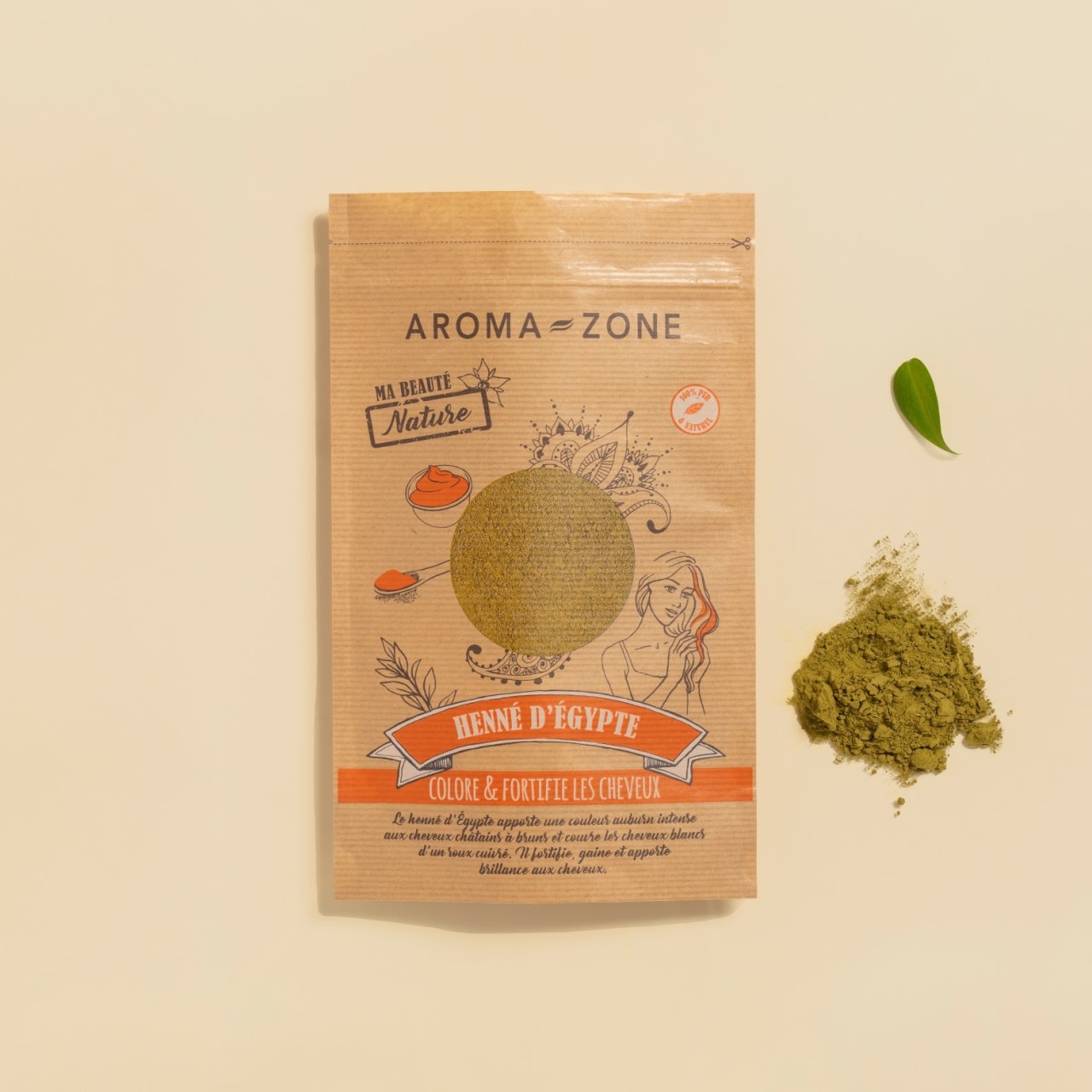
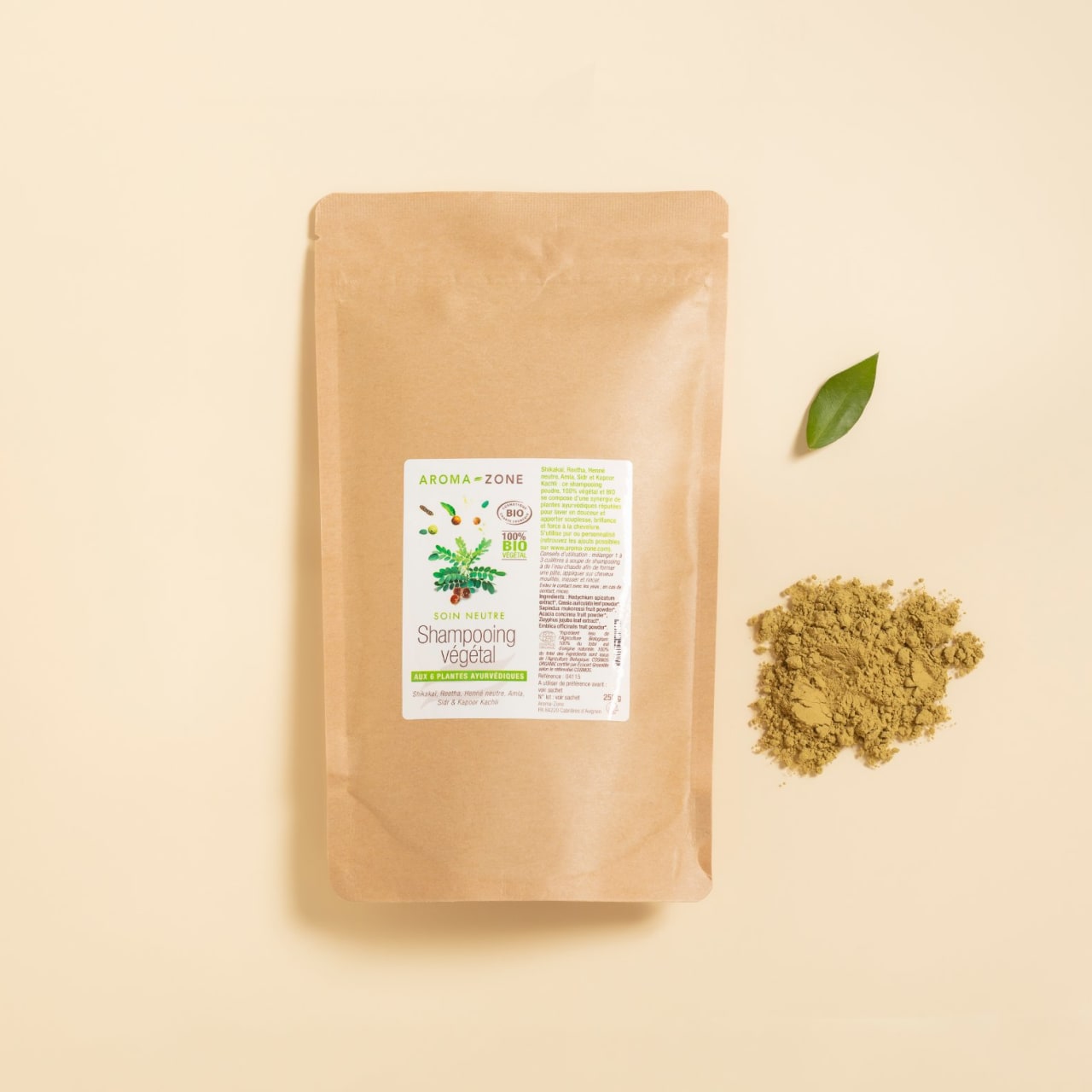
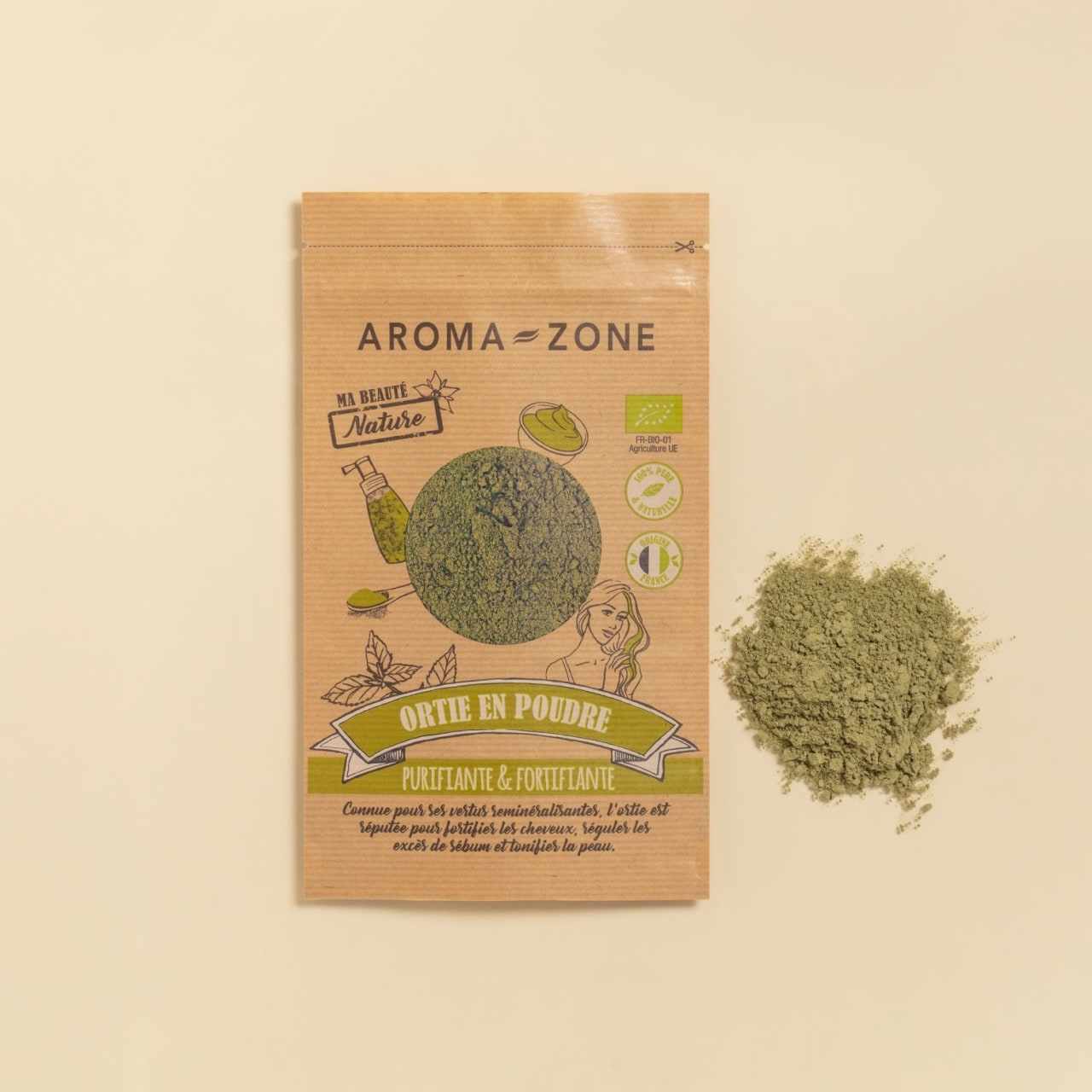
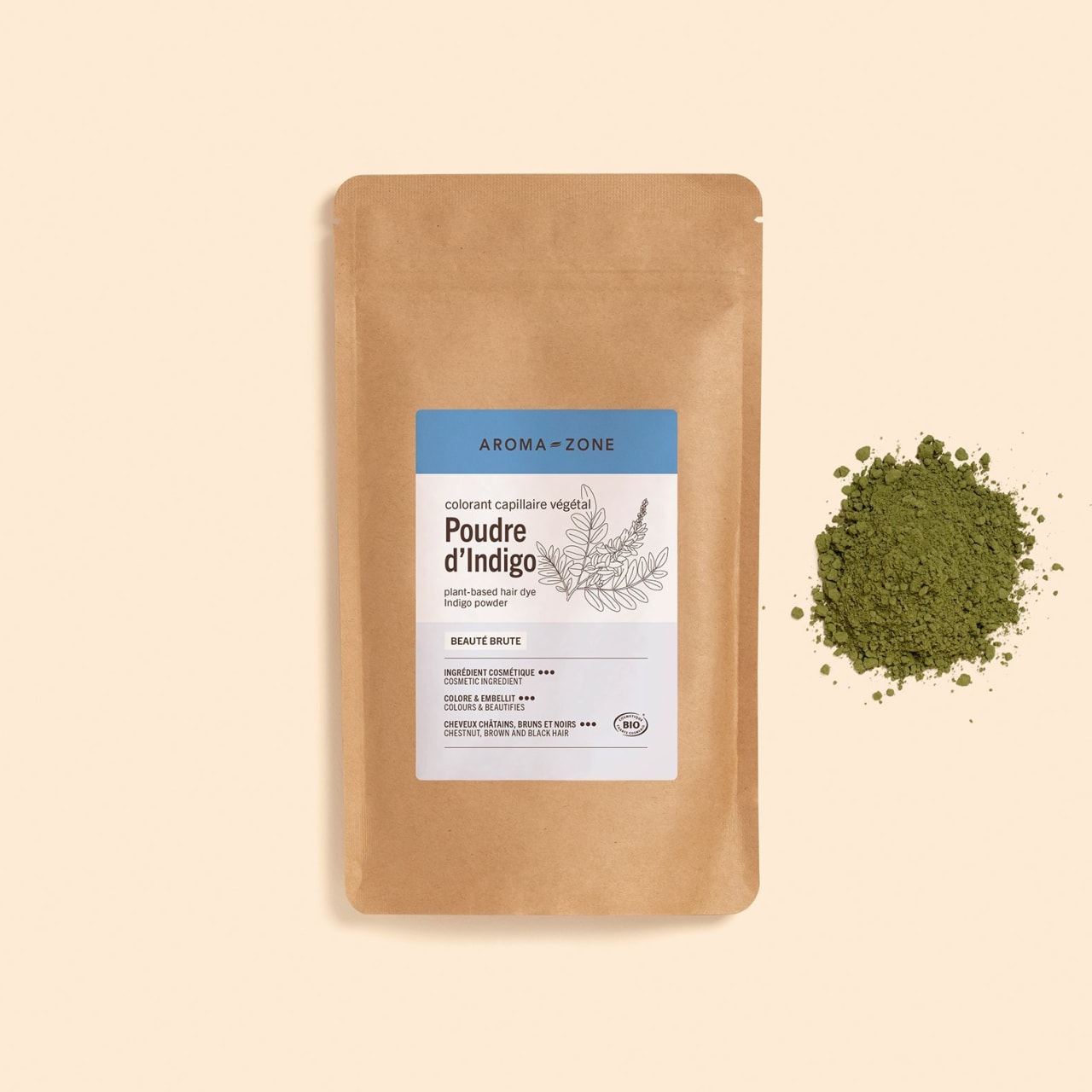
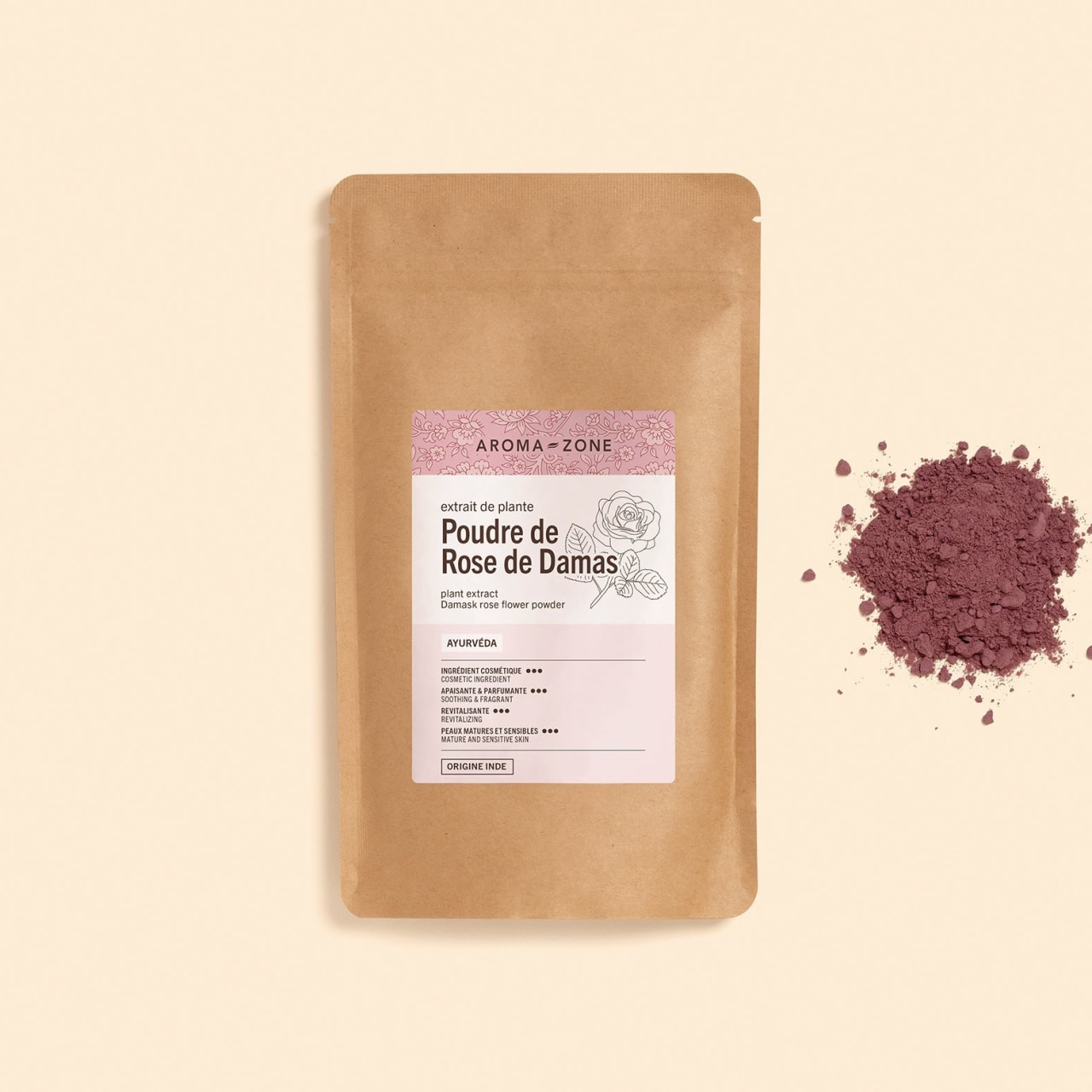
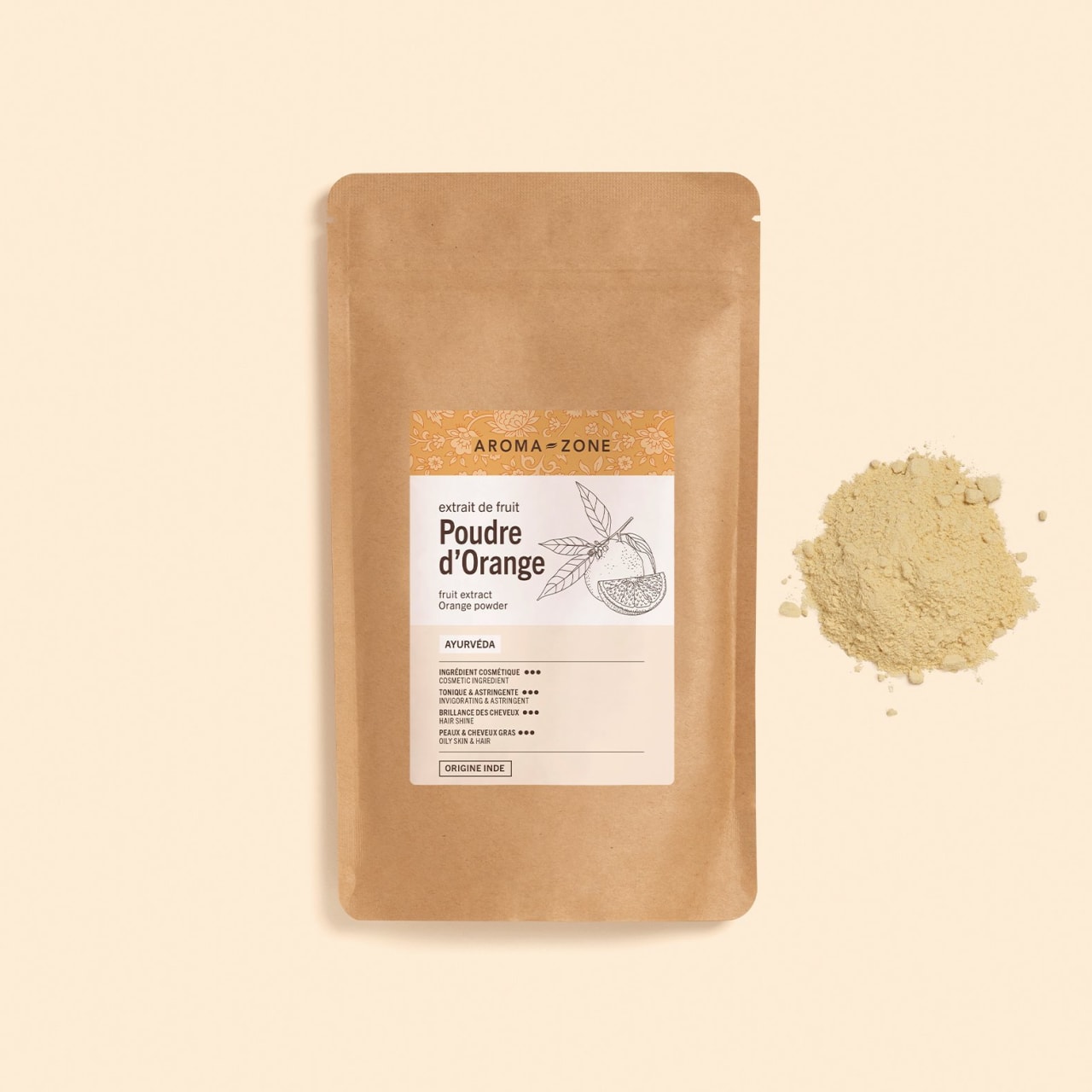
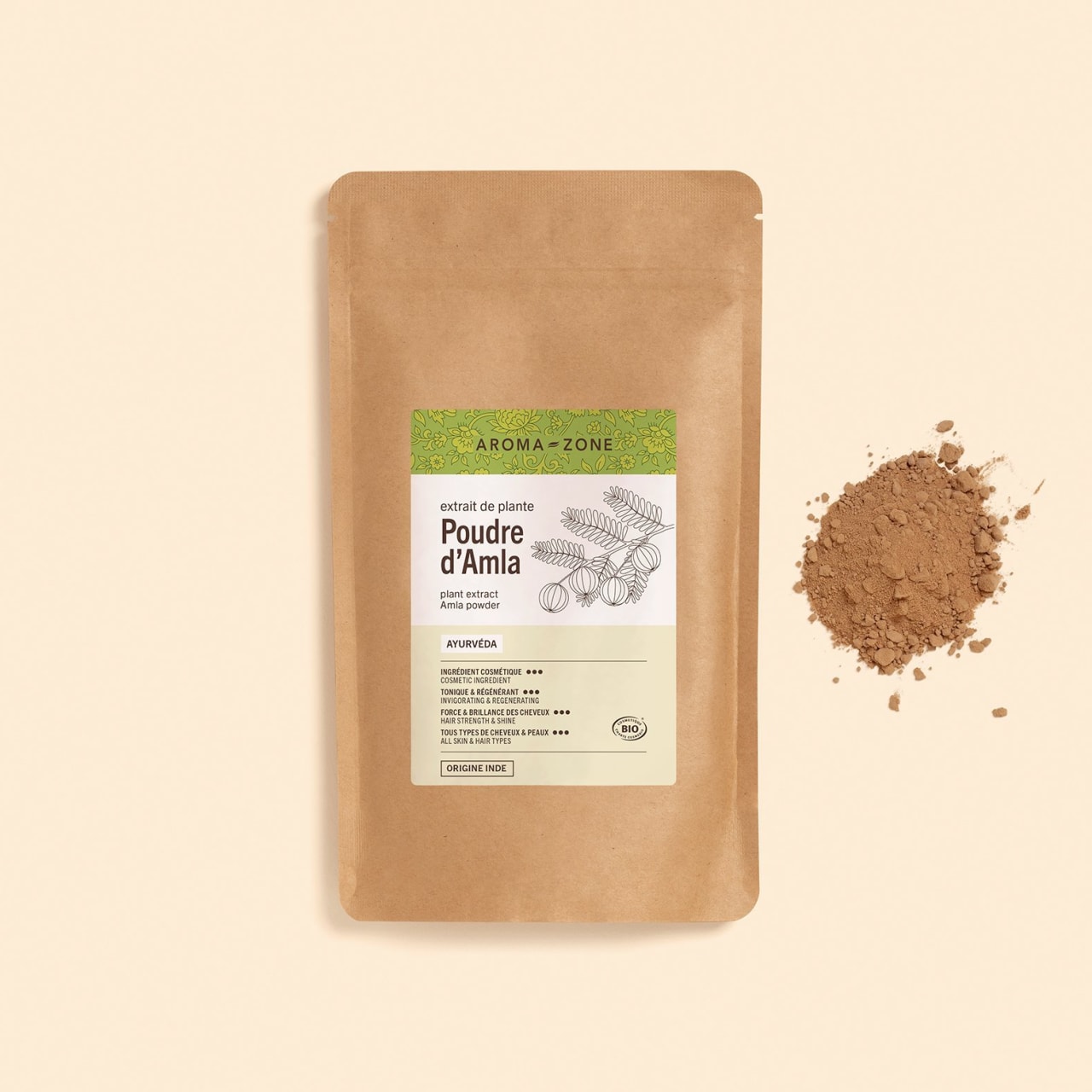
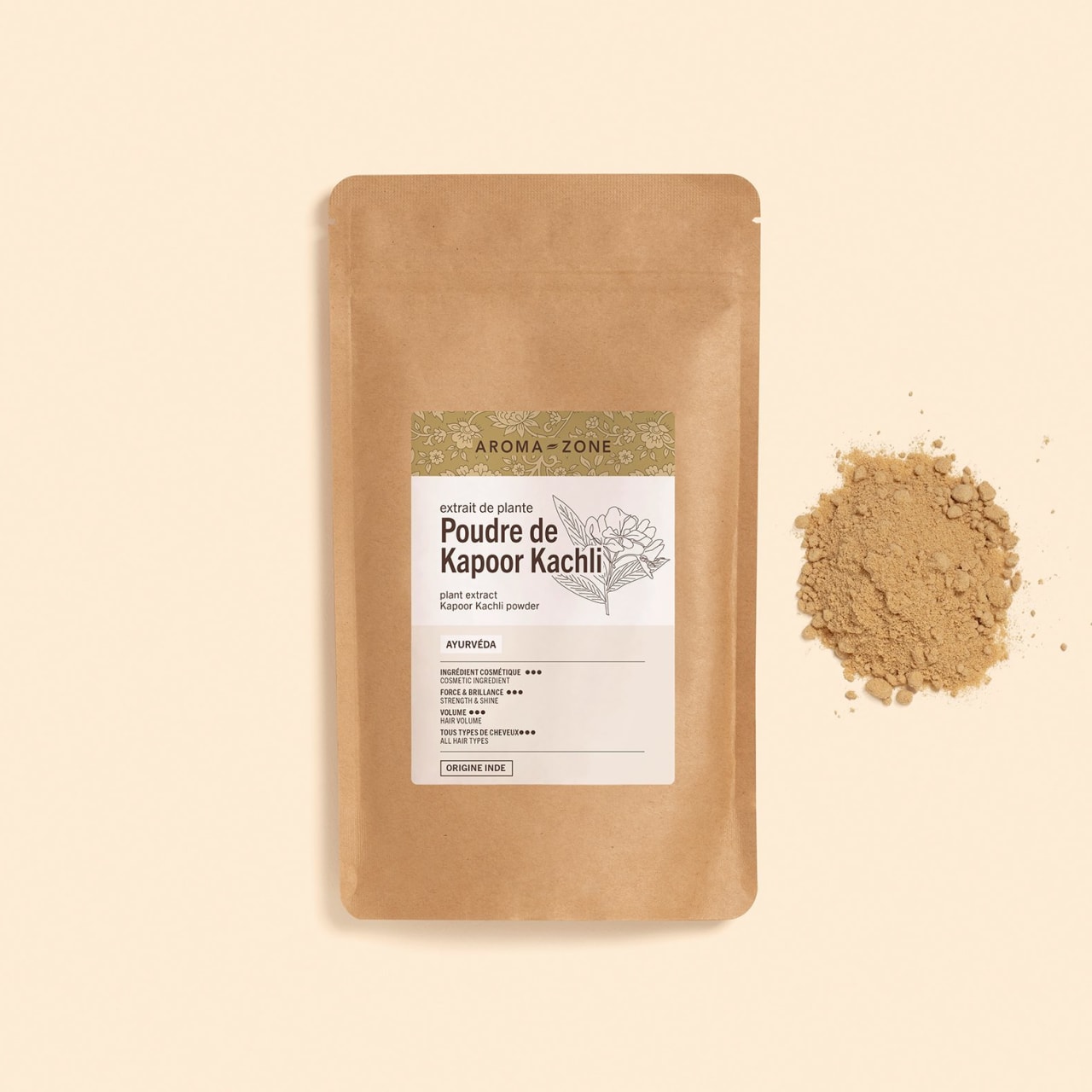
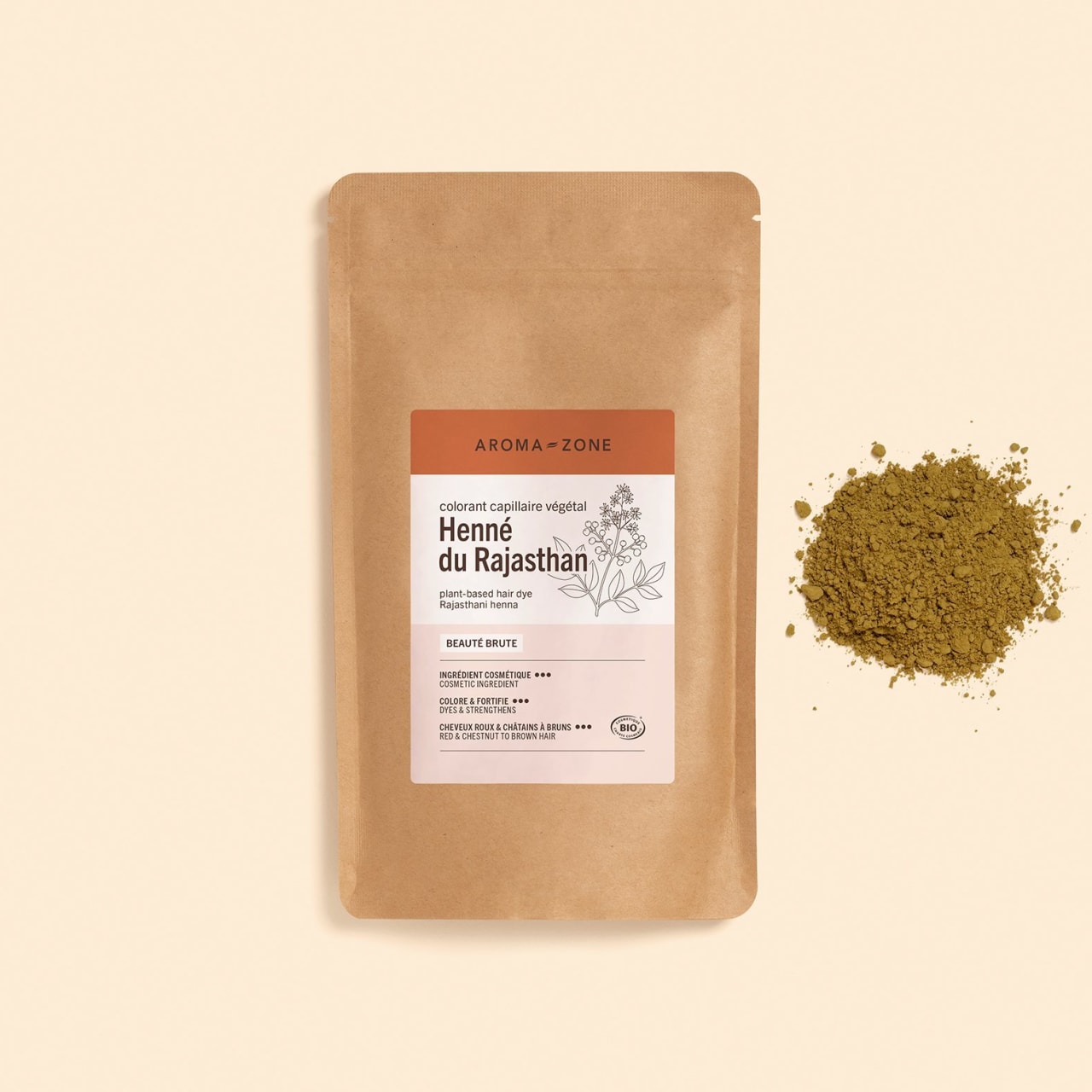
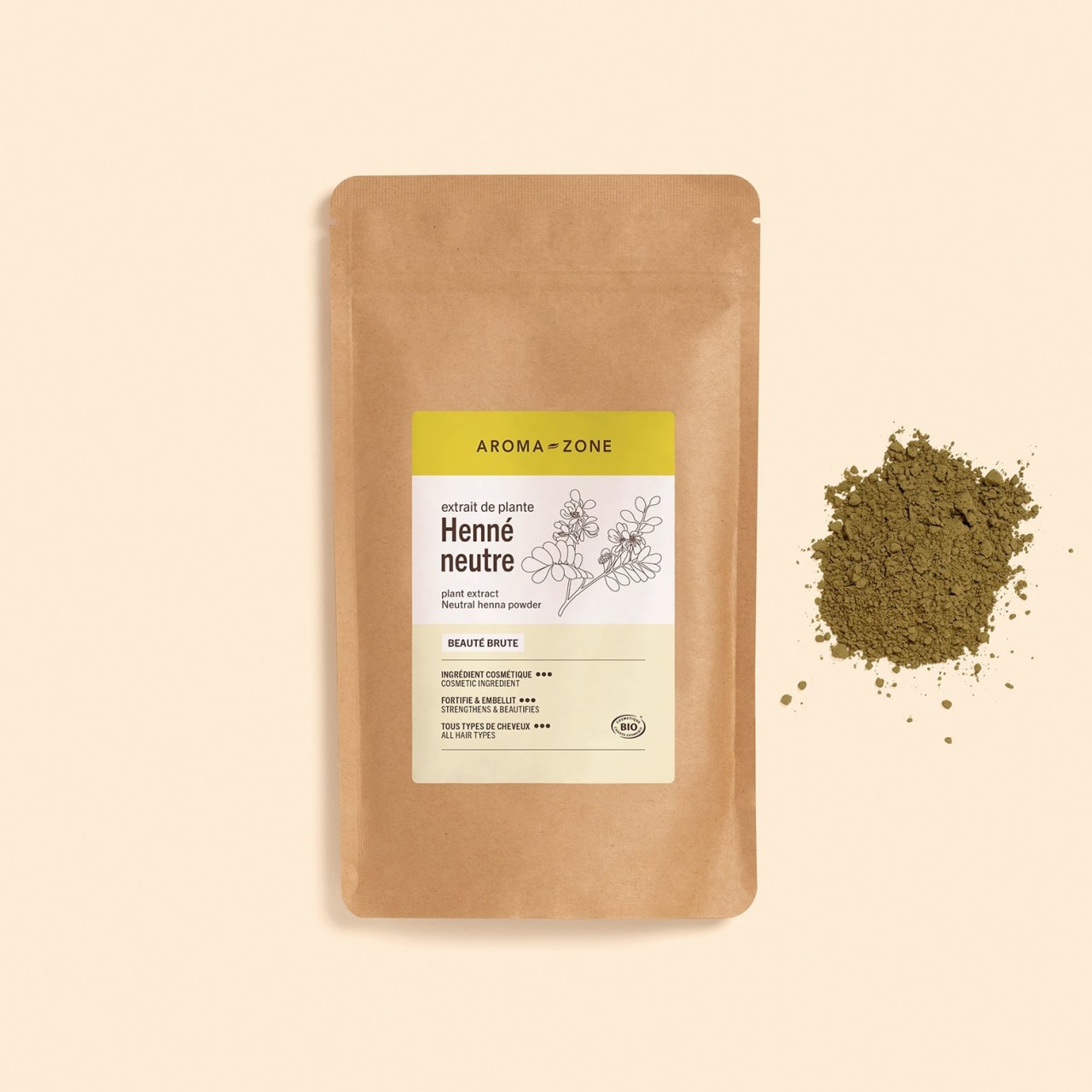
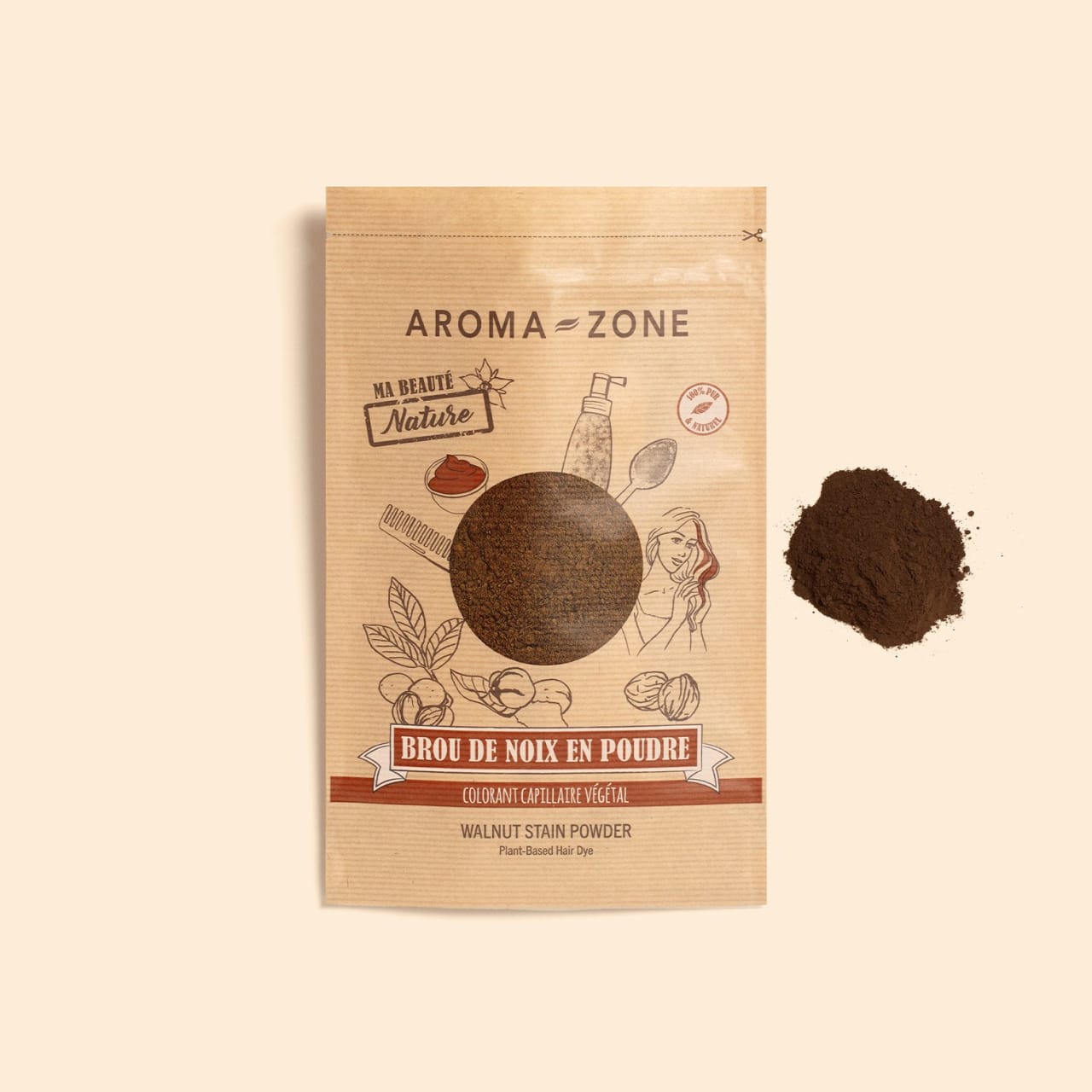
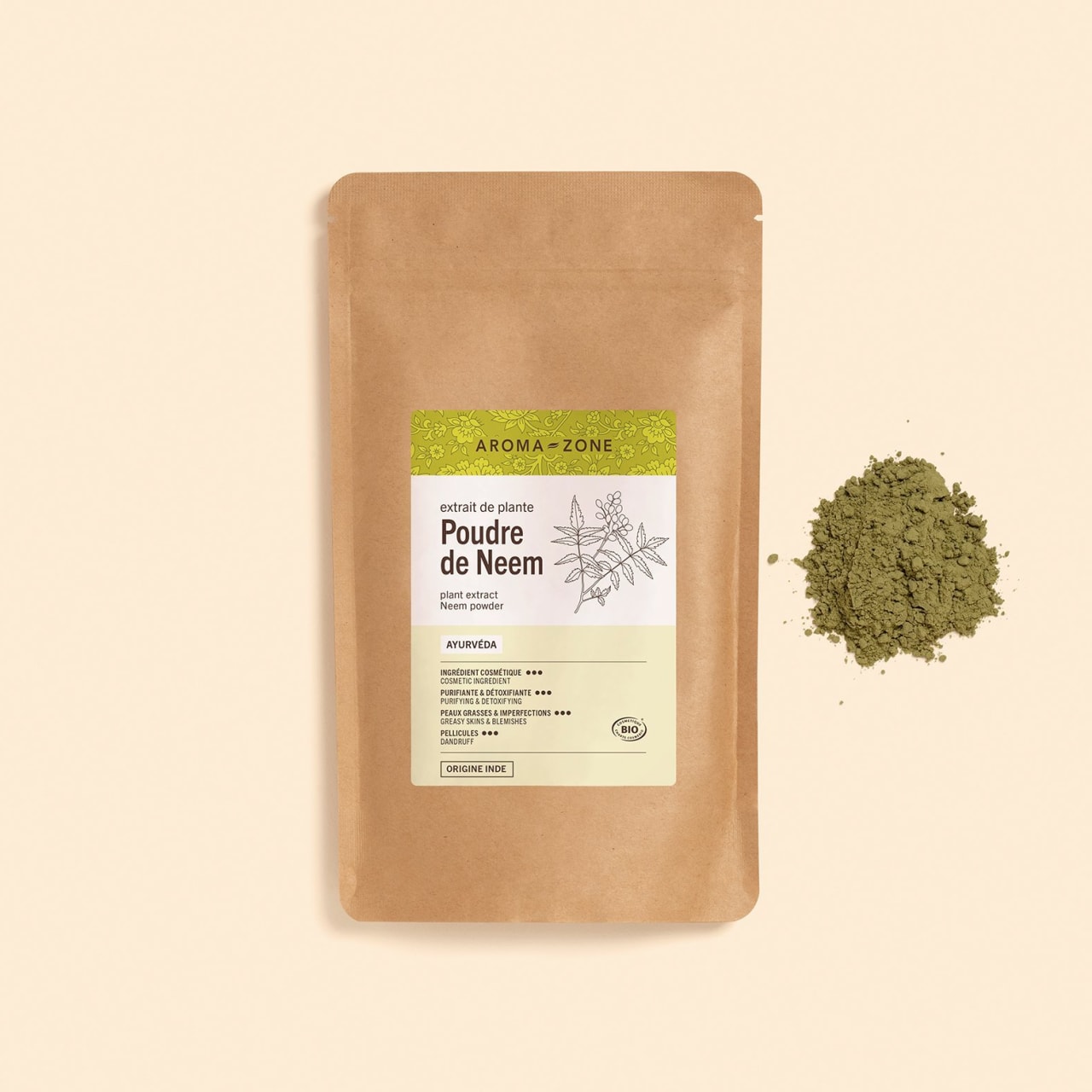
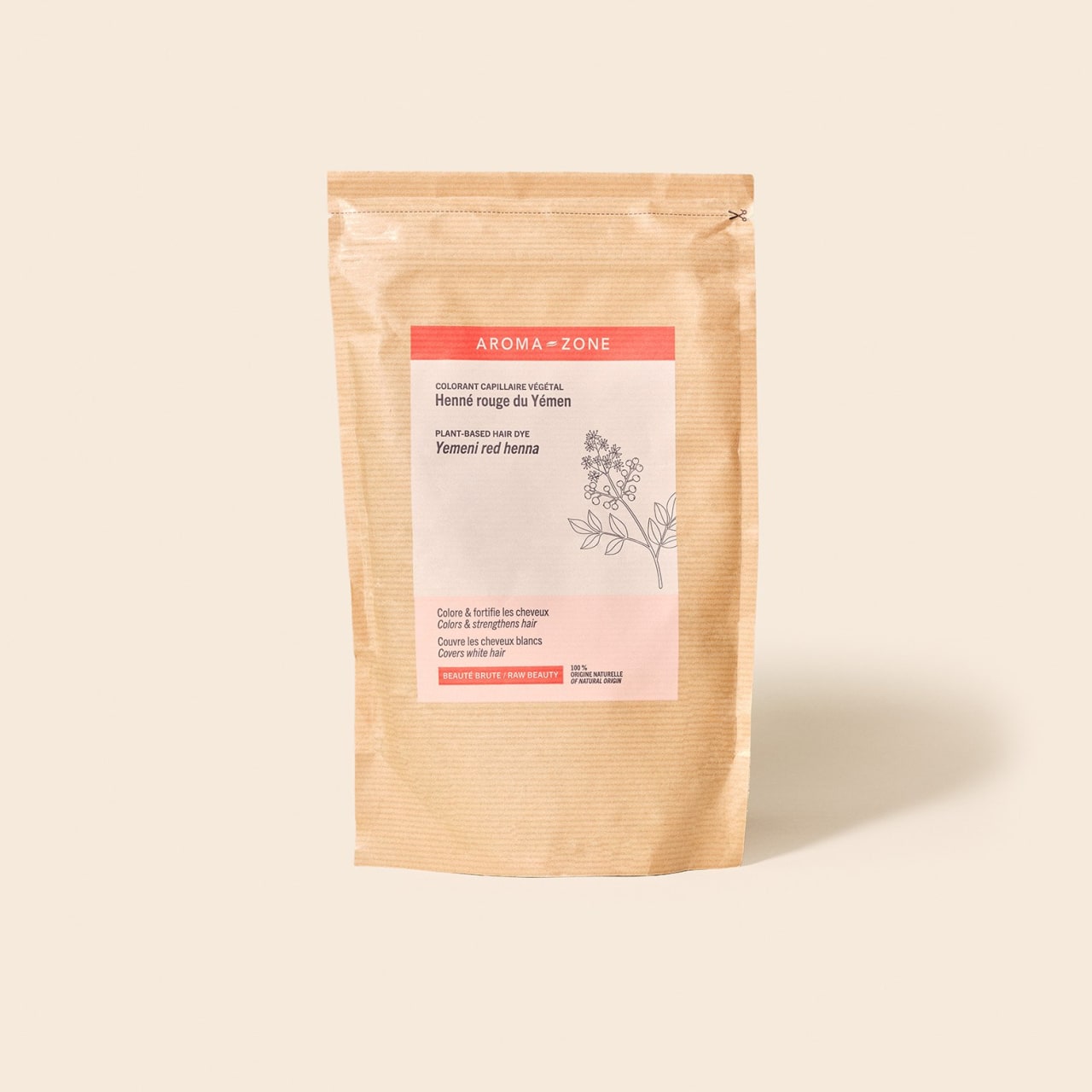
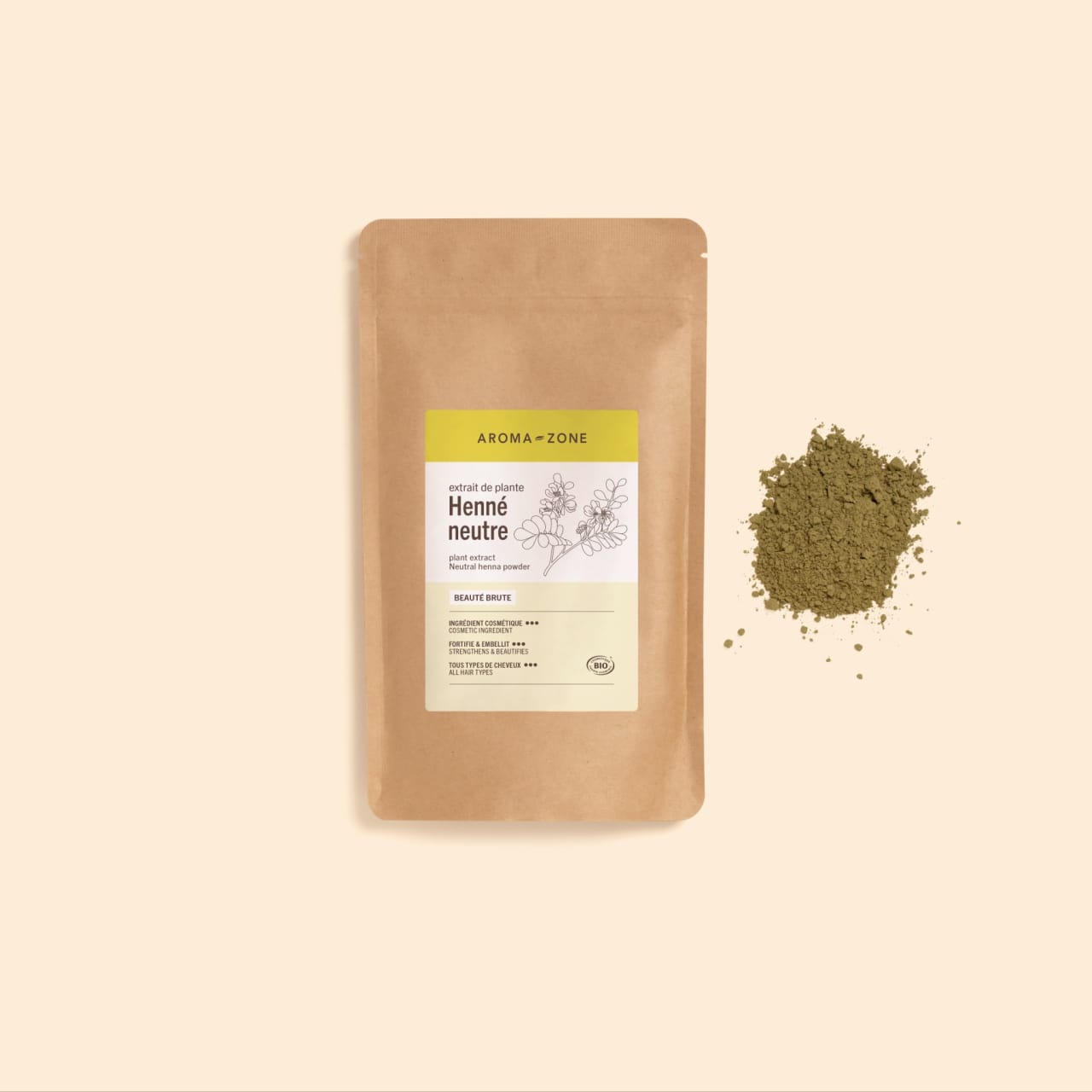
A herbal powder for hair is exactly what it sounds like: a plant, root, leaf or flower, dried and ground into a fine powder, then mixed with liquid (water, yoghurt, a hydrosol) to form a paste applied to hair or scalp.
Unlike a ready-made product, a powder is a raw ingredient, not a finished formula, which means it needs a bit more know-how, but also gives more control over exactly what goes into your routine.
3 main herbal powders for hair families
1. Hair-colouring powders
Rather than lifting the hair's own pigment and depositing a new colour with ammonia or peroxide, plant-based powders coat the outside of the hair shaft with pigment molecules that bind to the keratin. By the way, discover how grey hair can be repigmented naturally with hair powders.
That's why results build up gradually with each application rather than shifting colour instantly, and why they tend to be gentler on the hair fibre overall, though they can't lighten hair the way a chemical dye can.
Neutral Henna: doesn't add colour at all, used purely for its conditioning properties.
Rajasthan Henna, Egyptian Henna and Yemeni Red Henna: each gives a different depth of red-orange, depending on origin and preparation.
Indigo: often layered over henna to shift the tone towards brown or black.
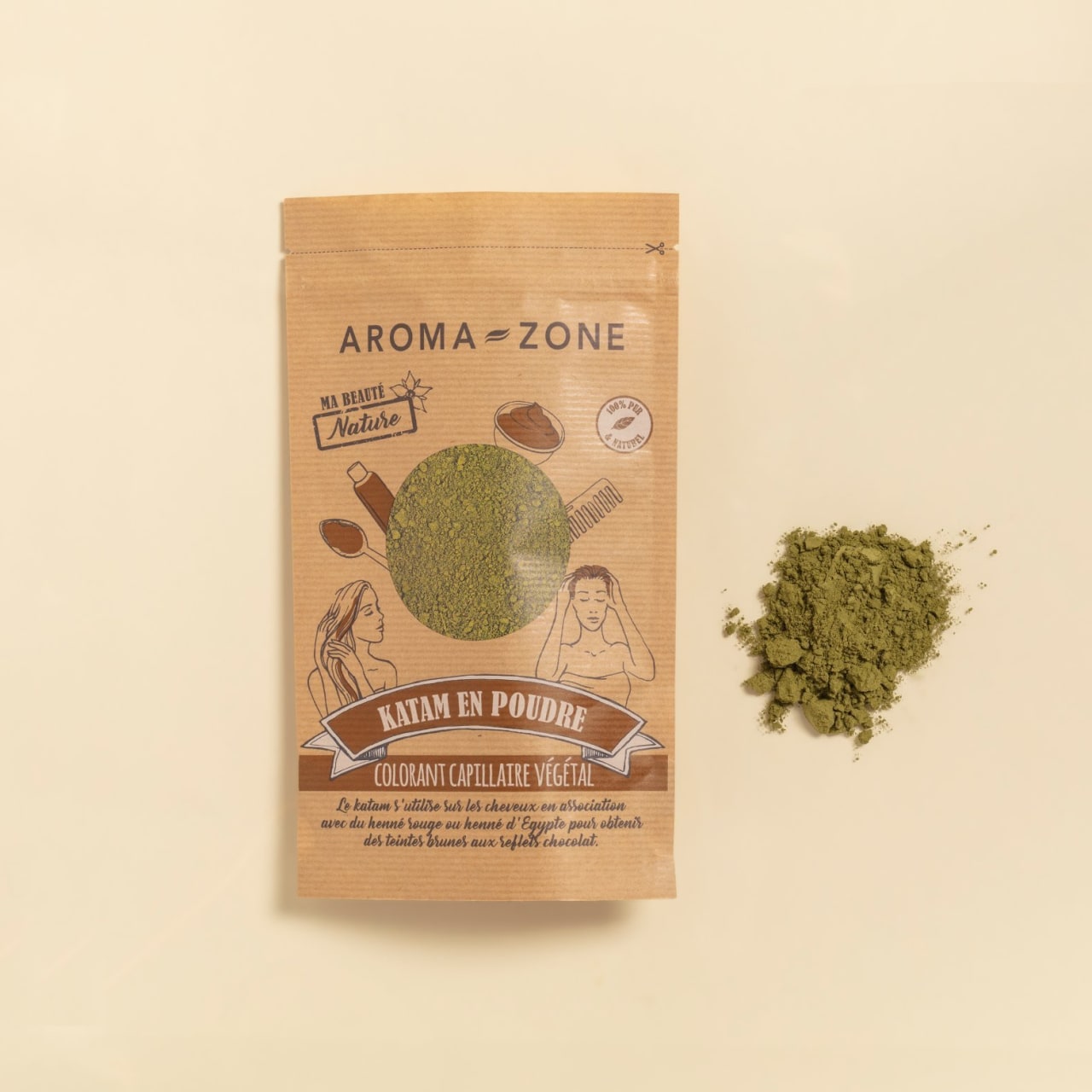
Walnut Husk and Katam: further natural colouring options.
Want a 100% natural, plant-based colour? Check our guide: How do you colour your hair naturally?
2. Strengthening and nourishing powders
Plant powders for hair are traditionally valued for supporting hair health rather than changing its colour.
Most work by coating and reinforcing the hair shaft from the outside, filling in tiny gaps in the cuticle so hair feels smoother and resists breakage better, rather than changing anything at a structural level the way a keratin treatment might.
Plant powders are well-known for a handful of specific properties.
Here's what to look for and why:
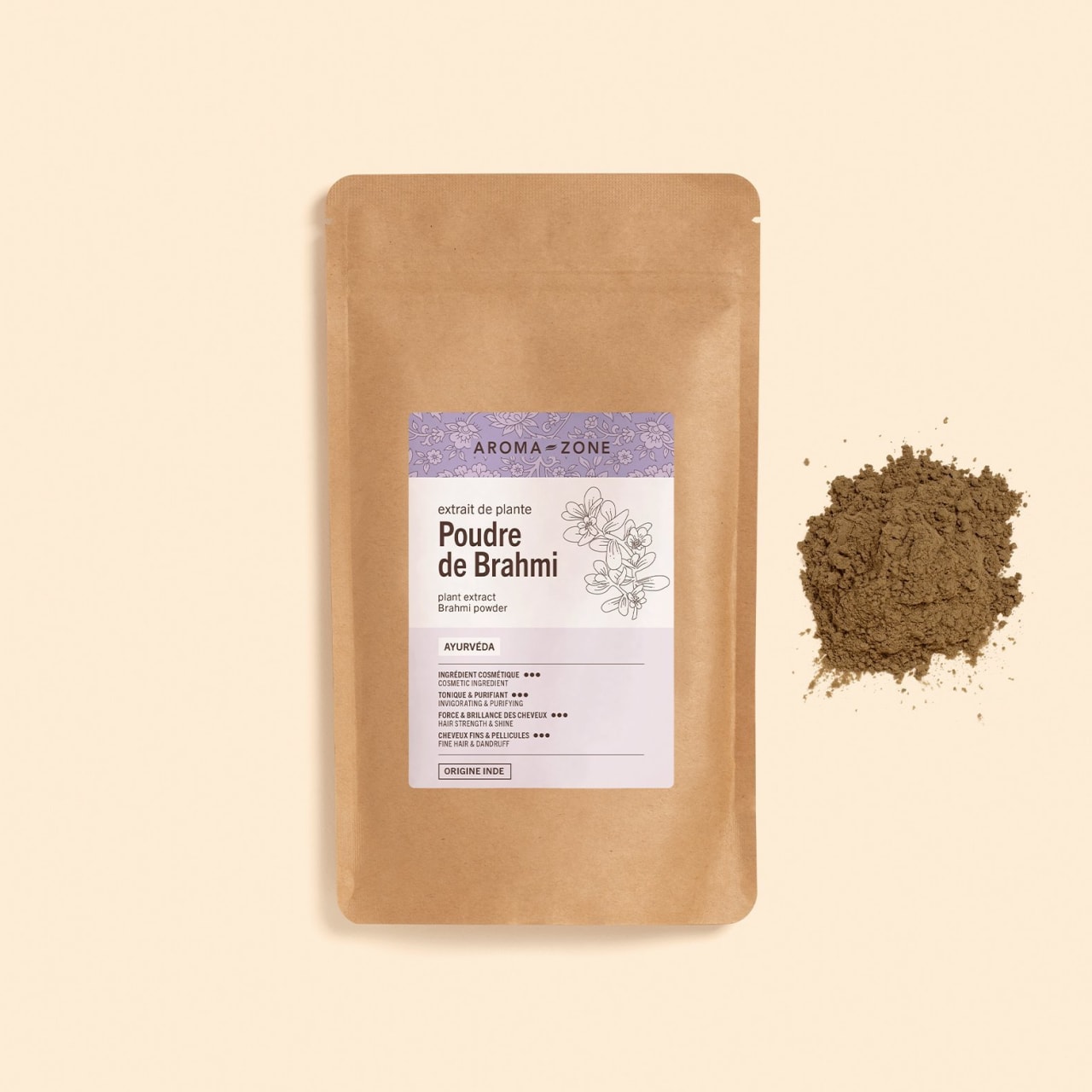
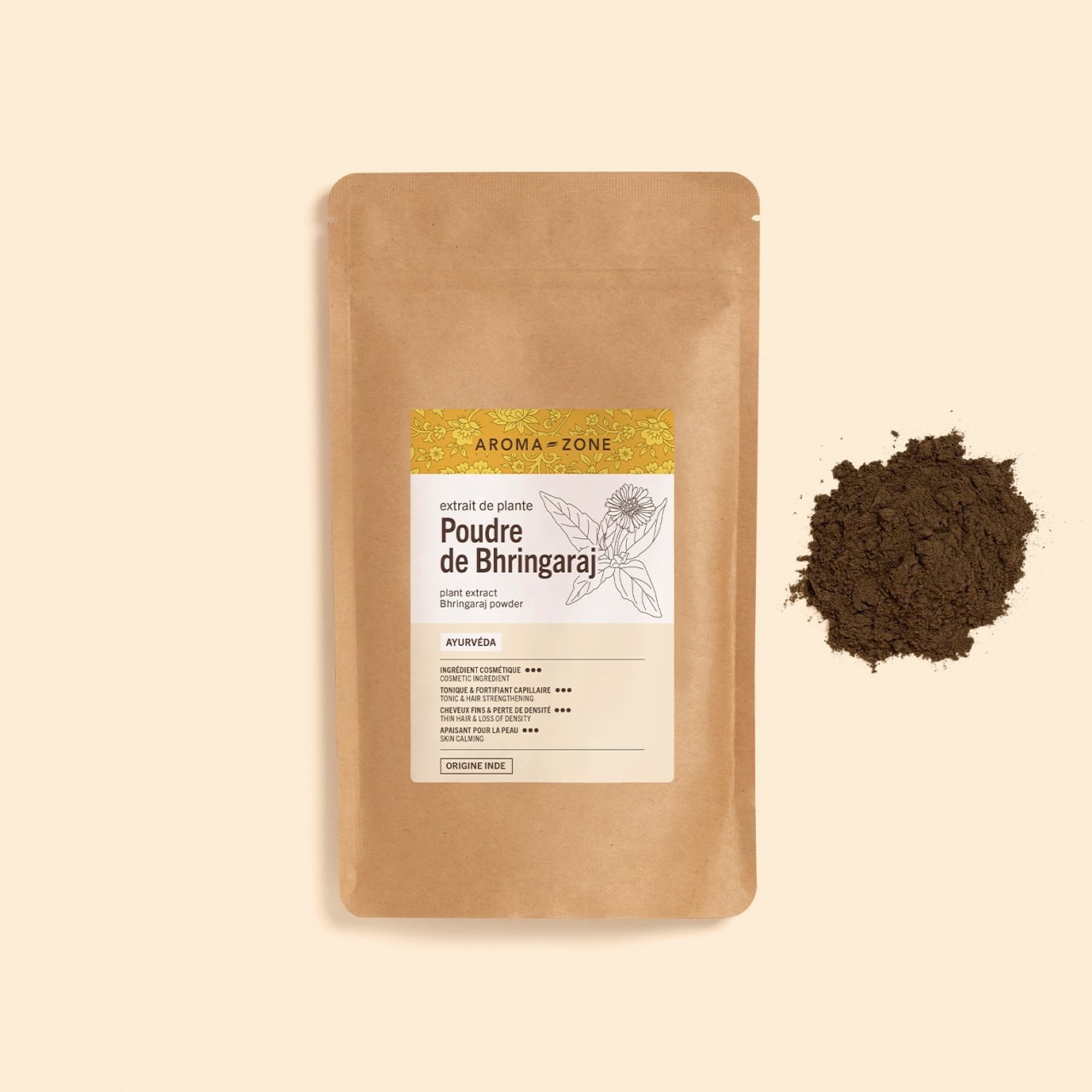
Anti-ageing: Organic Amla Powder, Bhringraj Powder, Brahmi Powder, all rich in antioxidants, traditionally used to help protect hair from everyday oxidative stress (UV, pollution) that can leave it looking dull and brittle over time.
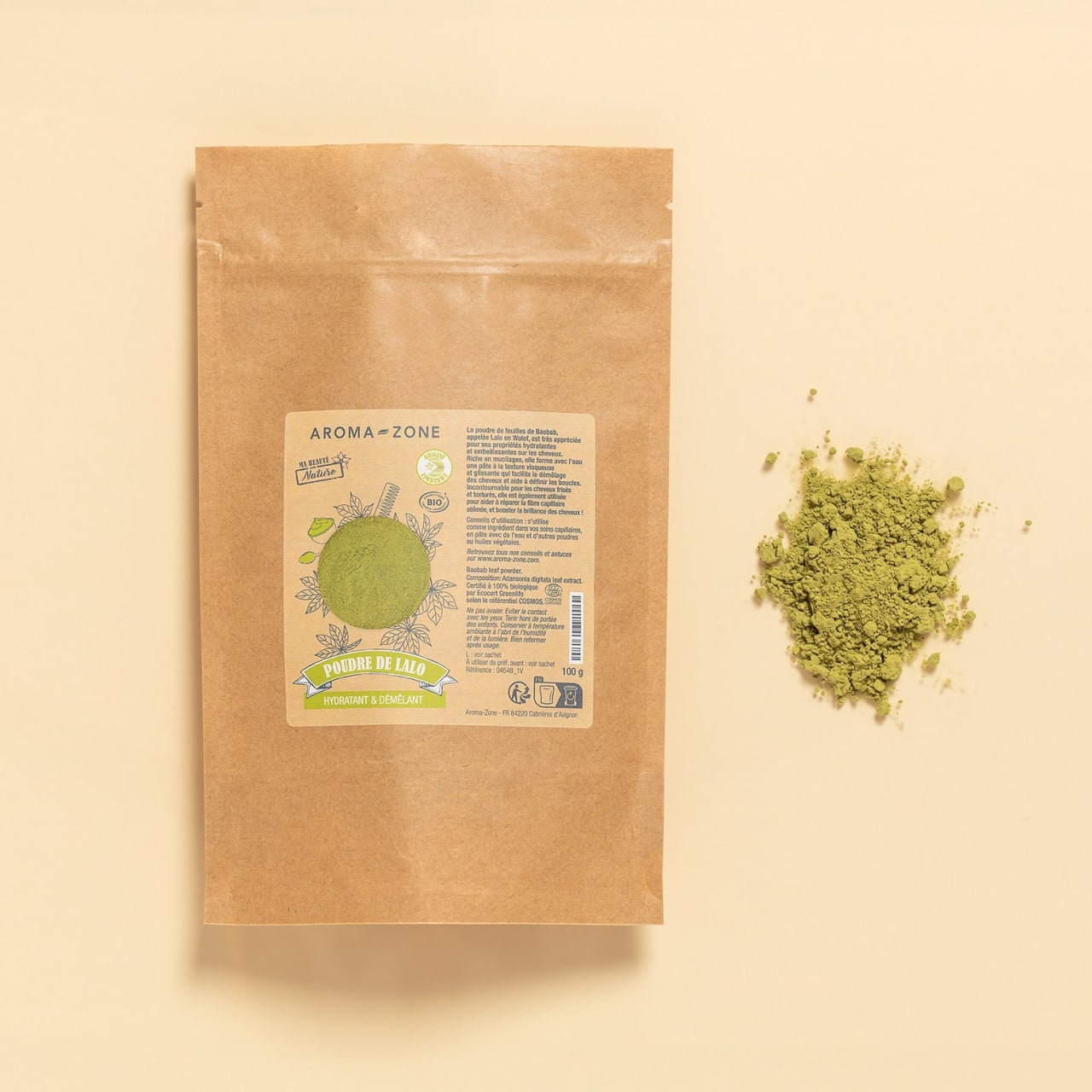
Hair strengthening: Organic Amla Powder, Organic Nettle Leaf Powder, Organic Lalo Powder, these coat the hair shaft with a fine protective layer, helping reduce friction and breakage during brushing or styling
Soothing: Bhringraj Powder, Brahmi Powder long-standing Ayurvedic staples, traditionally massaged into the scalp to help calm irritation and support a more comfortable scalp environment for healthy growth.
Purifying: Organic Nettle Leaf Powder, helps absorb excess oil at the root, useful if your scalp tends to feel greasy before the week's up.
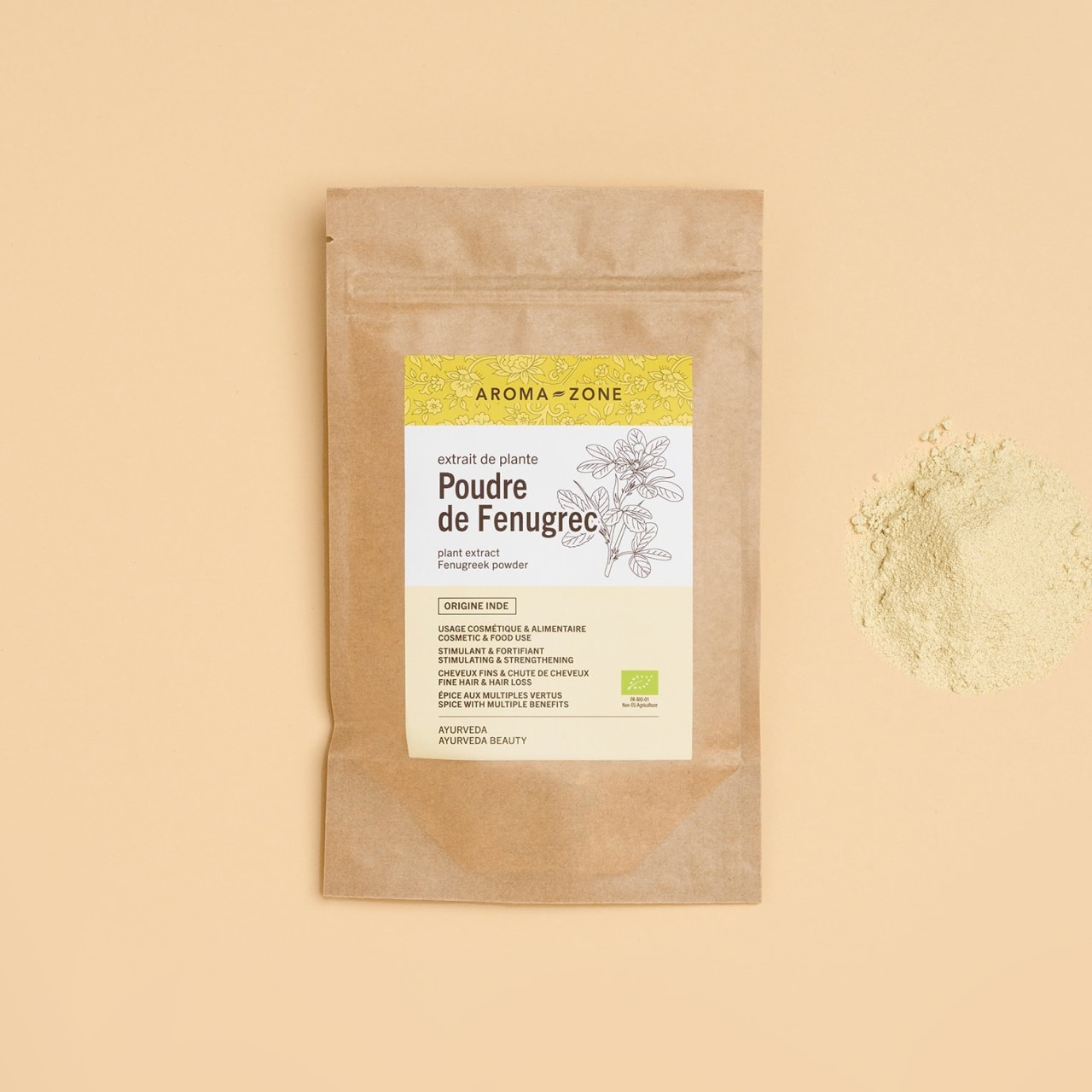
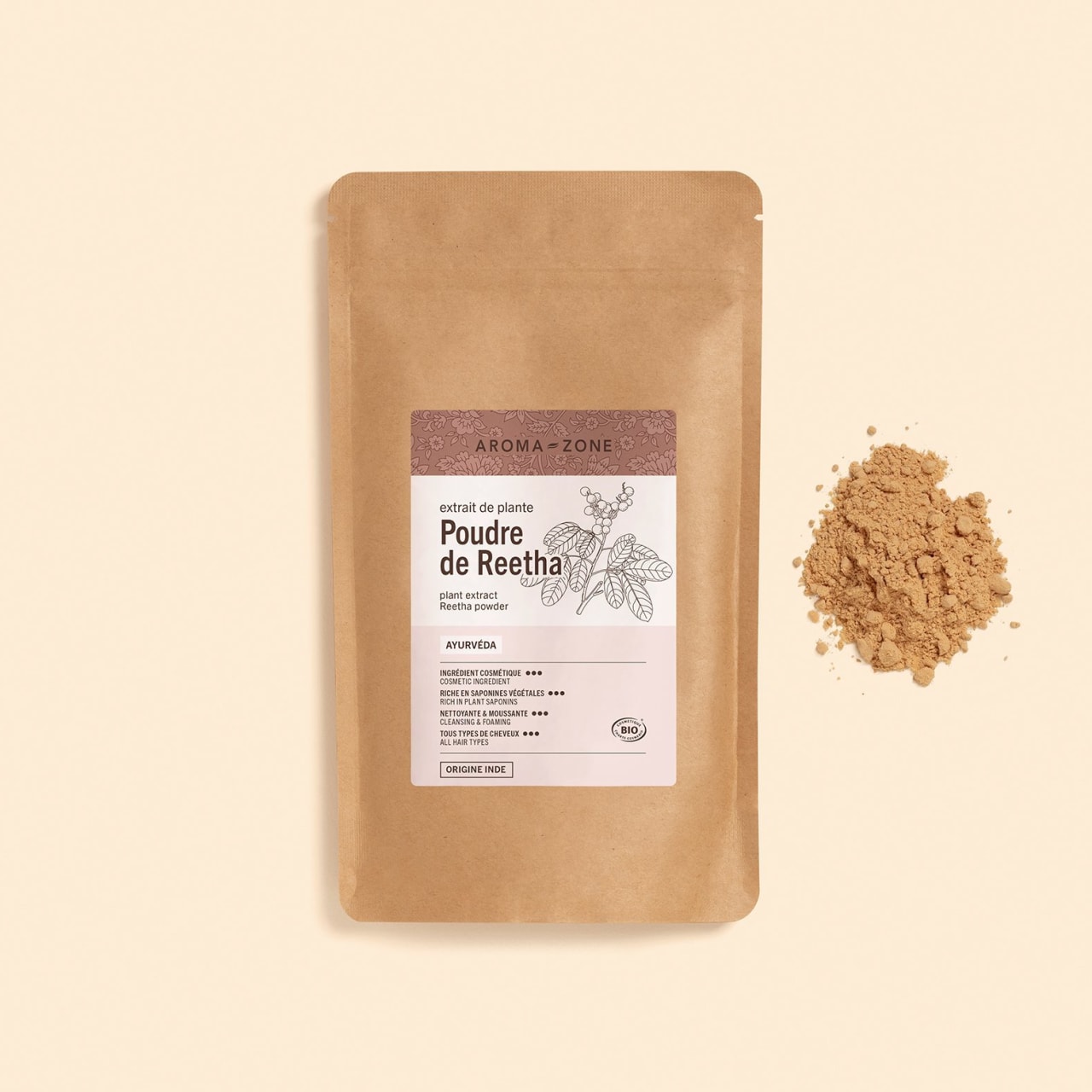
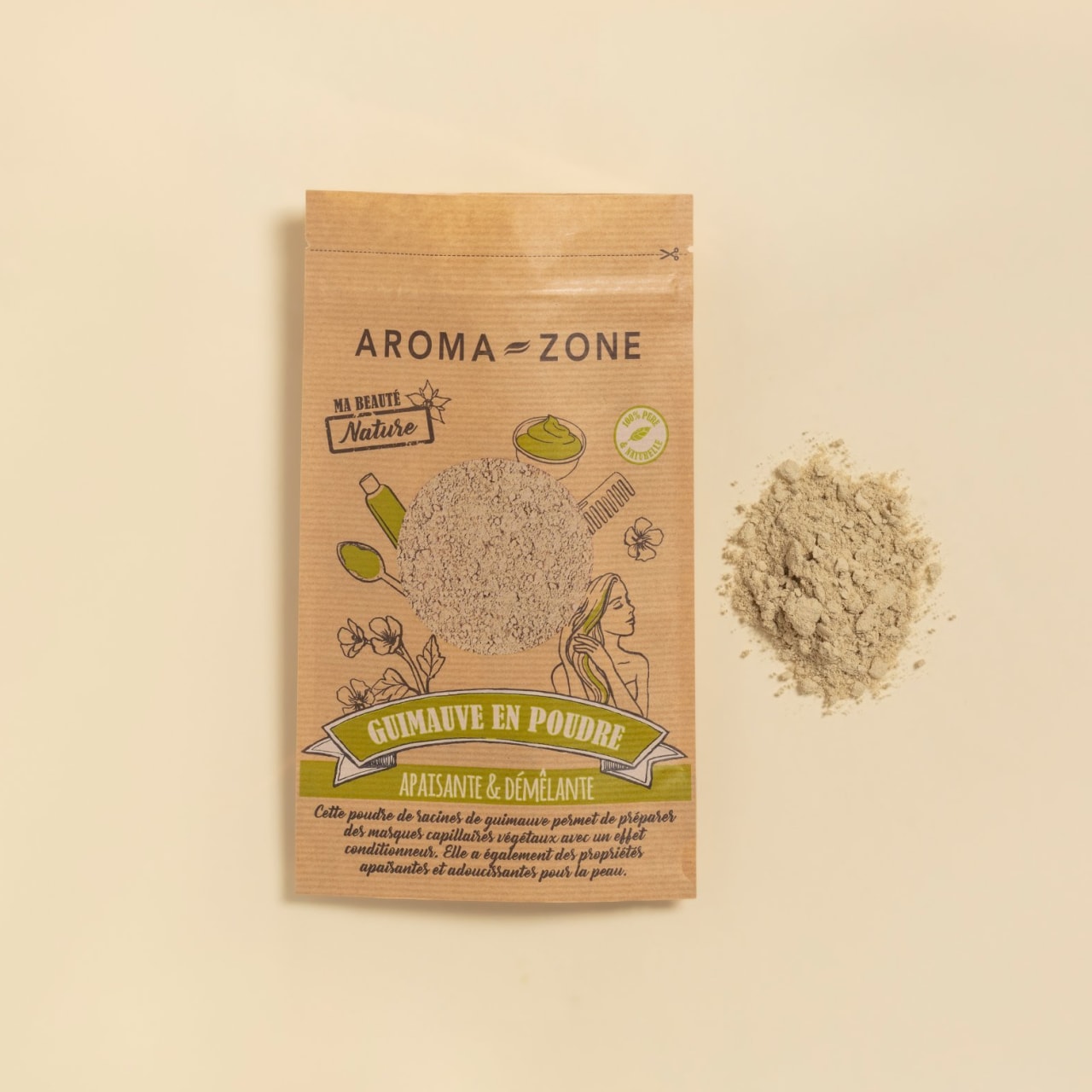
Conditioning: Organic Fenugreek Powder, Organic Reetha Powder, Marshmallow Powder, all mucilage-rich, meaning they turn slightly gel-like in water, which is what gives them their softening, detangling effect on the hair.
3. Purifying and cleansing plant powders for hair
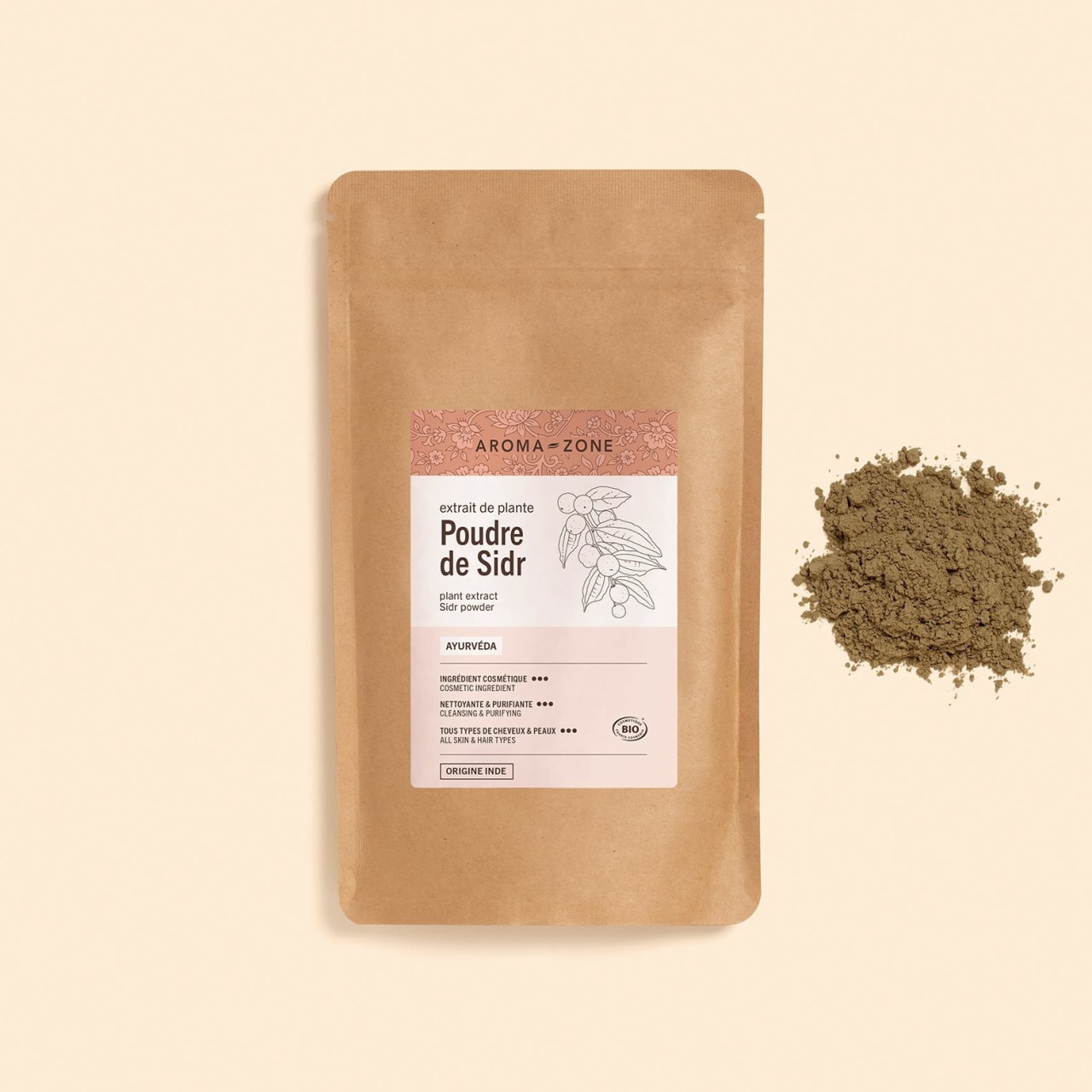
Some plant powders act more like a gentle clay-based cleanser.
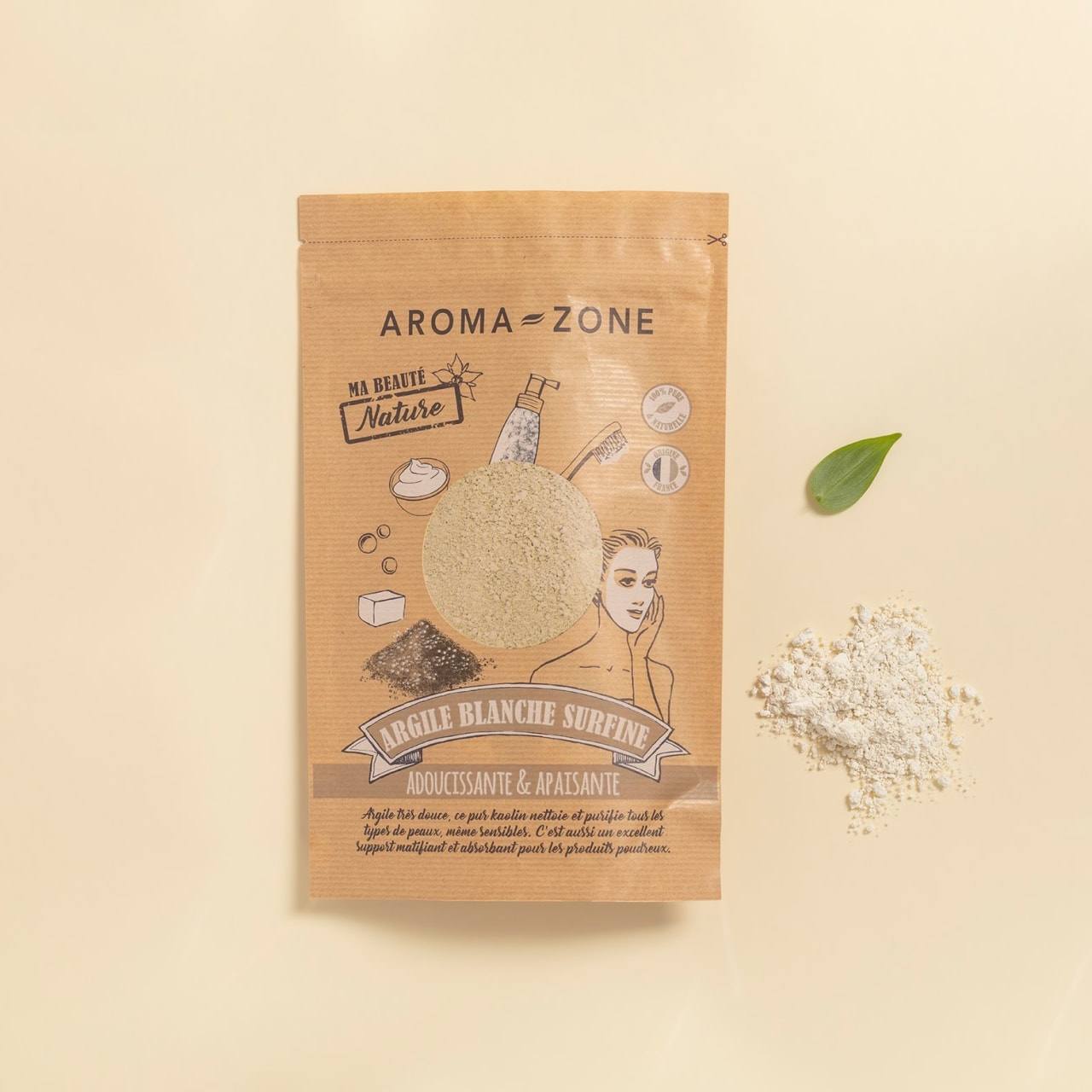
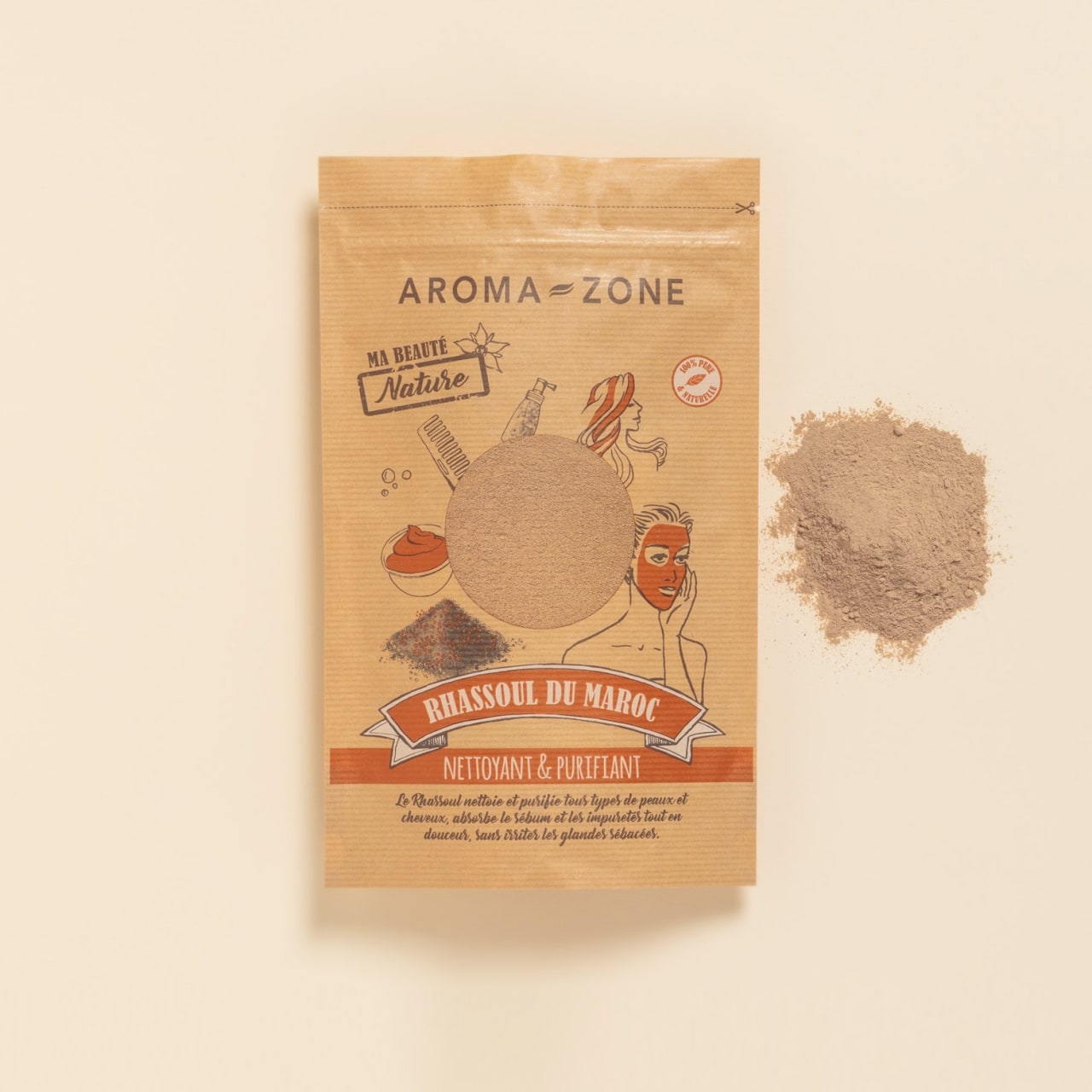
Moroccan Rhassoul and Superfine White Kaolin Clay both cleanse and purify without stripping the scalp, while Bitter Orange Powder and Organic Neem Powder bring a purifying effect that's often reached for on oilier, blemish-prone scalps.
How to actually use a herbal powder for hair?
Choose your liquid. Water is the simplest option, but yoghurt, aloe vera gel or a hydrosol all work too, and change the texture and effect of the final paste
Mix to a smooth, lump-free paste. The consistency should be similar to a thick yoghurt, thin enough to spread, thick enough to stay put
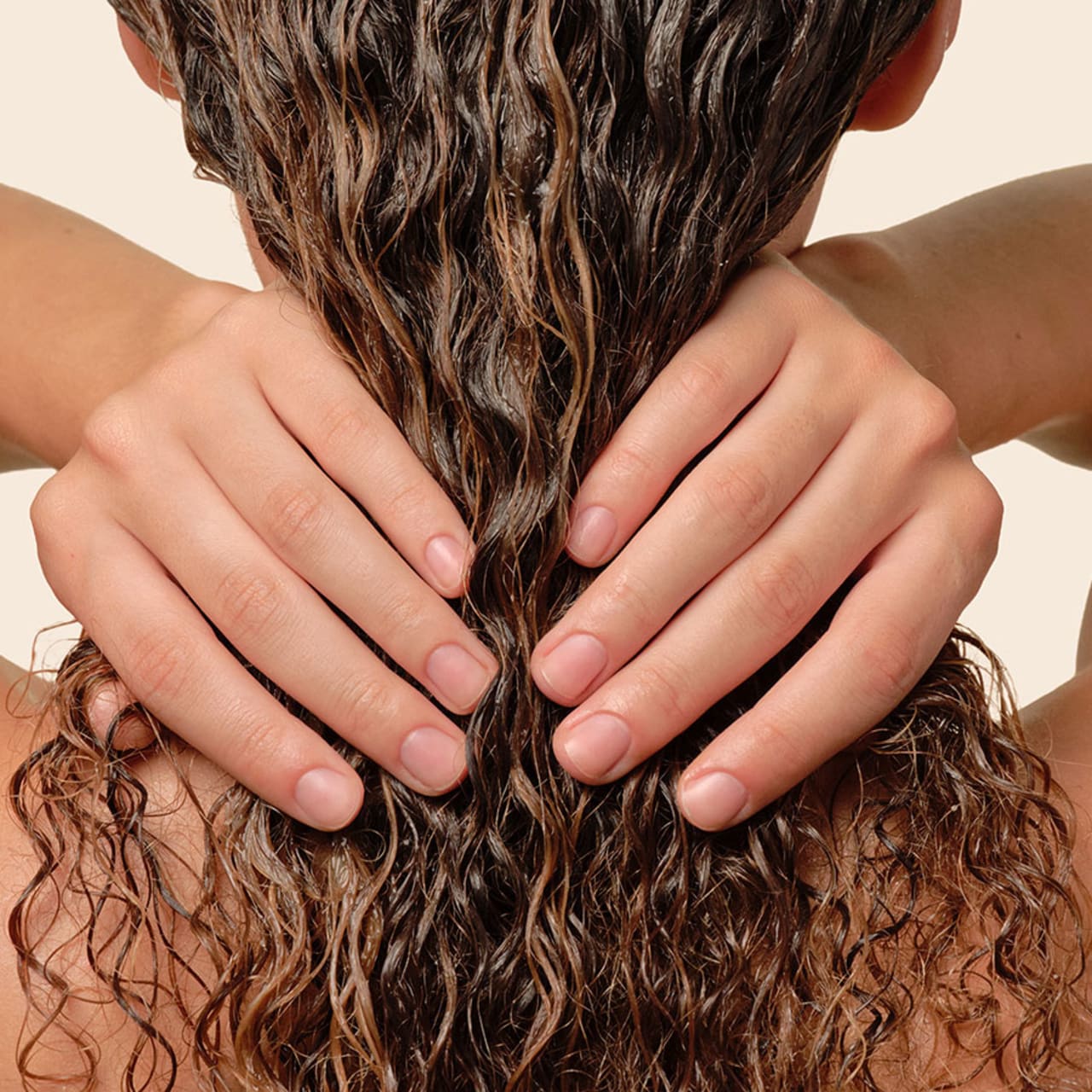
Apply to clean, dry or damp hair, focusing on the scalp for purifying/strengthening powders, or root to tip for colouring powders like henna
Leave on, timing varies a lot: strengthening powders often need 30-60 minutes, henna for colour typically needs 1-3 hours depending on the depth of colour wanted
Rinse thoroughly, powders can be more stubborn to rinse out than a liquid product, so allow extra time and water.
A few things worth knowing before you start
Always patch test a new powder, particularly henna and dyes. A small amount on skin, left for 24-48 hours, is worth the wait
Henna is permanent-ish, it fades gradually rather than washing out, so it's worth testing the colour on a small hidden section first
Powders can be combined, a purifying clay and a strengthening powder in the same mask, for instance, is a common approach rather than an exception.


