
Superfine White Kaolin Clay
Soothing
Mattifying
£4.00
1 article = 250 g
Price per kg = £16.00
free delivery up to £25 in United Kingdom
100% secure payment CB, Visa, Mastercard, Paypal, Apple Pay, Google Pay
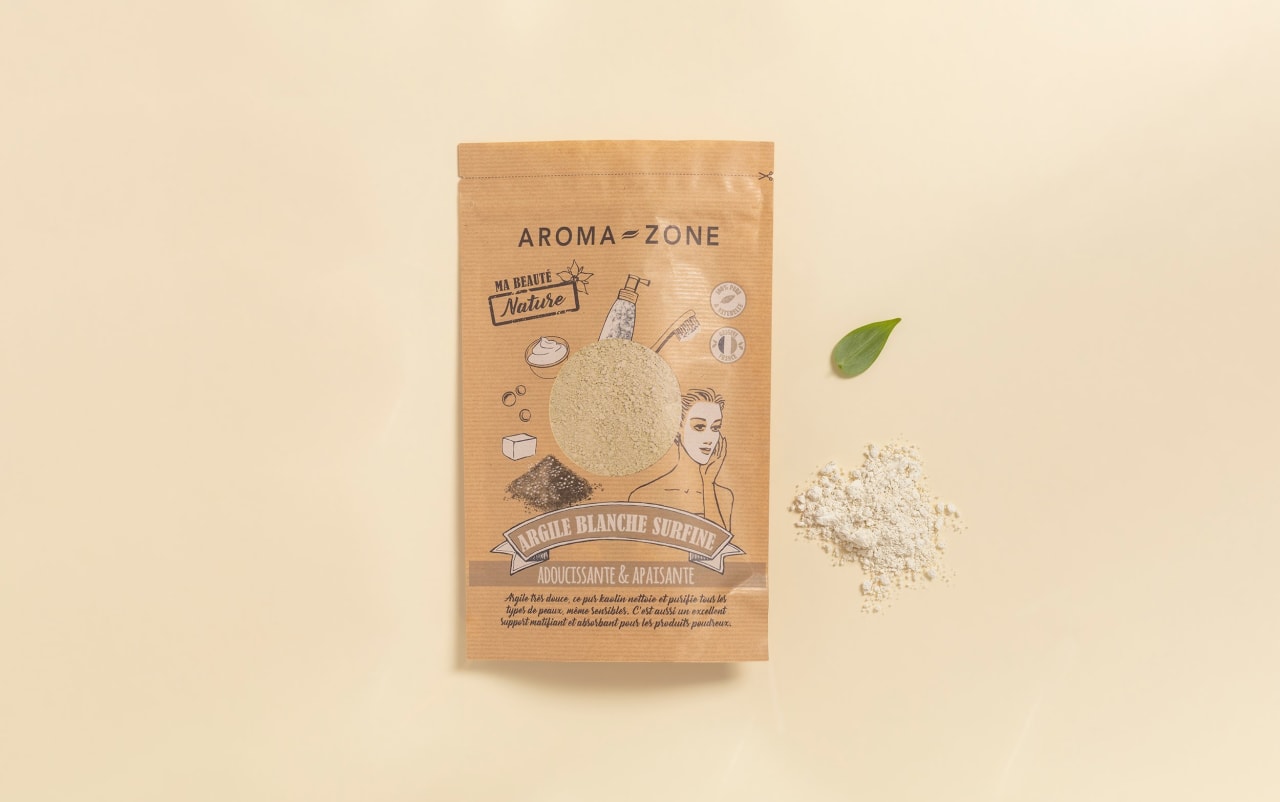
Superfine White Kaolin Clay
250 g

100% natural origin

From France
Properties
As a cosmetic ingredient, superfine white kaolin clay (kaolin) is recognised for its properties:
Adsorbent, purifying and purifying the skin
Absorbent and with a matte finish
Repairing
Softening
Carries active ingredients and water
Very gentle
Indications
Delicate and sensitive skin
Dry and dehydrated skin
Skin prone to discomfort
Properties
As a hair improvement ingredient, superfine white kaolin clay(kaolin) is renowned for its properties:
Cleansing : known to gently absorb excess sebum and impurities.
Purifying
Indications
All hair and scalp types
Properties
In mouth care, superfine white kaolin clay (kaolin) is recognised for its properties:
Gentleabrasive
Thickener for toothpaste
Cleansing
Neutralises acidity
Properties
In make-up, superfine white kaolin clay (kaolin) is recognised for its properties:
With a matte finish
Skin-friendly whitepowder base
Touch Properties
Properties
For household use, superfine white kaolin clay (kaolin) is recognised for its properties:
Cleansing, absorbs grease
Mild abrasive
Uses Skin care
White superfine clay can be used as an ingredient in your skin care products:
Masks, poultices and wraps
Shower gels and soaps
Creams, gels and lotions
A few ideas
Purifying mask for dry, sensitive skin
Slimming wrap with seaweed synergy
Matte finish cream for dry and sensitive skin
Deodorant
Clay soap
Cleansing lotion, make-up remover
Instant recipe by Aroma-Zone
Moisturising and soothing mask
White clay
10 g
Concentrated Mallow extract
30 drops
Mineral water
9 ml
Step 1
Mix the clay and water with a spatula until smooth, then add the mallow extract, mixing well.
Step 2
Apply to the entire face and leave on for 10 minutes. Rinse off with clean water.
Uses Hair care
Superfine white clay can be used as an ingredient in your hair preparations:
Shampoo
Hair masks
Uses Mouth care
Superfine white clay can be used as an ingredient in your mouth care preparations:
In gentle toothpastes: as clay is a soft rock, it does not scratch the enamel
In rinses
Make-up uses
White clay can be used as an ingredient in your make-up preparations:
Foundation powders
Foundation
Eyeshadow
Household uses
To remove greasy spots from hard-to-wash surfaces: wooden furniture, leather, carpets, stone, marble, etc.
To make your own "clay stone", a multi-purpose cleaner and scourer
Dosage :
1 to 95% of the total weight of your mixture
oil-insoluble
Water-insoluble
Can be used as a paste or dispersion
Use in home cosmetics
Cream and lotions, shampoo, shower, soap, gel, mask, powder, wrap, poultice, hair mask, toothpaste, compacted powder.
Make a recipe from A to Z
Superfine white clay can be used as an ingredient in your blends.
Incorporate white clay as an active ingredient in your water-based preparations: creams, lotions, gels, soaps, etc.
Step 1
Add the white clay (ideally pre-mixed in a little cold water) to your formulation at the end.
Step 2
Shake to mix well.
Aroma-Zone Tip
For better dispersion of the clay in your emulsions or gels, pre-disperse it in a little water before adding it.
To make a mask, wrap or poultice
White clay can be mixed with other clays or plant powders to prepare masks, poultices or body wraps.
Step 1
Pour the white clay and other powders (other clays, plant powders, etc.) into a suitable container.
Step 2
Add water or hydrosol and mix to obtain a smooth, creamy paste.
Apply your mask in 3 steps
Immediately apply the mixture in a thick layer on the skin (face, neck, body) or hair, etc.
Leave on until the mask begins to dry. It is recommended to not let the mixture dry completely.
Rinse thoroughly with water to remove the mask.
Aroma-Zone Tip
Clay pastes do not keep and should be used quickly after preparation (48 hours storage maximum in the refrigerator).
If you wish to incorporate essential oils into a clay paste, we recommend adding a small amount of oil or Solubol to solubilise them.
For better results, do not heat the clay and avoid contact with metal that oxidises. You can use stainless steel or plastic equipment. For mixing, use a plastic spatula.
Use it in a make-up product containing mineral powders.
To make a loose or compacted powder:
Mix the white clay with the mineral powders, ideally by grinding in a mortar or coffee grinder to disperse the pigments evenly.
To make a cream foundation:
Step 1
Mix the white clay with the mineral powders, ideally by grinding in a mortar or coffee grinder to disperse the pigments evenly.
Step 2
Add this powdery mixture to your melted oil phase.
In practice Household uses
On oily spots: cover the spot with clay and work the powder into the surface, leave overnight, then remove the clay by brushing or vacuuming. Repeat the operation if the spot is deeply ingrained.
Precautions
Precautions and allergens
Precautions for use
Allergens
Allergen-free
1 scoop 5 ml (level*) | 2.3 g |
1 scoop 2 ml (level*) | 1.1 g |
1 stainless steel spoon TAD (level*) | 0.55 g |
1 stainless steel spoon DASH (levelled*) | 0.25 g |
1 stainless steel spoon PINCH (level*) | 0.2 g |
* level: a spoon filled to the brim, where the excess has been removed by passing a spatula or the back of a knife over it.
Quality
100% natural origin, unwashed to retain all its mineral richness, non-irradiated. High-purity mineral (over 95% clay).
Production process
Quarried, dried and ground. No chemical treatment is used.
Function
Cosmetic ingredient for formulating masks, poultices, powders and soaps…
Benefits and properties
Detox
Make-up
Purifying
Restorative
Country of origin
France
INCI name
Kaolin
Particle size
< 40 microns
Composition
Hydrated aluminium silicate
Presentation
Packaged in zipped bags
Learn more
White clay is a natural mineral from the phylosillicate family (like talc and micas). It is made up of hydrated aluminium silicate, and its white colour comes from its high alumina content (around 23%), renowned for its restorative properties. Its lamellar structure gives it excellent covering properties.
Focus on absorption and adsorption:
Clays have the property of absorbing liquids such as water, filling up like a sponge.
Clays also have the ability to adsorb, i.e. to bind molecules to their surface. This ability to bind molecules comes from the fact that clays are negatively charged. The negative charge is explained by the presence of minerals**(the more concentrated the clay is in mineral salts, the more negatively charged it will be**).
When clay is in a solution, it will attract the opposite positive ions in the solution and exchange them once in contact with the skin. Clay will therefore help to remineralise and detoxify the skin, by exchanging its mineral salts with the toxins and impurities in the skin. This phenomenon allows the clay to carry active ingredients and return them to the skin.
White clay can be used as an ingredient in your blends. A sedimentary clay derived from an environment leached by water from perfectly drained soil, it is rich in silica and low in mineral salts, and is one of the least adsorbent and most hydrated clays. It is therefore preferentially used in preparations for dry, sensitive skin.
White clay has been known and used for a very long time: Palaeolithic healers were already treating with clays and mud. Today, white clay is used in the pharmaceutical and cosmetics industries. It is also used when making of ceramics, paper, rubber and plastics.
Organoleptic properties
Appearance: fine, greasy powder to the touch
Color: white
Odor: neutral
Cationic exchange capacity
5-15 meq/100 g (bibliographic data for kaolin)
Storage
Store away from air, moisture and light. Close the sachet tightly after each use.
Precautions
Powdery product, do not use near a source of ventilation, do not inhale.
Keep out of reach of children.
As clay absorbs impurities and toxins, do not reuse clay that has already been used.
Environmental qualities and characteristics product sheet
Reference
0230501 - white clay 250 g
Main packaging material
Paper bag
Recyclability
Most packaging can be recycled

EO = Essential Oil
VO = Carrier Oil or Macerated Oil
Bran: 200 g
Clay: 100 g
Milk: 1 liter
Honey: 100 g
True Lavender essential oil: 10 drops
Directions: Pour the honey, lotion, essential oil and clay into the hot bath, along with a small sachet containing the bran.
Fresh or dried Lavender flowers: 25 g
Fresh Calendula flowers: 25 g (or 4 teaspoons of dried flowers)
Freshly scented Rose petals: 25 g (or 4 teaspoons of dried petals)
Very hot water: 225 ml
Yoghurt: 2 teaspoons
Honey: 1 tablespoon
Kaolin: 20 g
Liquorice root powder: 1 teaspoon
Neroli essential oil: 5 drops
Rose essential oil: 5 drops
Sea water (or mineral water with 2 teaspoons of sea salt added): 125 ml
Sea salt : 60 g
Procedure: Leave the petals to infuse in very hot water for at least 30 minutes. Strain the mixture through cheesecloth, kitchen paper or a fine sieve. Set aside. Make a smooth paste with the yoghurt and honey. Gradually add the kaolin, Liquorice root and essential oils, whisking well.
To use: Run a very hot bath (to fill the room with steam) and pour in the infusion and sea salt. Add the sea water (or substitute) to the paste and whisk again. Massage the mud into your skin from head to toe, avoiding the eye area and mouth. Leave for 10 minutes, then plunge into the bath (you may need to add a little cold water) and stay in the muddy water for 10 minutes. Rinse off with cool water (and the bath too!).
Warning: This recipe is messy. You can set up a comfortable armchair in your bathroom and line it with old towels. Make yourself comfortable and leave the mud to work.
Alternatively, cover anything likely to get dirty with plastic.
NB: Mud is washed away by washing clothes at a high temperature.
Recommended container: glass jar Ingredients for 50 ml:
White clay: 2 tablespoons
Roman chamomile hydrosol: a few drops to moisten the clay paste
Aloe vera gel: 1 tablespoon
Lavender essential oil: 2 drops
Tea tree essential oil: 2 drops
Propolis extract: 2 drops
Directions: Mix the ingredients together vigorously until a homogeneous paste is obtained.
Use: Apply in small dabs to infected or irritated areas. Leave on for as long as possible. Gently remove with clean water, then dab with antiseptic lotion. Use every evening until the lesions have healed. This blend can be kept for 2 to 3 weeks.
Ylang-Ylang or Geranium Essential Oil: 2 drops
Sesame or Borage oil: 1 teaspoon
White clay: 2 tablespoons
Directions: Dilute the essential oils in carrier oil. Add a little fresh water or floral water to the clay to make a paste. Add the mixture of essential and carrier oils.
Use: Apply the mask to a well-cleansed face, avoiding the eye contour area, and leave on for 10 to 20 minutes (the mask needs to dry). Then rinse off with lukewarm water or floral water.
Ylang-Ylang or Geranium essential oil: 2 drops
Sesame or Borage oil: 1 teaspoon
White clay: 2 tablespoons
Directions: Dilute the essential oils in carrier oil. Add a little fresh water or floral water to the clay to make a paste. Add the mixture of essential and carrier oils.
Use: Apply the mask to a well-cleansed face, avoiding the eye contour area, and leave on for 10 to 20 minutes (the mask needs to dry). Then rinse off with lukewarm water or floral water.
Clay: 3 tablespoons
True Lavender essential oil: 3 drops
Cedar essential oil: 3 drops
Castor oil: 1 teaspoon
Lemon juice: 1 teaspoon
Brewer's yeast: 1 teaspoon
Lavender infusion
Procedure: Mix all the ingredients.
White or green clay: 2 teaspoons
Bran: 1 teaspoon
1/2 crushed peach or strawberries
Petitgrain bigaradier essential oil: 2 drops
How to use: Mix all the ingredients, then proceed with a scrub.
Use : Cleanse the skin with a lotion or lotion. Apply the scrub quickly, massaging it into the skin in small circular motions to remove impurities deep down. Leave on for 20 minutes, then remove the product by rubbing in rotating movements over the forehead, chin and cheeks, and in vertical movements over the nose, face contours and neck. Rinse thoroughly with lukewarm water, then spray on a toning lotion and dry the skin. Apply a day (or night) cream or skincare oil. This scrub should be done once or twice a month, depending on the condition of your skin.
Kaolin (white clay): 100 g
Baking soda: 100 g
Dried raspberry leaves: 10 g
Dried aromatic herbs (according to your preference: spearmint, sage, fennel, peppermint, etc.): 5 g
Myrrh powder: 5 g
Dried curly dock: 5 g
Mint or sage or Fennel essential oil, depending on your choice of aromatic herb: 5 drops
Method: Pour the kaolin and bicarbonate of soda into a container, then grind the aromatic herbs to a powder using a coffee grinder or pepper mill (or a mortar and pestle). Add the other two dry ingredients and mix with a wire whisk to aerate the mixture. Add the essential oil corresponding to the aromatic herb of your choice, and whisk again. Cover the container with a clean cloth or towel and leave the mixture to rest overnight. In the morning, quickly whisk the mixture and transfer to a sterilised bottle.
How to use: Put a little powder on your toothbrush every morning and evening to clean your teeth as usual.
1 tablespoon white or green clay or fine salt, or 1 tablespoon iris powder, or lycopod or flour
How to use: Sprinkle the chosen product onto the scalp. Leave on for 5 minutes. Brush several times to remove all the product. You can also use 1 tablespoon of a mixture of 2 or 3 of these products.
2/3 White clay
1/3 Mugwort, dried and finely ground
How to use: Mix the ingredients. Sprinkle on the inside of shoes. Store in a jar. Prevents perspiration and tired feet.
Chopped fresh sage leaves: 110 g or 50 g dried sage leaves
Cider vinegar: 225 ml
Kaolin powder (white clay)
1 egg yolk (optional, for its nourishing effect)
Procedure: Heat the vinegar in a saucepan and infuse the sage in the simmering liquid for 10 minutes. Strain the mixture while it is still hot.
Use: Leave to cool and then add the kaolin powder, until the mixture has a mask-like texture. Gradually beat in the egg yolk. Using clips or tongs, separate dry hair into strips, then coat with paste from roots to ends. Wrap your hair in cling film and leave the dye on for 30 minutes to 1 hour (wrap a hot towel around the cling film to speed up the treatment slightly). Rinse with lukewarm, almost cold water (not hot), then wash and apply conditioner. Use once a week. If you have dry or frizzy hair, add 1 tablespoon of olive oil to the mixture, after the egg yolk.
Dried sage leaves: 25 g
Dried Calendula leaves: 20 g
Red wine: 225 ml
Kaolin powder (white clay)
Extra virgin olive oil: 1 tablespoon
1 egg yolk (optional, for its nourishing effect)
Procedure: Place the sage and Calendula leaves in a heatproof container, then bring the wine to the boil in a small saucepan. Pour over the leaves and leave to cool thoroughly. Strain the herbal wine and reheat in a clean saucepan. Gradually add the kaolin to the wine, stirring all the time, until the mixture has the consistency of a mask. Add the olive oil, which will nourish the hair, and the egg (leave the mixture to cool before adding the egg yolk, which could cook).
To use: Using clips or tongs, separate dry hair into strips and spread the paste over each strip, from roots to ends. Wrap your hair in cling film and leave for at least 45 minutes (you can wrap a hot towel around the cling film to speed up the treatment slightly). Rinse thoroughly with warm water, then wash and apply conditioner.
NB: This treatment may cause bleached hair to turn carrot orange.
Supplier documentation
Clay, ancestral medicine
Philippe Andrianne
'Argiles thérapeutiques'
Gaël Sitzia
'L'argile qui guérit: Mémento de médecine naturelle'
Raymond Dextreit
Clay and non-clay minerals in the pharmaceutical and cosmetic industries, Part II. Active ingredients
Isabel Carretero, Manuel Pozo,
"Your natural beauty"
Chantal Clergeaud
Plants, Oils and Beauty Fragrances - Secrets and Recipes
Marie-Françoise Delarozière and Raymonde Treirweiler
"Natural Skincare Guide"
Josephine Fairley
Frequently Asked Questions
Essential Oils
1 ml = approximately 35 drops (with our Aroma-Zone dropper caps)
Carrier Oils
1 pump (Aroma-Zone aluminium pump) = approx. 0.15 ml
Mass / Volume conversion (for a liquid)
Mass (g) = Density x Volume (ml) at 20°C
Further information
1 full teaspoon = between 3 and 4.5 ml
1 full tablespoon = between 7.5 and 10 ml
However, these spoon ratios depend on a number of factors (e.g. viscosity of the liquid, temperature, depth and size of the spoon, rheological behaviour of the liquid), and we strongly advise you to use precise measuring equipment, such as graduated test tubes, graduated pipettes, and precision scales.
Loading...
Excellent, nothing to say. I order it regularly, never disappointed. ?
I use it to replace talc. It's less absorbent but it does the job. I haven't tested it for any other use yet
Very good, I would like 1kg to 5kg formats.
Very good, for different uses!
Very gentle for dental care
Associated products
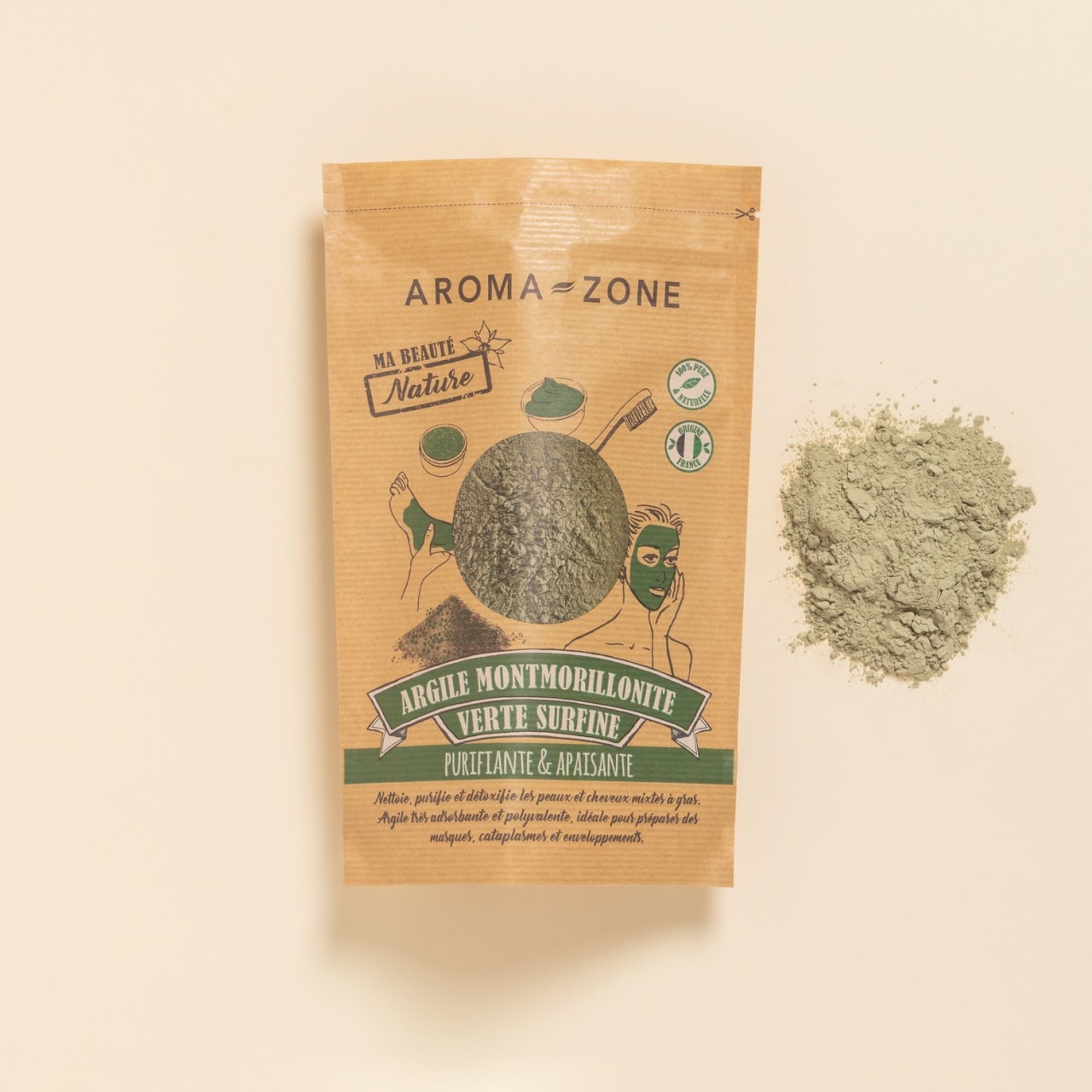
£5.50
500 g
£6.50
500 g
£4.00
250 g
£4.00
250 g
£2.00
15 g
£5.50
500 g


