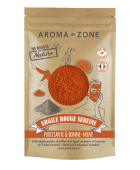
Superfine Red Clay
Purifying
£4.00
1 article = 250 g
Price per kg = £16.00
free delivery up to £40 in United Kingdom
100% secure payment CB, Visa, Mastercard, Paypal, Apple Pay, Google Pay
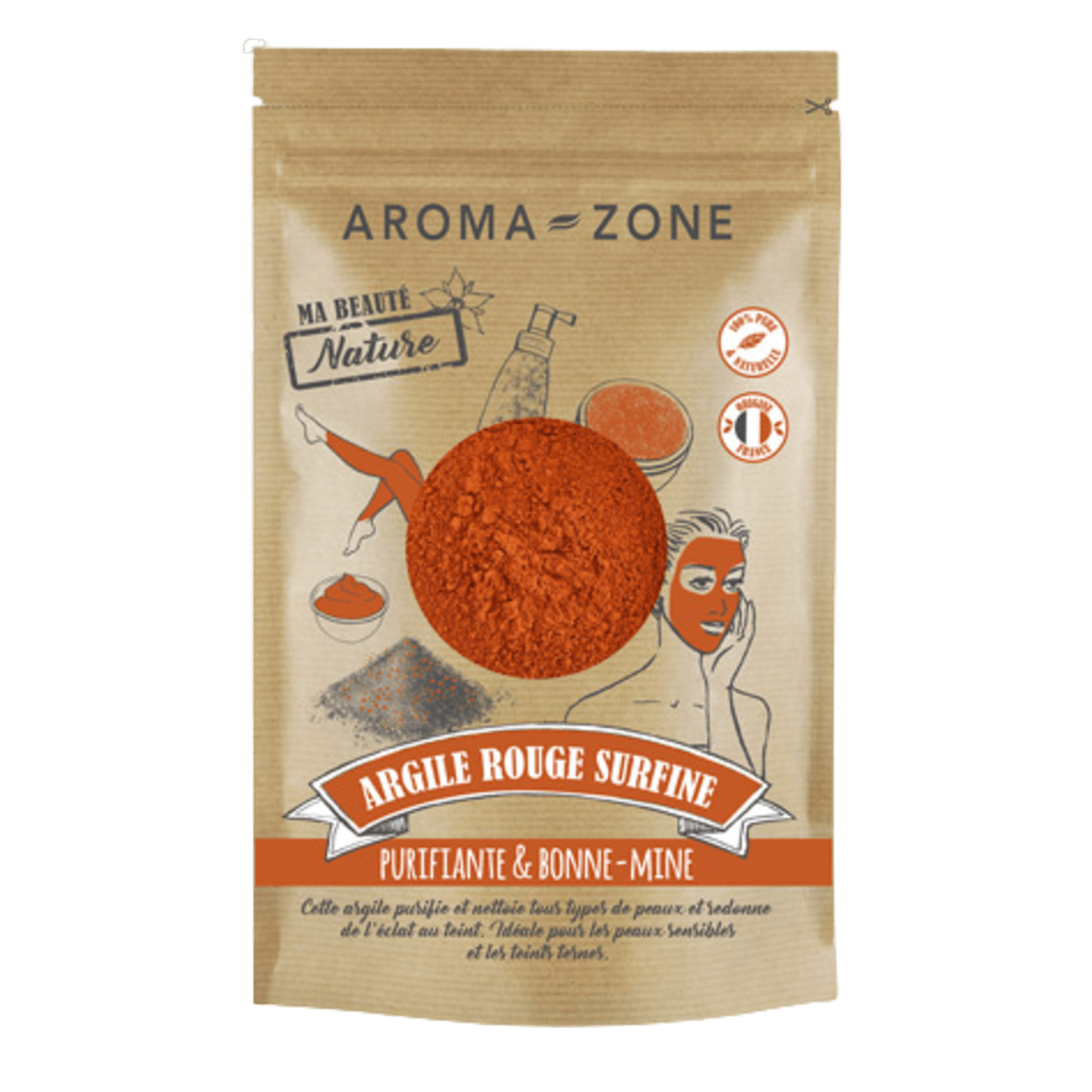

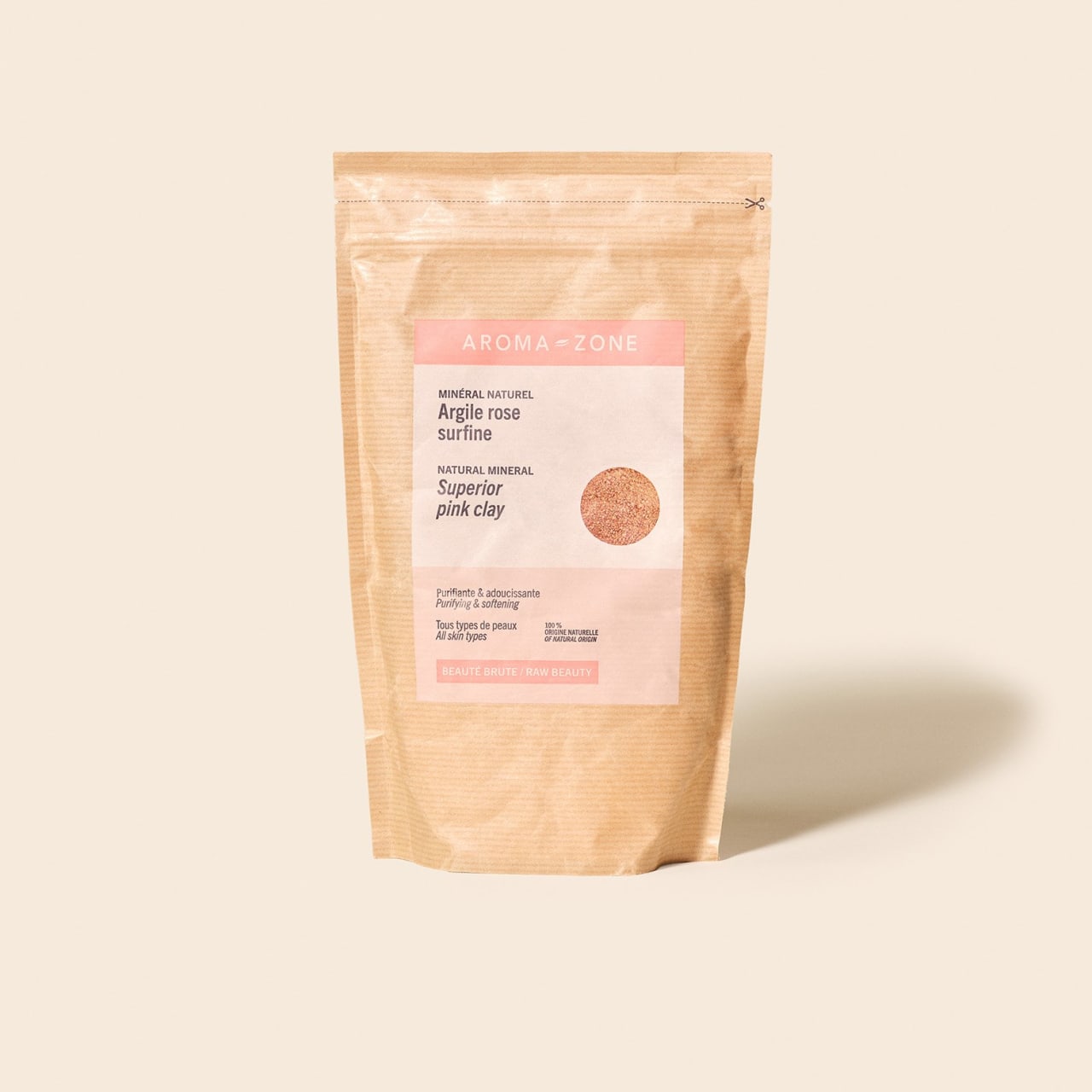
Superfine Red Clay
250 g

100% Origin: Natural

From France
Properties
Superfine red clay is recognised for its properties as a cosmetic ingredient:
Cleansing and purifying
Adsorbent and detoxifying
Absorbent and mattifying
Stimulating and toning, with a radiance-boosting effect
Indications
Sensitive and delicate skin
Skin prone to redness
Reactive skin
Properties
As a hair improvement ingredient, superfine red clay is renowned for its properties:
Cleansing: Known for absorbing excess sebum and impurities
Revitalising
Indications
Brown and red hair
Properties
Superfine red clay is renowned for its properties in make-up:
Colouring, giving a very natural 'earthy' red
Matte finish
Uses
Red clay can be used as an ingredient in your skincare products:
Masks, poultices and wraps
Shower gels and soaps
Creams, gels and lotions
Uses
Use red clay as an ingredient in your hair preparations:
Shampoo
Hair masks
Uses
Use red clay as an ingredient in your make-up preparations:
Loose foundation powders
Foundation
Blush
Blushes and eyeshadows
General characteristics
Quantity
1 to 60% of the total weight of your blend
Water-insoluble
Can be used as a paste or dispersion
oil-insoluble
Uses in home cosmetics
Cream and lotions, shampoo, shower, soap, gel, mask, powder, wrap, poultice, hair mask, pressed compact powder
1 scoop 5 ml (level*) | 4.4 g |
1 scoop 2 ml (level*) | 2 g |
* level: a spoon filled to the brim, where the excess has been removed by passing a spatula or the back of a knife over it.
5% red clay | 0.5 g |
10% red clay | 1.0 g |
20% red clay | 2.0 g |
5% red clay | 1.5 g |
10% red clay | 3.0 g |
20% red clay | 6.0 g |
5% red clay | 2.5 g |
10% red clay | 5.0 g |
20% red clay | 10.0 g |
5% red clay | 5.0 g |
10% red clay | 10.0 g |
20% red clay | 20.0 g |
Preparation
Precautions
Precautions and allergens
Precautions for use
Allergens
Allergen-free
I make my recipe from scratch
Superfine red clay can be used as an ingredient in your blends.
Incorporate red clay as an active ingredient in your water-based preparations: creams, lotions, gels, soaps, etc.
Step 1
Incorporate red clay, ideally pre-dispersed in a bit of cold water, at the end of the preparation.
Step 2
Shake to mix well.
Aroma-Zone Tip
For better dispersion of the clay in your emulsions or gels, pre-disperse it in a little water before adding it.
To make a mask, wrap or poultice
Red clay can be mixed with other clays or plant powders to make masks, poultices or body wraps.
Step 1
Pour the montmorillonite clay with the other powders (other clays, plants, etc.) into a suitable container.
Step 2
Add water or hydrosol and mix to obtain a smooth, creamy paste.
Apply your mask in 3 steps
Immediately apply the mixture in a thick layer on the skin (face, neck, body) or hair, etc.
Leave on until the mask begins to dry. It is recommended to not let the mixture dry completely.
Rinse thoroughly with water to remove the mask.
Aroma-Zone tip
Clay pastes do not keep and should be used quickly after preparation (maximum storage of 48 hours in the refrigerator).
If you wish to incorporate essential oils into a clay paste, we recommend adding a small amount of oil or Solubol to solubilise them.
For better results, do not heat the clay and avoid contact with oxidisable metal. You can use stainless steel or plastic equipment. For mixing, use a plastic spatula.
I use it in a make-up product containing mineral powders.
To prepare a loose or compact powder:
Mix the red clay with the mineral powders and pigments, ideally by grinding in a mortar or coffee grinder for good pigment dispersion.
To make a cream foundation:
Step 1
Mix the red clay with the mineral powders and pigments, ideally by grinding in a mortar or coffee grinder for good pigment dispersion.
Step 2
Add this powdery mixture to your melted oil phase.
Aroma-Zone tip
For better dispersion of the clay in your emulsions or gels, pre-disperse it in a little water before adding it.
Production process
Red illite clay is extracted from natural quarries and undergoes a mechanical treatment without any chemical processes. It is crushed and dried, and the grains of powder are then sorted using a sophisticated and innovative vacuum selection process.
Function
Cosmetic ingredient for formulating masks, poultices, powders and soaps…
Benefits and properties
Detox
Make-up
Purifying
Quality
100% natural origin, non-irradiated.
Country of origin
France
INCI name
Illite, kaolinite
Composition
Hydrated aluminium silicate
Presentation
Packaged in zipped bags
Learn more
Red clay is a natural mineral from the phylosillicate family (like talc and micas). It is made up of hydrated aluminium silicate, and is rich in iron and potassium, which have anti-fatigue properties. Its lamellar structure (in layers) gives it excellent absorbent properties.
>> Focus on absorption and adsorption: Clays can absorb liquids such as water, filling up like a sponge.
Clays can also adsorb, meaning that they bind molecules to their surface. This ability to bind molecules comes from the fact that clays are negatively charged. The negative charge is explained by the presence of minerals**(the higher the concentration of mineral salts in the clay, the more negatively charged it will be**).
When the clay is in solution, it will attract the opposing positive ions from that solution and exchange them once in contact with the skin. Clay therefore helps to remineralise and detoxify the skin by exchanging its mineral salts with the toxins and impurities in the skin. This phenomenon allows the clay to carry active ingredients and return them to the skin.
Red clay can be used as an ingredient in your blends. It is suitable for all skin types for a healthy glow. Red clay has been used throughout the ages, particularly in pottery, but also in cosmetics. In Egypt, it was used in balms and masks to enhance the complexion, such as Cleopatra's Balm.
Organoleptic properties
Appearance: fine powder
Colour: red to orange-brown
Odour: neutral
Particle size
< 150 μm
Composition
High-purity ore: over 80% illite and kaolinite clay.
On average:
SiO2: 48.1
Al2O3: 26.4
Fe2O3: 9.0
K2O: 7.8
TiO2: 1.0
CaO: 1.3
MgO: 3.2
Na2O: 2.7
MnO: 0.1
P2O5: 0.1
Storage conditions
Store away from air, moisture and light. Close the sachet tightly after each use.
Precautions
Powdered product, do not use near a source of ventilation, do not inhale.
Keep out of reach of children.
As clay absorbs impurities and toxins, do not reuse clay that has already been used.
Environmental qualities and characteristics product sheet
Reference
0230801 - Superfine red clay 250 g
Main packaging material
Paper bag
Recyclability
Most packaging can be recycled
EO = Essential Oil
VO = Carrier Oil or Macerated Oil
Almond or hazelnut powder: 1 tablespoon
Red clay: 1 tablespoon
Rose water
Honey: 1 tablespoon
Essential oil of your choice according to skin type: 3 g
Directions: Mix all the ingredients well to form a paste. Use: Gently massage into the face, avoiding the eye contour, and neck. Leave on for 5 minutes.
25 ml (5 teaspoons) red clay
10 ml (2 teaspoons) plant-based glycerine
15 ml (3 teaspoons) lavender hydrosol
5 drops tea tree essential oil
5 drops lemon essential oil
5 drops grapefruit seed extract
Directions: Mix all the ingredients with a wooden or plastic spoon (no metal to preserve the properties of the clay).
Use: Apply once or twice a week, leave on for 15 to 20 minutes then rinse off with lukewarm water.
Roman chamomile hydrosol: 60 ml
Red clay: 4 tablespoons
Hazelnut carrier oil: 1 tablespoon
Roman chamomile essential oil: 6 drops
Grapefruit seed extract: 10 drops
Natural vitamin E: 4 drops
Directions: Mix the chamomile hydrosol with the red clay. Add the carrier oil, essential oil, grapefruit seed extract and vitamin E and mix well.
Use: Apply to the entire face and leave on for 10 minutes.
Red clay: 100 g
A sprig of rosemary
Spring water
Directions: Cut up the rosemary in a bowl. Add the clay and mix with the water to form a paste.
Use: Apply to the face, avoiding the eye contour, and neck. Leave on for 15 minutes. Rinse off with clear water.
Supplier documentation
L’argile, médecine ancestrale
Philippe Andrianne
Argiles thérapeutiques
Gaël Sitzia
The Healing Power of Clay: Repertory of Natural Medicine
Raymond Dextreit
'90 recettes de beauté bio à faire soi-même'
Sophie Macheteau and Vanina Guet
Secrets de beauté au naturel
Amélie Brochier
Frequently Asked Questions
Very smooth, really happy
I saw it everywhere on social media. I wanted to try it and I'm very satisfied!
Used on the face for 5 minutes to see results.
Very gentle and powerful earth
Love the texture!