
Superfine Green Illite Clay
Cleansing
Anti-blemishes
£5.50
1 article = 500 g
Price per kg = £11.00
free delivery up to £25 in United Kingdom
100% secure payment CB, Visa, Mastercard, Paypal, Apple Pay, Google Pay
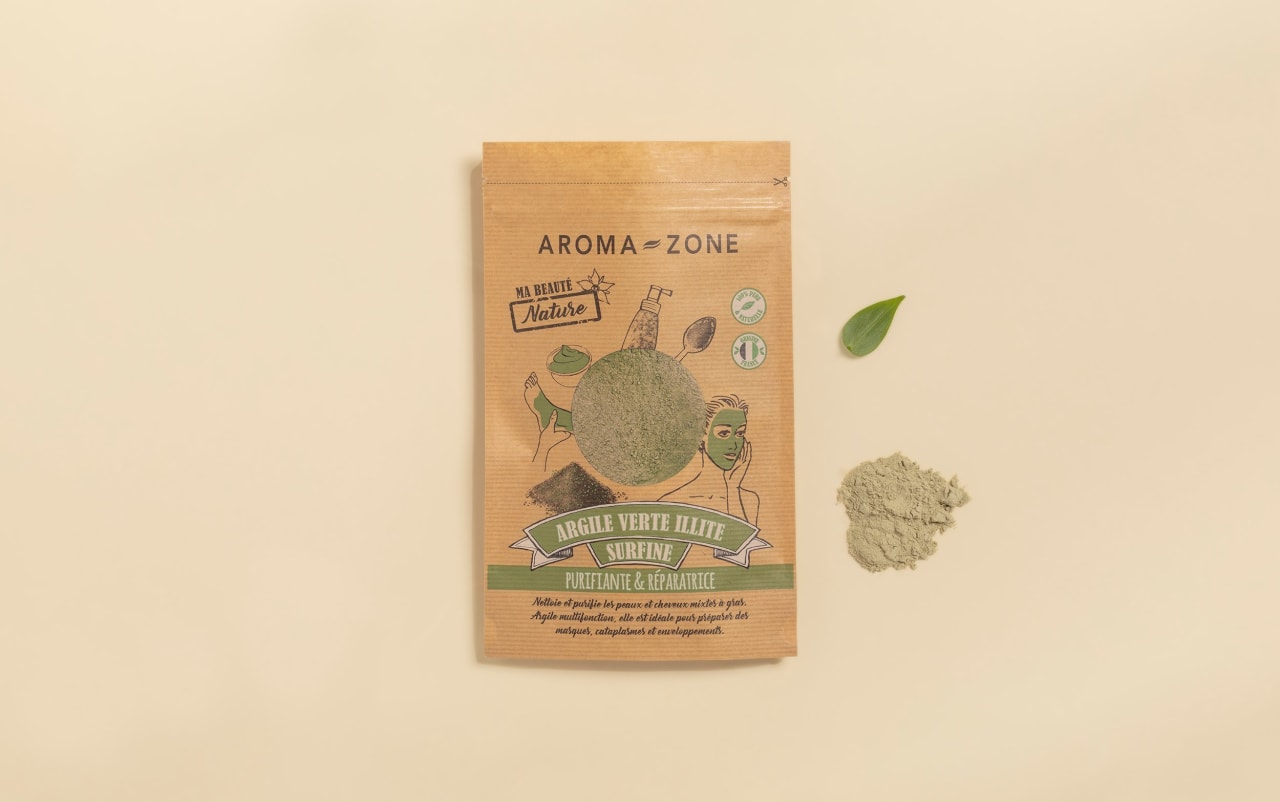
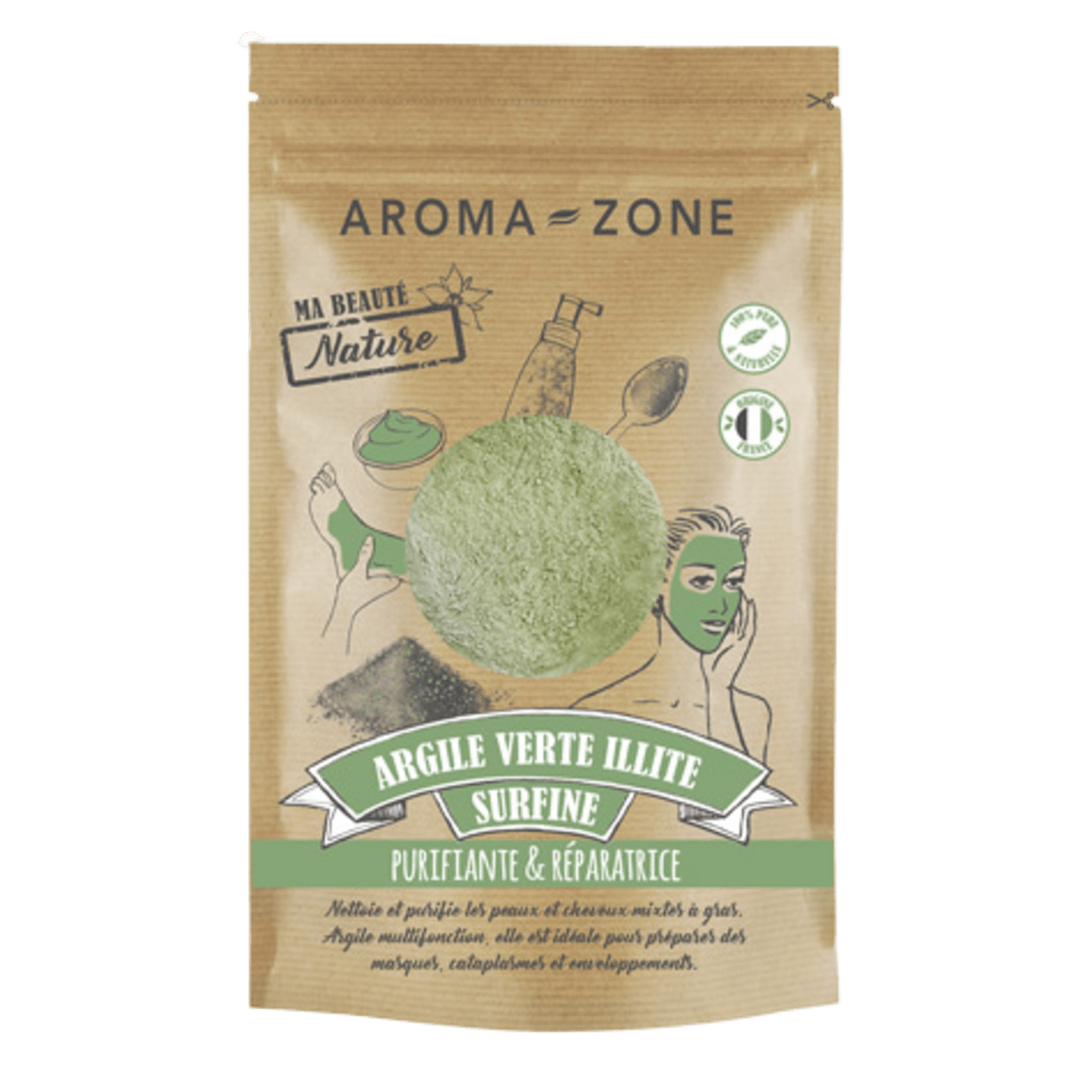

Superfine Green Illite Clay
500 g

100% natural origin

From France
Properties
As a cosmetic ingredient, superfine green illite clay is recognised for the following properties:
Highly absorbent, it eliminates excess sebum and impurities.
Detoxifying, it helps remineralise the skin.
Gently cleanses, purifies and detoxifies the epidermis.
Decongests
Indications
Normal to oily skin
Acne-prone skin
Helps reduce the appearance of dimpled skin
Properties
As a hair enchancer ingredient, superfine green illite clay is renowned for the following properties:
Cleansing: it is known to absorb excess sebum and combat greasy hair
Purifying: it balances the scalp
Absorbent and absorbent
Indications
Combination to oily hair
Properties
For household use, superfine green illite clay is recognised for the following properties:
Cleansing, absorbs grease
Mild abrasive
Uses
Superfine green illite clay can be used as an ingredient in the following skincare formulations:
masks, poultices and wraps
Shower gels and soaps
Creams, gels and lotions
Uses
Use superfine green illite clay as an ingredient in the following hair product mixes:
Purifying shampoos
Absorbent hair masks
Hair clarification
Uses
To remove greasy spots from hard-to-wash surfaces: wooden furniture, leather, carpets, stone, marble, etc.
To make your own "clay stone", a multi-purpose cleaner and scourer
Our green illite clay, with its very pure superfine quality, its French origin and its sustainable quarrying process, is one of these exceptional products. A clay from French quarries.
Our green illite clay comes from a natural quarry in the Auvergne region of France, and is of excellent quality, as the clay is pure.
This clay is mined in compliance with French environmental standards, and the quarry is subject to regular checks. The plant is managed with sustainable development in mind, and in 2008 was awarded the eco-efficiency prize by ADEME (Agence de l'Environnement et de la Maîtrise de l'Energie). A CO2 assessment carried out in 2011 estimated that 1kg of clay produced = 45g of CO2 produced, which is very low compared with imported clays that are often mixtures of different origins. The fact that our illite green clay comes from a single deposit guarantees better traceability and consistent, controlled batch quality. This green clay is non-irradiated and complies with Ecocert and Nature & Progrès standards. A very pure superfine clay
Illite green clay is ground to a fine, homogeneous particle size, perfectly suited to cosmetic use and very pleasant to apply. The quality of the clay is rigorously controlled, in particular its impurity content, its microbiological purity and the homogeneity of the powder.
On oily spots: cover the spot with clay and work the powder into the surface, leave overnight, then remove the clay by brushing or vacuuming. Repeat the operation if the spot is deeply ingrained.
General characteristics
Quantity
1 to 60% of the total weight of your blend
oil-insoluble
Water-insoluble
Can be used as a paste or dispersion
Use in home cosmetics
Cream and lotions, shampoo, shower gel, soap, gel, mask, powder, wrap, poultice, hair mask, toothpaste.
Further information
1 scoop 5 ml (level*) | 5 g |
1 scoop 2 ml (level*) | 2.3 g |
* level: a spoon filled to the brim, where the excess has been removed by passing a spatula or the back of a knife over it.
Preparation
Precautions
Precautions and allergens
Precautions for use
Allergens
Allergen-free
Make a recipe from A to Z
Green illite clay can be used as an ingredient in your recipes.
Incorporate green clay as an active ingredient in your formulas containing water e.g. creams, milks, lotions, gels, soaps.
Step 1
Add the green clay, ideally pre-dispersed in a little cold water, at the final stage.
Step 2
Shake to mix well.
Aroma-Zone Tip
For better dispersion of the clay in your emulsions or gels, pre-disperse it in a little water before adding it.
To make a mask, a wrap, or a poultice
Green clay can be used in a blend with other clays or plant powders to make masks, poultices or body wraps.
Step 1
Pour the green clay with the other powders (other clays and plants) into a suitable container.
Step 2
Add water or hydrosol and mix to obtain a smooth, creamy paste.
Aroma-Zone Tip
Clay pastes do not keep and should be used quickly after preparation (48 hours storage maximum in the refrigerator).
If you wish to incorporate essential oils into a clay paste, we recommend adding a small amount of oil or Solubol to solubilise them.
For better results, do not heat the clay and avoid contact with metal that oxidises. You can use stainless steel or plastic equipment. For mixing, use a plastic spatula.
Apply your mask in 3 steps
Immediately apply the mixture in a thick layer on the skin (face, neck, body) or hair, etc.
Leave on until the mask begins to dry. It is recommended to not let the mixture dry completely.
Rinse thoroughly with water to remove the mask.
Quality
100% natural origin, unwashed to retain all its mineral content, non-ionised.
Production process
Extracted from a natural quarry, crushed and finely ground. Green illite clay is dried in a kiln at over 350°C for 20 minutes. This process produces a clay with a very low microbiological load.
Function
Cosmetic ingredient for formulating masks, poultices, powders and soaps…
Benefits and properties
Detox
Purifying
Sebum regulator
Country of origin
France (Velay)
INCI name
Illite (majority), kaolin, montmorillonite.
Composition
Hydrated aluminium silicate
Presentation
Packaged in zipped bags
Learn more
Green clay is a natural mineral from the phylosillicate family (like talc and micas). It is made up of hydrated aluminium silicate and is rich in iron oxide, which gives it its well-known green colour. Its lamellar (leaf-like) structure gives it very good absorbent properties.
Focus on absorption and adsorption:
Clays can absorb liquids such as water, filling up a bit like a sponge.
They also have the ability to adsorb, i.e. to bind molecules to their surface. This ability to bind molecules comes from the fact that clays are negatively charged due to the presence of minerals. The higher the concentration of mineral salts in the clay, the more negatively charged it will be.
When clay is in solution, it will attract the opposite positive ions in the solution and exchange them once in contact with the skin. Clay will therefore help to remineralise and detoxify the skin, by exchanging its mineral salts with the toxins and impurities in the skin. This phenomenon allows the clay to carry active ingredients and return them to the skin. It's a real miracle ingredient to be incorporated into homemade skin care products.
Green clay can be used as an ingredient in face and hair masks and other homemade cosmetics. Low in minerals but highly absorbent, it is best used in product mixes for combination to oily skin and acne-prone skin. Green clay is the most widely used clay. It is used in industry for its ability to eliminate waste and pump out impurities, as well as in the manufacture of pottery and bricks. It is the most popular clay for skin care.
Organoleptic properties
Appearance: fine powder
Colour: bright green
Odour: neutral
Cationic exchange capacity
Approximately 22 meq/100 g
Composition
Average:
Si2O: 42.6
Al2O3: 25.5
Fe2O3: 8.5
Na2O: 3.0
K2O: 7.1
CaO: 8.2
MgO: 3.5
Ti2O: 0.8
P2O5: 0.2
MnO: 0.1
Storage
Store away from air, moisture and light. Close the sachet tightly after each use.
Precautions
Powdery product, do not use near a source of ventilation, do not inhale.
Keep out of reach of children.
As clay absorbs impurities and toxins, do not reuse clay that has already been used.
For best results, avoid contact between the clay and oxidizable metal. Use wooden or stainless steel utensils instead.
Environmental qualities and characteristics product sheet
Reference
0461001 - Superfine green illite clay 500 g
Main packaging material
Paper bag
Recyclability
Most packaging can be recycled

EO = Essential Oil
VO = Carrier Oil or Macerated Oil
Matricaria recutita essential oil (German chamomile): 0.5 ml
Lavandula latifolia spica essential oil (spike lavender): 1 ml
Eucalyptus citriodora (lemon eucalyptus): 1 ml
Mentha x piperita essential oil (Peppermint): 1 ml
Talc or green clay: 100g in a powder bottle
Directions: Mix all the ingredients together in a container.
Directions for use: 2 or 3 local applications a day until a full improvement is seen.
Clay: 2 tablespoons
Coarse sea salt: 3 tablespoons
How to use: mix the ingredients together and add to the bath water to relieve swollen feet and legs.
Blue Tansy essential oil: 1 ml
Peppermint essential oil: 2 ml
Spike Lavender essential oil: 2 ml
Talc: 50 g
Green clay: 50 g
Directions: Mix all the ingredients in a container.
Use: Apply locally 3 to 4 times a day.
Coconut or olive carrier oils: 2 tablespoons
Castor carrier oil: 1 tablespoon
Neutral henna: 2 tablespoons
Cedar essential oil: 5 drops
Green clay: 2 tablespoons
Rosemary infusion
Directions: blend all ingredients and add infusion until desired consistency is achieved.
Use: apply to hair and leave on for up to 1 hour, then shampoo.
Hazelnut carrier oil: 1 tablespoon
Jojoba carrier oil: 1 teaspoon
Green clay: 1 tablespoon
Lemon essential oil: 2 drops
Wild chamomile essential oil: 2 drops
Directions: Mix the ingredients.
Use: Cleanse the skin with a lotion, then dry thoroughly. Apply the mask and leave on for 10 to 20 minutes (remove immediately if tingling occurs). Rinse off with lukewarm water. Spray the skin with floral water, then apply your day or night cream.
Green clay: 2 tablespoons
Rosewood essential oil: 10 drops
1 glass of hot water
Directions: mix the clay and essential oil, then dilute with the warm water.
Use: massage into scalp and hair and leave on for 10 minutes. Rinse with clean water.
This recipe is useful for restoring balance to combination skin with an oily tendency. Neem powder purifies, cleanses and tightens pores. Like jojoba carrier oil, it helps regulate excess sebum. Green clay is absorbent, cleansing and purifying.
Green clay: 1 tbsp.
Neem powder: 1 tsp.
Jojoba carrier oil: 2 tbsp.
Water: approx. 3 tbsp.
Directions: In a bowl, mix all the ingredients until you obtain a smooth, evenly mixed paste. Use: Apply this mask all over your face. Leave on for 10 minutes before rinsing.
The skin will quickly become purified and look smoother, and oily areas will be mattified. Repeat once a week.
Pregnant or breastfeeding women, or children under the age of 3 should not use neem powder. It can be replaced by green clay.
Helichrysum essential oil: 1 ml
Mastic Tree essential oil: 0.5 ml
Atlas Cedar essential oil: 0.5 ml
Blue Tansy essential oil: 0.5 ml
Peppermint essential oil: 2 ml
Talc: 50 g
Green clay: 50 g
Directions: Mix all the ingredients in a container.
Helichrysum italicum essential oil: 3 ml
Cupressus sempervirens (cypress) essential oil: 2 ml
Cistus ladaniferus CT pinene (gum rockrose) essential oil: 3 ml
Pistacia lentiscus (mastic tree) essential oil: 3 ml
Laurus nobilis (bay laurel) essential oil: 3 ml
Commiphora molmol (myrrh) essential oil: 5 ml
Tanacetum annuum (blue tansy) essential oil: 2 ml
Lavandula spica (spike lavender) essential oil: 10 ml
Argan carrier oil: 50 ml
Evening primrose carrier oil: 50 ml
Thyme or chestnut honey: 100 g
Green clay: 570 g
Wheatgerm carrier oil: between 180 and 250 ml to obtain a paste of the ideal consistency
Use: 1 topical application morning and evening, cover with an occlusive dressing
Before each new application, cleanse to remove any remnants of the previous application. Keep the mixture in a cool place (fridge door)
.
Supplier documentation
'L’argile médecine ancestrale' by Philippe Andrianne
'Argiles thérapeutiques' by Gaël Sitzia
'L’argile qui guérit : Mémento de médecine naturelle' by Raymond Dextreit
Clay and non-clay minerals in the pharmaceutical and cosmetic industries, Part II. Active ingredients
Isabel Carretero, Manuel Pozo,
'Votre beauté au naturel' by Chantal Clergeaud
'Aromatherapy: Healing with Essential Oils' by Dominique Baudoux
'Huiles essentielles - 2000 ans de découvertes aromathérapeutiques pour une médecine d'avenir' by Dominique Baudoux
Aroma-News newsletters from the NARD association
'Aromatherapy: Healing with Essential Oils' by Dominique Baudoux
Les cahiers pratiques de l'aromathérapie selon l'école française - Dermatologie" by Dominique Baudoux and Dr Abdesselam Zhiri
"Chemotyped essential oils and their synergies" by Dominique Baudoux and Dr Abdesselam Zhiri
Frequently Asked Questions
Essential Oils
1 ml = approximately 35 drops (with our Aroma-Zone dropper caps)
Carrier Oils
1 pump (Aroma-Zone aluminium pump) = approx. 0.15 ml
Mass / Volume conversion (for a liquid)
Mass (g) = Density x Volume (ml) at 20°C
Further information
1 full teaspoon = between 3 and 4.5 ml
1 full tablespoon = between 7.5 and 10 ml
However, these spoon ratios depend on a number of factors (e.g. viscosity of the liquid, temperature, depth and size of the spoon, rheological behaviour of the liquid), and we strongly advise you to use precise measuring equipment, such as graduated test tubes, graduated pipettes, and precision scales.
Loading...
Leaves the skin feeling soft and hydrated!
Used to purify my hair before a honey-brown henna coloring, it did the job, the henna colored my white hair well. I recommend!
Perfect, nothing to say
Nothing to be precise
Very good
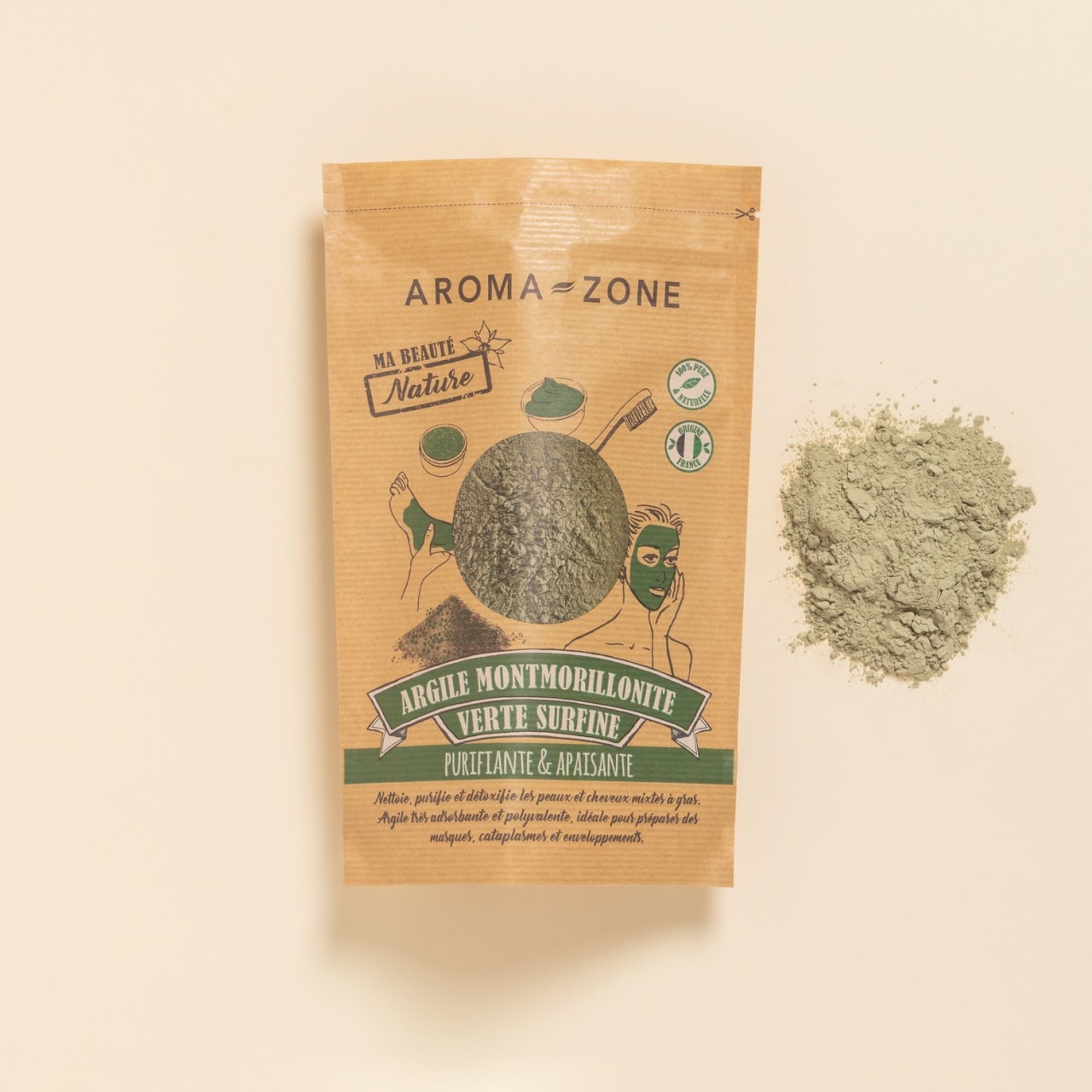
Associated products
£5.50
500 g
£6.50
500 g
£4.00
250 g
£4.00
250 g
£4.00
250 g
£4.00
250 g
£2.00
15 g


