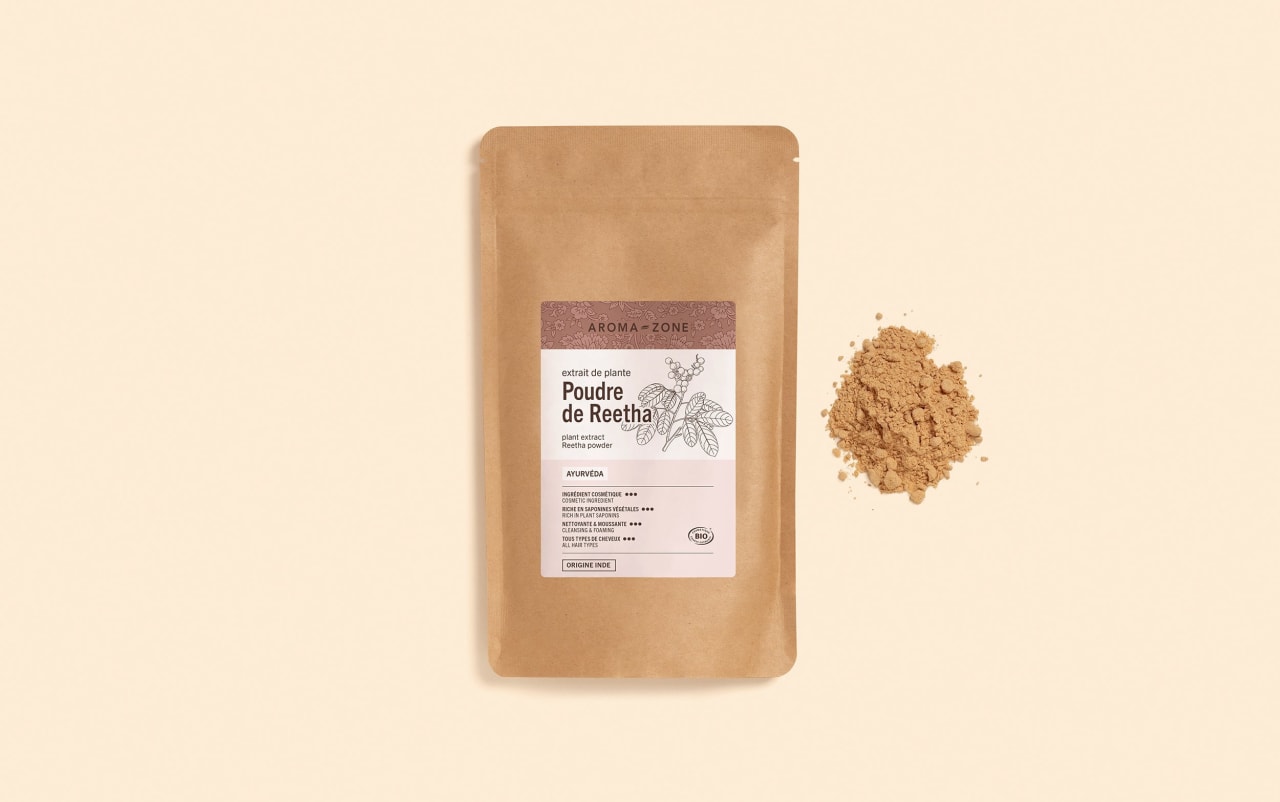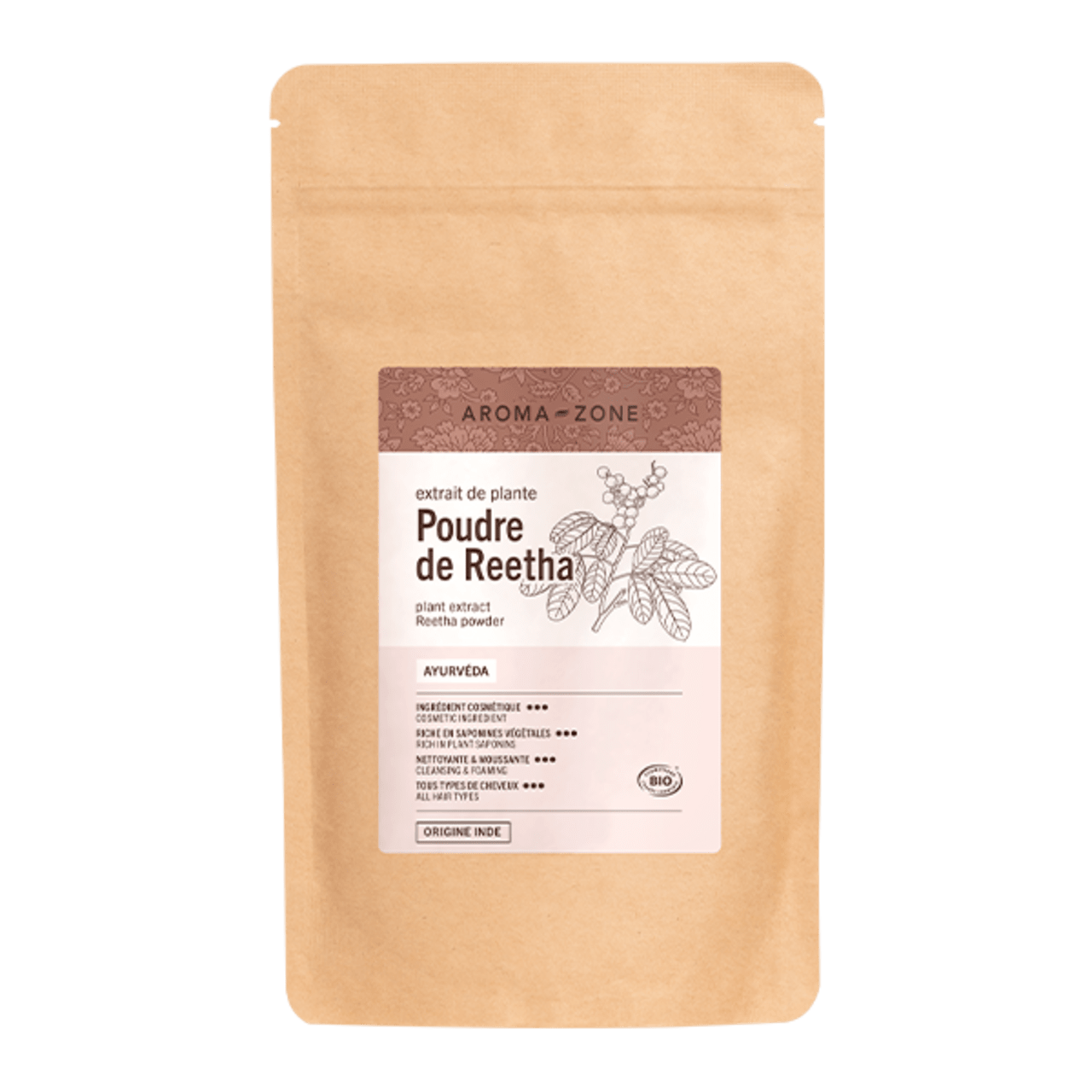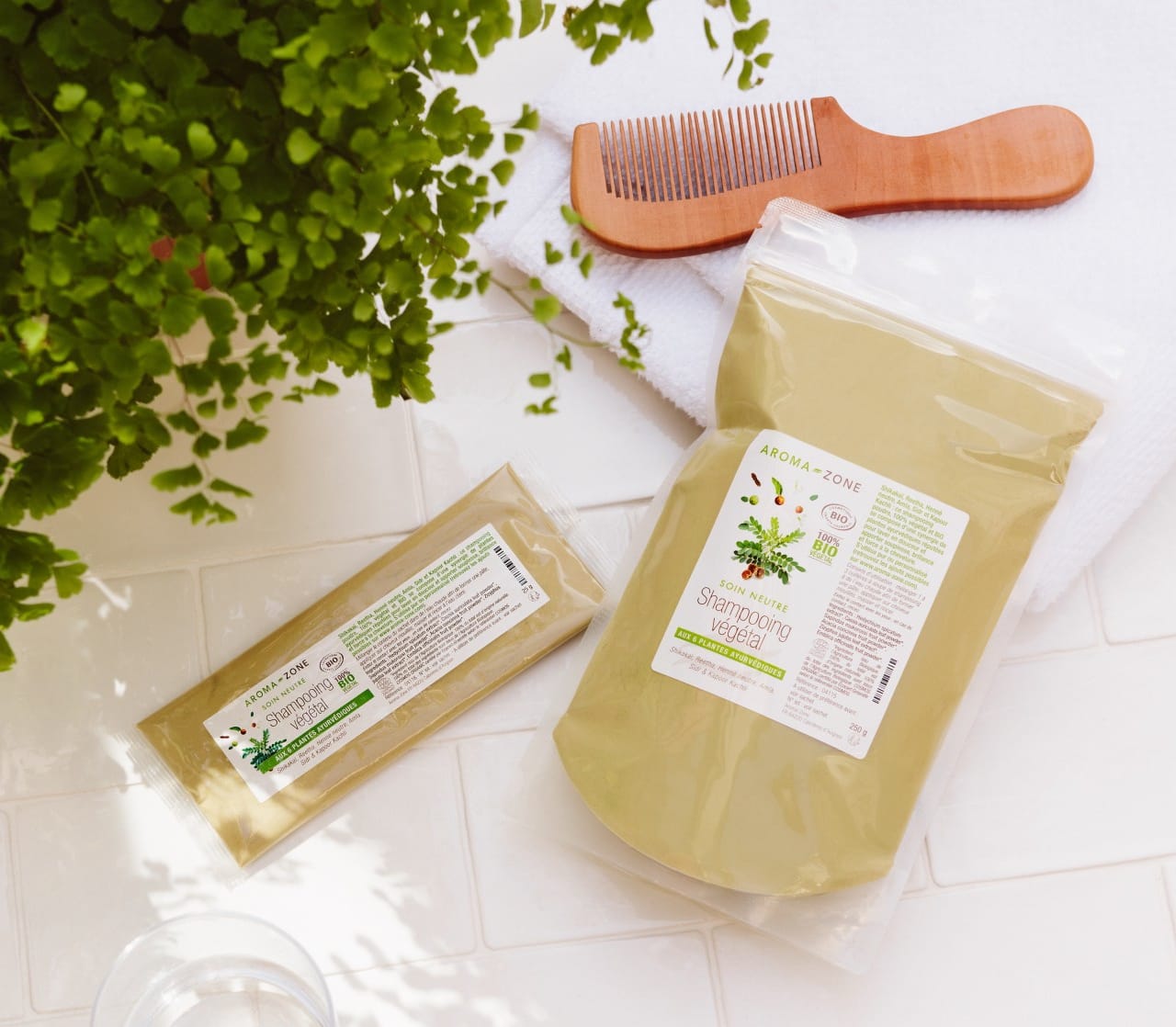
Organic Reetha Powder

  • 100% pure and natural
  • Ecocert - COSMOS ORGANIC
  • Organic cosmetic
Reetha Powder, rich in plant saponins, naturally cleanses and beautifies the hair while purifying the scalp and soothing dandruff. Used for centuries in Ayurveda, the traditional Indian system of natural health focused on balance and well-being, Reetha is a key ingredient in natural, chemical-free “no-shampoo” routines. This gentle powder can also be incorporated into formulations for oily or blemish-prone skin, allowing you to benefit from this age-old Ayurvedic tradition for healthy, radiant hair and skin.
£4.50

1 item = 250 g

Price per kg = £18

Features

Properties and uses

In practice

Quality

Storage and precautions

Find out more

Features

Our commitments

Culture

  • 100% of the total ingredients come from organic farming.

  • COSMOS ORGANIC certified by Ecocert Greenlife according to the COSMOS standard available at https://www.ecocert.com/en-US

Quality

100% pure and natural, cosmetic quality, non-irradiated powder

Production process

Sapindus mukorossi fruit peel (after the seeds have been removed) dried, then ground to a powder

Part of the plant used

Fruit peel

Botanical name

Sapindus mukorossi

Botanical family

Sapindaceae

Country of origin

India

Other names

Ritha, aritha, soapnut, soapnut

INCI name

Sapindus mukorossi powder

Presentation

Powder packaged in a zipped and sealed doypack

Main active ingredients

Plant saponins

Properties and uses

Skin care

Hair care

Household use

Find out more

Properties

As a cosmetic ingredient, organic ayurvedic reetha powder is renowned for the following properties:

  • High in plant saponins, natural 'surfactants' that dissolve oil and dirt: cleanses and purifies the skin.

  • Foaming effects

  • Purifying, purifies the skin

  • High in antioxidant compounds

  • Soothing

Indications

Cleansing for all skin types, especially:

  • Combination, oily and acne-prone skin

  • Skin sensitive to surfactants

  • Mature skin

Synergies

  • For combination, oily, blemished skin: green clays, nettle, horsetail, neem, manjistha, nagarmotha powders, burdock extract

  • For sensitive skin: Colloidal oatmeal, marshmallow, and fenugreek powders, burdock extract powder, camelina and cranberry carrier oils, calendula macerated oil, pomegranate CO2 extract

  • To add an exfoliating effect, for radiant skin: Rosehip powder, olive kernel powder, strawberry seeds, grated coconut, almond powder

  • For a healthy glow: Turmeric powder, manjistha

In practice

To release the saponins in the reetha powder and achieve effective cleansing, it is important to use very hot water. Plant-based pastes should be made using boiling water (which should be left to cool before application).

Reetha powder can be used in a variety of ways:

  • In a mixture with other natural powders ^ to make lightly foaming cleansing powders, to rub into the skin.

  • In a paste with water to make an 'instant' cleansing paste (cannot be preserved), mixed with other natural powders.

  • As an infusion or decoction, incorporated into the aqueous phase of your cosmetic formulas, ideal for making:

    • A cleansing lotion

    • A cleansing gel

In practice

General characteristics

Water-insoluble

Can be used as a paste or infusion

oil-insoluble

Use in home cosmetics

Mask, poultice, hair mask, shampoo in infusion or decoction form, lotion in infusion or decoction form, powder

Table of equivalents

Compare the capacity of the utensils we use

Recipe for reetha infusion

Hair and skin care recipe


Reetha powder can be used in several different ways:

  • As a powder, mixed with other natural powders to make cleansing powders.

  • As a paste, mask or poultice : mix with other natural powders, then with very hot water to release the saponins and obtain the desired consistency. This paste can be more or less fluid, depending on the desired application.

  • Infusion (or decoction) : can be incorporated as an aqueous phase in your hair or skin blends.

Choose a quantity appropriate to the quantity needed in your formula, adding a small margin to compensate for losses due to filtration.

How it works

1

Bring the required amount of water to the boil.

2

Weigh the quantity of powder using scales.

3

Add the boiling water to the reetha powder.

4

Leave to infuse for 10-15 minutes. To make a decoction, return the mixture to the heat and boil gently for 10-15 minutes.

5

Filter through a coffee filter or suitable clean cloth. Fenugreek is rich in mucilage, so filtration may take some time.

6

Collect the filtrate and leave to cool.

How to use:

This solution can be incorporated as an aqueous phase in your hair care or skin care products.

This preservative-free extract is highly sensitive to microbial contamination. Be sure to use it quickly and keep it refrigerated. If you wish to keep it for longer, you will need to add a preservative such as Cosgard: 20 drops per 100 ml of macerate or approximately 4.8 ml per 1 litre of macerated oil.

Quality

Organoleptic properties

  • Appearance: fine powder

  • Colour: light beige

  • Odour: characteristic of soap nuts, tangy, sour

Storage and precautions

Storage

Protect from air, moisture and light. Close the doypack tightly after each use.

Precautions

  • Powdery and irritating product, do not use near a source of ventilation.

  • Avoid contact with eyes; if contact occurs, rinse thoroughly with clean water.

  • Keep out of reach of children.

  • This powder is very active, so we recommend you always test it in the crease of the elbow 24 hours before application.

  • Use it diluted in a "neutral" or softening powder (rice powder, oat powder, clays, etc.).

  • If you feel a tingling sensation or overheating, stop application immediately and rinse off with clean water.

  • Do not ingest.

Find out more

Ayurveda, or ayurvedic medicine, is a comprehensive sacred therapeutic science that has been used for over 5,000 years in India. It is also a philosophy and a way of life. In Sanskrit, "ayur" means "life" and "veda" means "science or knowledge" . Discovered by the rishis or great sages of the Himalayas through observation of nature and the five elements (water, earth, fire, air, space or ether), it is based on the concept of the three doshas**(vâta, pitta and kapha**), each made up of two elements. .

Warning

The properties, information and methods of use below are quotes from reference books or websites on aromatherapy, hydrolatherapy and phytotherapy. This general information is provided for informative purposes only and in no way constitutes medical guidance. Under no circumstances can this information be used as a substitute for a medical diagnosis, consultation or follow-up, nor can it incur our liability. We recommend that you consult the guide to essential oils before using them, so that you are aware of any precautions that need to be taken. If in doubt, consult a doctor before using essential oils.

Responsible Person

  • EU responsible person: Aroma-Zone FR-84220 Cabrières d’Avignon

  • UK responsible person: Obelis UK Ltd, Sandford Gate, Oxford, OX4 6LB, UK

Equivalents

Essential Oils

1 ml = approximately 35 drops (with our Aroma-Zone dropper caps)

Carrier oils

1 pump (Aroma-Zone aluminium pump) = approx. 0.15 ml

Mass / Volume conversion (for a liquid)

Mass (g) = Density x Volume (ml) at 20°C

Further information

1 full teaspoon = between 3 and 4.5 ml

1 full tablespoon = between 7.5 and 10 ml


However, these spoon ratios depend on a number of factors (e.g. viscosity of the liquid, temperature, depth and size of the spoon, rheological behaviour of the liquid), and we strongly advise you to use precise measuring equipment, such as graduated test tubes, graduated pipettes, and precision scales.

Bibliography

1

Supplier documents

2

Ibrahim M., Khan AA et al. Antimicrobial activity of Sapindus mukorossi and Rheum emodi extracts against H pylori: In vitro and in vivo studies. World J Gastroenterol 28 (2006) 7136-7142.

3

Chen C-Y et al. Tyrosinase inhibition, free radical scavenging, antimicroorganism and anticancer proliferation activities of Sapindus mukorossi extracts. Journal of the Taiwan Institute of Chemical Engineers 41 (2010) 129-135.

4

Huang H-C et al.Triterpenoid saponins from the fruits and galls of Sapindus mukorossi. Phytochemistry 69 (2008) 1609-1616.