How do you colour your hair naturally?

Dreaming of natural, intensely pigmented, organic and 100% plant-based hair colour? Would you like to cover up your grey hair in a single application and make your hair shiny?

After months of research and development, we've come up with an innovative new range of natural organic hair dyes, featuring 8 bright 100% plant-based colours obtained by combining henna and ayurvedic plants from India.

In an unprecedented feat of plant-based dye, these colours allow you to colour and cover grey hair in a single application, without the dreaded carrot effect of henna! What's more, they can also be used on hair that has been chemically coloured.

By The Aroma-Zone editorial team

Reading time: 0 min.

What is plant-based hair dye and how does it differ from chemical hair dye?

The fundamental distinction between plant-based and chemical hair dyes lies in the ingredients and process.

  • Plant-based dyes use natural plant-based powders, such as henna and indigo. These plants provide natural pigments that dye the hair. Plant-based hair colour generally contains no ammonia, hydrogen peroxide or other harsh chemicals. It is gentle on the hair and can even improve it by strengthening it and making it shiny.

  • Chemical colouring, on the other hand, uses aggressive chemicals such as ammonia and peroxide. These chemicals penetrate the hair cuticle, remove the natural pigments and then deposit new artificial pigments. Although chemical colourings offer a wider range of colours, they can damage the hair, leaving it dry, brittle and sensitive. What's more, frequent exposure to these chemicals can weaken hair over time.

Plant-based hair dye takes a gentler, more respectful approach to hair.


Vegan dye: what's in it?

Vegan hair dye means that no ingredients of animal origin are used in the product, either in its manufacture or in its application. Plant-based vegan dyes are formulated from plants, plant extracts and other natural ingredients, offering an alternative that respects animals and the environment.

How does plant-based hair dye work?

Plant-based hair dye is a natural hair dyeing process based on pigments extracted from plants. These pigments, such as henna, indigo and other herbs, are ground into a fine powder. When mixed with hot water, they release natural colourants to create a paste that is applied to the hair. These dyes penetrate the hair cuticle and attach themselves to the keratin, the protein that makes up the hair. After the application time, the hair should be carefully rinsed with warm water. It's important to remember that the plant-based dye continues to develop after rinsing. The natural pigments oxidise on contact with air and stabilise, which means that the colour may deepen slightly in the days following colouring.

Unlike chemical dyes, plant-based dyes do not chemically alter the structure of the hair, but dye it in a gradual, less forceful way. The colour obtained depends on the hair's natural shade, the blend of plants used and the application time. What's more, plant-based dyes offer a semi-permanent result that gradually fades with each wash, avoiding visible roots.


Are there hairdressers who use plant-based dye?

Finding a hairdresser who specialises in plant-based dye can sometimes be a challenge, but more and more salons are offering this option. It's a good idea to check with salons in your area or visit online platforms specialising in plant-based dye to find a qualified and experienced professional.

Choosing the right plant-based hair dye to suit your needs

First of all, it's important to know that plant-based hair colours do not lighten hair. We advise you to always choose a shade darker than your original colour or, if you want a tone-on-tone effect to enhance and bring out the best in your colour or to cover up your grey hair, choose a plant-based colour identical to your natural colour.

Which henna should you choose for your hair colour?


Current hair colour

Making your own plant-based hair dye: the steps

Step 1: choose your dosage

  • For roots: 50 g or 1/4 of a 250 g sachet

  • For short hair: 1 x 100g sachet or 1/3 of a 250 g pack

  • For medium-length hair: 2-3 x 50 g sachets or 1/2 of a 250 g pack

  • For long hair: 4-5 x 50g sachets or 1 whole 250 g pack


Step 2: make your own henna paste

  1. Depending on the length of your hair, pour the required number of sachets into a bowl.

  2. Gradually pour lukewarm (35-40°C) tap water over the powder, mixing until you obtain a smooth, consistent paste.

  3. Apply the paste to your hair immediately, following the advice below.


Step 3: how do I apply the paste?

  1. Comb through clean, dry hair and divide into 2 sections, securing the top of the hair. You can use a piping bag, bottle, brush or your (gloved) fingers.

  2. Apply the paste strand by strand, starting at the back of the head. Work it all the way through to the scalp. You can use a piping bag, an applicator bottle, a brush or your (gloved) fingers.

  3. Continue with the top of the head, applying thick layers strand by strand.

  4. Massage to ensure all the hair is well covered and pull the hair together into a bun.

  5. Clean around your face and ears, then bundle all your hair into the shower cap. Leave on for 1.5 to 3 hours (1.5 hours for porous or chemically-coloured hair).

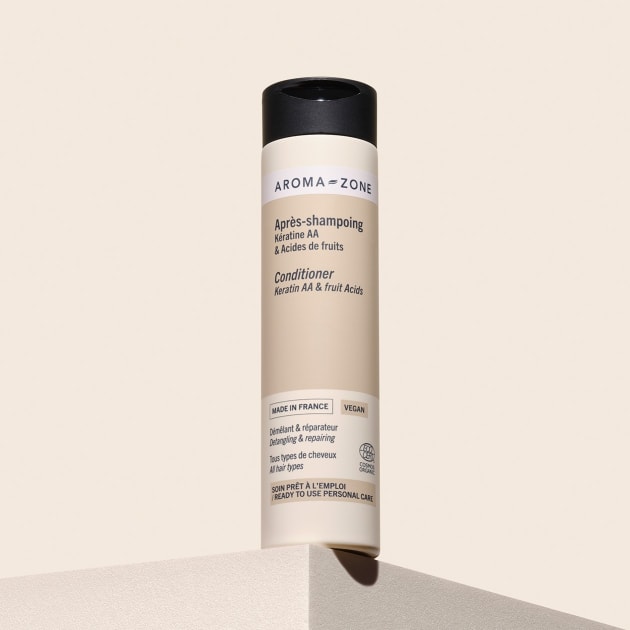
  6. Rinse thoroughly. If necessary, apply a detangling conditioner after colouring.


Our tips to make the most of your natural colouring

  • Do a trial on hair from your brush and wait 24 hours to see the final result.

  • To acidify your mixtures or your rinse lotion, you can use bottled lemon juice.

  • For very dry hair, the first wash after colouring can be done with conditioner (using the no-poo principle).

  • Lemon can be irritating to sensitive scalps, so a milder acid such as orange juice can be used instead.

  • To release as much lawsone as possible, cover the mixture with cling film and leave overnight at room temperature or for 2 hours at 35°C.

  • Between applications, you can dye just your roots.

  • Natural henna pastes (Egyptian henna, Rajasthani henna and Yemeni red henna) can be frozen.

  • To close the hair cuticles, use an acidic rinse or vinegar, which will bring shine and softness to your hair.

Our tips for making your own plant-based hair dye

  • Wear gloves.

  • Avoid using metal utensils to make the paste.

  • Protect your clothes (especially the shoulders) with an old t-shirt, for example.

  • Apply the henna paste to clean, dry hair.

  • Apply a thick layer of henna for deep, rich colour.

  • Do not wash your hair for 3-4 days after colouring.

  • If you wish to colour hair that has been chemically coloured, wait 1 month after applying the chemical colour before applying the plant-based dye.

  • After applying the paste, cover the hair in the hair wrap provided to keep in the heat and for added comfort. The henna paste should remain moist throughout the application.

  • The final colour will appear 3 to 4 days after the application of your colouring paste, as this is the time needed for the pigments to oxidise.

  • To limit colour bleeding (especially with indigo and katam), first shampoo with Sidr powder.

What are the Aroma-Zone organic plant-based dyes?

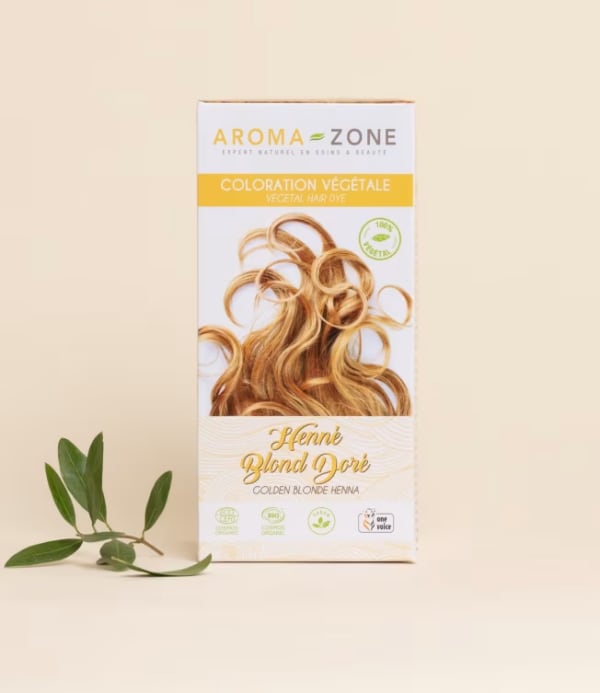
Golden blond henna

A complete 100% plant-based, organic colouring treatment that coats and strengthens hair while soothing the scalp. A combination of 8 plants, including chamomile, it makes light hair bright and shiny. It also covers grey hair, giving it a pretty honey-blonde colour.

Who is it for? Blonde to light brown hair. Covers grey hair.

Discover: golden blonde henna


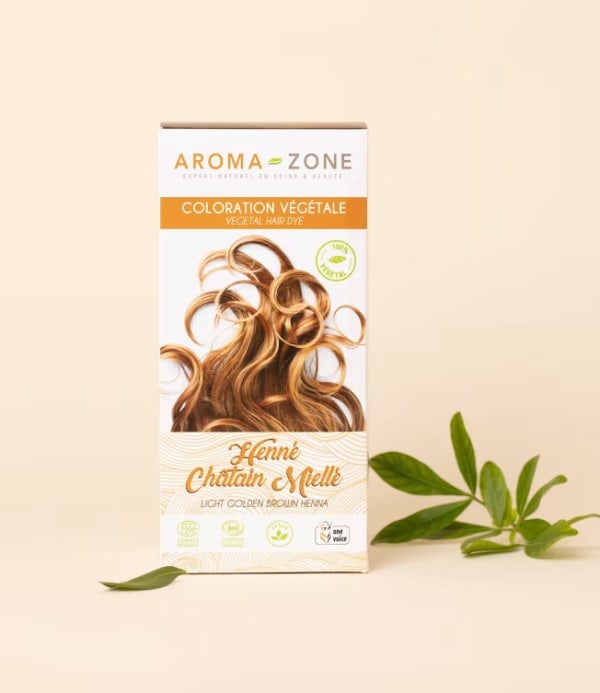
Honey chestnut henna

A combination of 9 plants with colouring and hair enhancing properties, this 100% plant-based, organic hair colour provides intense, natural colour, volume and shine. This colour-care product combines turmeric, chamomile and Rajasthani henna to give light hair lovely warm, bright, honeyed highlights.

Who's it for? Blonde to light brown hair. Covers grey hair.

Discover: honey chestnut henna

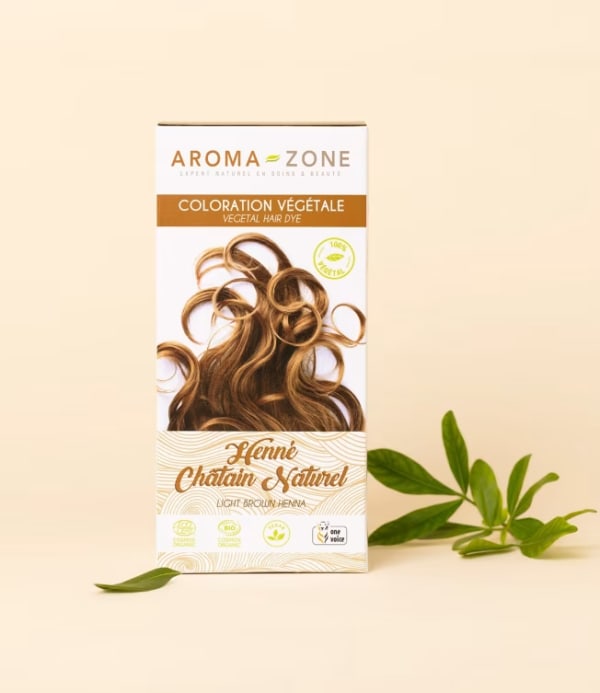
Natural chestnut henna

A complete 100% plant-based, organic treatment with a natural, radiant, full-coverage tint. A combination of eight plants with colouring and beneficial properties, it coats, smoothes and strengthens the hair. The combination of indigo and Rajasthani henna, with a dash of turmeric, produces a warm, radiant, natural colour with exceptional coverage.

Who's it for? Blonde to medium brown hair. Covers grey hair.

Discover: natural chestnut henna

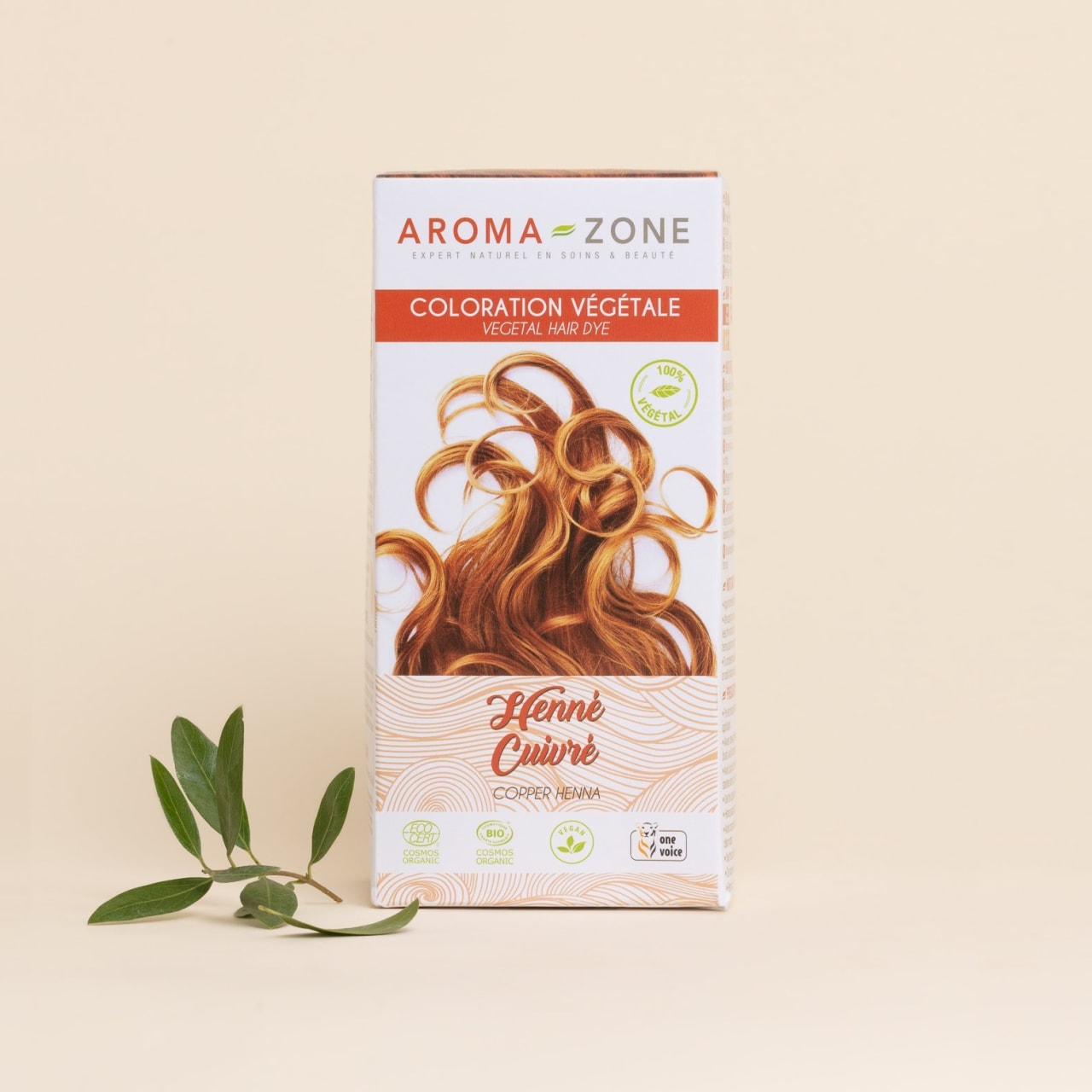
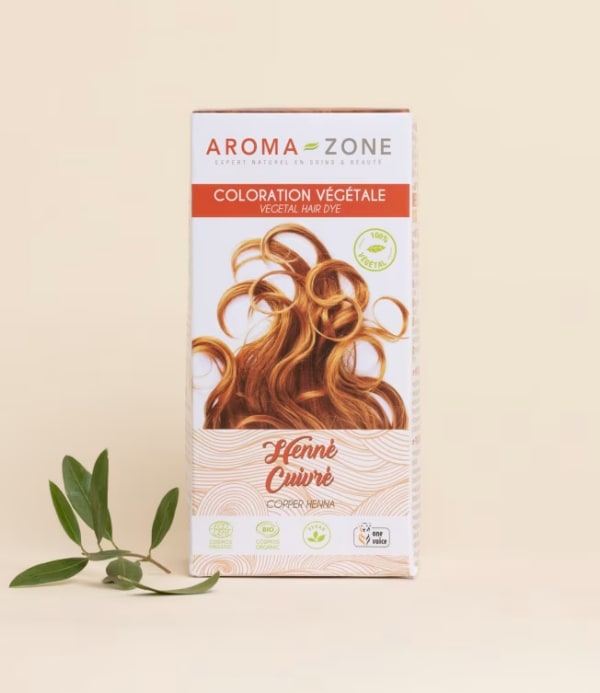
Copper henna

A 100% natural, organic, full-coverage colouring treatment that enhances hair with intense, bright coppery highlights. The combination of Rajasthani henna with manjishta and indigo produces intense, deep, shimmering coppery highlights.

Who's it for? Blonde to brown hair. Covers grey hair.

Discover: copper henna

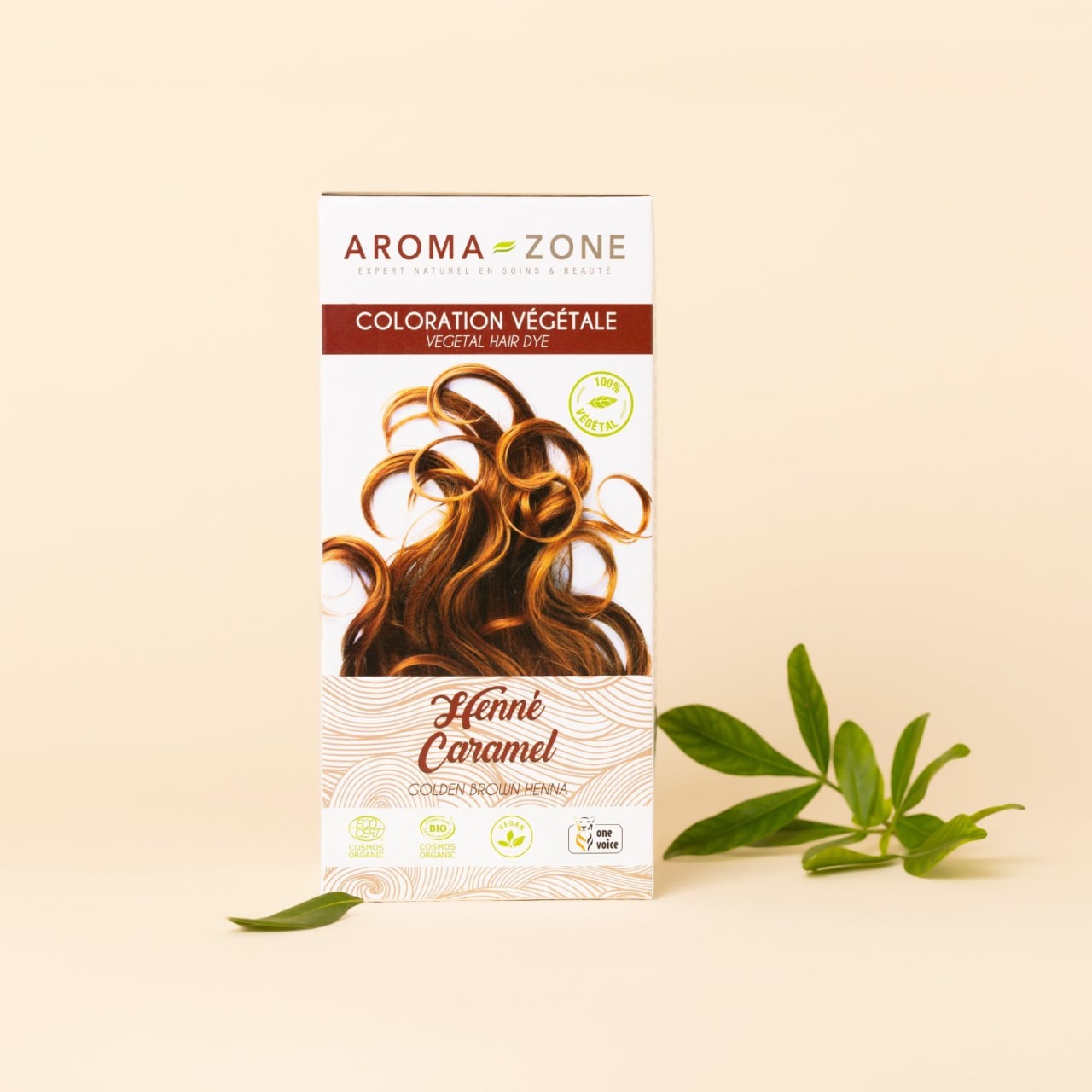
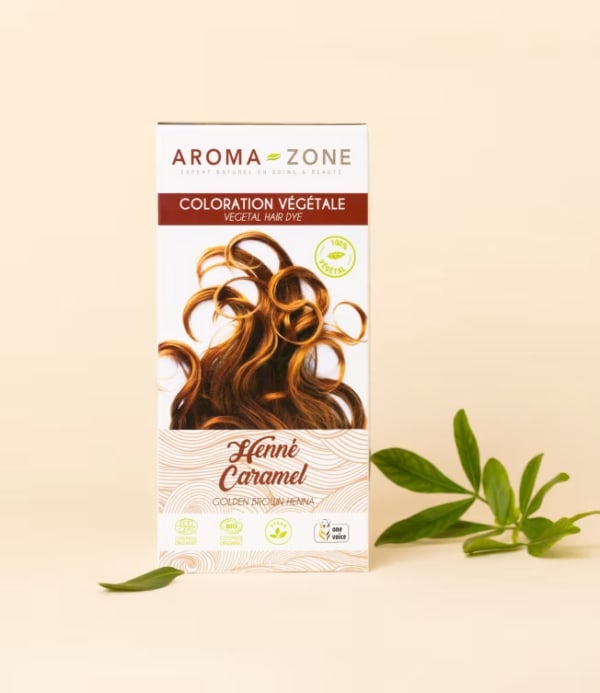
Caramel henna

A skilful blend of Rajasthani henna, indigo, turmeric and chamomile, this 100% natural and organic hair colour enhances hair with warm, luscious, shimmering highlights.

Who is it for? Blonde to medium brown hair. Covers grey hair.

Discover: caramel henna

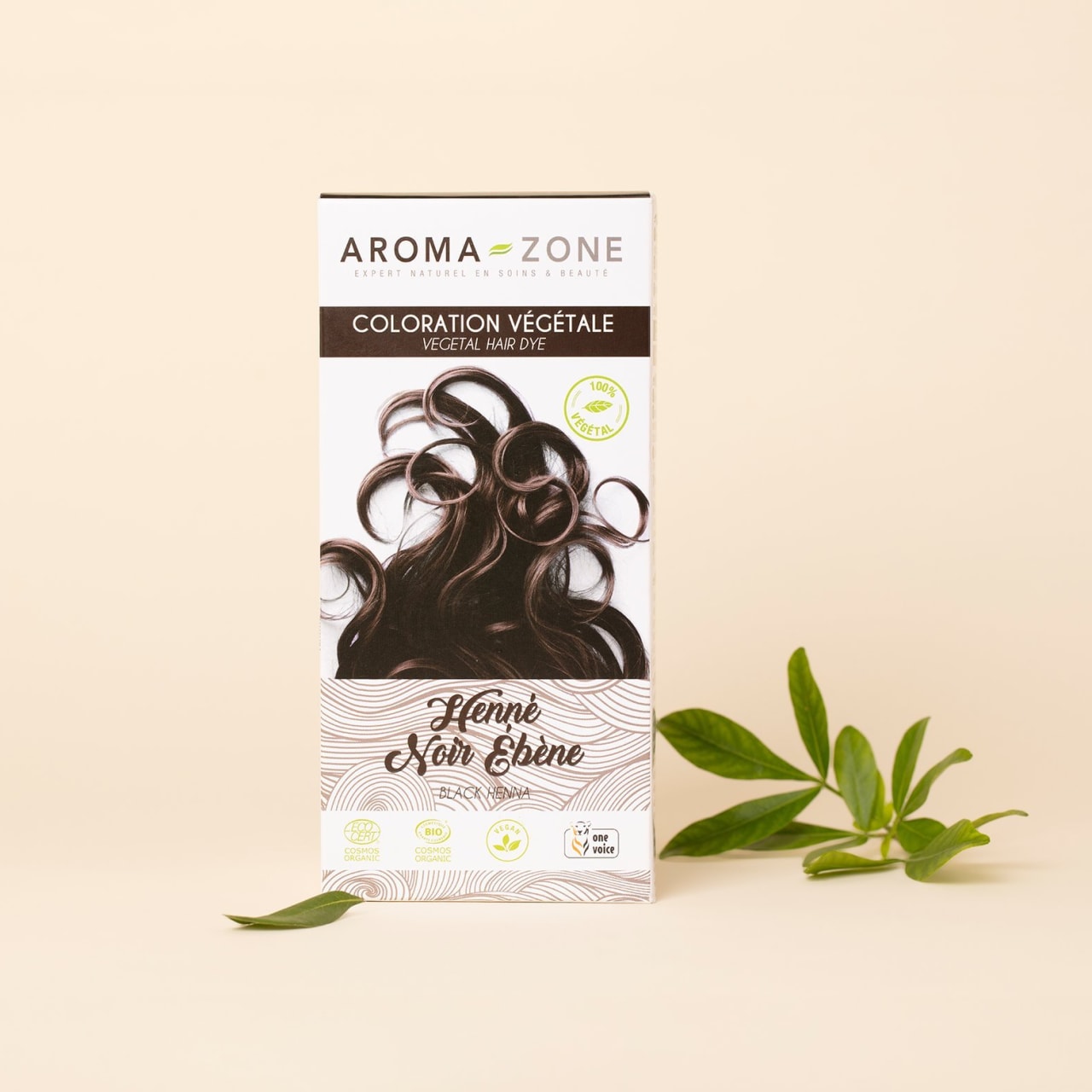
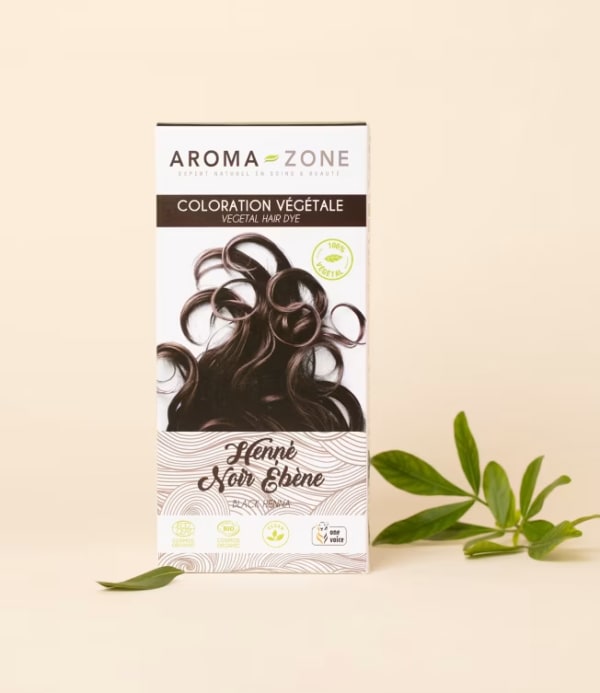
Ebony black henna

Indigo warmed with Rajasthani henna creates a 100% natural, organic colouring treatment that gives hair a deep, intense ebony colour with great coverage.

Who is it for? Blonde to brown hair. Covers grey hair.

Discover: ebony black henna

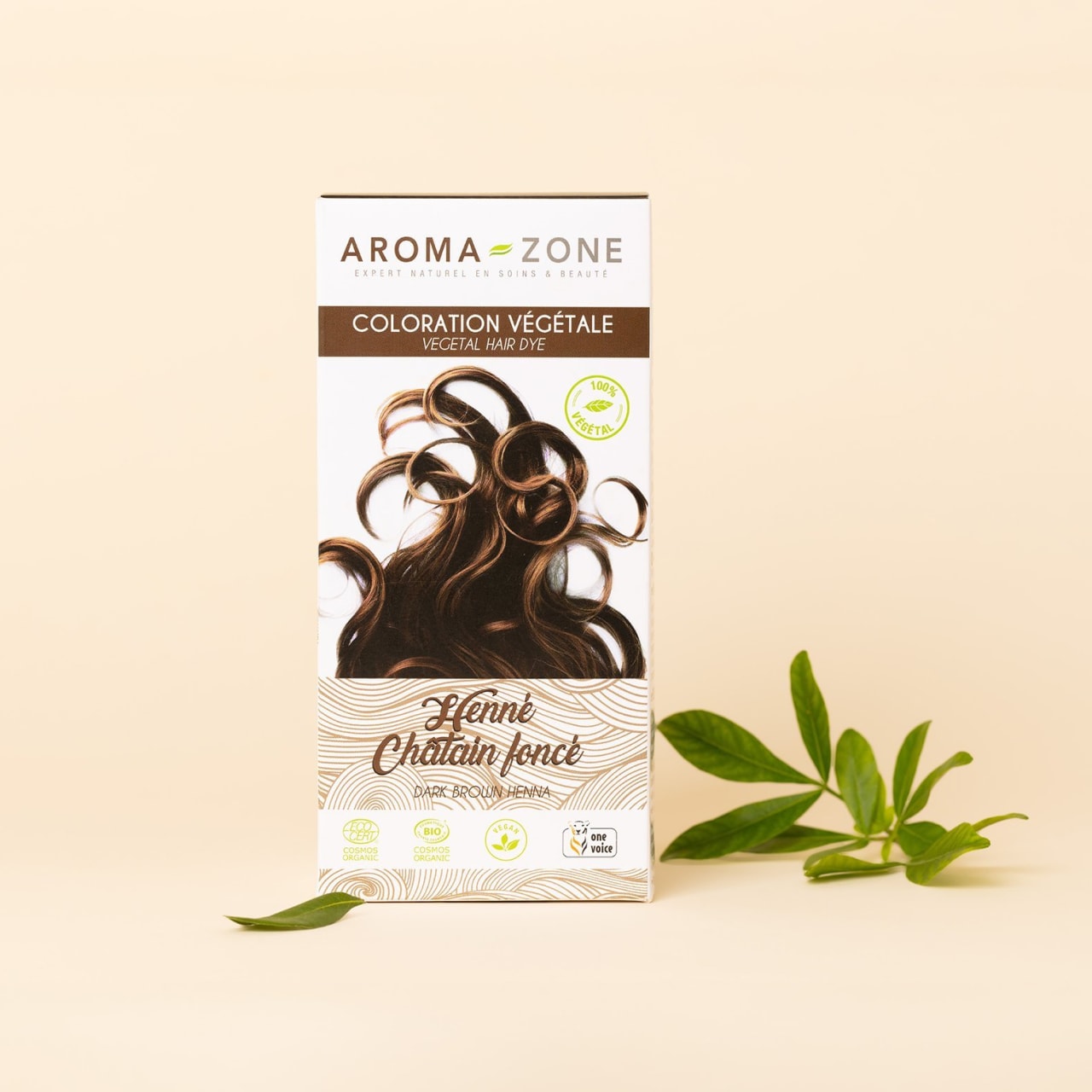
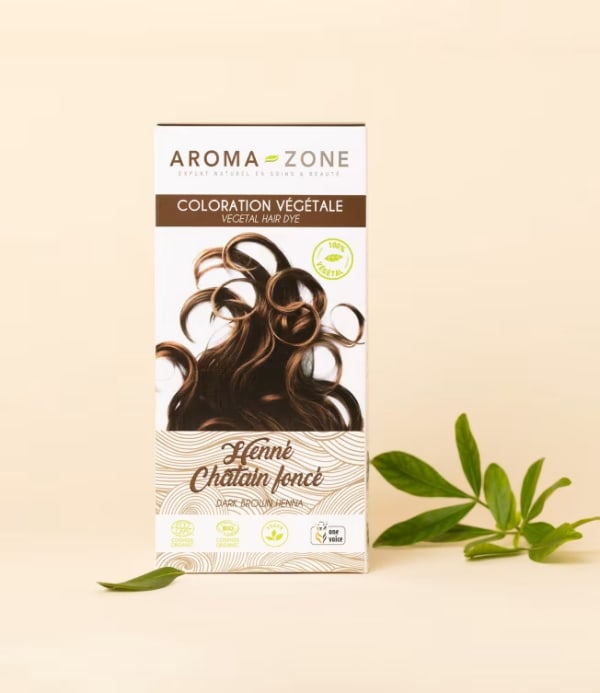
Dark chestnut henna

Indigo is combined with Rajasthani henna and delicately warmed with turmeric in this 100% natural and organic hair dye treatment, which gives hair a deep, bright and particularly full-bodied chestnut colour.

Who's it for? Blonde to brown hair. Covers grey hair.

Discover: dark chestnut henna

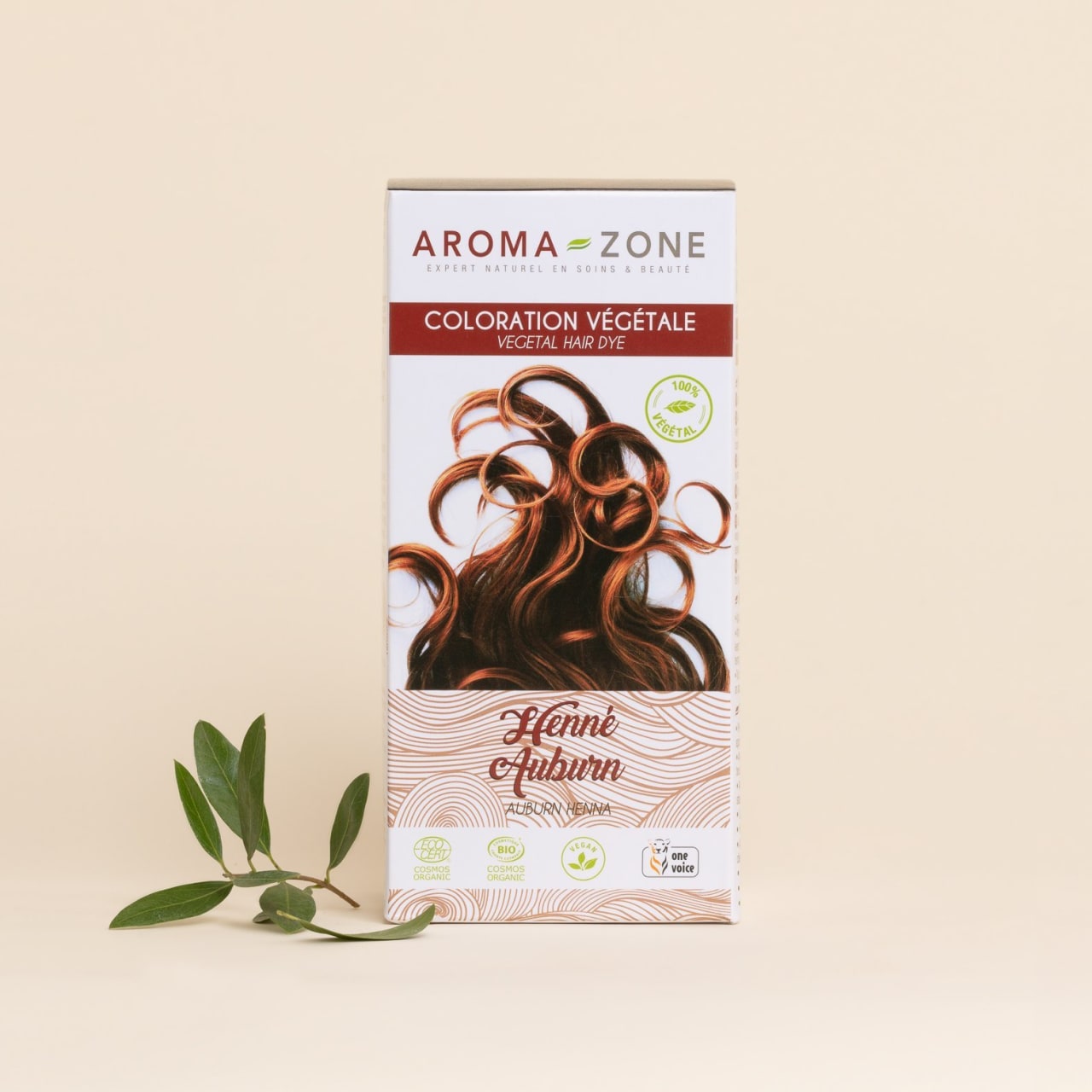
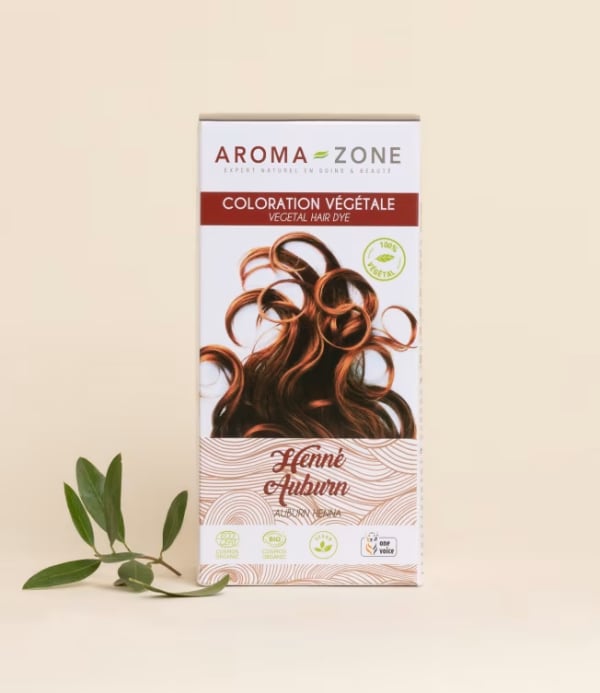
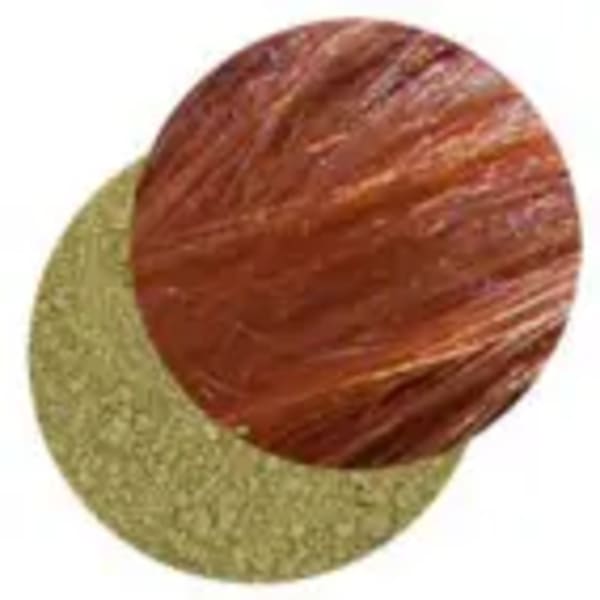
Auburn henna

Blended with Rajasthani henna and indigo, hibiscus brings its red and mahogany highlights to this 100% natural and organic hair colour for a warm, shimmering, and intensely covering auburn colour.

Who's it for? Blonde to brown hair. Covers grey hair.

Discover: auburn henna

A closer look at our plant-based henna colours

Why choose our plant-based colours?

  • They don't damage the hair fibre because they don't open the hair cuticles like chemical dyes do, and they don't bleach the hair and then re-colour it.

  • They colour the hair very naturally.

  • Genuine hair care products, they protect and strengthen the hair, sheathing it and restoring all its health and vitality.

  • Hair gains volume, suppleness, shine and thickness.

  • Hair is shiny, lustrous and radiant.

  • It covers grey hair in just one application!

  • No more itching, irritation or dandruff!

  • Suitable for hair that has been chemically coloured.


Colours perfectly for optimal long-lasting results

Thanks to their association with beneficial ayurvedic plants, the plant-based colour pigments in these new hair colours:

  • Are more easily extracted from plant powders,

  • Adhere easily to the hair fibre and set for a long time,

  • And, above all, colours don't bleed over time.

The henna leaves are ground into an extra-fine powder using a cold process to guarantee:

  • A high lawsone content (a heat-sensitive colour pigment)

  • Optimal colouring power thanks to the fineness of the powder.


Quality is always a priority for us

Our henna and ayurvedic plants are of the highest purity, guaranteed:

  • 100% pure plant

  • No additives

  • No PPD (paraphenylene diamine): the substance responsible for known allergies in henna, this substance is added to cheap hair dyes to accentuate the black colour.

  • No sodium picramate: chemical red dye added to cheap hair dyes to accentuate the red colour.

  • No metallic salts: often added to certain henna products to increase the colouring intensity.

  • 100% certified organic (which is extremely rare for henna!)

  • Free from undesirable contaminants: heavy metals and pesticides are analysed at each stage of production.


An ethical, responsible and eco-friendly approach

  • An ethical and responsable supply chain with production directly in India

  • Factory audited by Aroma-Zone teams

  • No child labour

  • 180 employees, 80% of whom are women.

  • Professional integration of people with disabilities through adapted training

  • Social protection and health cover for employees and their families

  • Production site 100% powered by solar energy

Composition of Aroma-Zone plant-based dyes

A closer look at dye plants

To obtain these 8 nourishing colours, ranging from golden blonde to ebony black, honeyed chestnut or copper, we worked with precise dosages and a combination of 10 plants, each with its own colouring and/or beneficial properties for the hair.

Like a painter, we worked with a palette of three dye plants, representing the three primary colours. Mixed in different proportions, we were able to obtain a whole range of natural, intense colours to enhance the hair.

  • Indigo (leaves), which contains a natural blue pigment: indigotine.

  • Rajasthan henna (leaves), which contains a natural red/orange pigment: lawsone.

  • Turmeric (roots), which contains a natural yellow pigment: curcumin.

These three plants, which provide the 3 essential primary colours (red/blue/yellow), are used to create a range of 8 hair colours. Our teams have created skilful blends of these three plants, working on the proportions to obtain different shades.

For a complete treatment, we've combined them with other plants to create a palette of varied shades, while at the same time enhancing the hair's beauty, like adding Manjishta (or Indian madder) to add depth to the copper. Chamomile adds golden highlights to golden blonde hair colour.


A closer look at ayurvedic plants, age-old secrets to amazing hair

To provide you with truly caring hair colours, we have combined dye plants with ayurvedic plants selected for their effectiveness in hair care:

  • Amla or Emblica officinalis (fruit) makes it easier for the hair fibre to absorb colour.

  • Sidr or Zizyphus jujuba (leaf) fixes the plant-based dye to the hair fibre, preventing it from fading with repeat washing.

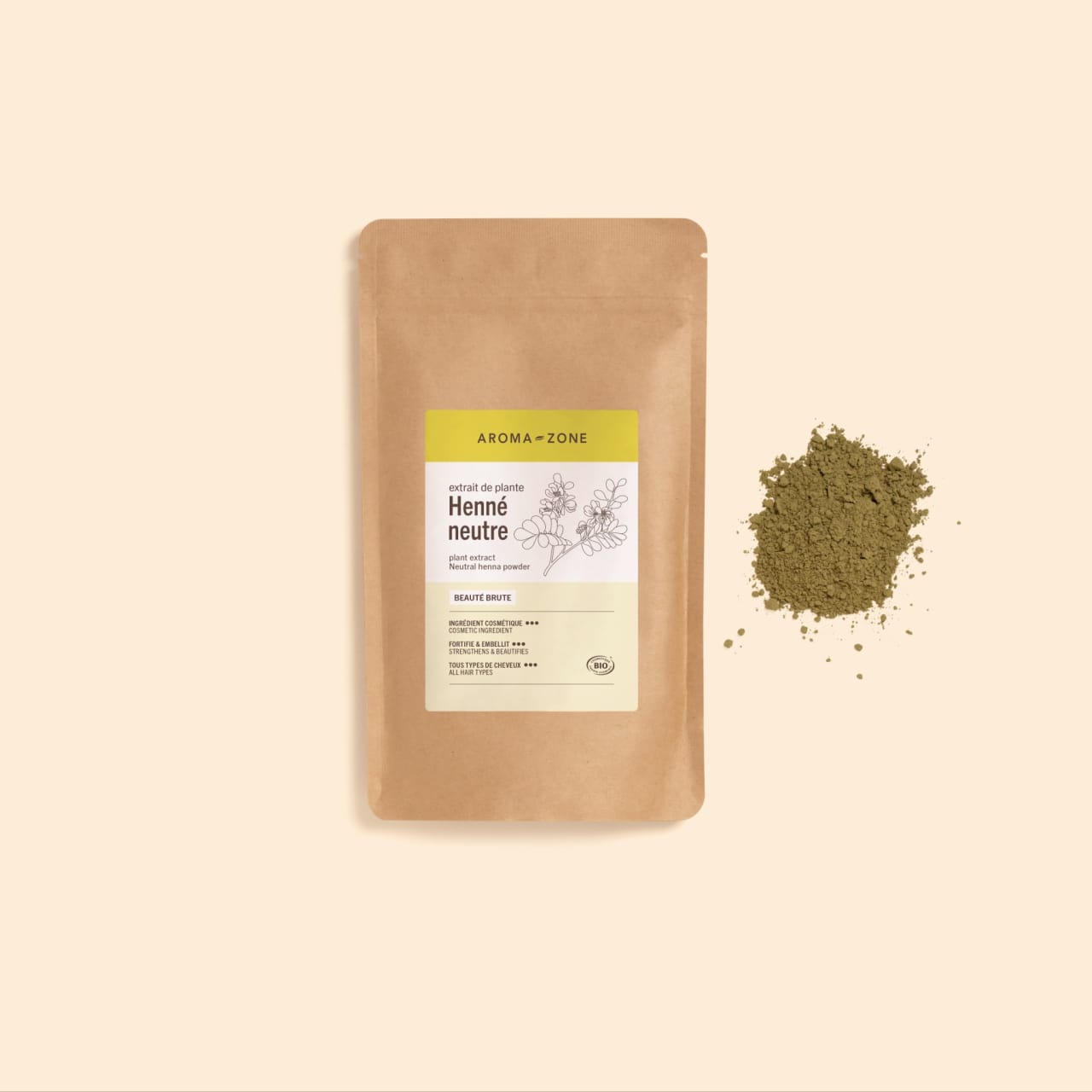
  • Neutral henna or Cassia Auriculata (leaf) gives hair light, volume and shine.

The right shampoos and conditioners

How do I prepare my hair for plant-based dye?

To optimise the take-up of plant dyes and ensure that the colour lasts over time, it is essential to open the hair cuticles using a basic solution (e.g. bicarbonate of soda, sodium hydroxide).

Once the hair cuticles are open, a larger surface area of the hair fibre is in contact with the colouring powder, which can then set more evenly and penetrate deep into the hair.

The rinsing stage is just as important: it should be done with an acidic solution (e.g. lemon juice, vinegar) to close the hair cuticles, trapping the colour, which will be protected and last longer. The acidic solution also has a protecting and smoothing effect and makes your hair shiny.


How do I wash my coloured hair?

Colour-treated hair needs special care to preserve the intensity of its colour and boost the hair fibre's shine and lustre. After all, as you shampoo your hair, the colour gradually fades, leaving it dull. Space out your shampooing to preserve the colour and natural beauty of your hair.


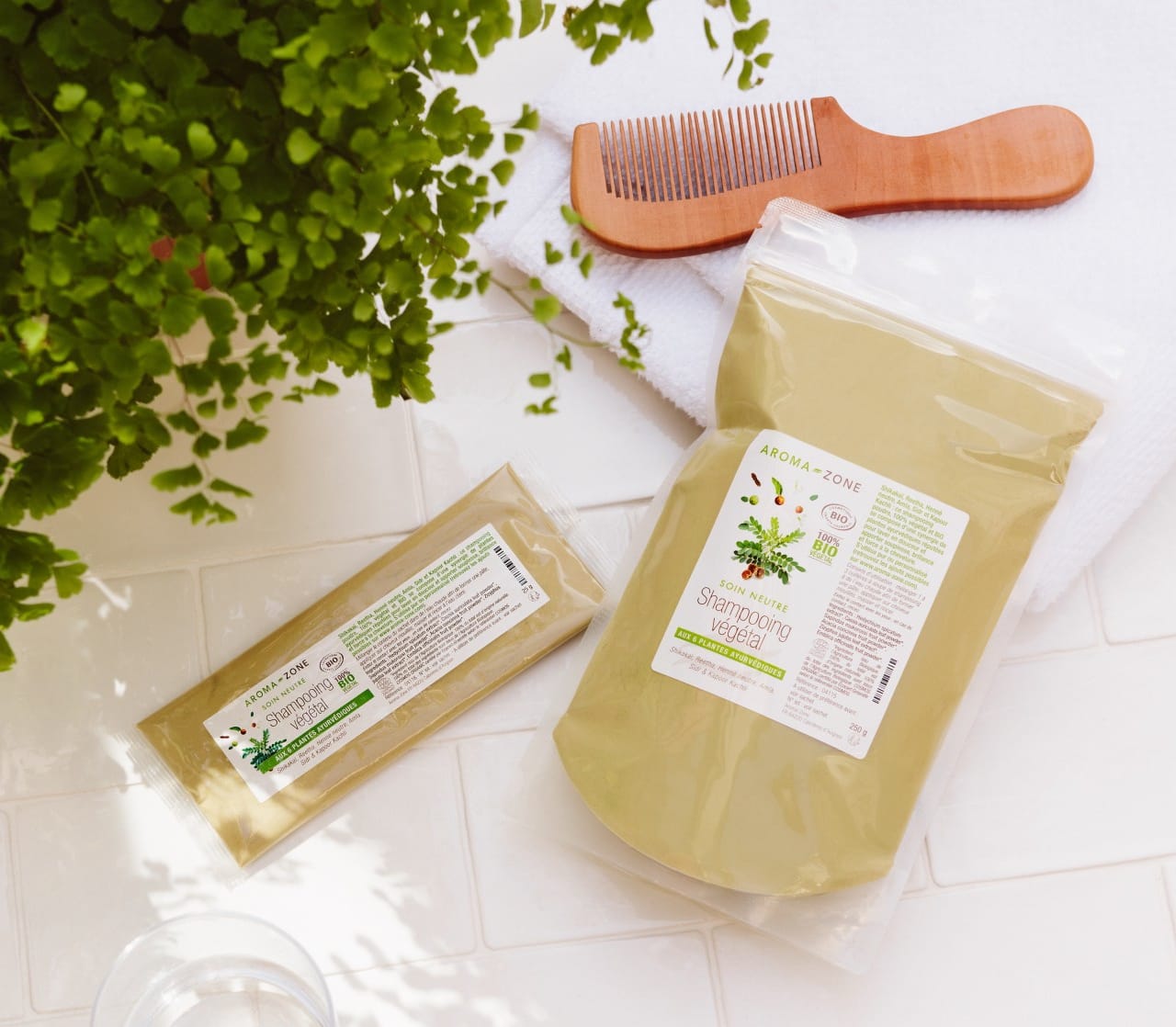
A closer look at our organic plant-based shampoo

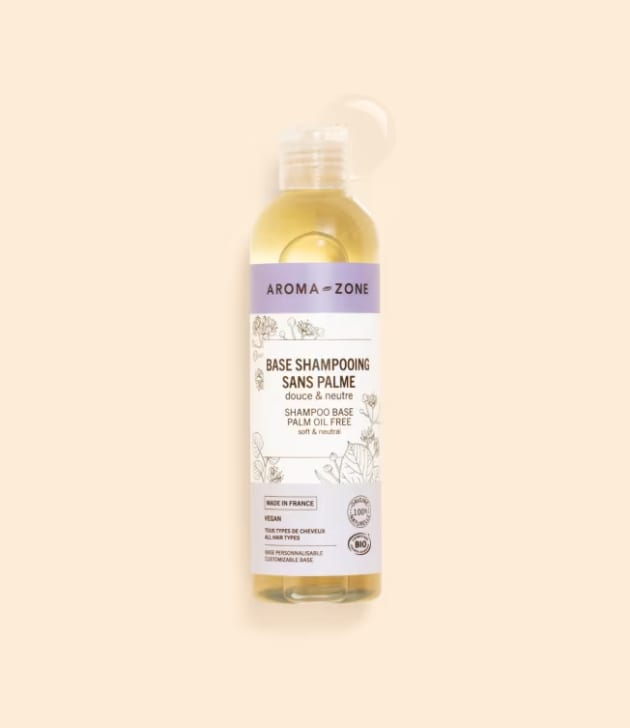
A genuine 'no poo' treatment*, our plant-based shampoo is a 'detox concentrate' for your hair. It is the product of choice for preparing hair for natural colouring: it effectively eliminates residues of silicones, quaternary ammoniums and other chemical substances that remain on the surface of the hair fibre and prevent the plant dyes from fixing to the hair. Containing no surfactants, it gently washes without damaging or stripping the coloured hair fibre.


This organic plant-based shampoo is made from 100% organic and natural plant powders, including shikakai and reetha powders, which have cleansing, purifying and detoxifying properties. Sidr, or jujube powder, with its protective qualities, prolongs the intensity of the colour by reducing colour bleeding. Neutral henna and kapoor kachli powders make your hair strong and shiny and boost the radiance of coloured hair.

*Surfactant-free, gentle on hair and scalp.


Discover: organic plant-based shampoo

How to use our organic plant-based shampoo

Step 1: Measure out the base

  • For 250 g plant-based shampoo: 5 heaped tablespoons or 2 heaped tablespoons.

  • For 25 g plant-based shampoo: 1 whole sachet.

Step 2: Personalise (or don't personalise) the base

  • With 1 or 2 active ingredients

  • A carrier oil

  • 1, 2 or 3 essential oils

To personalise your organic plant-based shampoo with ingredients to suit your needs and preferences, find a list of possible additions on the fact sheet.

Step 3: Add water

  • Add simmering water while mixing until you obtain a smooth paste.

  • 80 ml of water max for 25 g of powder.

Step 4: Apply to hair

  • Apply immediately to wet hair.

  • Massage into scalp.

  • Leave on for 3 to 5 minutes, then rinse with clean water.

Maintaining plant-based colour over time

Unlike chemical hair colour, which dries out and damages the hair, and then requires special care using harmful products (silicone, sulphates, ammonia), plant-based hair colour does not damage the hair and therefore requires less care.

However, if you want to prolong shine and highlights, treating your hair after colouring with plant-based products will help your colour last longer and keep your hair healthy. Here are a few ways to achieve this:

  1. Space out your shampoos and wash your hair gently: Washing your hair too often can make it greasy and cause the plant-based dye to fade. So, avoid washing your hair every day, opting to wash it once or twice a week.

  2. Rinse with cold or lukewarm water to close the hair cuticles that contain the colour.

  3. Use natural products: Whether shampoo or conditioner, opt for gentle, natural care products to strengthen your scalp and prolong colour. Chemical products can dry out your hair and even change the colour.

  4. Use a detangling brush and avoid over-aggressive brushing to avoid stripping the pigments from the hair fibre. You can use a wide-tooth comb to avoid breaking the hair.

  5. Make a moisturising mask once a week with carrier oils and essential oils; the active ingredients will cleanse your hair and protect the hair fibre.

  6. Avoid rough handling when drying your hair, such as using heated appliances (hairdryers, straighteners).

  7. Protect your hair from external elements such as the sun with a hat, and avoid sea salt or sand.

Natural plant-based dyes: what precautions should be taken?

  • Perform a patch test in the crease of the elbow at least 48 hours before application.

  • Always carry out a preliminary test on hair collected from your brush and wait 48 hours to assess the final result.

  • Avoid using iron or aluminium utensils to make your paste (favour stainless steel or a spatula).

  • Use the gloves provided to avoid staining your fingers.

  • Henna paste stains clothes, so remember to protect them!

  • Avoid contact with the eyes. In the event of contact, rinse thoroughly with clean water.

  • Use the product in a well-ventilated room.

  • Do not use on eyelashes or eyebrows.

  • Refer to instructions for use.

  • Store your plant-based dye away from heat and light.

  • The recommended use-by period for this product is 24 months after opening the sachet.

Find out more

Chemical and plant-based dye: the dangers

"Can I apply plant-based hair dye to chemically coloured or treated hair (straightening, perming)?" "Can chemical colouring or bleaching be redone after applying plant-based hair dye?"

As all our plant-based hair dyes are 100% pure and natural, with no metallic salts or other additives, there is no danger in using them on chemically-treated (permed or straightened) or colour-treated hair or, conversely, in re-treating, chemically colouring or perming hair after plant-based dye.

However, it is advisable to wait 4 to 6 weeks between colouring your hair with plant dyes and colouring or treating it with a chemical treatment, as plant dyes, by coating the hair, can reduce the absorption of the colouring or treatment, and vice versa: the absorption of plant dyes can sometimes be uneven or unpredictable on hair damaged by a chemical treatment.

In all cases, we recommend always testing the mixtures beforehand on a strand of hair (taken from your brush), as the colour obtained depends a great deal on the hair's initial shade, the proportion of grey hair, the mixture applied, the application time, but also the hair's texture (and therefore its history of colouring, bleaching, products and care) and hair quality.

Hair that has been chemically treated will be more porous. The application time for a plant-based colour should therefore be adapted to this type of hair, and we recommend 1.5 hours (instead of 3 hours for natural hair).

Using plant-based dye on bleached (or highlighted) hair can produce more intense colours. We recommend that you always carry out a test beforehand to check that it is suitable for you.

Furthermore, it is not advisable to chemically bleach hair after plant-based dye as this can bring out unexpected colours (intense copper with Copper dye, auburn or greenish with Ebony Black or Dark Chestnut dye). This is because the melanin (your hair's natural pigment) is oxidised by the product, lightening your hair's basic shade, but the plant-based colour pigments deposited on your hair can remain and stand out.

Can I have my hair coloured with plant-based products if I'm pregnant?

It is recommended that you consult a healthcare professional before colouring your hair with a plant-based colour during pregnancy. Although plant hair dyes are generally considered gentler than chemical dyes, some of the plants used in these products may contain potentially irritating or allergenic components. A discussion with a doctor or specialist will help to determine whether plant-based hair dye is safe during pregnancy, taking into account the individual needs and state of health of the mother-to-be.

Why didn't I get the result I wanted with my plant-based hair dye?

Here are a few tips to optimise the results of your plant-based hair dye:

  • Do a test application on a strand of hair taken from your brush. The colour you obtain depends very much on the initial shade, but also on the texture and quality of the hair. Chemical products, the presence and amount of grey hair and the length of the application time all have an influence on how well the colour sets. Hair that has undergone chemical treatments will be more porous, so the application time for plant-based dye will need to be adapted because it will dye more quickly. We recommend 1.5 hours for this type of hair (instead of 3 hours for natural hair).

  • Make a paste with the wet plant-based dye and wrap your hair in the hair wrap provided (the mixture must remain wet throughout the application).

  • For good coverage, we generally recommend a 3-hour application time on natural hair that has not undergone any chemical treatment.

  • Do not add oil or greasy ingredients to the paste and apply to washed hair (or hair with cuticles opened by an acidic solution as described in the article above).

  • Avoid using conditioners before colouring your hair, as they often leave a greasy residue (or even a residue of synthetic silicone) on the hair. If you use hair products containing silicones (which often remain on the hair), this can also reduce the hold. In this case, using a plant-based shampoo before colouring your hair will remove any residue of these products left on the hair and help the colour take.

Is it possible to lighten my hair with plant-based dyes?

Plant-based dyes do not lighten hair colour. However, you can use tone-on-tone colouring, which is ideal for covering grey hair. You can also add warm highlights to your hair, for example with the plant-based dyes copper, honey chestnut or caramel, or darken your natural hair colour by choosing a shade darker than your own.

Is it possible to cover my grey hair?

Colouring with plant dyes will tone down grey hair, i.e. colour it less intensely than the rest of the hair, creating beautiful highlights and adding depth to the hair. Our plant-based dyes achieve this result in a single application.

Can hair get green highlights with plant-based dye?

Plant dyes containing indigo need to oxidise in the open air for 24 to 48 hours after application to obtain their final shade. Any green highlights will disappear after this oxidation time.

What should I do if I don't like the colour I get?

Coconut milk and white clay or green clay can be used to speed up the fading of plant-based dyes. Make a hair mask by mixing water, clay and coconut milk until you obtain a smooth, creamy paste. Apply this paste all over your hair before shampooing and leave on for 30 minutes to 1 hour.

How do I maintain my plant-based hair colour?

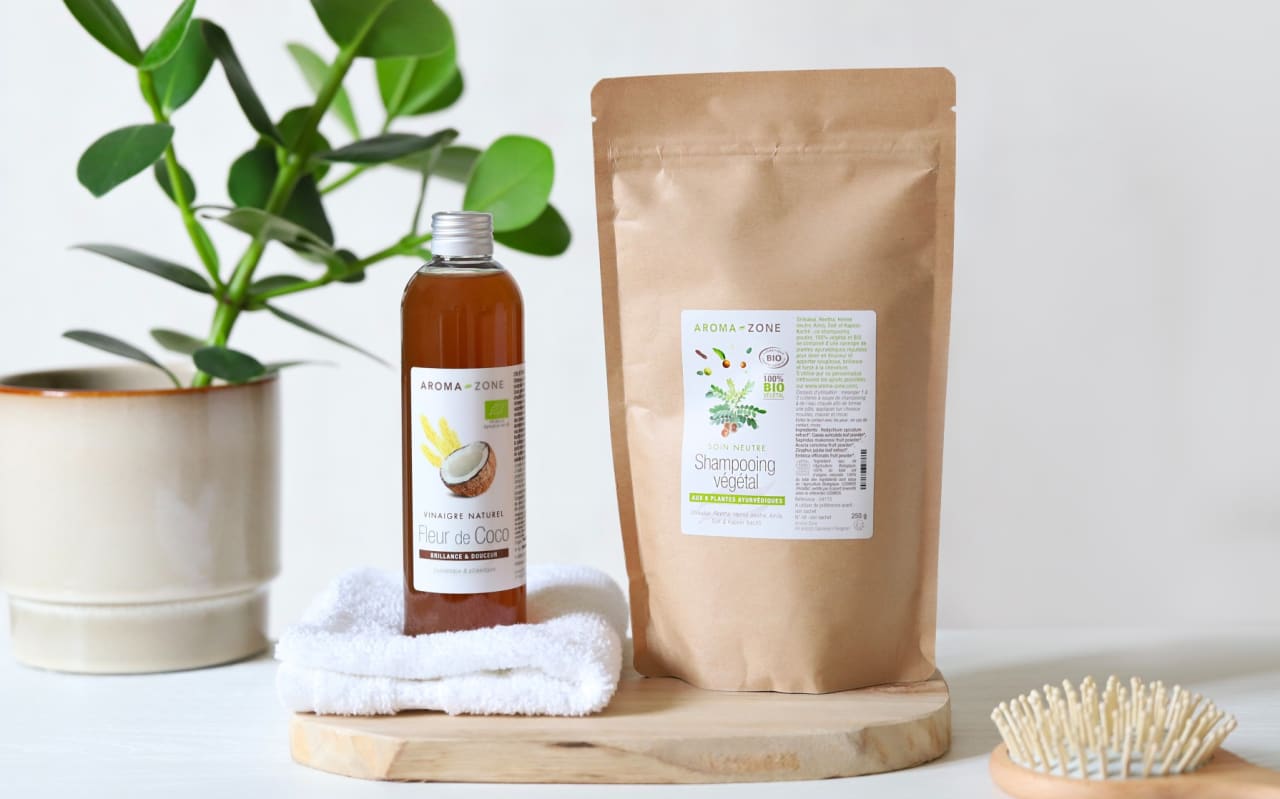
Washing your hair with harsh shampoos can damage the hair fibre and remove the colour pigments that have stuck to it. We recommend using our Organic Cleansing Base or our organic plant-based shampoo containing jujube powder, which fixes the colour.

Protective plant-based shampoo for coloured hair

You can make your own shampoo to protect your hair colour:

1

Pour the plant-based shampoo, hibiscus oil and Keratin'protect active ingredient into a bowl.

2

Gradually add the simmering water, stirring until you obtain a smooth, runny paste.

This 100% natural plant-based shampoo gently cleanses colour-treated hair and makes it shiny, while preventing colour bleeding. Massage all over wet hair. Leave on for 3 to 5 minutes, then rinse with clean water.

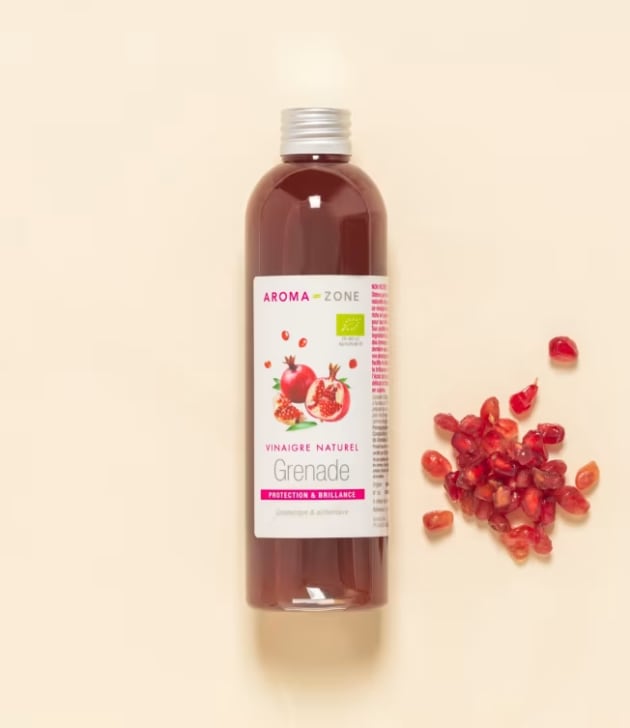
Use hair rinsing vinegars such as pomegranate vinegar or coconut vinegar which help maintain the shine and radiance of your colour.

Can I mix two plant-based dyes?

Our colours are designed to be used on their own, and their mixtures are optimised for each colour. However, it is possible to combine similar shades to add nuance to the colour. This is the case, for example, with golden blonde and honey chestnut, natural chestnut and caramel or dark chestnut and brown dyes.