Bicarbonate Of Soda (Sodium Bicarbonate)
free delivery up to £25 in United Kingdom
100% secure payment CB, Visa, Mastercard, Paypal, Apple Pay, Google Pay
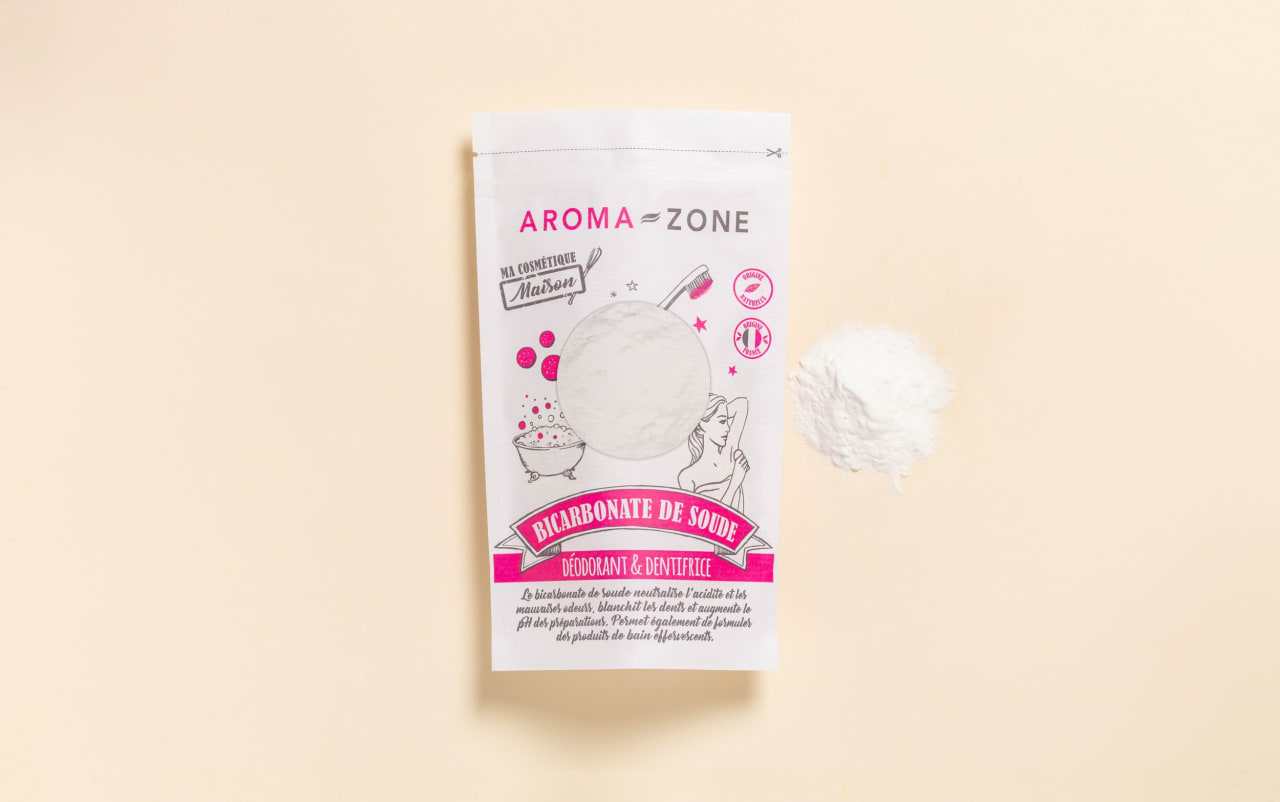
In beauty, baking soda (sodium bicarbonate) is known for these properties:
Alkalizing agent: increases the pH of acidic preparations
Deodorizing agent
Reacts with citric acid to produce effervescence in bath bombs and bath powders.
In oral care, baking soda (sodium bicarbonate) is known for these properties:
Mild abrasive: cleans teeth
Whitens teeth
Neutralizes acidity
Neutralizes bad odors
Cosmetic uses
Use as an ingredient in your preparations:
Effervescent bath products: bath bombs, bath pebbles
Deodorants
As a pH adjuster, to correct overly acidic pH levels (creams, cleansing gels, etc.)
A few ideas
Baking soda is traditionally used for its long-known properties in the following cases:
For blemish-prone skin : to dry out a pimple and speed up its disappearance, apply a paste made with a little baking soda and a drop of water. Massage in, leave on for a few minutes, then rinse. Repeat regularly until improvement is seen.
Quick deodorant: rub a little baking soda under your armpits or feet to combat sweat odor.
Clean your beauty accessories (brushes, sponges, makeup applicators, etc.) by soaking them overnight in a baking soda solution (2 tablespoons in 1 liter of water). Rinse well.
Synergies
Combine with citric acid to make effervescent bath bombs.
Oral care uses
Use as an ingredient in your preparations:
Toothpastes
Mouthwashes
Whitening treatments
Baking soda is traditionally used for its long-known properties in the following cases:
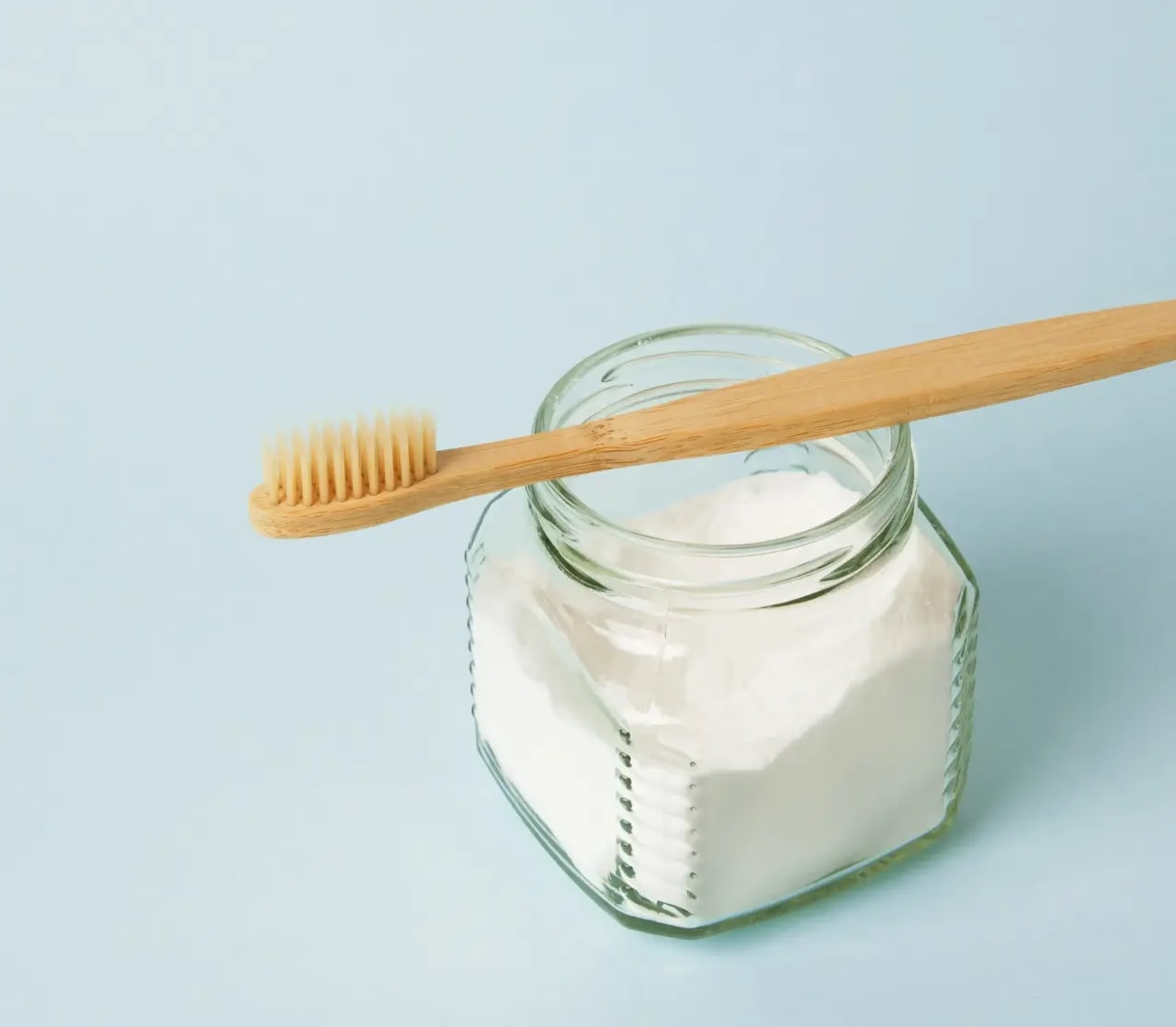
To whiten teeth, put a little baking soda on a wet toothbrush and brush your teeth gently.
Quick mouthwash: dilute a teaspoon of baking soda and 1-2 pinches of salt in a glass of water; ideal for neutralizing acidity and bad breath, and fighting tartar.
Synergies
Toothpastes : green clay, white clay...
General characteristics
Dosage
Depending on use
Soluble in water
pH
8.0-8.6 in a 1% solution in water
Insoluble in oil
Preparation
Precautions
Precautions and allergens
Precautions for use
Allergens
Allergen-free
To increase the pH of a cosmetic preparation that is too acidic (cream, cleansing gel, etc.), add a small amount of sodium bicarbonate and mix well before retesting the pH using a pH test strip.
Repeat until the desired pH is achieved.
Equivalence table
1 scoop 5 ml (level*) | 2.5 g |
1 scoop 2 ml (level*) | 1.1 g |
1 stainless steel spoon TAD (leveled*) | 0.4 g |
1 stainless steel spoon DASH (level*) | 0.2 g |
1 stainless steel spoon PINCH (level*) | 0.15 g |
1 spoon 0.5 ml | 0.25 g |
* leveled: a spoon filled to the brim with the excess removed using a spatula or the back of a knife
Quality
Cosmetics
Function
pH adjuster (increases pH), ingredient for effervescent bath products, multi-purpose household cleaner
Other names
Sodium bicarbonate, sodium hydrogen carbonate, "baking soda" in English-speaking countries
INCI designation
Sodium bicarbonate
Composition
Sodium bicarbonate NaHCO3
Presentation
Fine white powder, packaged in a zip-lock bag.
Storage
Store at room temperature away from moisture. Close the bag tightly.
Precautions
Keep out of reach of children.
Avoid contact with eyes.
Do not mix with acids in a closed container (gas release).
Focus on pH
pH (potential hydrogen) determines whether an aqueous mixture is acidic, neutral, or basic. pH is measured on a scale of 1 to 14:
1 < pH < 7 acidic pH
pH = 7 neutral pH
7 < pH < 14 basic (or alkaline) pH
In general, the skin has a pH between 4 and 6, which is fairly acidic, but it varies depending on the area of the body (armpits, intimate mucous membranes), skin type, and age. Recommended pH levels:
For shower gel: 5.0 to 7.5
For shampoo: 4.5 to 7.0
For detangling hair care: 4.0 to 5.0
For intimate hygiene products: 4.5 to 5.5 for women of childbearing age, 6.5 to 7.0 for young girls and menopausal women
For leave-on products (creams, milks, gels, lotions, etc.): 4.5 to 7.0
For creams containing AHA or DHA: 4.0 to 5.5
How does effervescence work?
In bath bombs, the effervescent effect is achieved by mixing citric acid with sodium bicarbonate. In its "dry" state, nothing happens, but when it comes into contact with water, an acid-base reaction occurs between the two ingredients. The reaction of an acid with baking soda produces carbon dioxide, which is a gas and therefore escapes in the form of small bubbles, creating effervescence! The other products of this reaction are water molecules and sodium citrate.
Environmental qualities and characteristics product sheet
Reference
00855 - sodium bicarbonate 250 g
Main packaging material
Paper bag
Recyclability
Most packaging can be recycled

EO = Essential Oil VO = Vegetable Oil or Oil Macerate
Black spots and brown spots on leaves are caused by microscopic fungi. You need a fungicide to rid your plants of them. Mix 5 teaspoons of baking soda with 4 liters of water. Add 1 liter of liquid soap and spray the mixture onto the affected plants. For best results, water the plants generously 2 days before treating them with this spray.
Baking soda is an organic insecticide. To combat ants, aphids, red spiders, and other insects, spray your plants with an aqueous solution of baking soda (1 teaspoon of baking soda per 1 liter of water).
Mildew is the generic name for a series of fungal diseases affecting many plant species, including vines, tomatoes, and potatoes. [...] Spraying baking soda is quite effective against mildew. Dissolve 1 teaspoon of baking soda in 3 liters of water and add 1 tablespoon of liquid Marseille soap (or dishwashing liquid) so that the solution sticks to the leaves. Spray this solution (which is not harmful) under and on the leaves after watering, and repeat after each heavy rain.
It appears as a grayish-white, floury powder (felting) on the surface of leaves, stems, and sometimes flowers. Powdery mildew can cause leaf deformation, causing them to curl and blister. Spraying baking soda is quite effective against powdery mildew. Its basic pH prevents fungal spores from germinating. Dissolve 1 teaspoon of baking soda per liter of water and add 1 teaspoon of liquid Marseille soap or milk so that the solution sticks to the leaves. Spray this solution (which is not harmful) under and on the leaves and repeat after each heavy rain.
Plant-based milk: 1 liter
Baking soda: 100 g
Honey: 2 tablespoons
White clay: 1 tablespoon
Apricot kernel or sesame oil: 10 ml
Rose, geranium, neroli, or petitgrain essential oil: 8 drops
Method: Put the baking soda and clay in the bathtub, then run a hot bath. Mix the vegetable oil and essential oil, add the milk and honey, then pour under the running water, stirring well. Adding fresh or dried flower petals (rose, lavender, etc.) to this bath is very attractive, but be sure to protect the drain with a grid to prevent the petals from clogging the pipes.
Baking soda: 20 g
Superfine white clay: 20 g
Fine sea salt: 5 g
Lemon essential oil: 4 drops
Tea tree essential oil: 2 drops
Method: Mix the clay, salt, and baking soda. Add the essential oils drop by drop, mixing well between each drop. Place in a small airtight jar.
Use: Before each use, moisten the toothbrush and dip it in the powder, then brush your teeth as usual. For a green toothpaste with a polar scent, replace the white clay with green clay and the lemon essential oil with 2 drops of mint essential oil.
Recommended container: tube or measuring bottle for toothpaste
Ingredients for 250 ml:
Green clay: 80 g
Calcium carbonate: 10 g
Lithothamnion powder: 10 g
Himalayan salt: 1/2 teaspoon
Sodium bicarbonate: 1/2 teaspoon
Blue mint hydrosol: 100 ml
Blue mint essential oil from Auvergne: 30 drops
Lemon essential oil: 10 drops
Grapefruit seed extract: 50 drops
Natural vitamin E: 17 drops
Method: Pour the green clay, calcium carbonate, lithothamnion powder, Himalayan salt, and sodium bicarbonate into the bowl. Add the blue mint hydrosol and mix the preparation with a mini whisk until you obtain a smooth paste. Finally, add the Auvergne blue mint and lemon essential oils, natural vitamin E, and grapefruit seed extract, and mix everything together. Pour the toothpaste into the pre-sterilized tube.
Baking soda can also be used as a weed killer. Sprinkle it between stones or slabs in walkways or on a patio to slow the growth of unwanted weeds.
1 cup of soda crystals
1 cup of baking soda
1 cup of pure soap flakes
6 drops of sandalwood essential oil
Method: Mix all the ingredients together.
Use: Use 1/2 cup for washing, adjusting according to the dirtiness and quantity of laundry. Aroma-Zone note: For better soap dissolution, this detergent is best used with a hot cycle, starting at 60°C.
1/2 cup salt
1/2 cup borax
1/2 cup baking soda
Hot water
Method and use: Mix the powdered ingredients and add water to form a paste. Apply generously to the oven walls. Leave on for one hour. Wipe with a clean cloth dipped in white vinegar, adding lemon juice if desired. Then wipe again with a damp cloth.
1/2 cup borax
1/2 cup baking soda
6 drops of eucalyptus essential oil
Method: Mix these two ingredients in a shaker.
Use: You can use it on all surfaces and remove black stains by brushing. Once the powder has been applied, leave it to work for an hour before rinsing.
2 tablespoons of baking soda
2 tablespoons of salt
1/4 cup white vinegar
Method and use: Sprinkle baking soda and salt into the sink and scrub, paying particular attention to the grooves and drain grate. Rinse with hot water and finish by wiping with a cloth dampened with white vinegar.
1/4 cup baking soda
1 cup water
6 drops of rosemary essential oil
Method and use: Mix all the ingredients together. Wet a soft, clean cloth with this mixture and wipe down the inside of the refrigerator or freezer, then wipe with a dry cloth.
Supplier documents
The wonders of baking soda, by Lise Soto
How to Clean Your Home Naturally, by Angela Martin
Natural Cosmetics by Hélène Baron and Tiphaine Chagnoux - Editions Sully
Delicious soaps by Mélinda Coss - Parangon Publishing
Virtues and benefits of Pierre Ripert's natural products - Presses du Châtelet
Frequently Asked Questions
Essential Oils
1 ml = approximately 35 drops (with our Aroma-Zone dropper caps)
Carrier Oils
1 pump (Aroma-Zone aluminium pump) = approx. 0.15 ml
Mass / Volume conversion (for a liquid)
Mass (g) = Density x Volume (ml) at 20°C
Further information
1 full teaspoon = between 3 and 4.5 ml
1 full tablespoon = between 7.5 and 10 ml
However, these spoon ratios depend on a number of factors (e.g. viscosity of the liquid, temperature, depth and size of the spoon, rheological behaviour of the liquid), and we strongly advise you to use precise measuring equipment, such as graduated test tubes, graduated pipettes, and precision scales.
Loading...
ideal against perspiration
A must-have
Excellent product
top
Very good