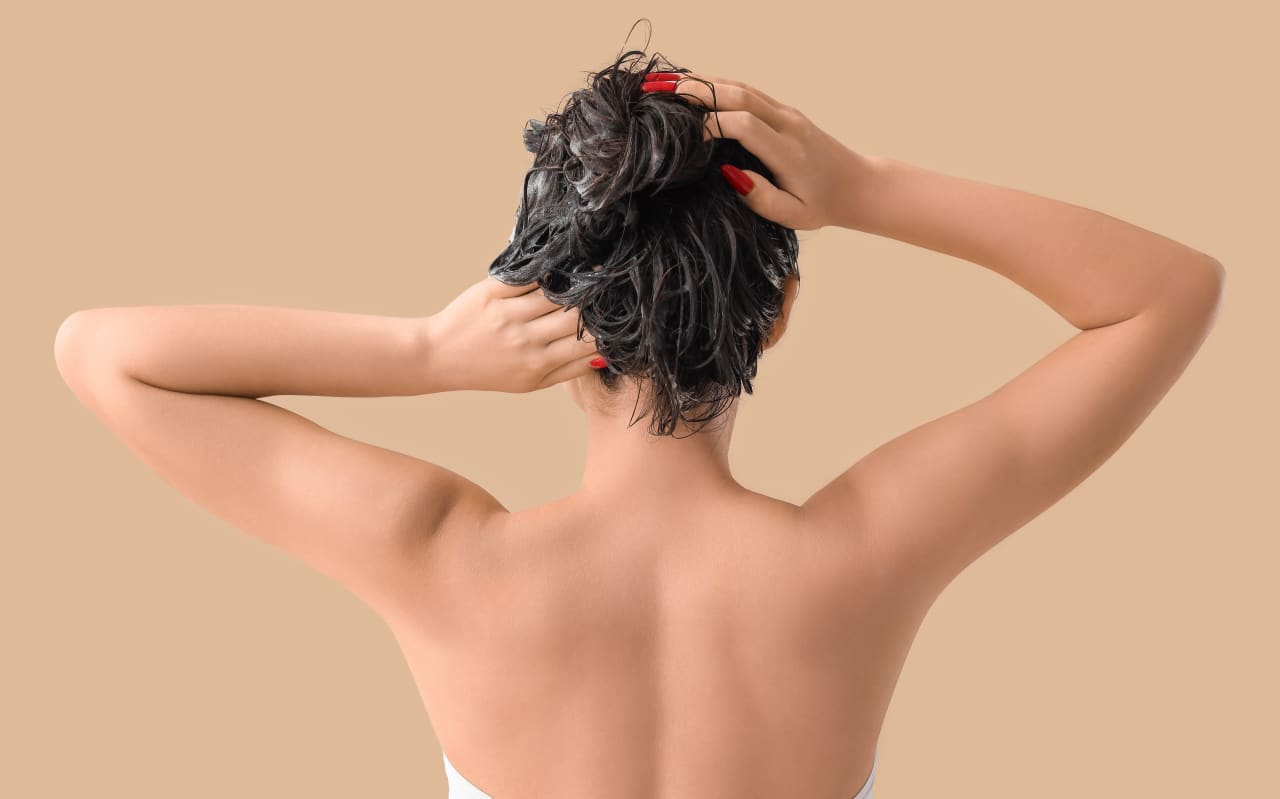
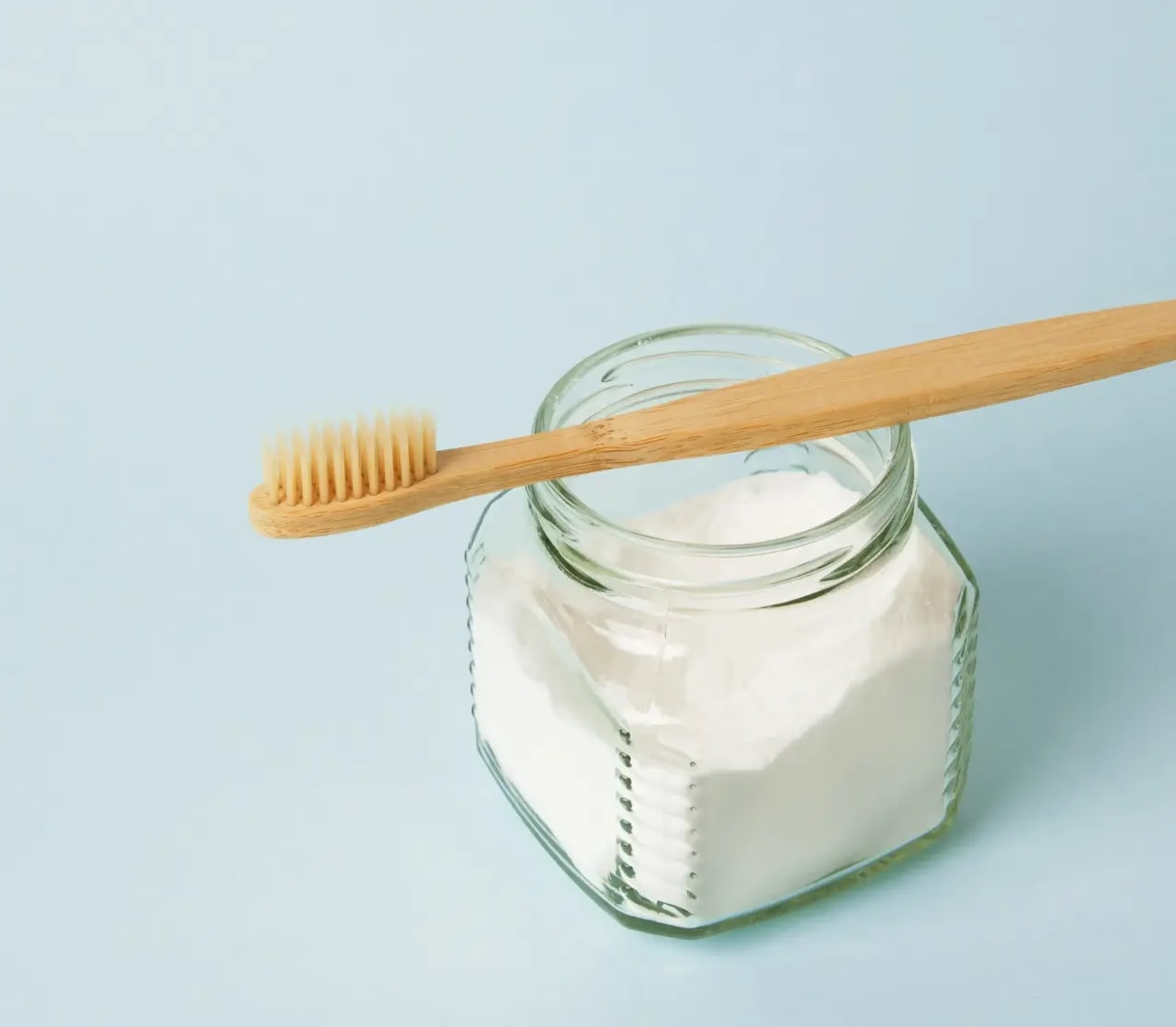
Baking soda is a natural lightening agent that will help remove yellow tones from your grey hair.
Baking soda on hair: how to use it?
Did you know you can use baking soda on your hair? Already a staple in our kitchens, this white powder can also be a useful addition in our bathrooms. When used on hair, sodium bicarbonate is known for its purifying and clarifying properties. For example, you can use it as a “no-poo” shampoo or a yellow-tone-removing mask. In any case, the most important thing is to use it at the right frequency to respect the delicacy of your hair. Discover our experts’ tips for incorporating baking soda into your beauty routine and making your own personalised hair care products. It’s easy, smart and saves money!

What are the benefits of baking soda for hair?
Baking soda is often touted as a “miracle” all-purpose product. It also has the advantage of being inexpensive. In cosmetics, it’s used on both the skin and the hair. The main benefits of baking soda for hair stem from its slightly abrasive properties.
Slightly abrasive: its fine grain size allows it to act as a gentle exfoliant, thereby loosening impurities clumped at the roots. Sodium bicarbonate can therefore be considered a purifying ally, particularly for oily scalps or those prone to dandruff.
Deodorising: Baking soda is traditionally used to neutralise unpleasant odours or even to enhance the effectiveness of deodorants. When applied to the scalp, it may help reduce unpleasant odours caused by the buildup of sebum and sweat between shampoos.
Baking soda on hair: what are its uses?
1. Removing hair dye
Want to get rid of your chemical or plant-based hair colour faster than expected? Baking soda acts as a clarifying agent on your hair, helping to lift the colour. Using it is simple: just mix 1 teaspoon of baking soda with a dose of your regular shampoo. Massage the mixture into your roots and lengths before rinsing with warm water. Finish by conditioning your hair for maximum benefits.
2. Lighten Your Hair Naturally
The principle is the same as before. If your permanent colour seems too dark, apply a baking soda treatment to your coloured hair. With repeated use, you’ll be able to remove pigments and thus lighten your colour. This tip works on all types of colour: full colour, highlights or balayage. If you don’t have coloured hair, you can use baking soda once a month to detox your hair at home.
3. Cleanse your scalp
It’s perfectly possible to occasionally replace your usual shampoo with a mixture of water and baking soda. Its purifying and gently exfoliating properties allow it to clean the scalp. It can even help with discomfort or dandruff. This solution is a handy fix when you’re on the go, but it should be used in moderation. We don’t recommend washing your hair with baking soda every week. If you’re looking for a gentler solution that makes your hair shine, mix a little baking soda into a mild shampoo.
4. Growing Your Hair
The exfoliating properties of baking soda can help promote normal hair growth. Exfoliating the scalp helps remove impurities and residue that "clog" it. At the same time, you stimulate blood circulation, thereby helping nutrients reach the hair follicle. For longer hair, you can try doing a baking soda scrub every now and then. And of course, don’t overdo it.
5. Baking soda for lice
Did you know that baking soda can also be applied to the hair to treat lice? It’s particularly effective at loosening nits stuck to the scalp. To do this, massage a small amount of powder directly into your child’s scalp. Rinse and use a lice comb to remove the loosened nits. You’ll find the task is much easier!
Is there an infestation at home? Discover all our natural tips for fighting lice.

How to use baking soda on your scalp?
Ready to get started? Here are the main ways to incorporate baking soda into your natural hair care routine.
Baking soda hair mask: This option is ideal for stripping your hair colour. This mask will help lighten your hair and remove your dye more quickly. Be careful not to leave it on too long, though: you could weaken your hair strands.
Baking soda shampoo: This recipe is part of the “no-poo” (or “low-poo”) trend. It allows you to cleanse your scalp without traditional shampoo—and therefore without surfactants. Keep in mind that a baking soda shampoo doesn’t lather. That doesn’t stop it from removing most impurities, thanks to its absorbent and abrasive properties.
Baking soda dry shampoo: If you have fine or oily hair, use this tip to restore body and lightness to your hair between washes. It has the advantage of combining purifying and deodorising benefits. Apply the mixture to the roots after detangling your hair. Leave it on for about a minute, then brush to remove any excess powder.
Some well-known combinations for hair
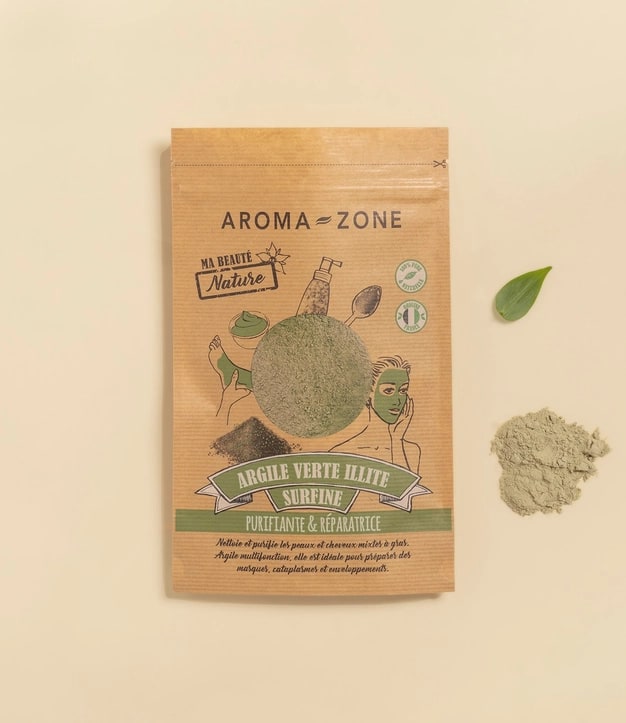
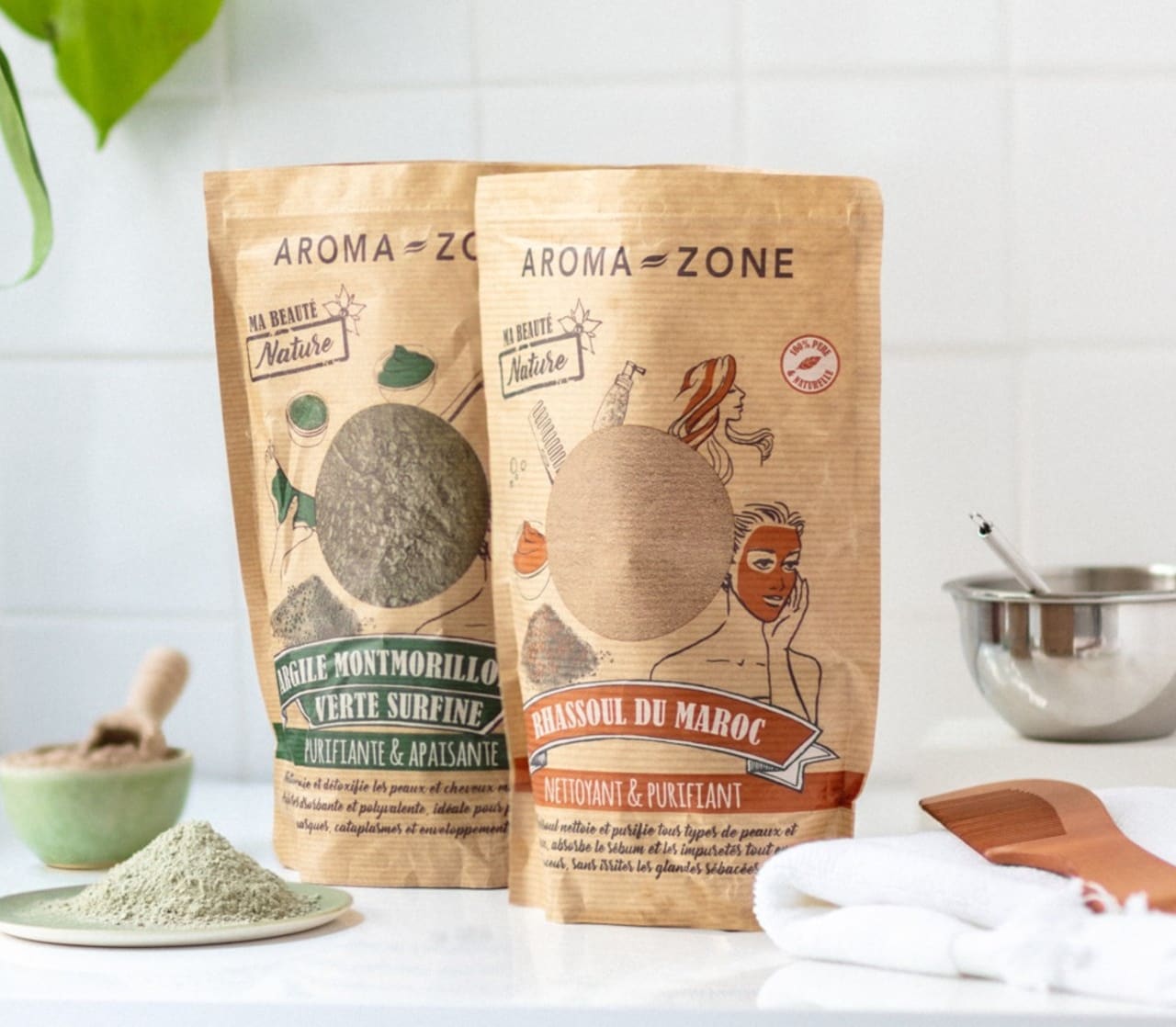
Baking soda and green clay

Baking soda and green clay both have absorbent properties. That’s why it can be beneficial to use green clay and baking soda on oily hair. Used individually or in combination, these two ingredients help absorb excess sebum at the roots. When used properly, they give your hair a fresh boost.
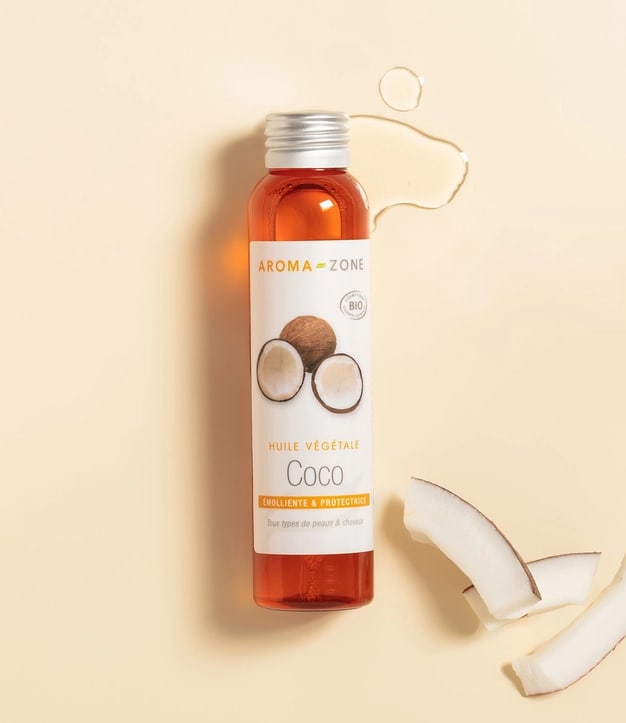
Coconut oil and baking soda

Baking soda is insoluble in oil. Therefore, you cannot mix coconut oil and baking soda in your recipes. However, there’s no reason you can’t use these two ingredients separately. After a baking soda hair mask, for example, coconut oil will help nourish the hair shaft.
When should you avoid using baking soda in your hair care routine?
Is baking soda on your hair dangerous?
Not necessarily! It all depends on how you use it. Baking soda has the unique characteristic of having an alkaline pH (around 9), which is quite different from that of the skin (around 5.5). It can therefore cause some discomfort if used too often or improperly. Our advice? Don’t overdo it, and be sure to condition your hair generously after each use. The right frequency can vary from person to person. Avoid leaving your treatments on for too long, and keep in mind that treatments using baking soda should remain occasional and temporary, or you risk stripping and weakening your hair.
When should you avoid using baking soda in hair care?
Incorporating baking soda into your hair care routine requires a healthy scalp with no major issues. This ingredient may not be suitable for you if you have a sensitive scalp or fine, fragile and damaged hair. Very dry and frizzy hair also falls into this category, as it is naturally brittle and does not respond well to overly abrasive or harsh treatments. We also advise against it if you regularly use heat styling tools, such as a flat iron or curling iron. Finally, unless you want to fix a hair mishap, do not use it on your coloured or highlighted hair: it will cause your colour to fade, whether it’s chemical or plant-based.
Good to know : Using baking soda on children’s hair is not prohibited. However, it’s best to use it only occasionally, such as in cases of lice.
Precautions for use
Precautions for using baking soda: Keep out of reach of children. Avoid contact with eyes. Do not mix with acids in a closed container (gas release). Storage: Store at room temperature away from moisture. Close the bag tightly.
Want to try a homemade hair care recipe using baking soda? We recommend testing it first on a small, hidden area of skin to minimise the risk of a skin reaction. Watch for redness, irritation, or any adverse reactions.
Several experts advise against excessive use of baking soda. It could sensitise the scalp and weaken the hair strands. So be sure to find the right balance, while paying attention to how your hair feels.
Expert tip
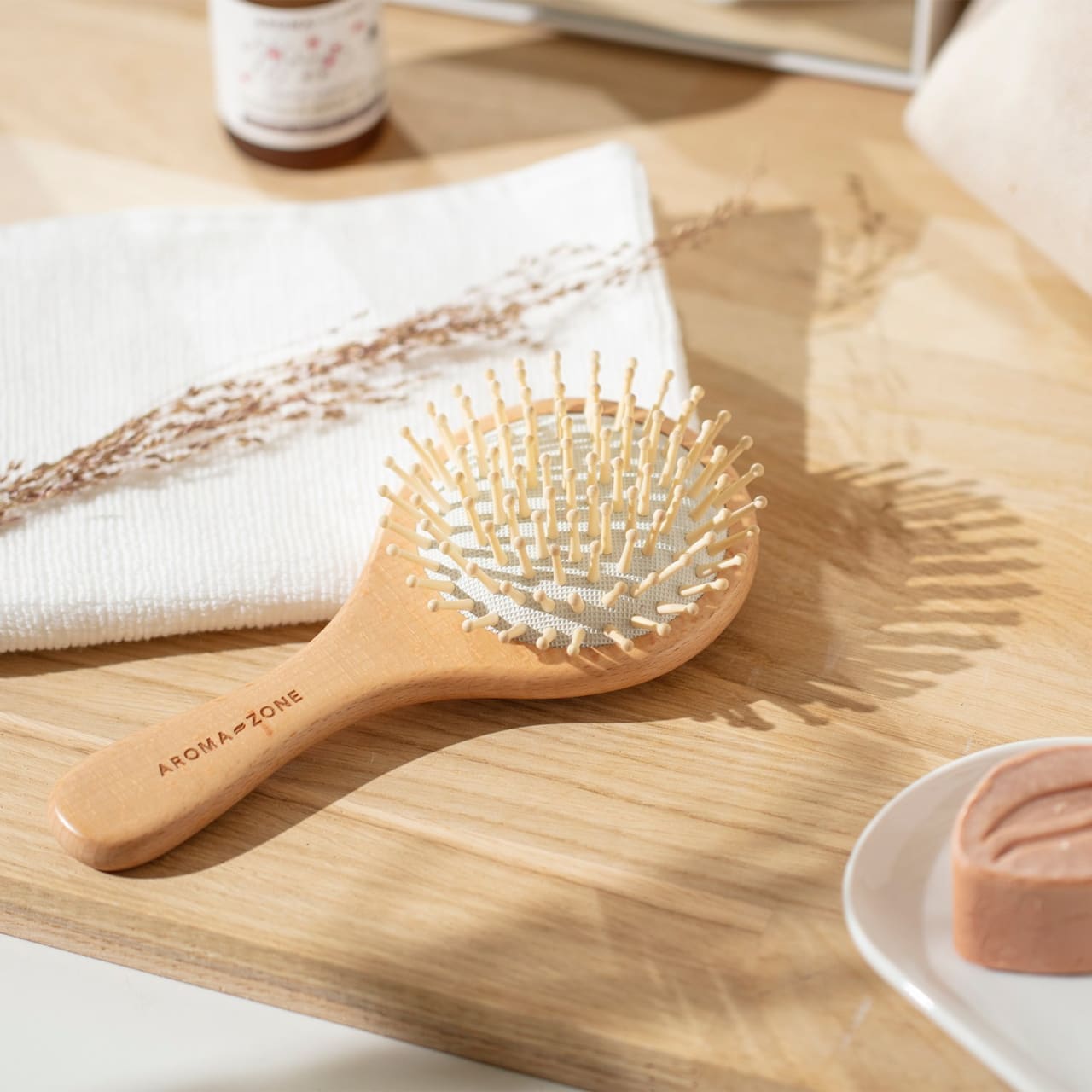
Did you know you can also use baking soda to clean your hairbrushes? Simply let them soak for a few hours in a small bowl of warm water mixed with baking soda. Then rinse with clean water and remove any buildup at the base of the bristles with a cotton swab or a small toothbrush.
Learn more

What are its benefits for grey hair?

What are its benefits for grey hair?

Can it be used with apple cider vinegar?

Can it be used with apple cider vinegar?
No, we do not recommend mixing baking soda with vinegar on your scalp or hair strands.
Focus on Our Writer, Hélène Betoux

Hélène Betoux is a French beauty journalist specialising in web media. Every day she writes tips, advice and guides to help consumers choose the right beauty products. With a strong interest in natural, organic and clean cosmetics, she analyses and shares trends and innovations in the sector.
Bibliography
1
Pierre Ripert, Baking Soda and Its Benefits,
Presses du Châtelet, 2010.
2
Élodie Joy-Joubert, I Love My Hair. All-natural beauty care,
La Plage, 2014.