1. As Toothpaste?
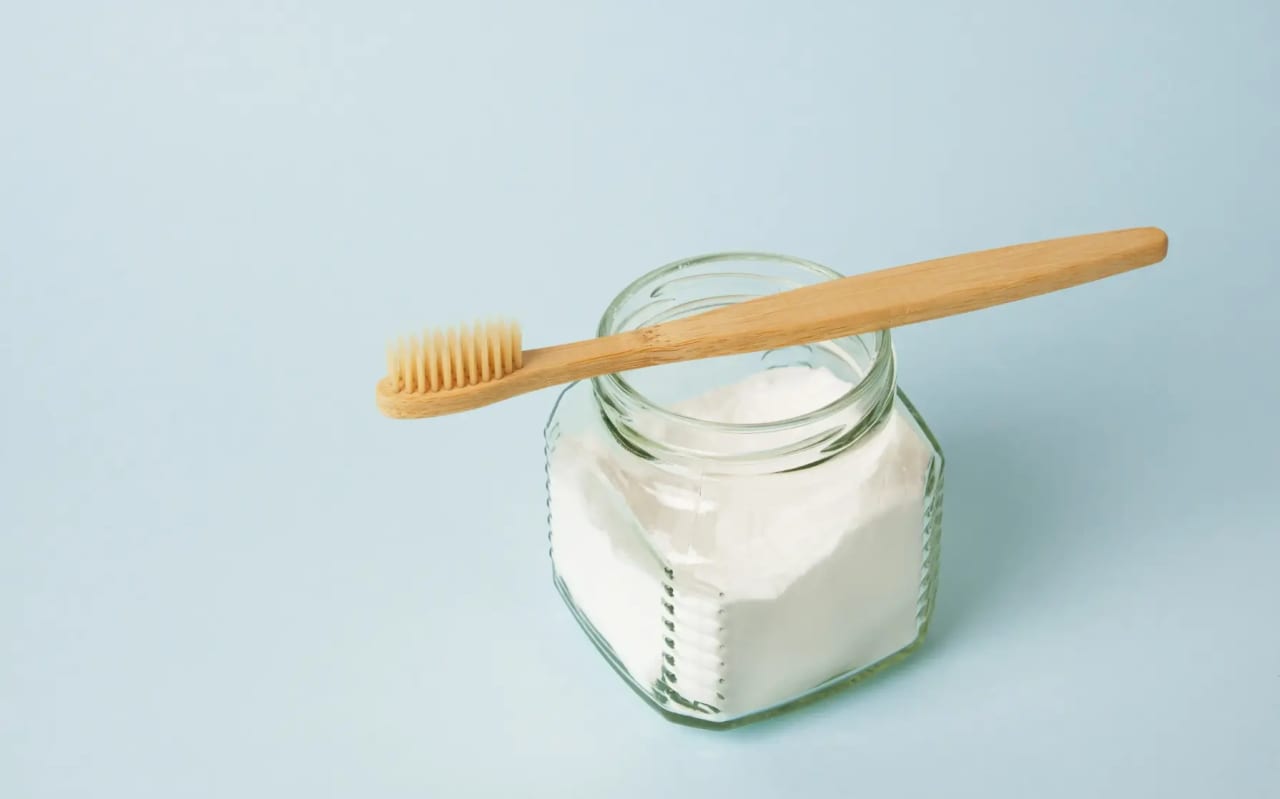
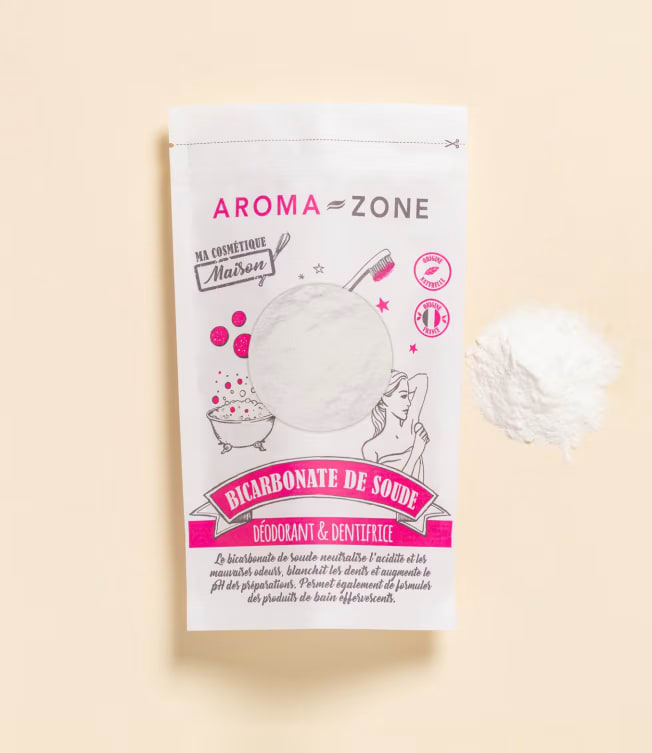
Baking soda is a great ingredient for making your homemade toothpaste. Its abrasive action gently cleans the enamel, and its chemical action helps thoroughly clean the mouth, dissolve food residue, prevent tartar buildup, and alkalise saliva to avoid bad breath or oral conditions. However, it cannot replace toothpaste on its own.
You can use it in different ways:
either before or after your usual toothbrushing by sprinkling it into a little water to achieve a paste-like consistency, then gently brush in small circles over your teeth.
or sprinkle it directly onto your toothpaste already applied to your toothbrush to combine its benefits with those of the toothpaste.
use it as an ingredient in a recipe for homemade toothpaste: we invite you to find all our recipes further down in this article.
As a precaution, we recommend using baking soda once every 10 days to enjoy all its benefits without any risk to your tooth enamel or gums.
2. As a Whitening Treatment
Thanks to its gentle abrasive properties, baking soda polishes the enamel and removes surface stains on the teeth caused by consuming certain staining foods like coffee, tea, red wine, nicotine, and more. This can restore whiteness and shine to your teeth.
However, it cannot lighten the natural shade of your tooth enamel, which is unique to each person and varies based on your genetic makeup.
Please also note that old, deeply embedded stains or yellowing caused by medication cannot be removed with baking soda. For this, we recommend consulting your dentist.
We recommend two ways to use baking soda for teeth whitening:
Add baking soda directly to your regular toothpaste on your toothbrush and gently brush your teeth for 3 to 5 minutes using small circular motions.
Or make a paste by mixing equal parts baking soda and water. Then apply this paste to your teeth and let it sit for 5 minutes before rinsing thoroughly. Then brush your teeth as usual.
As a precaution, we recommend using baking soda on your teeth only once every 10 days. Its abrasive properties can irritate your gums.
3. As a Mouthwash
Baking soda can also be used to make mouthwashes to help combat bad breath, soothe mouth ulcers and minor oral injuries, or rebalance the mouth’s pH in cases of acidic saliva. Acidic saliva may contribute to dry mouth, the growth of bacteria associated with cavities, bad breath, enamel demineralisation, tooth sensitivity, or tartar build-up. Thanks to its alkalising properties, baking soda helps neutralise excess acidity.
To make a baking soda mouthwash, dilute one teaspoon of baking soda in a glass of warm or cool water and use it as a mouth rinse or gargle. If desired, you can add a drop of Clove essential oil to help soothe mouth ulcers, Peppermint essential oil for a refreshing sensation, or a pinch of fine salt to help protect enamel from tartar build-up. Mouth rinses can be used several times a week.
However, if you experience significant or persistent oral acidity, we recommend seeking advice from a healthcare professional.