








All you need to know about magnesium
Did you know that nearly 80% of the French population currently have a magnesium deficiency?
Magnesium is involved in over 300 metabolic reactions in the human body, making it an essential food supplement to help you cope with modern life, fatigue and stress. You should also take it if you suffer from persistent muscle pain.
How well do you know this essential mineral? Do you think you can recognise the signs of a magnesium deficiency? Can you distinguish between the best forms available (oxide, chloride, lactate, malate, citrate, bisglycinate, gluconate, etc.)? Follow this Aroma-Zone guide to find out all you need to know about magnesium!

Magnesium: what is it?
Magnesium is a mineral. It owes its name to the Greek city of Magnesia, a basin of magnesium carbonate deposits.
It is an essential mineral, but our bodies cannot produce it. Therefore, our magnesium intake comes from our diet.
However, magnesium requirements vary significantly from one person to another depending on age, physical activity, stress levels and diet. Requirements are higher for athletes and pregnant women in particular, but can also be increased during periods of stress. Certain medications, such as proton pump inhibitors or anti-diabetic drugs, can also have an impact on the amount of magnesium required, as well as on its absorption.
It is important to note that, due to nutrient depletion in our diet and more intense lifestyles, food intake alone is no longer sufficient to cover our magnesium needs. In fact, studies have shown that a large proportion of the population now have an inadequate magnesium intake.
Therefore, the almost universal intake of magnesium these days is via a food supplement.
What are the benefits of magnesium?
Magnesium is recognised for the following benefits:
Reduces fatigue.
Normal functioning of the nervous system and maintenance of normal psychological functions.
Contributes to normal muscular function.
Helps maintain electrolyte balance.
Helps maintain normal protein synthesis and energy metabolism.
Maintains normal bones and teeth.
Involved cell division process.
It should be noted that magnesium can have laxative effects for some people, which may be perceived as an indirect benefit for anyone suffering from chronic constipation.
What are the signs of magnesium deficiency?
The physical and psychological signs that can indicate a magnesium deficiency are:
Fatigue
Muscle weakness and cramps
Muscular pains, particularly back pain
Sleep disorders
Nervousness
Constipation
Tingling, trembling and twitching eyelids. You can also read our special article on this subject: Twitching eyelids: why? What should you do?
If you are in any doubt about certain symptoms, ask your doctor for advice.
And to find out more about the signs of magnesium deficiency, read our special article: magnesium deficiency: a closer look at our food supplement.
What are the risks of magnesium deficiency?
Long-term magnesium deficiency can have negative consequences for your health, as the mineral plays a crucial role in many bodily functions.
Below is a list of some of the risks and symptoms that can be associated with long-term magnesium deficiency:
Migraines
Impaired immune function.
Neuromuscular disorders: cramps, weakness and tremors.
Nervous system disorders: anxiety, irritability, depression and sleep disorders.
Cardiovascular problems: cardiac arrhythmia, arterial hypertension and an increased risk of developing cardiovascular disease.
Increased risk of osteoporosis.
Metabolic disorders: increased risk of insulin resistance and type 2 diabetes.
Where can I find magnesium?
How to adapt your diet: which foods are rich in magnesium?
To begin with, it's important to include one or more of the magnesium-rich foods listed below in your daily diet, especially if you are pregnant or breastfeeding, are under stress or regularly do sports.
A simple tip is to post a list of these foods on your fridge door so that you can remember to stock up, eat them regularly and vary the sources of magnesium in your diet.
Food sources of magnesium are:
Green leafy vegetables (spinach, kale, etc.).
Wholegrain or pseudo-cereals (brown rice, buckwheat, quinoa, etc.).
Oilseeds and seeds (almonds, Brazil nuts, peanuts, pumpkin seeds, etc.).
Dark chocolate with 70% cocoa or more.
Seafood and small oily fish (prawns, mackerel, sardines, etc.).
Fruit (bananas, figs, avocados, dried apricots, etc.).
To a lesser extent, dairy products (milk and yoghurt) and magnesium-rich waters.
In theory, a balanced diet should cover daily requirements, with the nutritional reference value (NRV) for magnesium set at 375 mg in Europe.
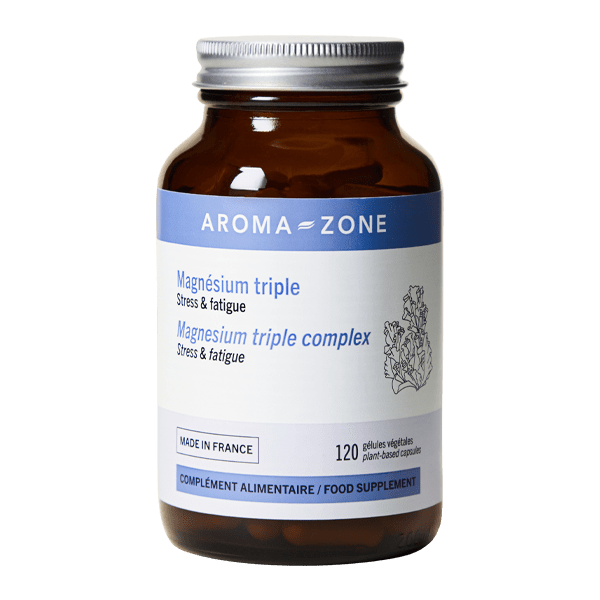
A closer look at our triple magnesium food supplement
At Aroma-Zone, we have chosen to combine 3 forms of magnesium for optimal effectiveness by blending high bioavailability and high magnesium concentration:

Magnesium bisglycinate: unlike other forms of magnesium, bisglycinate is absorbed directly from the small intestine, without needing to be transformed by gastric pH. As a result, its absorption is estimated to be 8 times faster than magnesium oxide, to give just one example. Bisglycinate is, therefore, considered to be one of the best organic forms of magnesium, both in terms of bioavailability and digestive tolerance.
Marine magnesium: a 100% natural source of magnesium, this extract of highly purified seawater is taken from the Irish coast. Marine magnesium is an insoluble magnesium salt, unlike bisglycinate. It is mainly composed of magnesium hydroxide, and tests show that it is much more bio-available (over 4 times more magnesium assimilated) than magnesium oxide. What's more, the main advantage of it is that it combines other trace minerals with magnesium, which optimise its effectiveness in the body.
Organic sea lettuce extract: this extract of the seaweed Ulva lactuca has exceptional magnesium content, thanks to an extraction process using seawater. Certified organic, it is an useful source of 100% natural magnesium.
Find out more about our Triple Magnesium food supplement.
How should I take magnesium? How much magnesium should I take every day?
Taking 3 capsules a day of our Triple Magnesium food supplement guarantees the right daily intake of magnesium. With this dose of magnesium per day, a 120-capsule pot covers a 40-day course of treatment. For maximum effectiveness, we recommend taking a course for 40 to 90 days.
Magnesium capsules can be taken at any time of day, but for best absorption, it is advisable to take this food supplement with a meal.
To promote sleep, taking them in the evening is beneficial, and to combat stress, taking them in the morning may be a good idea. If you take 2 or 3 capsules a day, it's also a good idea to divide the doses between different times of the day (morning and evening, for example) to ensure a regular intake.
Finally, it is advisable to take your magnesium capsules some time away from calcium-rich food supplements, as these 2 minerals can compete for absorption.
What are the contraindications to magnesium?
Magnesium contraindications may vary from one formulation to another, depending on the co-factors and forms used.
There are no known contraindications to taking our Triple Magnesium during pregnancy or while breastfeeding. However, pregnant or breastfeeding women are advised to seek the advice of a healthcare professional before taking any food supplements.
There are no contraindications to taking Triple Magnesium continuously for people whose needs are particularly high, such as athletes, people subject to stress or the elderly.
This product is for adults only. Do not give to children or adolescents.
Organic sea lettuce extract (seaweed) provides a small amount of iodine (< 10 µg for the daily dose of 3 capsules, i.e. less than 6.7% of the nutritional reference value of 150 µg / day for iodine). If you have thyroid problems, please seek the advice of your doctor.
Article written by Lou Dumas, Naturopath

Lou graduated from HEC in 2012. She gained ten years of experience in marketing for cosmetics and perfumes before becoming an independent consultant in this field. She recently completed a three-year naturopathy program at the European College of Holistic Naturopathy (CENATHO, Paris) with the goal of supporting the physical and mental health of the people she works with through a holistic approach to lifestyle.