Home Teeth Cleaning: What Products Should You Use?

Dental tartar can quickly dull the beautiful white of our teeth but can also lead to oral health problems such as gingivitis, bad breath and even cavities. Dental scaling, usually performed by a dental professional, can also be done at home to gradually remove plaque. However, this natural scaling must be done with the right products to avoid damaging tooth enamel and/or gums. In this article, we’ll explore all the natural tips for successful at-home scaling.

Reading time: 0 min.

Tartar: what is it?

Dental tartar, also known as calculus, is a mineral buildup on the teeth resulting from the calcification of dental plaque. Dental plaque is that thin, sticky film composed of bacteria, saliva, food particles, and sugars present in the mouth. If it is not regularly removed through proper brushing, it can harden and turn into tartar. 

Tartar forms mainly at the junction between the teeth and gums, as well as between the teeth themselves. It often has a rough texture and can vary in color: white, yellow, or brown.  Once tartar has formed, it becomes a breeding ground for bacteria, which can lead to oral health problems such as gingivitis (inflammation of the gums) and, eventually, more serious periodontal diseases. In addition, tartar can contribute to tooth discoloration and bad breath.

Removing dental tartar may require the intervention of a healthcare professional, such as a dentist, as it can cause not only cosmetic concerns but also oral health problems.
Why do we get tartar on our teeth?

As we’ve already mentioned, several factors contribute to the formation of tartar on teeth; here are the specific ones:

  • Mineralisation of dental plaque: Saliva contains minerals such as calcium and phosphate. When dental plaque comes into repeated contact with these minerals, it begins to mineralise and harden, thus forming tartar.

  • Poor oral hygiene: Inadequate brushing and failure to floss allow dental plaque to accumulate. Hard-to-reach areas, such as the spaces between teeth and along the gum line, are particularly prone to tartar buildup.

  • Diet: Certain foods, particularly those high in carbohydrates and sugars, promote the growth of bacteria responsible for dental plaque. Unbalanced diets can therefore contribute to tartar buildup.

  • Individual factors: Some individuals are more prone to developing tartar due to genetic factors, the composition of their saliva, or medical conditions that affect saliva production.

Expert Tip

Beyond the aesthetic aspect, removing plaque is essential for maintaining good oral health. It is important to maintain good oral hygiene by brushing your teeth at least twice a day, flossing regularly, and visiting a dental professional for routine cleanings.

What is teeth cleaning?

Dental scaling is a professional medical procedure designed to remove tartar buildup on the teeth. It is generally performed by a dentist during a visit to the dental health professional. It is essential to have your teeth scaled once or twice a year to: 

Prevent dental problems: By removing tartar, scaling helps prevent dental problems such as gingivitis (gum inflammation), periodontal disease, and cavities.

Maintaining good oral health: Tartar can affect overall oral health, including the gums and bone that support the teeth. Regular scaling helps maintain a healthy mouth.

Improving dental aesthetics: By removing tartar, scaling can also help improve dental aesthetics by reducing stains and giving teeth a cleaner, brighter appearance.

It is also possible to perform teeth cleaning yourself, or at least naturally prevent the buildup of tartar; below, we’ll look at how to perform effective at-home teeth cleaning.

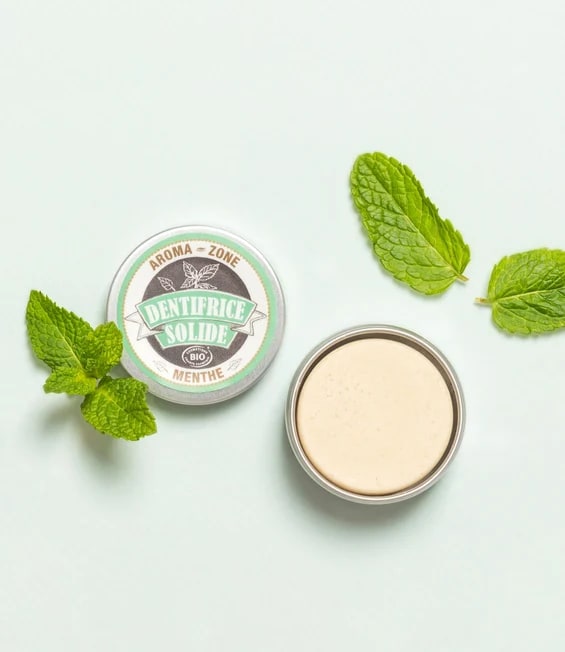
Aroma Zone product spotlight: Organic Mint Solid Toothpaste

Discover Aroma Zone’s Organic Mint Solid Toothpaste, a true gem for taking care of your oral health. With an exceptional rating of 346 positive reviews, this certified organic and vegan toothpaste has won the hearts of our customers. Made with 100% natural ingredients, it highlights its French manufacturing and its commitment as an organic cosmetic. Its unique formula combines the power of calcium carbonate for gentle cleaning and a dazzling shine with naturally antibacterial coconut oil. Xylitol and sweet-tasting birch extract help prevent cavities. This natural toothpaste not only prevents plaque and cavities but also cleanses the mouth and removes tartar. For fresh breath, enjoy the duo of Spearmint and Peppermint essential oils. Choose the recyclable eco-refill to easily refill your toothpaste while reducing waste. Give your smile the best with this organic mint solid toothpaste.

How can you remove tartar from your teeth naturally?

It is possible to help remove tartar from your teeth at home using natural methods, although these methods do not replace professional scaling at the dentist’s office. Here are some home remedies to help reduce dental tartar:

  1. Baking soda: Baking soda can be used as a gentle polishing agent to help remove plaque. Mix a small amount of baking soda with water to form a paste, then brush your teeth with this paste once a week. However, do not use this method frequently, as baking soda can be abrasive.

  2. Apple cider vinegar: Apple cider vinegar is acidic and can help dissolve tartar buildup. Dilute one tablespoon of apple cider vinegar in a glass of warm water and use it as a mouthwash. Do not use this method more than once a week to avoid any risk of irritation.

  3. Coconut oil (oil pulling): Coconut oil has antibacterial properties. The "oil pulling" technique involves swishing coconut oil around in your mouth for 15 to 20 minutes, then spitting out the mixture. This can help reduce plaque, but it is not a substitute for regular brushing.

  4. Crunchy fruits and vegetables: Eating foods such as apples, carrots, and celery can help naturally clean teeth by stimulating saliva production and removing food particles.

  5. Hydrogen peroxide: Hydrogen peroxide can be used as a diluted mouthwash to help reduce plaque. Use it with caution and in a low dilution, and do not use it frequently.

Prevent tartar naturally?

For greater effectiveness, it’s also important to maintain a flawless oral hygiene routine to prevent tartar buildup:

  • Brushing: It is recommended to brush your teeth thoroughly at least once or twice a day with a soft-bristled toothbrush. 

  • Flossing: An essential step for removing plaque between teeth; use it in moderation—once a day is sufficient.

  • Opt for effective oral hygiene: Use an antiseptic mouthwash recommended by your dentist. Some mouthwashes can help reduce plaque and prevent tartar buildup.

Expert Tip

It is important to note that these methods should be used with caution, as excessive or improper use can damage tooth enamel or the gums. Furthermore, these tips are not a substitute for good oral hygiene, which includes regular brushing, flossing, and visits to the dentist for professional cleanings. Before trying these methods, it is recommended that you consult a dental professional for advice tailored to your specific dental situation.

Learn more:

How to prevent tartar? Tips listed

To avoid an unpleasant experience at the dentist, it’s best to prevent tartar buildup. Note that despite all preventive measures, a professional scaling is strongly recommended at least once a year by your dentist. 

  1. Regular tooth brushing: Brush your teeth at least twice a day, preferably in the morning and before bed, using a soft-bristled toothbrush. Use proper brushing technique to reach all tooth surfaces, including the gum line.

  2. Flossing: Flossing is essential for removing plaque between teeth, where a toothbrush cannot reach effectively. Gently floss once a day.

  3. Mouthwash: Use an antiseptic mouthwash recommended by your dentist. Some mouthwashes can help reduce plaque and prevent tartar buildup.

  4. Eat a balanced diet: Limit your intake of foods high in sugar and carbohydrates, as they promote the growth of bacteria that cause plaque. Eat a balanced diet rich in fruits, vegetables, lean proteins, and dairy products.

  5. Chew crunchy foods: Certain crunchy foods, such as apples, carrots, and celery, can help naturally clean your teeth by stimulating saliva production and removing food particles.

  6. See your dentist regularly: Schedule regular visits to your dentist for dental exams and professional cleanings. A dental professional can detect and remove tartar more effectively than at-home cleaning methods.

  7. Avoid tobacco: Smoking is associated with an increased risk of tartar buildup. Avoid tobacco to maintain the health of your teeth and gums.

By following these tips and maintaining good oral hygiene, you can significantly reduce the risk of tartar buildup and keep your mouth healthy. If you have specific concerns or special dental needs, consult your dentist for personalised advice.

Does baking soda remove tartar?

Baking soda is sometimes used as a cleaning agent to remove tartar, but it’s important to note that it may not be as effective as other products specifically designed for this purpose. Tartar is a buildup of mineral deposits, primarily calcium carbonate, that forms on the teeth and can be difficult to remove.

Although baking soda can help gently remove tartar thanks to its mild abrasive action, it’s important to use it with caution to avoid damaging tooth enamel. Excessive use or applying too much pressure when brushing with baking soda can lead to tooth enamel erosion, which can cause tooth sensitivity and other dental problems.

How to perform dental scaling?

It is important to note that dental scaling is generally performed by dental health professionals, such as dentists or dental hygienists, as they have the expertise and tools necessary to do so safely and effectively. However, there are at-home dental care methods that can help reduce tartar buildup and maintain good oral health. Here are some tips for taking care of your teeth and reducing tartar buildup at home:

  1. Regular brushing: Brush your teeth at least twice a day, preferably after meals, using a soft-bristled toothbrush and fluoride toothpaste. Regular brushing can help remove plaque and prevent tartar buildup.

  2. Flossing: Floss daily to clean between your teeth and along the gumline, where your toothbrush can’t reach. Flossing helps remove food debris and plaque that can contribute to tartar buildup.

  3. Using mouthwash: Use an antiseptic mouthwash after brushing to rinse bacteria and food particles from your mouth. Choose an alcohol-free mouthwash containing fluoride to help strengthen tooth enamel and prevent cavities.

  4. Avoid sugary foods and drinks: Limit your intake of foods and drinks high in sugar, as they can promote the growth of bacteria that cause plaque and tartar. If you eat sugary foods, be sure to brush your teeth or rinse your mouth with water afterward.

  5. Sugar-free gum: Chew sugar-free gum after meals to stimulate saliva production, which can help remove food particles and neutralise acids in the mouth that contribute to tartar buildup.

Spotlight on our editor: Coralie Técher

Coralie has spent seven years working as a journalist and editor specialising in women’s issues. With a particular passion for beauty and wellbeing, she is committed to highlighting nature’s self-care solutions. Always staying up to date with the latest research and trends, she enjoys sharing the most relevant and trustworthy insights with her readers.

Bibliography

1

VERGNE, Alfred. On Dental Tartar and Its Deposits. 1869.

2

BUCCARELLO, Fanny. Effect of antiseptic solutions on the dispersion of particles and bacteria emitted during the use of an ultrasonic scaler. 2005. Doctoral thesis. Publisher not available.

3

VIGOUROUX, F. Non-surgical treatment.