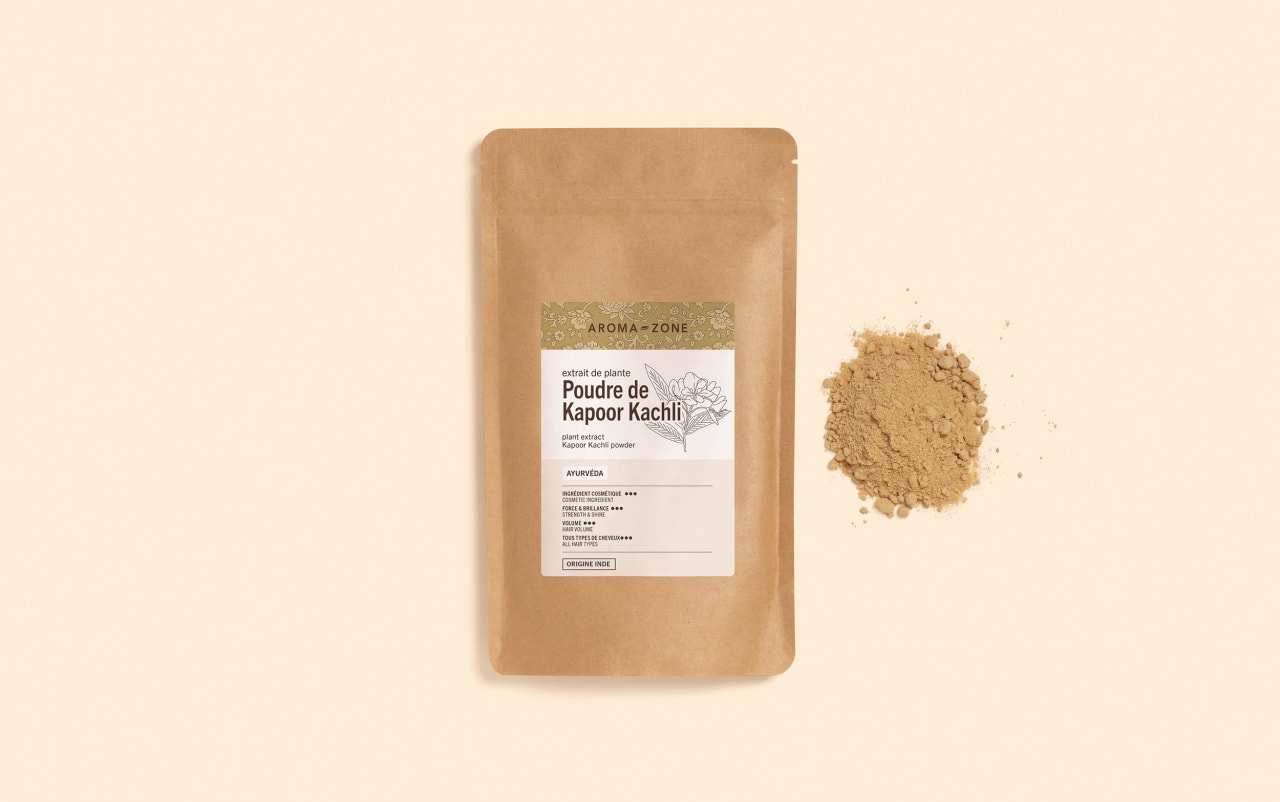
Kapoor Kachli Powder

  • 100% pure and natural
  • Foraged
Kapoor Kachli is traditionally known in Ayurveda for soothing Vata and Kapha constitutions. This species of wild ginger is rich in antioxidants and has naturally fortifying properties, making the powder an ideal ingredient for hair-care formulations. It is reputed to help thicken and add shine to the hair, stimulate growth, and leave a pleasant, fresh aroma.
£3.50

1 item = 100 g

Price per kg = £35

Features

Properties and uses

In practice

Quality

Storage and precautions

Find out more

Features

Our commitments

Culture

Foraged

Quality

  • 100% pure and natural

  • Cosmetic quality

Production process

The root is harvested by hand, then air-dried and ground to a powder.

Part of the plant used

Rhizomes

Botanical name

Hedychium spicatum

Botanical family

Zingiberaceae

Benefits and properties

  • Hair fortifier

  • Fragrance

Country of origin

India

Other names

Spiked ginger lily, Kapur kachiri, Shati, Suvrata, Gandhamulika, Gandharika, Gandhavadhu, Prithu palashika, Gandhapalashi

INCI name

Hedychium spicatum root powder

Properties and uses

Hair care

Find out more, etc.

Properties

Ayurvedic Kapoor Kachli powder is recognised for its beneficial haircare properties:

  • Rich in antioxidants and stimulating, it tones the scalp and encourages hair growth.

  • It enhances hair shine, making it thicker and shinier.

  • It makes hair easier to detangle and smoother.

  • Thanks to its natural fragrance, it leaves hair smelling pleasantly clean .

Indications

  • All hair types

  • Dull, tired hair

  • Hair loss

Synergies

  • To fragrance the hair: Damask rose and Iris powder, Damask rose, Jasmine, patchouli, and Orange blossom hydrosols, Damask rose and Patchouli essential oils.

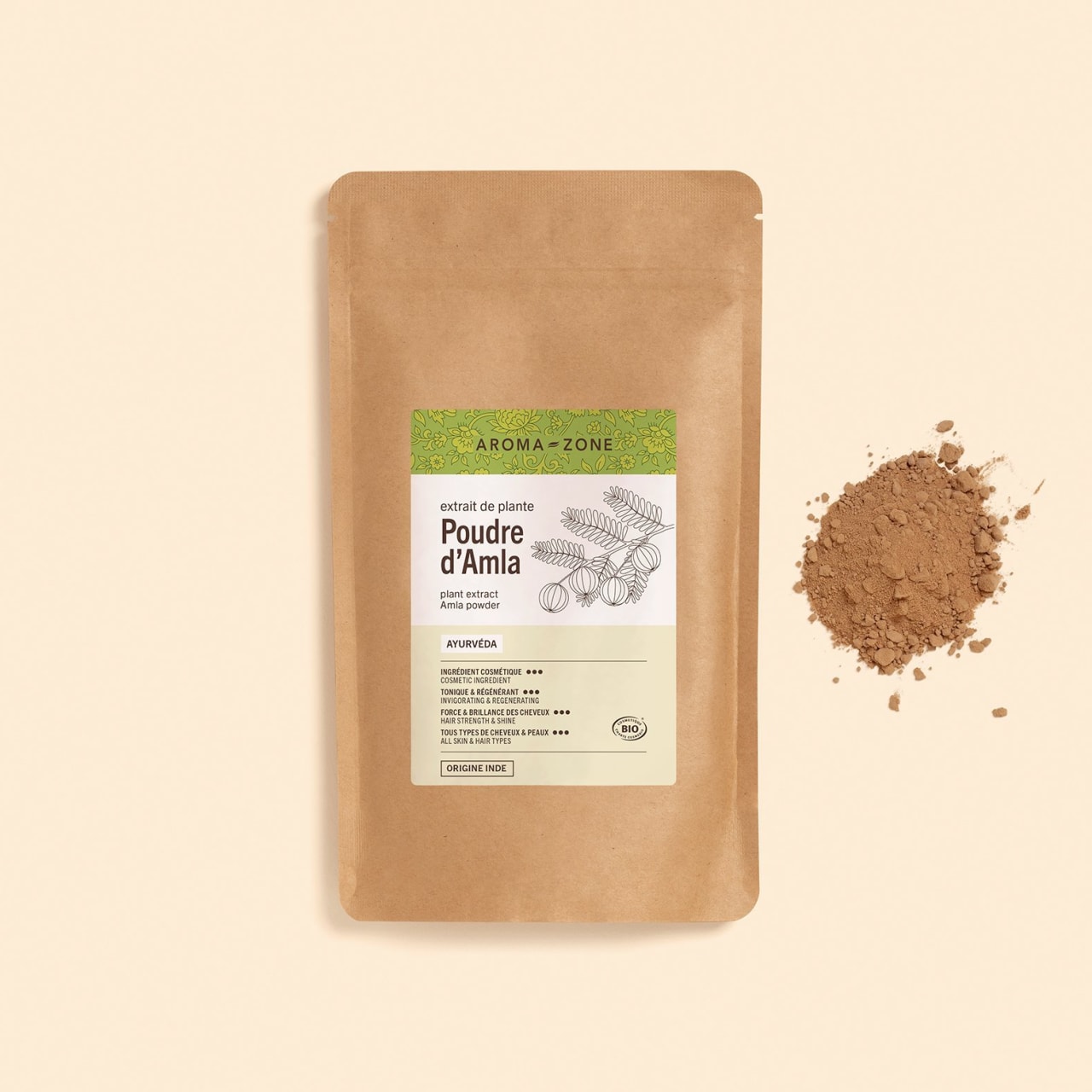
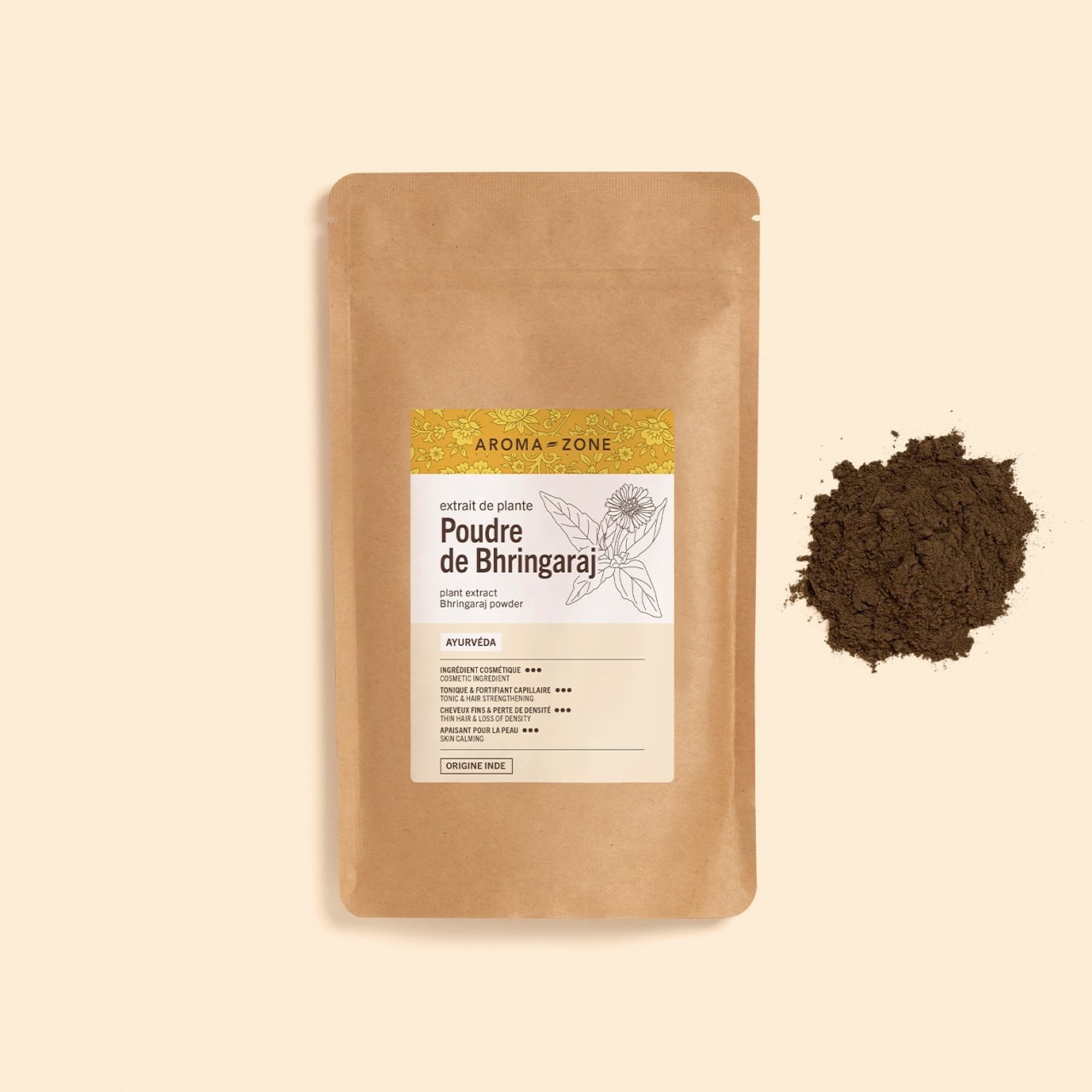
  • To promote hair growth: Amla and Bhringaraj powders, Sapote and Grape seed oils, Lemon, Clary sage, Spikenard and Atlas cedar essential oils, and grapefruit hydrosol.

In practice

  • As a mask, mixed with other natural powders.

  • As a dry shampoo, mixed with other natural powders.

  • As an water-based macerate (or infusion), incorporated in the water phase of your homemade cosmetic formulas, as an ideal active ingredient for:

    • A toning hair mask.

    • A smoothing shampoo.

    • A fragrant hair mist.

    • A hair loss lotion.

In practice

General characteristics

Water-insoluble

Use as a dispersion

Oil-insoluble

Use as a dispersion

Use in home cosmetics

Cream and lotions, infusion (to be incorporated into your own preparation), lotion, hair mask, shampoo

Equivalence table

Compare the capacity of the utensils we use

Some recipe ideas

Recipe for Water-Based Kapoor Kachli Macerate

Hair and skin care recipe

Choose a quantity appropriate to the quantity needed in your formula, adding a small margin to compensate for losses due to filtration.

How it works

1

Weigh the quantity of powder using scales.

2

Using a powder funnel, pour the powder into the water.

3

Shake well to disperse the powder in the liquid.

4

Leave to macerate for 24 hours in a dark place, stirring occasionally.

5

After maceration, filter through a coffee filter or a clean, suitable cloth.

6

Collect the filtrate and transfer it using a clean pipette into a previously disinfected airtight bottle.

Use

This solution can be incorporated into the water-based phase of your hair or skincare formulations.

Please note, without a preservative, this extract is very sensitive to microbial contamination. Be sure to use it quickly and store it in the fridge. If you'd prefer to store it for a longer period, you should add a preservative such as Aroma-Zone's grapefruit seed extract: 20 drops for every 100 ml of macerate or approximately 4.8 ml per 1 litre of macerated oil.

Kapoor Kachli Infusion Recipe

Hair and skin care recipe

Choose a quantity appropriate to the quantity needed in your formula, adding a small margin to compensate for losses due to filtration.

How it works

1

Bring the required amount of water to the boil.

2

Weigh the quantity of powder using scales.

3

Add boiling water to the Kapoor Kachli powder.

4

Leave to infuse for 10-15 minutes.

5

After brewing, filter through a coffee filter or a clean, suitable cloth.

6

Collect the filtrate and leave to cool.

Use

This solution can be incorporated as an aqueous phase in your hair and skin care products.

This preservative-free extract is very sensitive to microbial contamination. Be sure to use it quickly and keep it refrigerated. If you want to keep it longer, you'll need to add a preservative like Aroma-Zone grapefruit seed extract: 20 drops for 100 ml of macerate or about 4.8 ml for 1 litre of macerated oil.

  • As a mask : mix with other plant powders and hot water to obtain the desired consistency.

  • As a water-based macerate (or infusion) : add during the water-based phase of your hair or skin formulations.

Quality

Organoleptic properties

  • Appearance: fine powder

  • Colour: light brown

  • Odour: fresh, clean, naturally fragrant

  • Virya: warming

Composition

  • Terpenoids

  • Flavonoids

  • Phenolic derivatives

Storage and precautions

Storage

Store away from air, moisture and light. Tightly seal container after use

Precautions

  • Powdery product and irritant; do not use near a source of ventilation.

  • It is advisable to use a mask and goggles when handling the powder.

  • Avoid contact with eyes; if contact occurs, rinse thoroughly with clean water.

  • Keep out of reach of children.

  • This powder is very active, so we recommend that you always test it in the crease of the elbow 24 hours before application.

Find out more

Ayurveda, or Ayurvedic medicine, is a sacred and comprehensive therapeutic science that has been practised for over 5,000 years in India. It embodies a philosophy and way of life. In Sanskrit, "ayur" translates to "life" and "veda" to "science" or "knowledge." Discovered by the Rishis, the great sages of the Himalayas, through keen observation of nature and the five elements (Water, Earth, Fire, Air, Space and Ether), Ayurveda is founded on the concept of the three doshas (Vata, Pitta, and Kapha), each composed of two elements. Every individual is born with a unique proportion of these doshas, with one or two often being predominant. The aim of Ayurveda is to exist in harmony with your inherent constitution, to understand what promotes your health, happiness, and radiant skin, while also learning to recognise the factors that contribute to illness or unhappiness.

Warning

The properties, information and methods of use below are quotes from reference books or websites on aromatherapy, hydrolatherapy and phytotherapy. This general information is provided for informative purposes only and in no way constitutes medical guidance. Under no circumstances can this information be used as a substitute for a medical diagnosis, consultation or follow-up, nor can it incur our liability. We recommend that you consult the guide to essential oils before using them, so that you are aware of any precautions that need to be taken. If in doubt, consult a doctor before using essential oils.

Responsible Person

  • EU responsible person: Aroma-Zone FR-84220 Cabrières d’Avignon

  • UK responsible person: Obelis UK Ltd, Sandford Gate, Oxford, OX4 6LB, UK

Equivalents

Essential Oils

1 ml = approximately 35 drops (with our Aroma-Zone dropper caps)

Carrier oils

1 pump (Aroma-Zone aluminium pump) = approx. 0.15 ml

Mass / Volume conversion (for a liquid)

Mass (g) = Density x Volume (ml) at 20°C

Further information

1 full teaspoon = between 3 and 4.5 ml

1 full tablespoon = between 7.5 and 10 ml


However, these spoon ratios depend on a number of factors (e.g. viscosity of the liquid, temperature, depth and size of the spoon, rheological behaviour of the liquid), and we strongly advise you to use precise measuring equipment, such as graduated test tubes, graduated pipettes, and precision scales.

Bibliography

1

Supplier Documents

2

'The Divinity of Plants - An Ayurvedic Guide to Herbal Medicine' by Dr. David Frawley and Dr. Vasant Lad

3

Sravani T, Padmaa M Paarakh, "Hedychium spicatum Buch.Ham. – An Overview", Pharmacologyonline 2: 633-642 (2011)