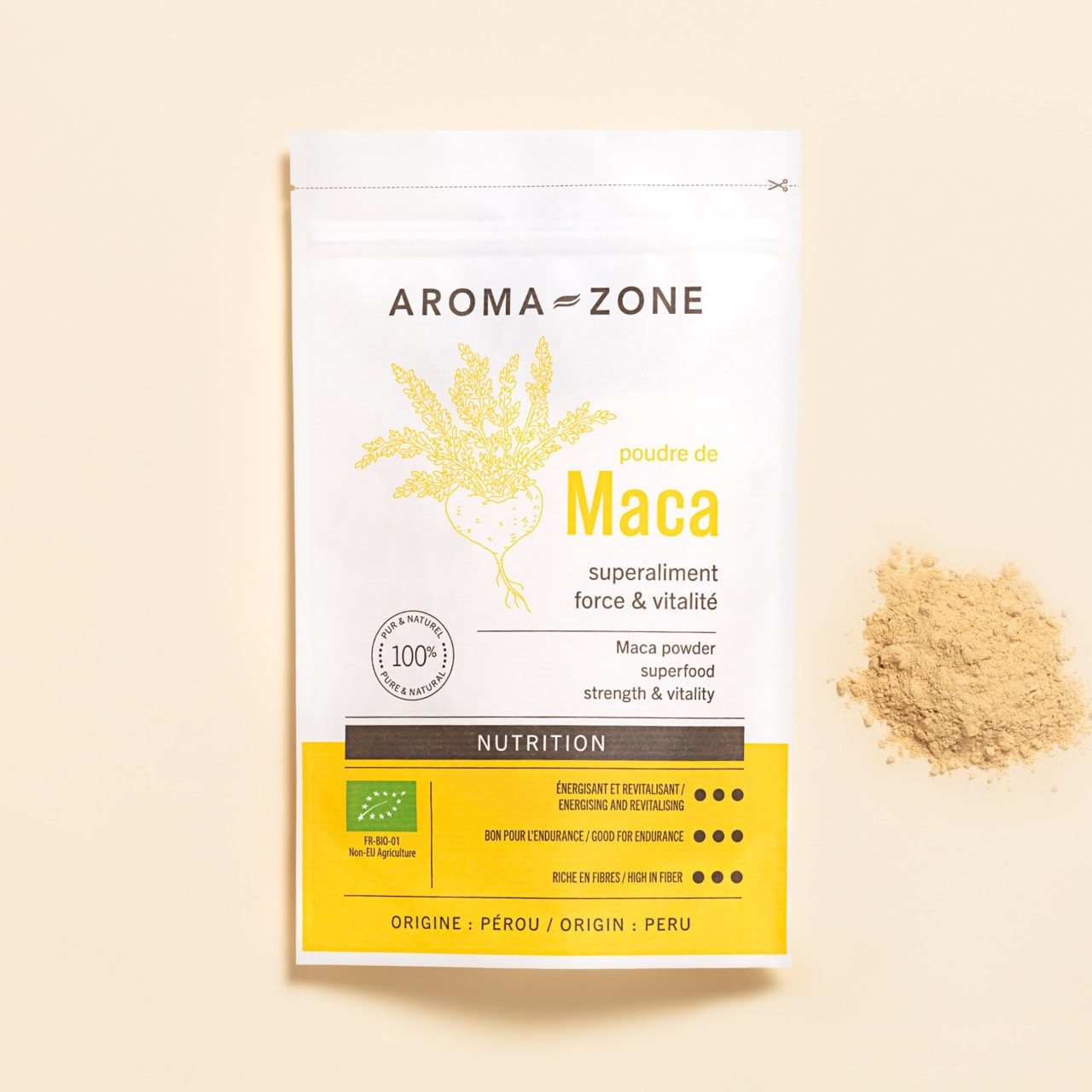
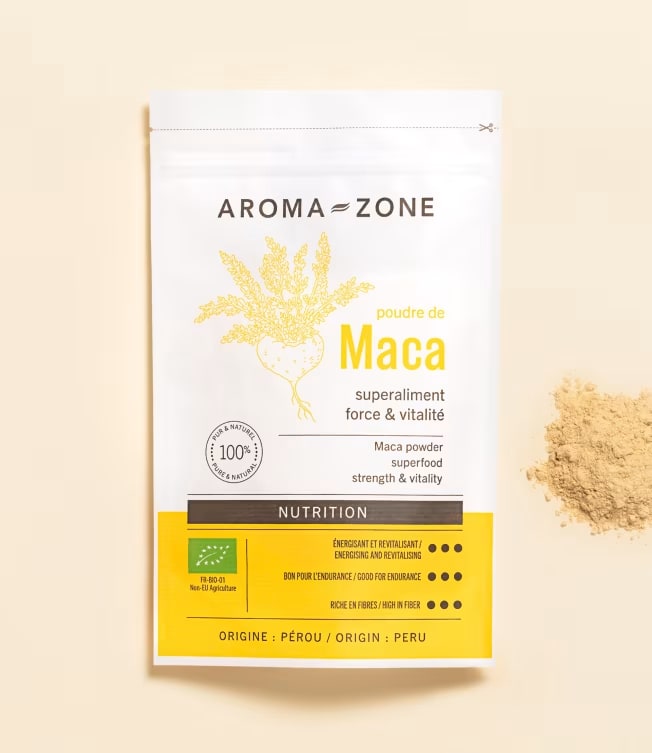
Research on maca reveals several interesting effects and benefits on vitality, sexual function, memory and stress management, although much of the data is still based on preliminary or animal studies and does not support authorised health claims.
According to a comprehensive review published in 2024 (Ulloa Del Carpio et al., [1]), differences in the geographical origin of maca influence its composition and effects. Researchers highlight its potential in several areas of health, including sexual function, neuroprotection, blood pressure regulation, and photoprotection. These results encourage further research into this promising plant.
A randomised double-blind study conducted in healthy adults showed that consuming red or black maca for several weeks was well tolerated and associated with a perceived improvement in sexual function and overall well-being (Gonzales-Arimborgo et al., 2016, [3]).
Other studies indicate that maca may improve sexual desire without directly influencing hormone levels. This was observed in a study of adult men who consumed maca for eight weeks: sexual desire increased without any change in blood testosterone levels (Gonzales GF et al., 2002, [4]).
Finally, an earlier review from 2020 (Peres et al., [2]) summarises the nutritional and pharmacological properties of the plant, particularly its adaptogenic, tonic, and antioxidant effects, while calling for more scientific rigour to validate these observations.