Organic Chia Seeds
Digestive comfort
£6.50
1 article = 380 g
Price per kg = £17.11
free delivery up to £25 in United Kingdom
100% secure payment CB, Visa, Mastercard, Paypal, Apple Pay, Google Pay
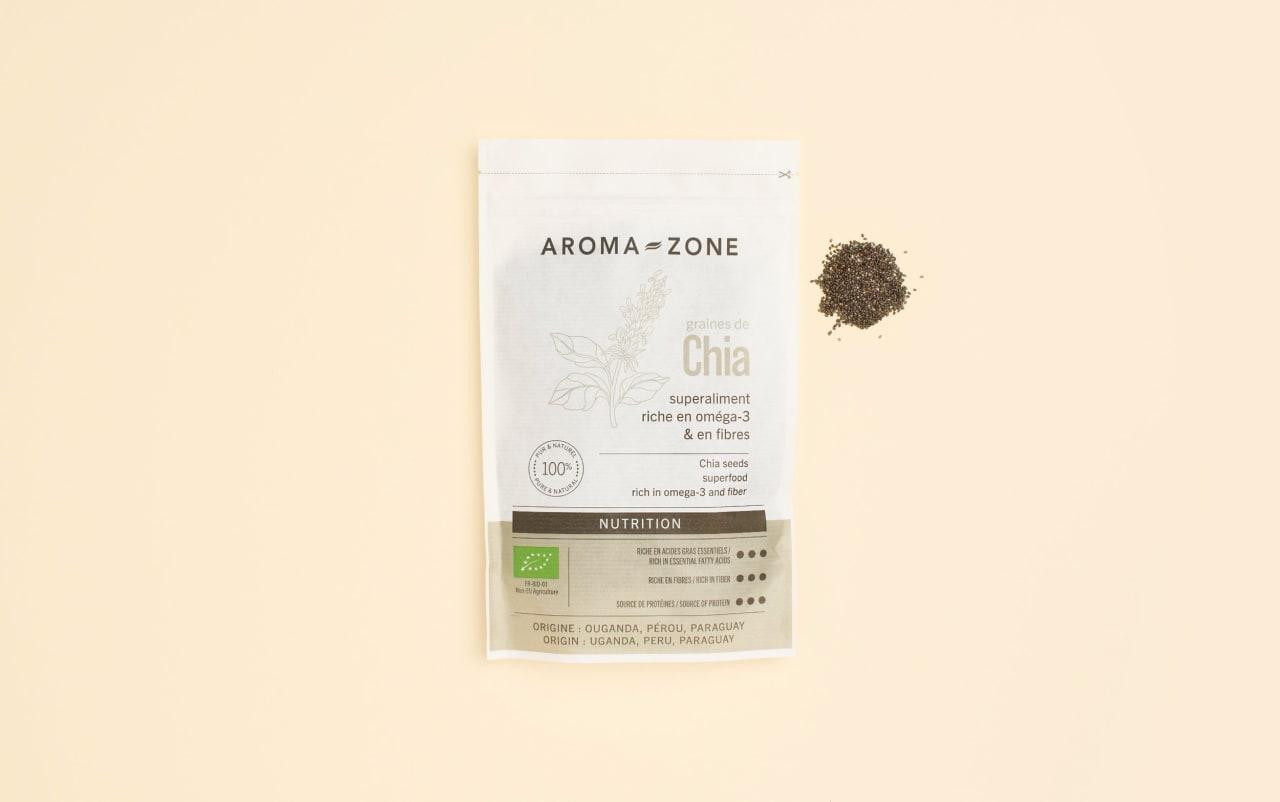
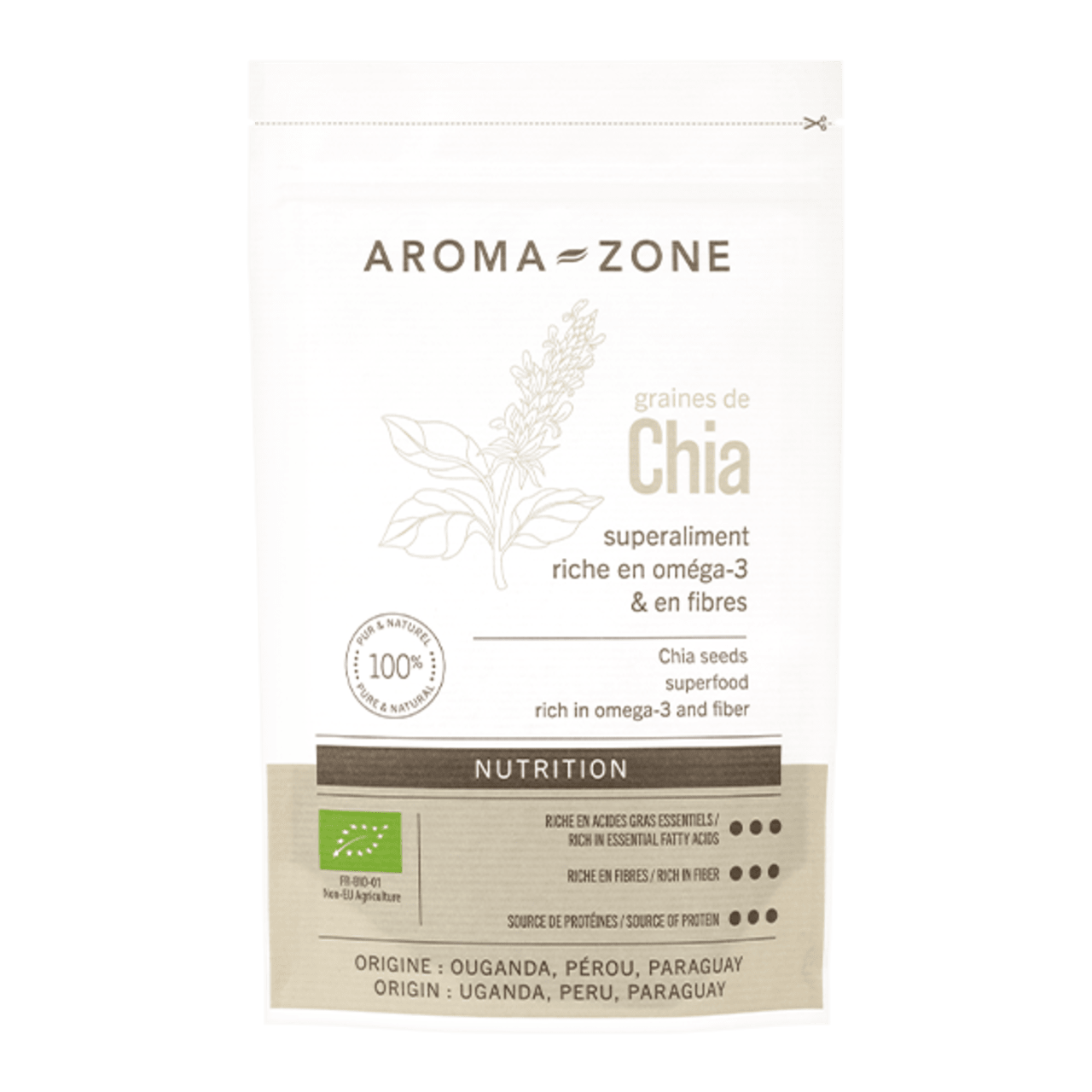
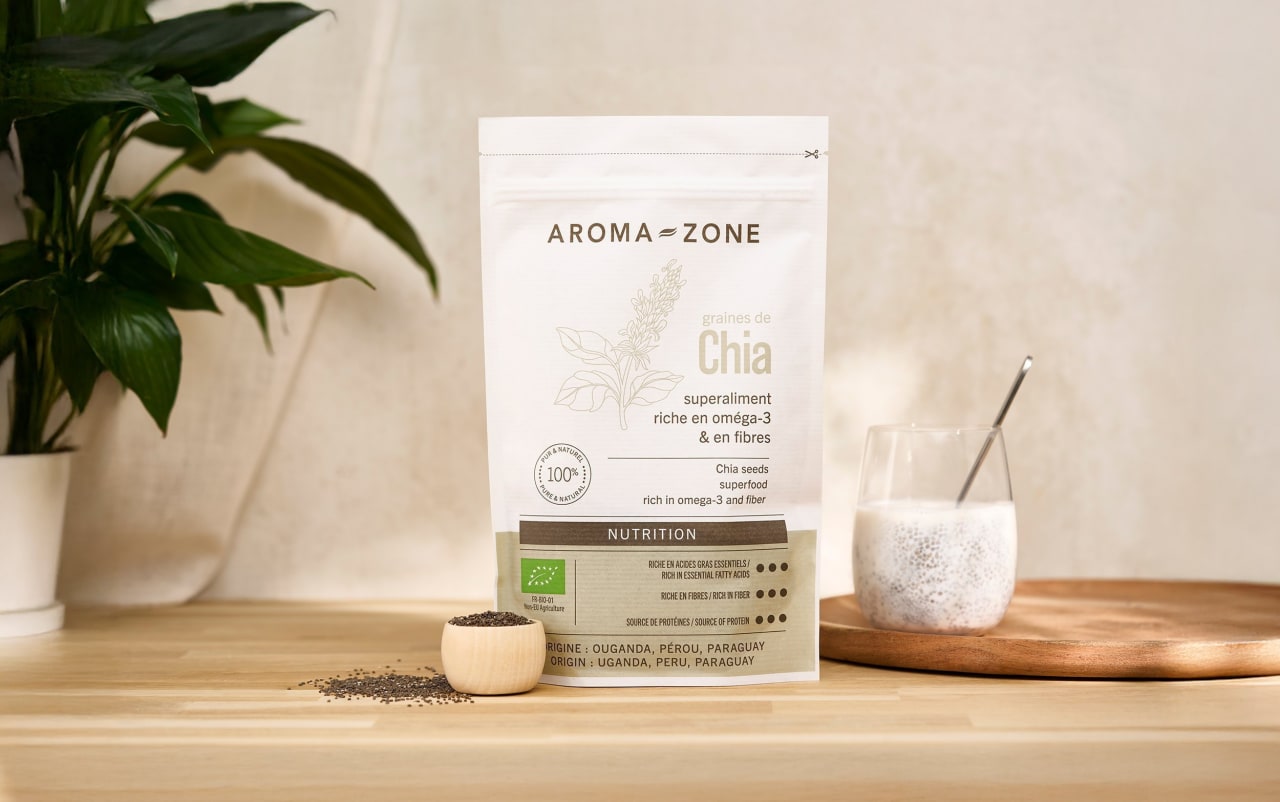

Organic Chia Seeds
380 g
100% natural origin
Organic Farming
Organic
Why we love it
100% ORGANIC Chia seeds, 100% natural
A concentrate of benefits, easy to incorporate into your daily diet for a boost of fibre and Omega-3 fatty acids.
Rich in mucilage, fibre, essential Omega-3 fatty acids and protein
For whom?
For people who want to adopt a healthier diet, increase their intake of Omega-3, fibre and protein, or simply discover new tastes and textures!
How do I use it?
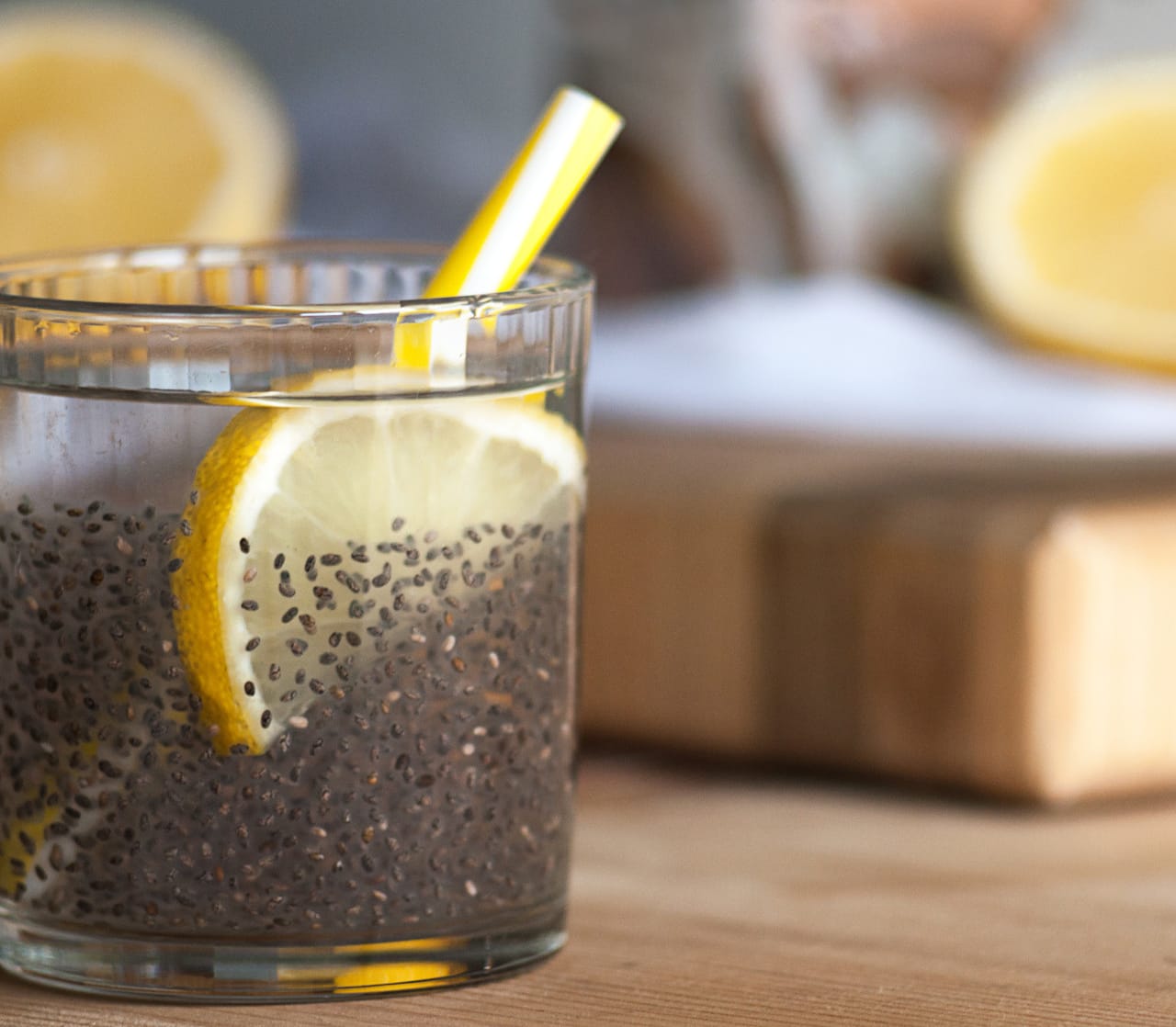
Sprinkle 1 tablespoon of Chia seeds (whole or pre-ground) over a dish, stir directly into a preparation (bread, cake, crackers, biscuits, etc.), or soak in a liquid (milk, plant-based drink, water or fruit juice) to form a jelly-like texture and make 'chia puddings' or 'chia creams'.
How should ORGANIC Chia seeds be eaten?
Incorporate 1 to 3 teaspoon(s) of Chia seeds (whole or ground) per day (maximum 15 g) into your culinary preparations: breads, biscuits, yoghurts, mueslis, etc.

Sprinkle 1 tablespoon of Chia seeds over your salads and dishes. Or add 1 to 2 tablespoons to bread doughs, crackers, biscuits, cookies, etc.

Add 1 to 2 tablespoons of chia seeds to your dessert recipes.

Add 1 to 2 teaspoons of chia seeds to your smoothies and shakes.

Add 1 to 2 tablespoons of chia seeds to your cereal bars or energy balls.

Add 1 to 2 tablespoons of chia seeds to your porridge, energy bowls, breakfast bowls, chia puddings, etc.
Some ideas for incorporating Chia seeds into your diet:
Make chia puddings, chia creams, energy bowls and breakfast bowls, topped as you wish with dried or fresh fruit, almonds, granola-style toasted cereals, fruit coulis or compote... To do this, soak 1 to 2 tablespoons of chia seeds in a liquid such as milk or a plant-based drink to obtain a sort of mucilaginous gel.
To obtain chia puddings or chia creams with a smoother texture, you can grind the chia seeds with a spice grinder. Because chia seeds are rich in omega-3 polyunsaturated fatty acids, they are more sensitive to oxidation once ground, so prepare small quantities and keep them in an airtight jar in the fridge.
Make seed crackers.
Replace the eggs in your cooked dishes with chia seeds soaked in a liquid (water, milk, plant milk): to replace 1 egg, mix 2 teaspoons of seeds with 3 tablespoons of warm water, then leave to stand for 15 to 20 minutes before use. Handy for vegans!
Why eat Chia seeds?
Chia seeds have a particularly interesting nutritional composition. They contain polyunsaturated fatty acids, in particular essential omega-3 fatty acids, fibre, protein, vitamins, minerals, antioxidants, etc., making them highly nutritious.
Naturally rich in polyunsaturated fatty acids, with an excellent omega-3/omega-6 ratio, Chia seeds are renowned for their health benefits.
Their high fibre content makes them an excellent ally for the digestive system and intestinal transit.
Chia seeds are an interesting snack because they are very satiating: in fact, a high quantity of fibre in the daily diet helps to improve satiety after a meal.
They are also a good source of protein, contributing to the necessary daily intake, which is particularly useful if you are on a vegetarian or vegan diet.
Chia seeds contain numerous minerals such as magnesium, iron and phosphorus, but above all calcium: they contain more calcium than milk!
Chia seeds are also a good source of vitamins, in particular vitamins C, E, B1 and B3, with recognised benefits.
Chia seeds are also an interesting source of phenolic compounds with antioxidant properties.
Chia seeds are also great for healthy cooking with original textures:
Chia seeds are easy to incorporate into your meals, desserts or snacks, and can be eaten raw, whole or ground, or soaked in a liquid. They can also be cooked in preparations such as breads, biscuits and crackers.
When they come into contact with water (or milk, plant-based drinks, fruit juice, etc.), Chia seeds form a mucilaginous gel that can be used to create jelly-like textures, such as chia puddings, or to add a binding agent to recipes, such as seed crackers.
This mucilaginous gel can also replace eggs in vegan recipes with cooking, by providing a binding effect.
Ingredient: 100% ORGANIC black Chia seeds (Salvia hispanica L.).
Product of Organic Farming certified by Ecocert France SAS.
Energy | 1832 kJ/ 444 kcal |
Fat | 31.1 g |
of which saturates | 3.8 g |
Of which polyunsaturated fatty acids | 24.2 g |
of which Omega-3 | 18.5 g |
Of which omega 6 | 5.84 g |
Carbohydrates | 4.9 g |
of which sugars | 0.8 g |
Fibre | 31.4 g |
Protein | 20.4 g |
Salt | 0.03 g |
Vitamin C | 1.6 mg |
Vitamin E | 0.5 mg |
Vitamin B1 | 0.62 mg |
Vitamin B3 | 8.83 mg |
Calcium | 631 mg |
Iron | 7.72 mg |
Phosphorus | 860 mg |
Magnesium | 335 mg |
Botanical name
Salvia Hispanica, L.
Botanical family
Lamiaceae
Country of origin
Uganda, Peru or Paraguay
Function
Superfood
Features
Black, grey or mottled seeds
Capacity
380 g
Learn more
The plant Salvia hispanica L. , more commonly known as Chia, is native to Central America, particularly Mexico and Guatemala. Belonging to the Lamiaceae family, chia is an annual plant, meaning that its life cycle lasts only one year. Although visually quite different, chia belongs to the same botanical family as mint (Mentha x piperita L. ) and sage (Salvia officinalis).
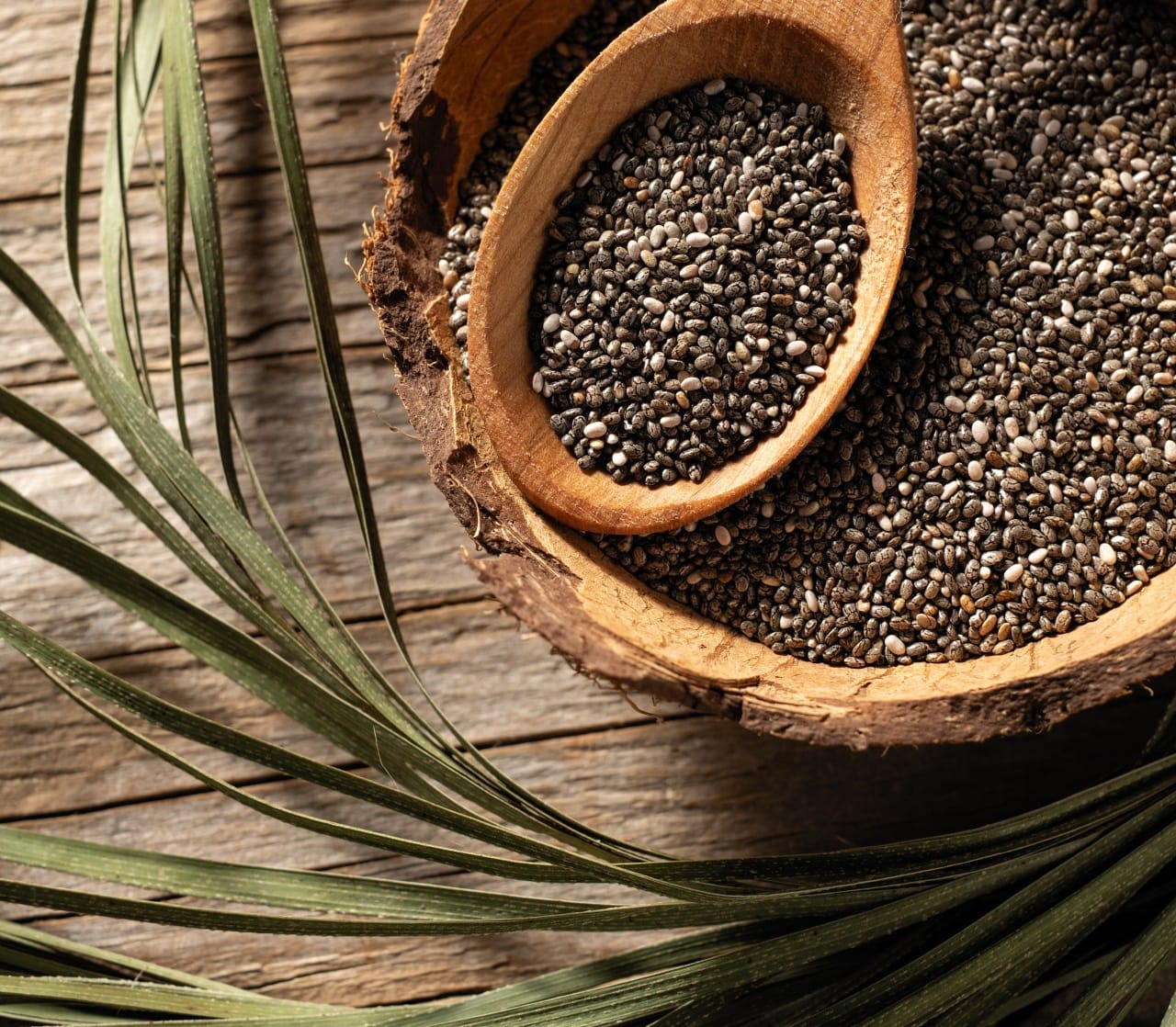
This plant, which can grow to around 1 m in height, has serrated leaves and white and violet flowers. The black, white or grey Chia seeds are found within these flowers.
These little seeds are prized for their impressive nutritional value. They contain fibre, omega-3 fatty acids, protein, vitamins and plant mucilage, a natural substance that swells on contact with water to form a gel with many fascinating properties! In the past, chia seeds were highly valued by the Maya, Aztec and Inca cultures, who consumed them extensively both as a food and as a traditional treatment.
Today, chia is grown in many other parts of the world, including South America, Europe and Oceania, mainly for its seeds. In fact, chia seeds are often considered a 'superfood', thanks to their interesting nutritional composition and numerous benefits.
Storage
Store in a cool, dry place away from light. Close the sachet tightly after opening.
Precautions
Do not exceed 15 g of Chia seeds per day (approximately 1.5 to 2 tablespoons).
Keep out of reach of children.
Environmental qualities and characteristics product sheet
Reference
04632 - ORGANIC Chia seeds 380 g
Main packaging material
Paper bag
Recyclability
Most packaging can be recycled
Aroma-Zone – Recycling instructions
"Knez Hrnčič, M., Ivanovski, M., Cör, D. & Knez, Ž. Chia Seeds (Salvia Hispanica L.): An Overview-Phytochemical Profile, Isolation Methods, and Application. Molecules 25, 11 (2019).
https://ciqual.anses.fr/#/aliments/15047/chia-graine-sechee"
Frequently Asked Questions
There are no contraindications to eating chia seeds during pregnancy and when breast-feeding, as part of a varied diet.
Yes, there are no contraindications to incorporating Chia seeds into your daily diet, without exceeding 15 g per day.
Chia seeds can be eaten whole, incorporated into breads, cakes, crackers and biscuits, or swollen in a liquid (milk, vegetable drink, coconut milk, etc.) in the form of "Chia pudding".
They can also be ground very easily using a spice or coffee grinder, and then added to porridge or breakfast bowls, for example in combination with almond or oat protein powder, fromage frais, oat flakes, cocoa nibs, etc.
You can consume up to 15g of Chia seeds a day, i.e. around 1.5 to 2 tablespoons, to enjoy their benefits without excess.
No, Chia seeds can be eaten as they are, but soaking them in a liquid creates a mucilaginous gel, ideal for puddings or as an egg substitute in vegan recipes.
I consume them every day. Either in yogurt and fruit (prepared the night before) or simply in a glass of water (infused for a few hours).
Everything you'd expect from chia seeds, the container is practical. Unbeatable value for money.
Excellent product, I consume it daily, morning and/or evening; great for a snack. Very good for digestion and aids in weight loss.
Very good quality and a good quantity I recommend
Perfect.
Associated products

£4.00
100 g

£7.00
80 g

£13.00
400 g

£7.00
200 g

£9.50
200 g
Associated tips

Nutrition tips

Nutrition tips