The benefits of Chia seeds

You've probably already heard of them, they've been so popular over the last few years, but how much do you know about Chia seeds? These tiny seeds are packed with nutrients and have numerous health and beauty benefits.

In this article you'll find all the advice you need to incorporate this superfood into your daily routine and reap all its benefits.

Reading time: 0 min.

What are Chia seeds?

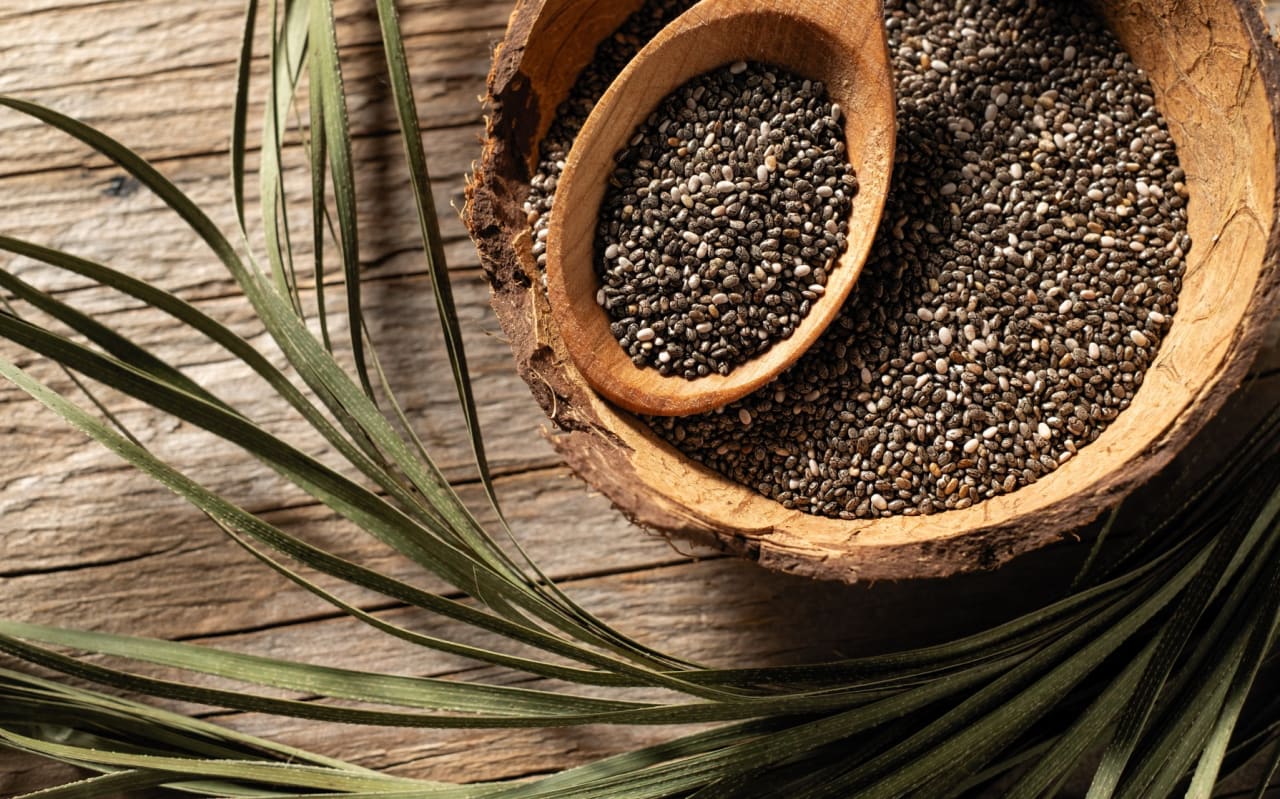
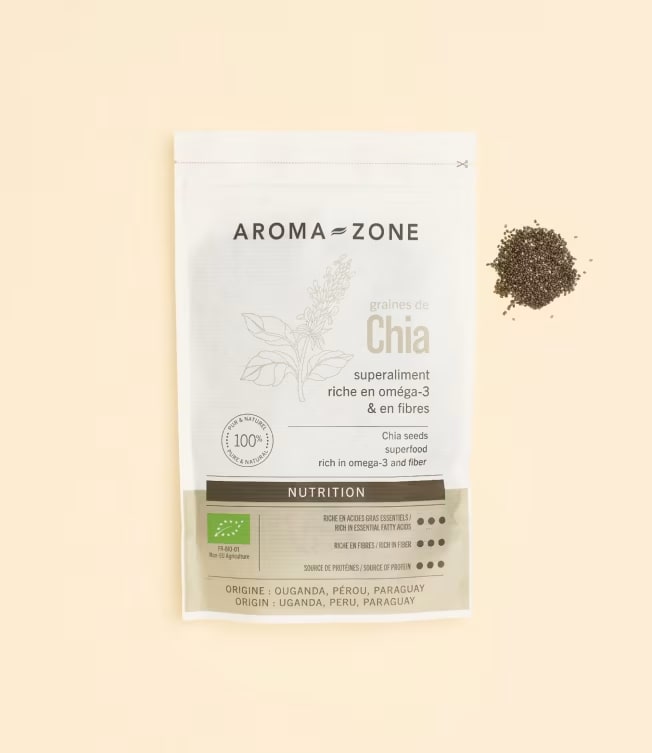
Native to Central America, the Chia seed is a tiny, smooth, shiny seed, black or light grey in colour and oval in shape. It comes from the Chia plant (Salvia hispanica), a herbaceous member of the Lamiaceae family, which grows about 1 metre high, and has oblong leaves and mauve or white flowers. Its seeds, grouped in fours, contain a number of valuable nutrients, including Omega-3s, antioxidants, vitamins, minerals, trace elements, fibre and protein. In fact, they are considered to be superfoods because of their composition and their many health benefits. Chia seeds have laxative, cardiovascular protective, anti-inflammatory, nutritive, blood sugar regulating, sleep and appetite regulating properties. They can be eaten whole, soaked or ground.

A few words about its history:

Chia seeds have been eaten in Central America for thousands of years. They formed part of the staple diet of the Aztec and Mayan peoples, who used them for its rich nutrients and medicinal properties. They were used to soothe digestive disorders, restore energy and stamina, calm inflammation and enhance intellectual faculties.

They were also used for cosmetic and spiritual purposes.

What are the health benefits of Chia seeds?

Chia seeds have numerous health benefits.

They are nutritious

Chia seeds are rich in protein, fibre, carbohydrates, essential fatty acids, minerals (calcium, iron, potassium, manganese, copper, magnesium, phosphorus and zinc), vitamins (B1, B2, B3, B9, C and E) and antioxidants, making them particularly interesting from a nutritional point of view. They're a real treasure trove of nutrients that you can use every day to supplement your diet, fill up on energy for the day, boost your vitality and limit deficiencies.

They are suitable for everyone and can be adapted to vegetarian, vegan or flexitarian diets, sports enthusiasts, the elderly, those who are pregnant, etc.

Their high calcium content (around 5 times more than milk!) means they play a role in bone health. They help strengthen bones and teeth and prevent decalcification and osteoporosis. They can be an interesting alternative for people who are lactose intolerant (for example, since 2 tablespoons of Chia seeds represent around 15% of the recommended daily intake of calcium).

Finally, their richness in energy metabolism coenzymes (Manganese, Copper, Iron, Zinc, group B vitamins, etc.) helps the body to produce energy.

They regulate intestinal transit

Thanks to their high insoluble fibre content, Chia seeds make it easier to pass stools, speed up intestinal transit and combat constipation. Chia seeds are an ideal ally for people with slow bowel movements or who have difficulty with bowel movements.

The fibre in Chia seeds also strengthens the intestinal microbiota by nourishing the 'good bacteria' that make it up, helping to balance the intestinal flora, soothe digestive problems, calm inflammation and boost immunity.

It is anti-inflammatory

The high content of polyunsaturated fatty acids (alpha-linolenic acid (20%), also known as Omega-3, and gamma-linolenic acid (8%), which is part of Omega-6) in Chia seeds gives them powerful anti-inflammatory properties. These essential fatty acids encourage the production of anti-inflammatory cells capable of restricting pro-inflammatory mediators in the body. They therefore reduce inflammation in the body (whether chronic or acute), stimulate the immune system and help the body to function properly.

They contribute to a healthy cardiovascular system

Chia seeds are rich in Omega-3 and Omega-6 fatty acids, which play a role in cardiovascular health. These essential fatty acids promote blood fluidity and healthy blood vessels, preventing blood clots and helping to lower blood pressure. Combined with the fibre contained in Chia seeds, which reduces the absorption of lipids, they modulate cholesterol levels: 'good cholesterol' (HDL-cholesterol) is then favoured to the detriment of 'bad cholesterol' (LDL-cholesterol).

Finally, the anti-inflammatory and antioxidant properties of Chia seeds also contribute to the smooth functioning of the cardiovascular system. Chia seeds therefore play an important role in preventing cardiovascular disease and improving the overall health of the heart and blood circulation.

They are an antioxidant

Chia seeds are rich in natural antioxidants, containing vitamin E, numerous polyphenols, copper, manganese and zinc.

They therefore play an essential role in combating the formation of excess free radicals in the body. Free radicals are responsible for oxidative stress, cell damage and premature cell ageing. Antioxidants help prevent degenerative diseases, cardiovascular disease and cancer.

It promotes healthy brain function

Thanks once again to their particular richness in Omega-3 and Omega-6 fatty acids, Chia seeds help the brain to function properly. These precious lipids represent the resources needed to maintain the structures of cerebral cell membranes and the brain's metabolic functions. They optimise cognitive functions, memory, learning and concentration, and prevent cognitive disorders.

Chia seeds therefore support brain and nervous system health.

A real ally for athletes

Chia seeds are ideal for athletes of all abilities, thanks to their carbohydrate, lipid, protein, fibre, iron and potassium content. With around 20g of plant protein per 100g and 9 essential amino acids, Chia seeds are a complete source of protein perfectly suited to all diets, whether you're a flexitarian, vegetarian or vegan.

A real nutritional bomb, they provide a lasting source of energy during exercise, help improve physical fitness and endurance, help build muscle mass and promote recovery.

Pre-Columbian peoples used them for these reasons.

Don't hesitate to eat Chia seeds before or after your sports session.

They regulate sleep

Among its amino acids, Chia seeds contain tryptophan, which plays an important role in regulating sleep. This amino acid is a precursor of serotonin and melatonin, a neurotransmitter and a hormone that regulate relaxation and the circadian rhythm of sleep, among other things.

Chia seeds also contain magnesium, which helps reduce stress, promotes relaxation and helps you fall asleep, contributing to good quality, restorative sleep.

They help regulate blood sugar levels

Thanks to their high mucilaginous (soluble) fibre content, Chia seeds swell on contact with liquid and form an absorbent gel. This gel can slow down the assimilation of carbohydrates and their release over time in order to avoid a rapid rise in blood sugar levels and prevent blood sugar spikes.

Chia seeds can therefore help to regulate and stabilise blood sugar levels and play a preventive role in type 2 diabetes.

They regulate the appetite

Once again, thanks to their soluble fibres, which swell on contact with a liquid to form a mucilaginous gel, Chia seeds are a good appetite regulator. Once ingested, this gel partially fills the stomach, creating a feeling of satiety and an appetite suppressant effect. Chia seeds can therefore be of interest if you want to avoid cravings, regulate your appetite or even start losing weight.

They are ideal during pregnancy

Chia seeds are particularly useful during pregnancy, as they provide a number of essential nutrients, including calcium, which is particularly important during this period. Chia seeds help to maintain your optimal state of vitality while optimising the nutritional intake required by both mother and baby.

The laxative properties of Chia seeds can be a good natural remedy in the event of intestinal transit disturbances during pregnancy.

A closer look at our organic chia seeds superfood

The beauty benefits of Chia seeds

They take care of your hair

Rich in B vitamins, zinc, iron, copper, antioxidants and Omega-3, Chia seeds are good for your hair's health. They promote scalp health, stimulate growth, strengthen hair and add shine. Their high antioxidant content may also prevent the appearance of grey hair.

You can use Chia seeds internally via your diet and externally, for example by applying a filtered Chia seed gel to your hair.

They take care of your skin

Chia seeds are ideal for caring for your skin naturally.

  • They moisturise and protect the skin, thanks to Omega-3, B vitamins, antioxidants and proteins

  • They strengthen the skin's barrier with B vitamins, magnesium and calcium

  • They combat skin cell ageing thanks to antioxidants

  • They calm inflammation thanks to their many antioxidants, vitamin E and Omega-3s

  • They promote collagen synthesis, thanks in particular to vitamins E and C, zinc and copper

  • They fight acne thanks to zinc, magnesium and Omega-3s

What do Chia seeds contain?

Chia seeds are a nutritional bomb. They mainly contain:

  • fatty acids (around 31g), including around 24g of polyunsaturated fatty acids (Omega-3 and Omega-6)

  • carbohydrates (around 5g)

  • proteins (around 20g) including the 9 essential amino acids

  • soluble and insoluble fibre (around 33g)

  • minerals: calcium, copper, iron, magnesium, manganese, phosphorus, potassium and zinc

  • vitamins: B1, B2, B3, B9, C and E

  • antioxidants: polyphenols, carotenoids

  • salt (about 0.03g)

All this for around 400 kcal per 100g.

Chia seeds: any side effects or contraindications?

Side effects

Chia seeds have very few side effects when consumed in the recommended quantities. An excess of Chia seeds may cause gastrointestinal upset (pain, bloating, gas, diarrhoea). If you experience these symptoms, reduce your daily intake. If in doubt, ask your doctor for advice.

Chia seeds swell on contact with water to form a mucilaginous gel. We therefore recommend that you drink enough water when you consume your chia seeds to avoid the risk of obstruction of the digestive tract.

Contraindications

Warning: Chia seeds are contraindicated:

  • if you are allergic to plants in the Lamiaceae family (such as Mint, Thyme, Lavender, Sage, Basil, Rosemary, etc.)

  • if you are allergic to linseed, sesame seed, sunflower seed, etc.

  • in cases of Inflammatory Bowel Disease (IBD)

  • in people with prostate cancer

  • in people taking anticoagulants or platelet aggregation inhibitors

  • in people prone to haemorrhoids

If you are taking medication, we recommend that you take Chia seeds at least 3 hours before taking your medication, and ask your doctor for advice if in doubt.

How should Chia seeds be used / consumed?

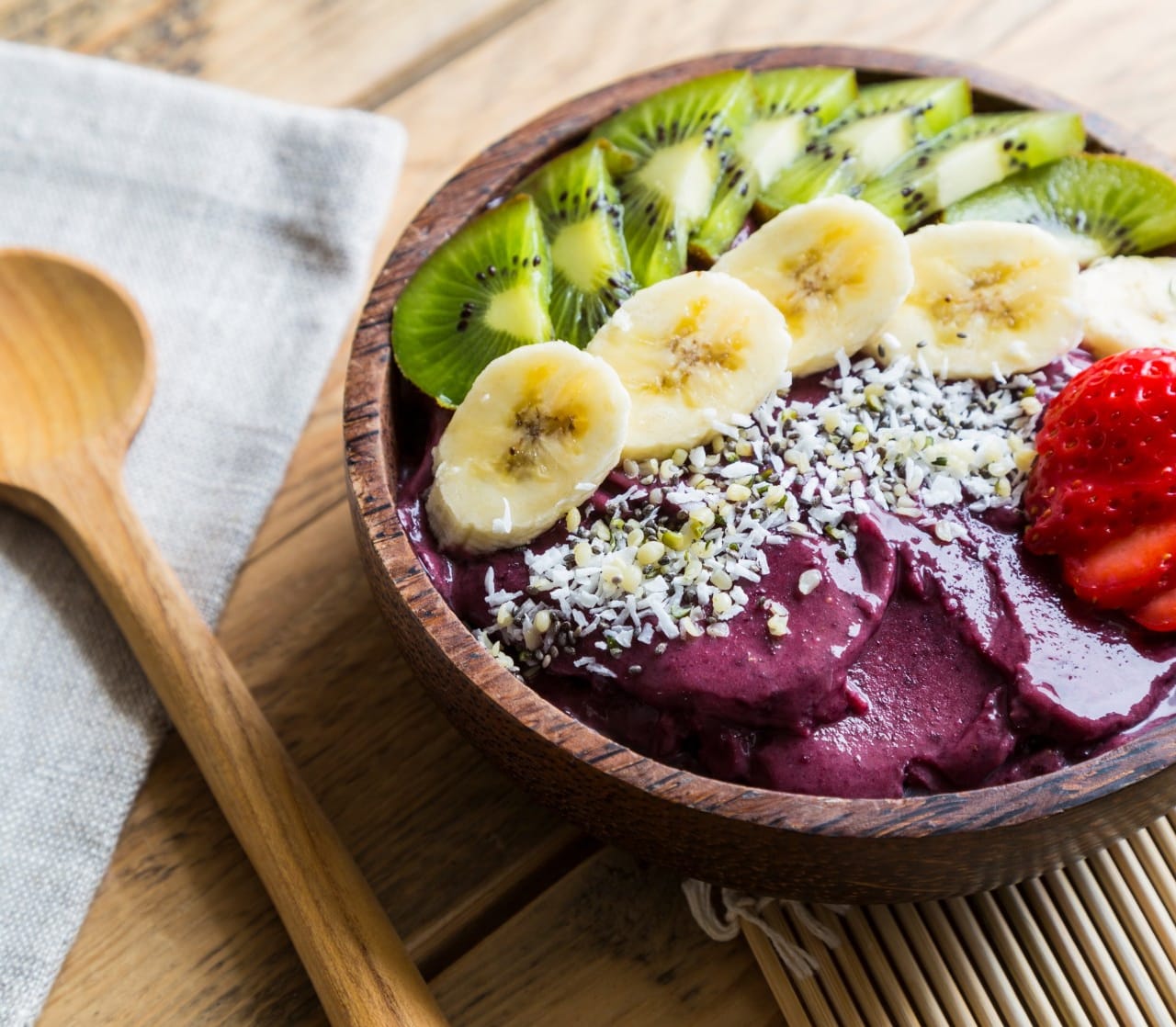
Chia seeds are easy to incorporate into your diet: sprinkle them on your salads, raw vegetables, porridges, compotes, yoghurts, etc. or soak them for several hours to obtain a gel that can be used for cooking. You can also grind them to make them easier to add to your smoothies and homemade milkshakes, for example.

See our easy chia seed recipes below as well as our video tutorial for our favourite pudding:

Chia seed salad recipe

Serves 2

Chia seed salad recipe

For the seasoning

1

Wash the spinach shoots, tomatoes and radishes.

2

Cut the avocado, tomatoes and radishes into pieces and mix all the ingredients together in a bowl.

3

Add the Chia seeds, pumpkin seeds and mozzarella balls.

4

Add the seasoning and enjoy!

Moisturising mask with Chia seeds

For skincare

1

First, prepare the Chia gel by mixing the Chia seeds in a little water and leaving the mixture to swell for around thirty minutes.

2

Then filter the mixture to retain only the gel.

3

Then, mix the Chia gel with the yoghurt and apply a thick layer to your face and neck.

4

Leave on for 10 minutes, then rinse thoroughly with clean water.

Nutritional treatment

Finally, you can also use Chia seeds as a simple nutritional treatment: mix around 2 tablespoons of Chia seeds in a glass of water the night before. Place in the fridge overnight. Swallow the mixture the next day. Remember to start your treatment with a few grams of seeds and gradually increase.

Expert advice

To reap the full benefits of chia seeds, we recommend soaking them before eating. This activates their nutrients and improves their digestibility. Mix them with water, plant milk or yoghurt for at least 30 minutes to obtain a jelly-like texture, ideal for digestion and hydration. Add them to your smoothies, porridges or desserts for optimum fibre, omega-3 and protein content.

Find out more

What quantity of Chia seeds should I eat a day?

We recommend that you consume between 10 and 25 g of Chia seeds a day (equivalent to around 1 or 2 tablespoons), starting with small quantities and gradually increasing as the days go by. Chia seeds are still high in calories if eaten in large quantities, and can affect instestinal transit.

True or false: do Chia seeds make you lose weight?

As we mentioned earlier, Chia seeds have satiating, appetite-regulating and "natural appetite-suppressant" qualities, thanks in particular to their soluble fibres, which swell on contact with liquid. This forms a thick, mucilaginous gel which, once ingested, fills part of the stomach and induces satiety.

Their high fibre content also has an impact on the absorption of carbohydrates to reduce blood sugar peaks, an important factor in weight loss. The tryptophan it contains also plays a role in regulating hunger.

As you already know, there's obviously no miracle cure for losing weight, but Chia seeds can be an ally in your weight loss. They help curb cravings, reduce feelings of hunger and increase satiety. They are also a source of protein, which helps to maintain muscle mass and a healthy metabolism.

Focus on our Naturopathic editor, Stéphanie Catrysse

Stéphanie Catrysse is a naturopath (certified by the FENA), a wellness massage and lymphatic drainage practitioner, and a personal development consultant. 

Passionate about alternative medicine, she practices a holistic approach to health.