
Guide to essential oils

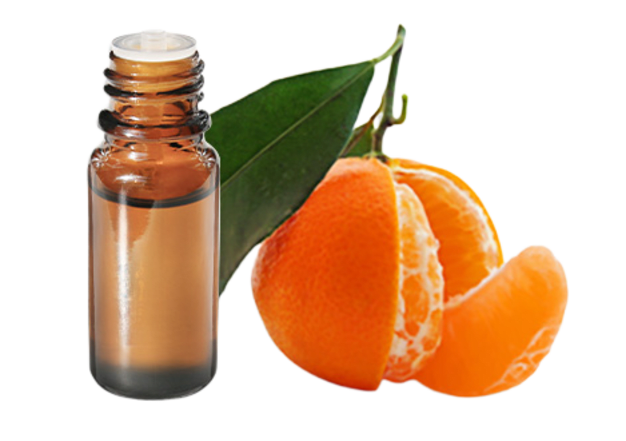
Essential oil of Clementine

Clementine essential oil is non-photosensitising and is fabulous for air diffusion in living rooms. With its subtle, fruity scent, Clementine essential oil is also ideal for scenting your home cosmetics. Clementine essential oil is also known for calming tension and aiding sleep.

How to use

  • Skin application and massage

    Skin application and massage

    Appropriate

  • Cosmetic active ingredient

    Cosmetic active ingredient

    Suitable

  • Diffusion

    Diffusion

    Suitable

  • Food grade

    Food grade

    Suitable

  • Aromatherapy bath

    Aromatherapy bath

    Appropriate

Features

Properties and uses

Precautions

Find out more

Features

Production process

Cold expression followed by distillation

Part of the plant used

Zest

Botanical name

Citrus clementina

Warning

The properties, information and methods of use below are quotes from reference books or websites on aromatherapy, hydrolatherapy and phytotherapy. This general information is provided for informative purposes only and in no way constitutes medical guidance. Under no circumstances can this information be used as a substitute for a medical diagnosis, consultation or follow-up, nor can it incur our liability. We recommend that you consult the guide to essential oils before using them, so that you are aware of any precautions that need to be taken. If in doubt, consult a doctor before using essential oils.

Properties and uses

Clementine essential oil is traditionally used for: Poor digestion, insomnia, stress

Health

Beauty

Wellness

Kitchen

Find out more

Properties

Clementine essential oil is known for its health benefits:

  • Calming

  • Improves digestive health, acts as a mild laxative, relieves gas

  • Gastric and liver stimulant

Uses

It is traditionally used to improve the following situations:

Digestion: dyspepsia, gastralgia, hiccups, colic, intestinal spasms, aerophagia, etc.

In practice

Digestive comfort: mix into your oil blend. Massage or rub your mixture over the affected area.

Precautions

  • An irritant in its pure state, use well diluted for all skin applications.

  • Not recommended during the first three months of pregnancy.

  • Keep out of reach of children.

  • Avoid contact with eyes.

  • Certain natural compounds contained in this essential oil may present a risk of allergy for certain sensitive individuals when the essential oil is incorporated into a cosmetic composition (according to the 7th Amendment of the European Directive on cosmetic products (2003/15/EC)): limonene, and to a lesser extent, linalool.

  • As a general rule, always carry out a test application of your mixture, in the crease of the elbow, at least 48 hours before using it.

Find out more

Corsican clementine essential oil is rare and precious. Obtained from the zest of the fruit using cold press method followed by distillation, the scent of this oil is unique, subtle and faithful to the fruit.

Its properties are similar to those of mandarin, with the advantage of not being photo-sensitising.

Aromatherapy recipes from the bibliography

EO = Essential Oil VO = Carrier Oil or Macerated Oil

Cocooning Clementine Vanilla face, body and haircare oil (A. Erligmann)

BeautyBody care

  • 47 g or 51 ml Kukui CO
  • 1 g organic vanilla oil macerate
  • 1.7 g or 67 drops of organic Clementine EO
  • 0.1 g or 4 drops of organic Neroli EO
  • 0.1 or 4 drops of liquid Vitamin E

Directions: Pour the kukui oil and vanilla macerate into a bowl. Add the EO and vitamin E, one after the other, mixing well with each addition. Using the small funnel, pour the treatment oil into your bottle.

Equivalents

Essential Oils

1 ml = approximately 35 drops (with our Aroma-Zone dropper caps)

Carrier oils

1 pump (Aroma-Zone aluminium pump) = approx. 0.15 ml

Mass / Volume conversion (for a liquid)

Mass (g) = Density x Volume (ml) at 20°C

Further information

1 full teaspoon = between 3 and 4.5 ml

1 full tablespoon = between 7.5 and 10 ml


However, these spoon ratios depend on a number of factors (e.g. viscosity of the liquid, temperature, depth and size of the spoon, rheological behaviour of the liquid), and we strongly advise you to use precise measuring equipment, such as graduated test tubes, graduated pipettes, and precision scales.

Bibliography

1

'Huiles essentielles - 2000 ans de découvertes aromathérapeutiques pour une médecine d'avenir'

Dominique Baudoux

2

'The Practice Of Aromatherapy'

Dr Jean Valnet - Éditions Maloine

3

'L'Aromathérapie exactement'

P. Franchomme and Dr D. Pénoël

4

'La bible de l'aromathérapie'

Nerys Purchon

5

'L'ABC des huiles essentielles'

Dr Telphon

6

'Aromatherapy'

Nelly Grosjean

7

'Les huiles essentielles pour votre santé'

G. Roulier

8

Aroma-News newsletters

NARD Association

9

'Aromatherapy - Healing with essential oils'

Dominique Baudoux - Editions Amyris

10

"Essential oils"

Jean-Pierre Willem

11

'Plantes, Huiles et Parfums de Beauté - Secrets et Recettes'

Marie-Françoise Delarozière and Raymonde Treirweiler

12

'Aroma Family'

Dr Jean-Pierre Willem

13

'Aroma-Stress'

Dr Jean-Pierre Willem

14

'Aroma Slimming'

Dr Jean-Pierre Willem

15

'Essential oils and skincare'

Marie-Claire Laparé

16

'La cuisine aux huiles essentielles - Des recettes saines et créatives'

Aymeric Pataud

17

'Cuisiner avec les huiles essentielles et les eaux florales'

Emmanuel and Valérie Cupillard

18

'Guide de la beauté naturelle'

Josephine Fairley

19

'Traité de phytothérapie et d'aromthérapie - Tome 2 maladies infectieuses'

Paul Belaiche

20

'Les cahiers pratiques de l'aromathérapie française - Pédiatrie'

Dominique Baudoux - Editions Amyris

21

'Huiles essentielles chémotypées et leurs synergies'

Dominique Baudoux and Dr Abdesselam Zhiri

22

'Phytothérapie & Aromathérapie - Comment soigner les maladies infectieuses par les plantes'

Dr J. Valnet, Dr C. Duraffourd and Dr J.C. Lapraz

23

' Saveurs et bien-être - la cuisine aux huiles essentielles'

Nathalie Le Foll and Beatriz Da Costa

24

'Le formulaire d'aromathérapie pratique pour le prescripteur et le conseil pharmaceutique'

Dominique Baudoux

25

« Les huiles végétales - Huiles de santé et de beauté »

Chantal and Lionel Clergeaud - Editions Amyris

26

27

A. Erligmann (2013), 'Créer ses cosmétiques et parfums bio: 30 recettes faciles et gourmandes à base d'huiles essentielles',

Eugen Ulmer Editions

28