Our natural routine for beautiful hair
The beauty and health of your hair often depend on how you look after it on a daily basis. While each hair type requires specific care, it's essential to understand and adopt a routine adapted to your own hair to make it look its best naturally. Whether you have voluptuous curls, silky-smooth locks or thick, strong hair, there are natural routines that will help you achieve healthy, radiant hair. In this article, we'll delve into the different hair types and explore the natural routines best suited to each. Join us on this hair adventure and discover how to find your ideal routine for radiant hair.

What's the right hair routine?
For a good hair routine, it's essential to first understand your hair's needs. Each type of hair has its own specific needs, which need to be identified so that they can be met as effectively as possible.
Recognising your hair type
Before embarking on a routine, it's essential to work out your hair type. Hair can be classified according to multiple criteria:
Texture: straight, wavy, curly or frizzy.
Porosity: high, medium or low (this determines your hair's ability to absorb and retain moisture). To find out how porous your hair is, you can use the glass of water trick, which involves cutting one of your hairs with scissors and placing it in a glass of water. The more the hair sinks, the more porous it is. If your hair floats, you have very low hair porosity. However, this method is not the most accurate, which is why we recommend that you consult our guide to hair porosity, which contains a number of practical tips.
Hair thickness: fine, medium or thick.
Understanding your hair's needs
Once you know your hair type, it's easier to understand its specific needs:
Dry hair: Requires deep moisturising, nourishing oils and hair creams.
Oily hair: Requires gentle shampoos, balancing products and clay masks to regulate sebum production.
Damaged or brittle hair: It needs proteins, repairing products and avoidance of excessive heat.
Fine hair: It responds well to volumising products and it's best to avoid products that are too heavy or too nourishing (which can weigh it down).
Curly or frizzy hair: This requires moisturising care, styling creams and specific techniques such as plopping or finger coiling to define curls.
In this guide, we've put together some personalised advice to meet the needs of each hair type.
What hair routine is best for fine, straight hair?
Straight hair comes in 3 sub-types: 1A, 1B and 1C:
Type 1A is fine, perfectly straight hair.
Type 1B refers to straight hair of intermediate thickness with moderate volume.
Type 1C refers to hair that is straight but has a thick, robust texture.
We tend to think that straight hair needs the least care, but this is completely false. Fine hair, although easier to style and detangle than curly or frizzy hair, also needs a special care routine to avoid damaging it. This very fragile type of hair tends to break and split easily. It is also more prone to excess sebum on the scalp. That's why fine, straight hair needs special attention.
To begin with, we recommend using a gentle shampoo specially designed for fine hair, while avoiding heavy products that can weigh it down. Next, a light conditioner can be applied, but only to the hair itself and ends to avoid weighing down and greasing the roots.
It is also essential to moderate the amount of hair products used. Too much can leave hair flat and oily. When it comes to drying, the ideal solution is to opt for a microfibre towel, which will gently absorb excess water without damaging the hair.
Excessive heat should be avoided wherever possible. So if you want to use heated appliances such as straightening or curling irons, it's vital to apply a heat protector. In addition, regular trimming of the ends will give your hair a neat, healthy look.
Next, don't neglect moisturising your hair. To deeply hydrate your hair, we advise you to opt for a moisturising mask once a week or every fortnight, depending on your needs.
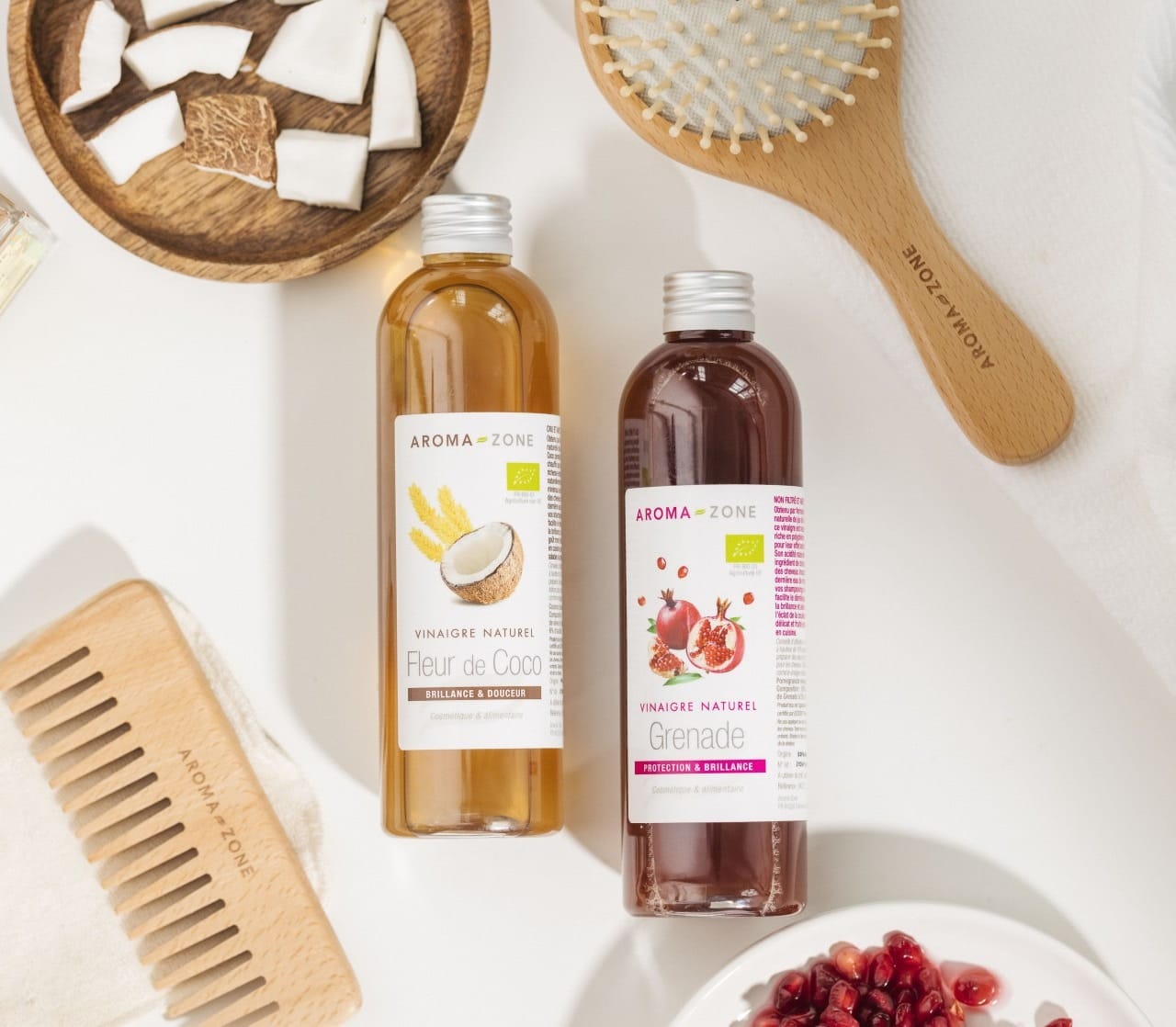
Fine hair can sometimes lack shine, so to make it shiny, you can use rinse-off vinegars. To find out more, take a look at our dedicated guide: How to make your hair shiny, where you'll discover all our tips and advice on the subject.
What's the right routine for wavy or curly hair?
There are three types of wavy hair:
Type 2A refers to hair with straight roots that flows into pretty, light waves.
Type 2B refers to hair with a straight root, more pronounced waves and prone to frizz.
Type 2C refers to dense hair with beautiful "S"-shaped curls, distinguished by their greater volume than the first two types.
Wavy and curly hair are treated in broadly the same way. Generally speaking, wavy hair can produce beautiful curls with the right routine, which is why our experts have put together a complete guide to achieving beautiful curls, whether you have wavy or curly hair.
The first step in looking after your curly or wavy hair is to keep it moisturised. It's essential to moisturise your hair morning and night. For example, you can use a conditioning oil on the ends of your hair to prevent breakage, or apply a leave-in treatment to damp hair. You can also opt for a hydrosol to apply to your scalp to moisturise it without making it greasy.
To avoid breaking your hair, we recommend that you opt for protective hairstyles such as braids and protect your hair from external aggressors such as the sun, wind and salt water.
It's no secret that blow-drying and heat are not particularly popular with your hair... So reduce the use of heating appliances and harsh chemical products such as bleaches or chemical colourings as much as possible.
For a complete routine to suit your curl type, we suggest our dedicated guide: Our simple, natural curly hair routine. This guide presents routines adapted to your hair type, tips and widely recommended natural products for looking after your curly hair.

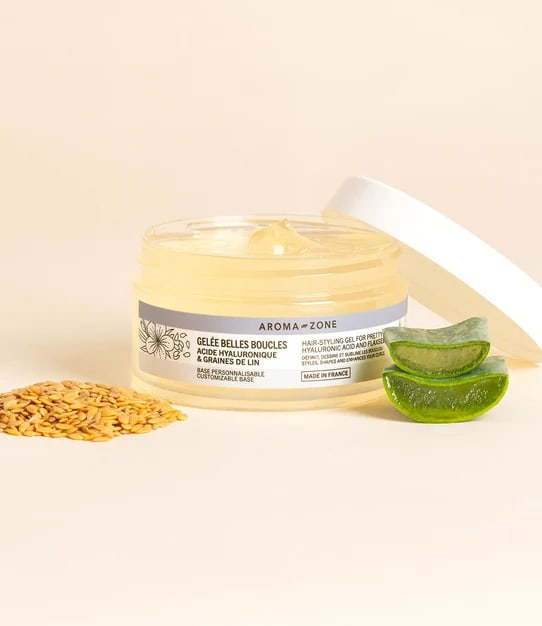
Curl-defining hyaluronic acid and linseed gel
A combination of Hyaluronic Acid, Linseed, Chia Seed and Organic Aloe Vera, this curly hair gel defines and sets curls while providing shine and protection. Its light, non-greasy texture, with no cardboard effect, tames frizz and makes styling easier, leaving curls sublimated and bouncy. Its certified organic formula, concentrated in active ingredients, is a real treatment that keeps hair moisturised and creates an anti-humidity barrier around the hair fibre for long-lasting curl hold. 2 in 1, it can also be used to fix flyaways and create pretty, plated-effect hairstyles.
What's the right routine for curly or textured hair?
If you have curly or frizzy hair, your hair is either type 3 or 4, with type 3 corresponding to curly hair and type 4 to frizzy hair:
Type 3A hair has looser, finer curls, forming a well-defined S shape.
Type 3B hair is thicker than type 3A, with fuller, tighter curls.
Hair type 3C has thick, compact curls, giving a vobright, flexible appearance.
Type 4A hair has compact curls that give an impression of elasticity and dynamism, but often look dry.
Type 4B hair has Z-shaped curls that are less pronounced, with a texture that varies in thickness.
Type 4C hair is characterised by ultra-tight curls. It is dense and has a marked tendency to shrink.
These hair types need highly moisturising and nourishing treatments. This type of hair is often dry and fragile. It needs special attention to ensure radiant curls.
For complete care of this type of hair, we recommend a 4-step routine:
Pre-poo to make your hair for shampooing
Gentle shampoo adapted to your needs
Gentle moisturising detangling
Moisturise throughout the week with an appropriate leave-in. Coconut oil is recommended.
We detail this care routine in our comprehensive guide dedicated to curly and frizzy hair, which includes all our tips, advice and best products for looking after your textured hair.
What about oily hair?
Oily hair can be a real ordeal on a daily basis, requiring almost daily washing or special styling to hide the greasiness... But there's nothing like a little routine to regulate sebum levels and space out shampoos to remedy the problem.
Why does your hair get greasy so quickly? There are many factors that can cause greasy hair, such as hormonal variations, stress, frequent washing, unsuitable hair products, etc. To regulate the sebum levels in your scalp and restore healthy hair, here are a few tips:
Space out your shampoos: as far as possible, try to wash your hair at least every 3 days. Washing your hair every day is excessively hard on your scalp, which will in turn become greasy more quickly... It's a vicious circle. If your hair is greasy from the first day after shampooing, opt for pulled-back styles and the use of a dry shampoo. The optimum rhythm for a healthy scalp is a wash every 4 to 5 days.
Air-dry your hair and reduce the use of hairdryers or other heated appliances, so as not to damage your scalp.
Once a week, or even every fortnight, pamper yourself with a purifying scalp scrub. This will help regulate your sebum levels and prevent the appearance of dandruff.
Use healthy hair products tailored to your needs. For example, use a purifying shampoo or add a few drops of tea tree essential oil to your usual mild shampoo. As for conditioner, we advise you to apply it only to your hair and the ends of your hair so you don't make your roots even greasier.
If you suffer from oily hair, we recommend you read our special guide: oily hair, what should I do? to understand and treat this problem naturally and effectively.
Dry hair: How can I get well-moisturised, nourished hair?
If you have dry hair, it's vital to understand whether it needs hydration or nutrition so that you can give it the right care.
To deeply moisturise your hair, there are a number of natural products that are highly effective and easy to apply. In our guide dedicated to hair hydration, we've brought together all the possible solutions for effectively moisturising your hair: hydrolats, carrier oils(Argan, for example), essential oils, dietary supplements(Ashwagandha as a treatment or powdered in masks, for example)...
If your aim is to nourish your hair, you can opt for leave-in products, highly nourishing oils and butters, and masks based on natural active ingredients renowned for their nourishing properties. In our guide "How to nourish dry hair", we give you all our advice on how to get beautiful, nourished, shiny, healthy hair.
What's your hair growth routine?
If you're aiming for hair growth, here are a few simple and essential steps to take:
Massage your scalp. Healthy hair starts at the roots! That's why massaging your scalp regularly with a hair growth stimulating serum will help your hair to grow.
Exfoliate your scalp once or twice a month. This very important step not only stimulates growth, but also purifies your scalp and combats the appearance of dandruff.
Opt for a cold water rinse. It may not be the most pleasant of experiences, but it's really beneficial for boosting hair growth and getting your hair back in tip-top shape. It also helps to close the hair scales to prevent split ends.
For more advice and to discover our selection of essential hair growth products, please check out our dedicated guide: How to stimulate hair growth?