

Hair needs a fairly demanding mix of nutrients to grow well: protein, vitamins, minerals, and a generally varied, balanced diet is the best place to get most of them. Hair supplements aren't a replacement for that, they're better thought of as extra support alongside it, useful for anyone whose diet or lifestyle makes it harder to get everything hair needs, or who simply wants a bit of targeted, additional support.
What nutrients does hair actually need?
Hair is mainly made of keratin, a protein that gives it structure and strength, and a handful of nutrients play a genuine role in keeping that process running smoothly. Not every one of them has the same level of backing though, worth knowing before you choose.
Biotin (vitamin B8), recognised as contributing to the maintenance of normal hair, more on that below, along with selenium and zinc.
Zinc and selenium, both also recognised as contributing to the maintenance of normal hair.
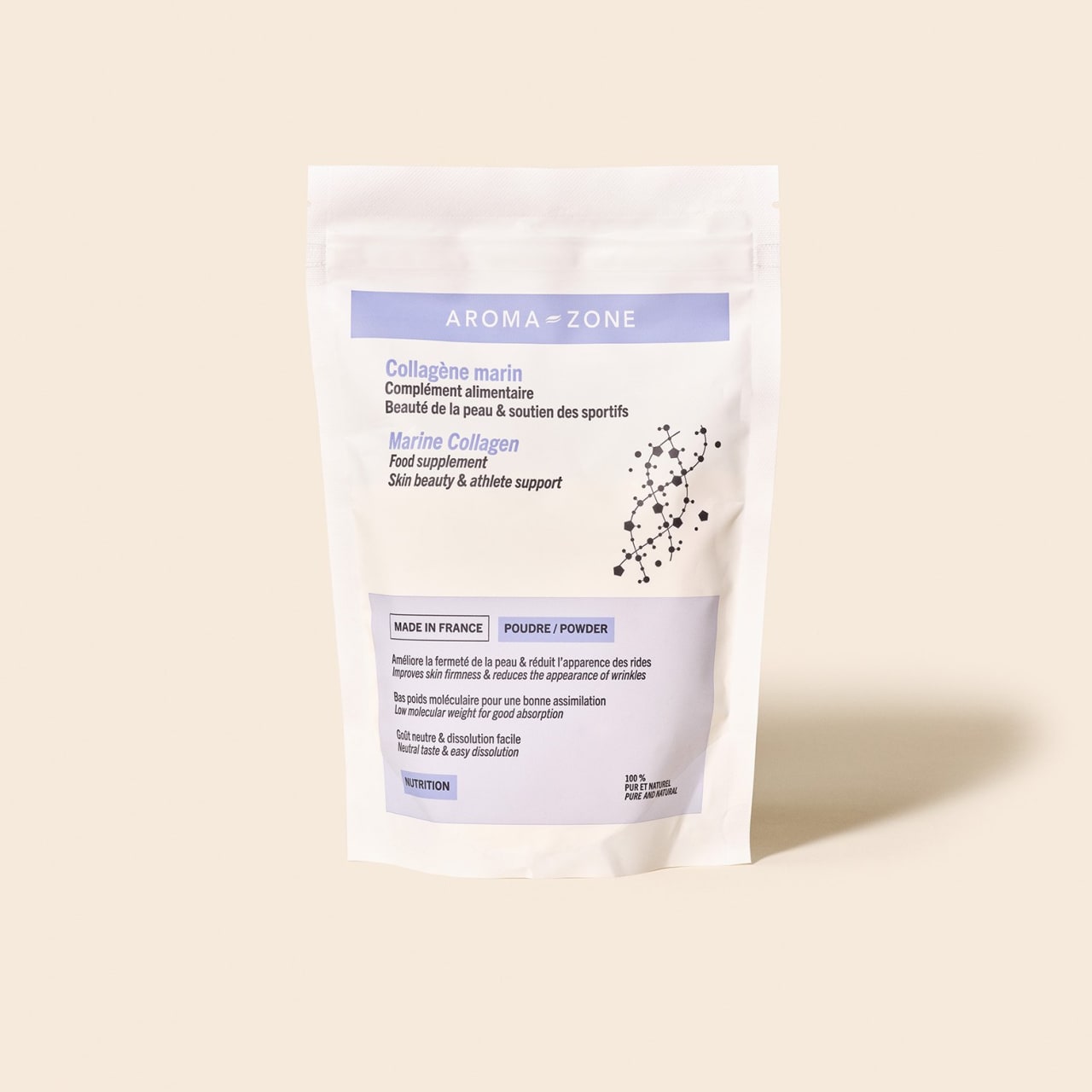
Marine collagen, a source of protein and amino acids, is a popular addition to hair supplement routines.
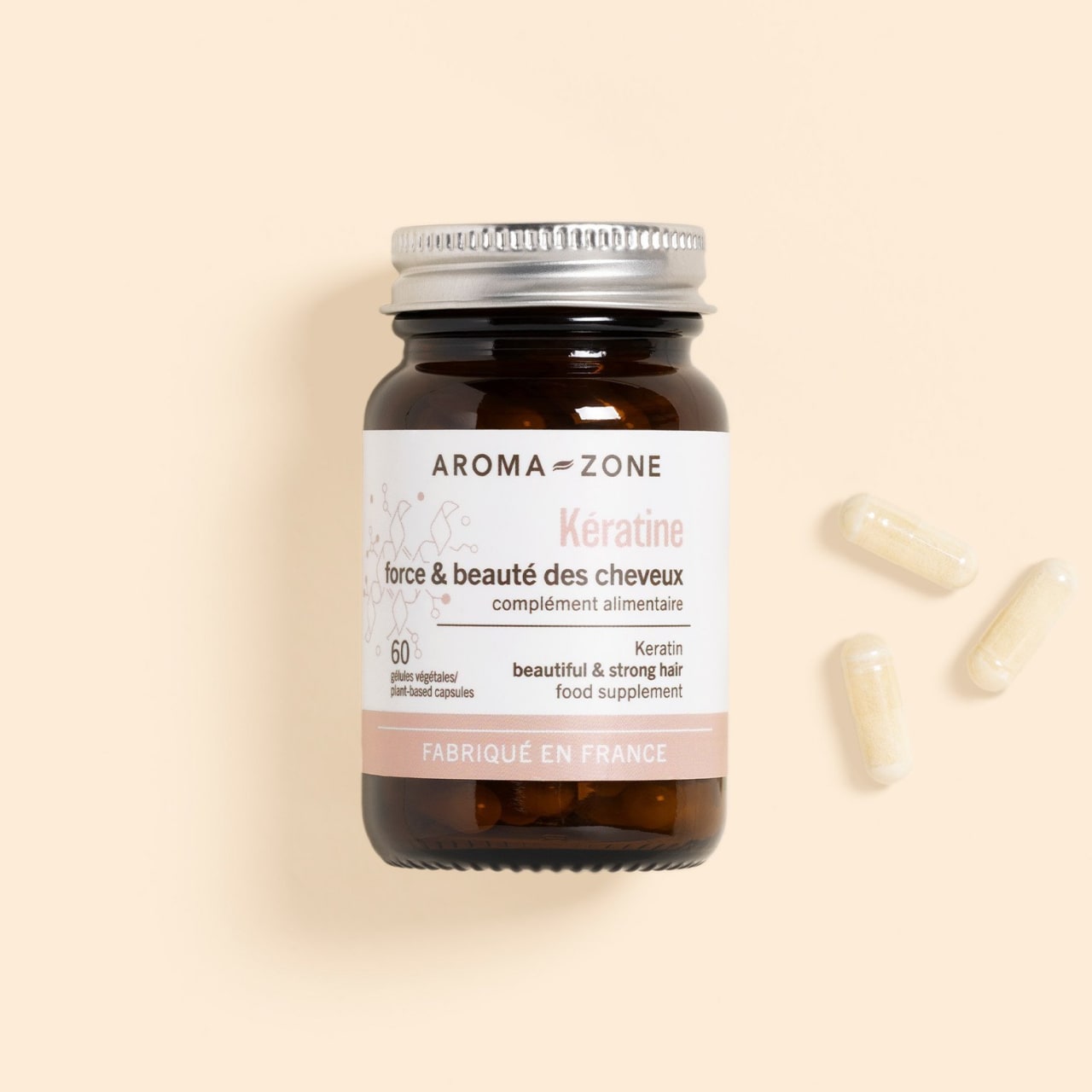
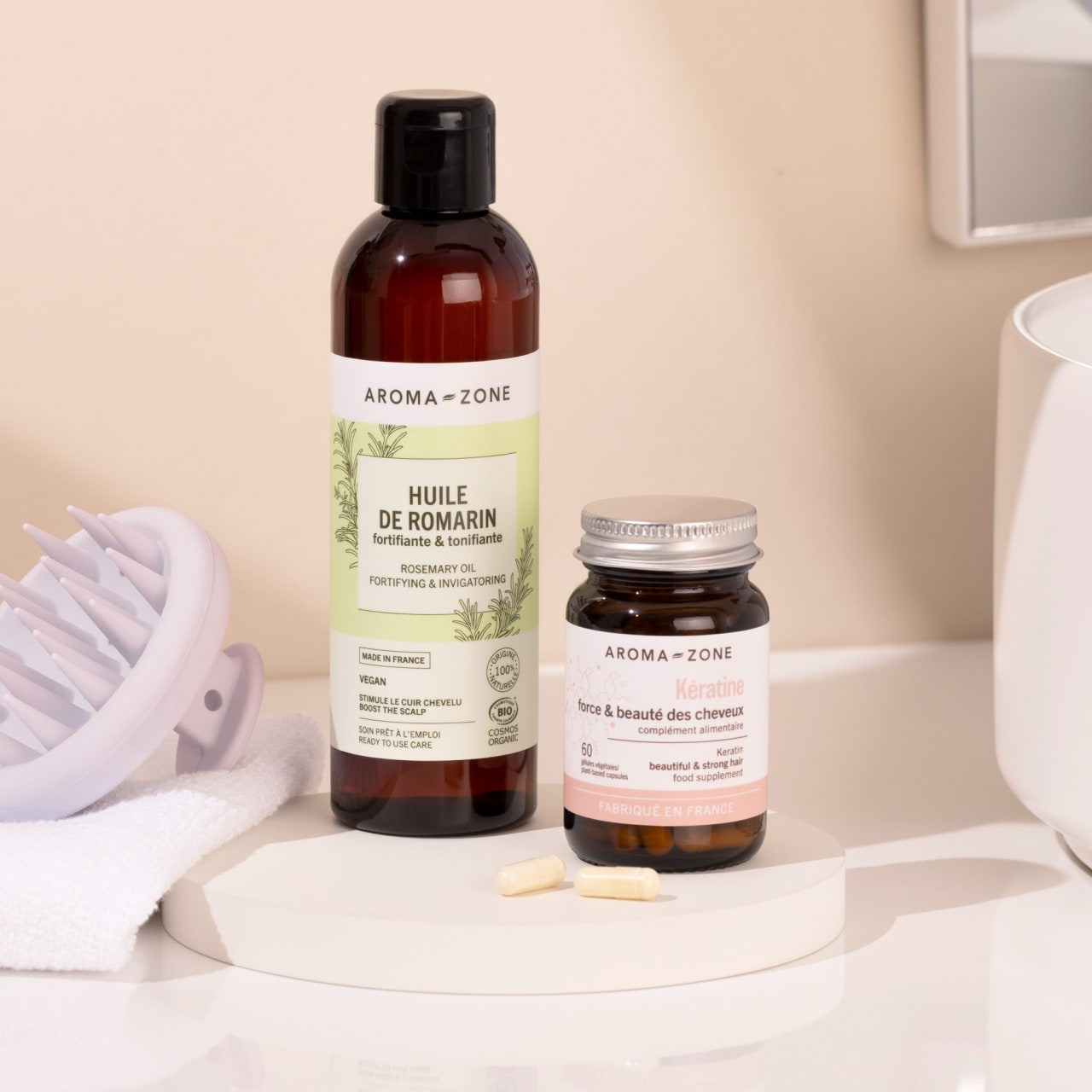
Keratin, taken as a supplement, provides the same protein hair itself is largely made of.
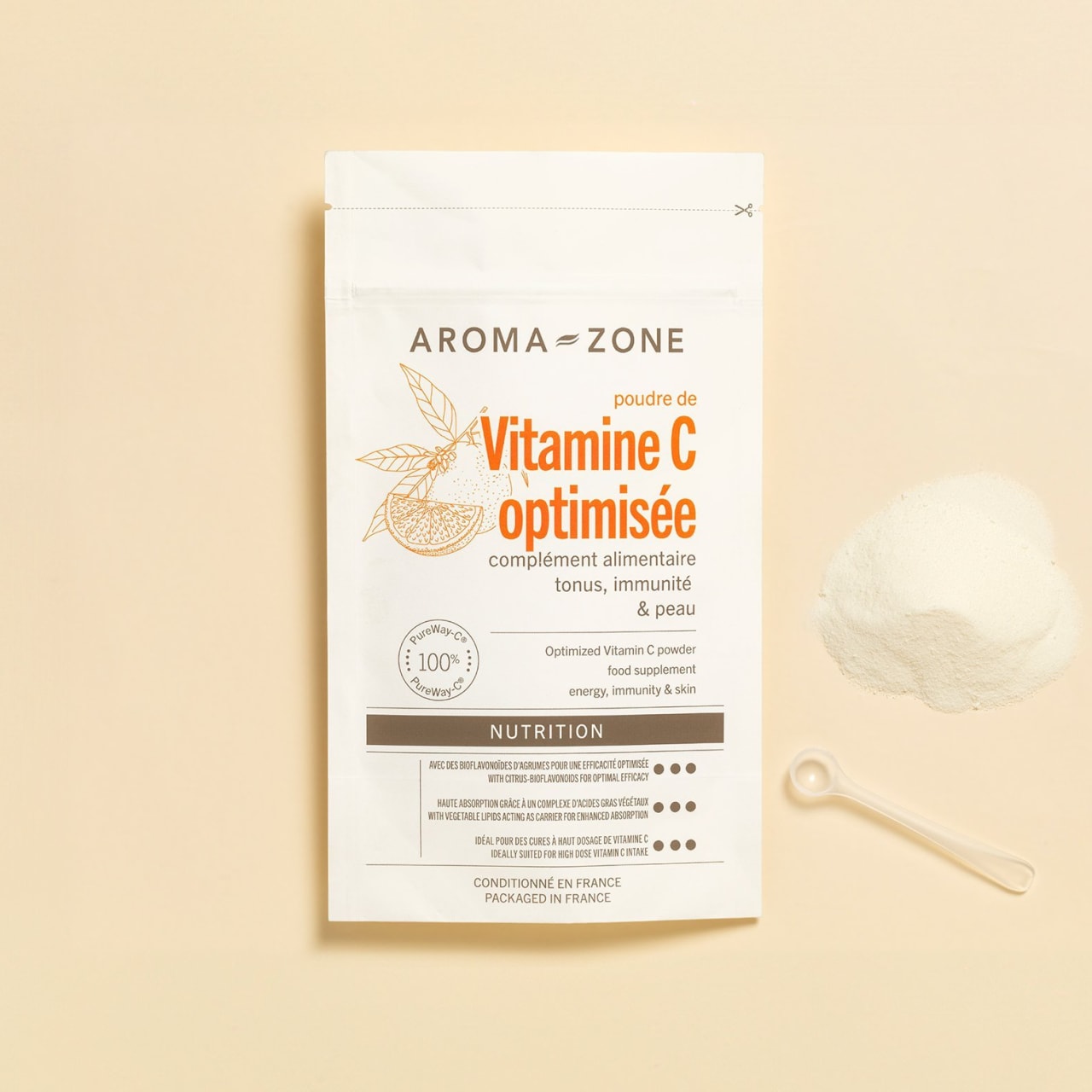
Vitamin C has a recognised role in normal collagen formation and normal iron absorption, worth knowing if you're comparing formulas.
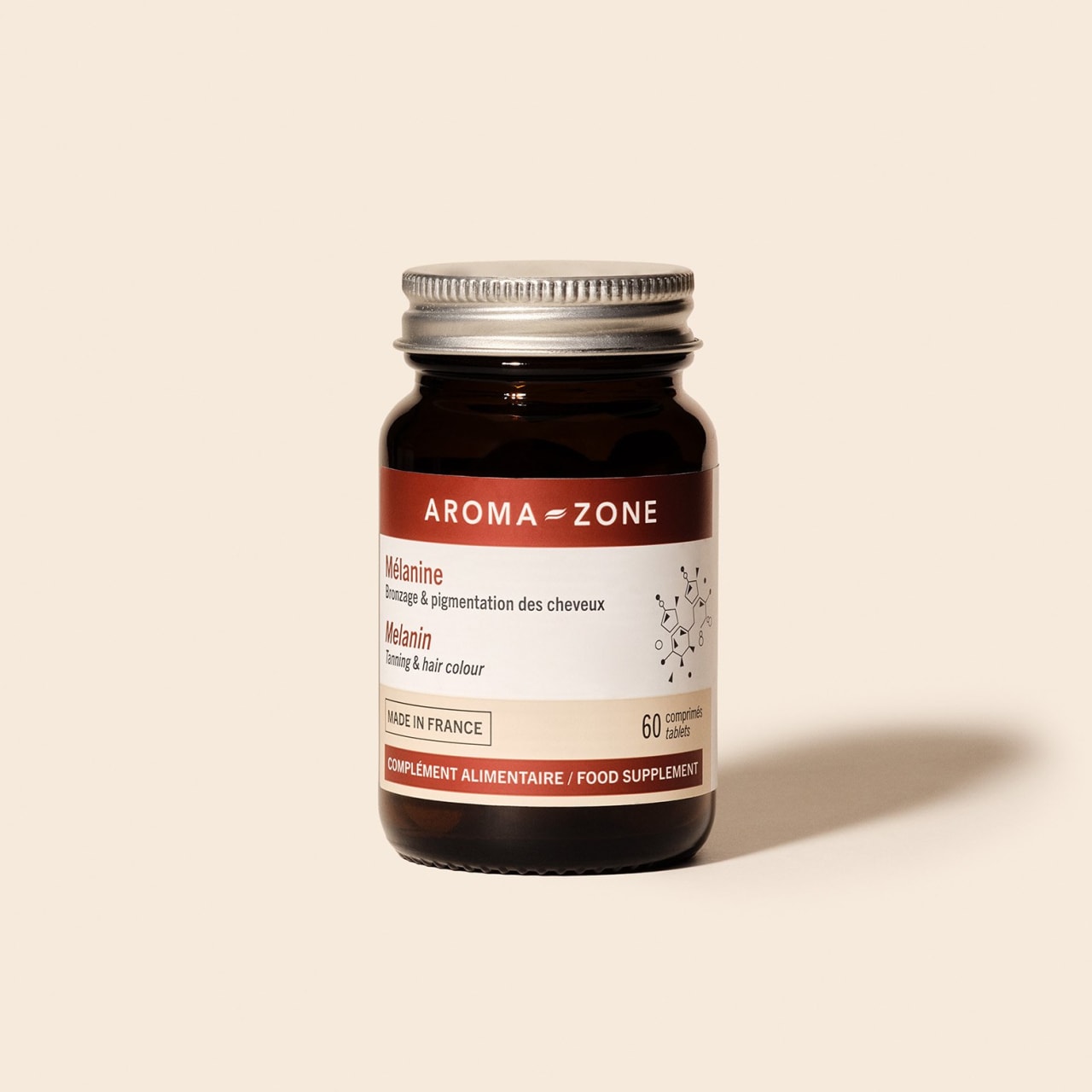
Melanin, the pigment responsible for hair's natural colour, is included in some formulas for that association.
Spirulina, ours sourced from organic French cultivation, is a source of plant protein and minerals, valued for general nutrition and health.
A closer look at biotin, selenium and zinc
Hair relies on a fairly small set of nutrients to do its job well, and biotin, selenium and zinc sit firmly at the centre of that list. Between the three of them, they touch on most of what keeps hair looking and feeling healthy, from the proteins it's built from to the follicles that produce it. Here's what each one actually does.
Biotin (vitamin B8)
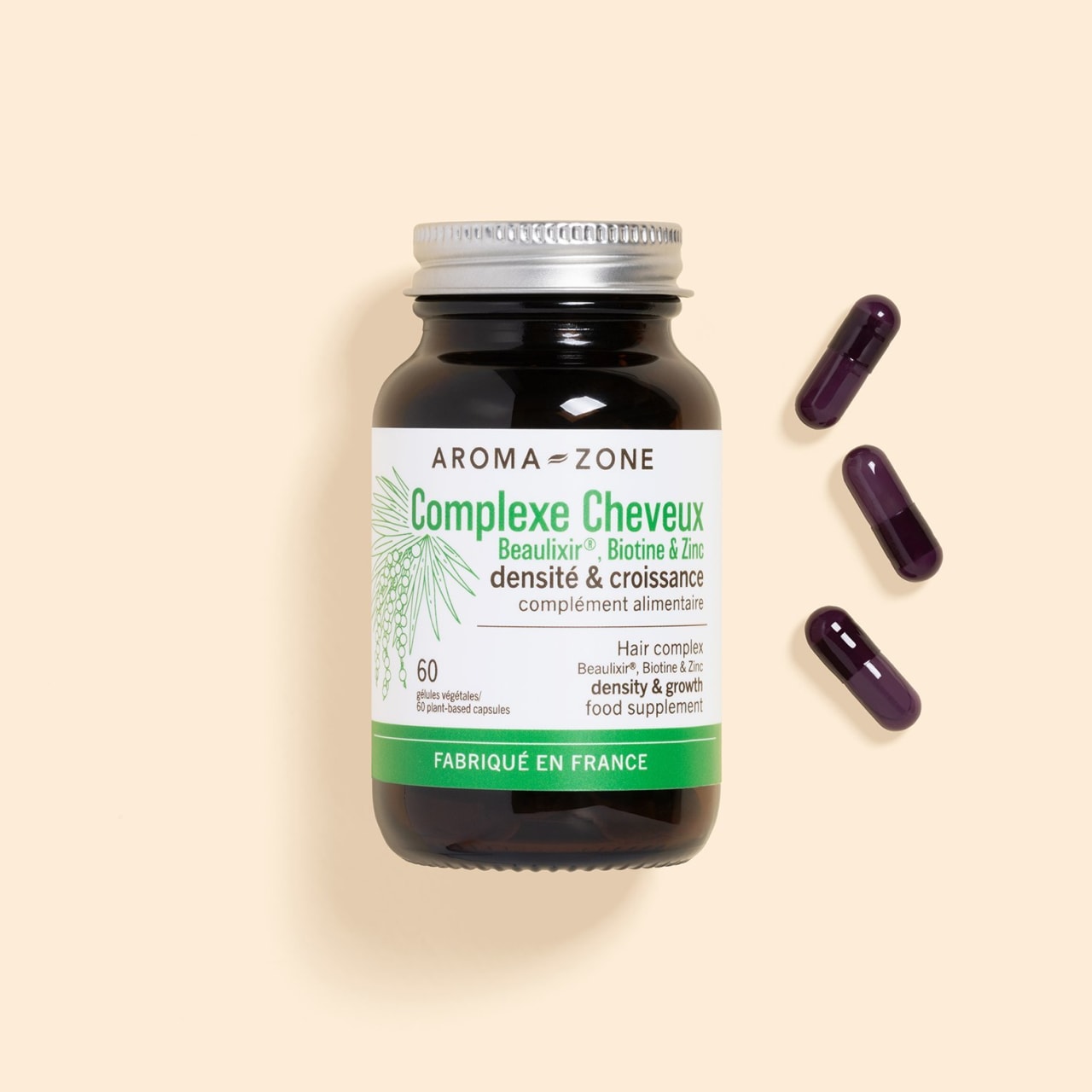
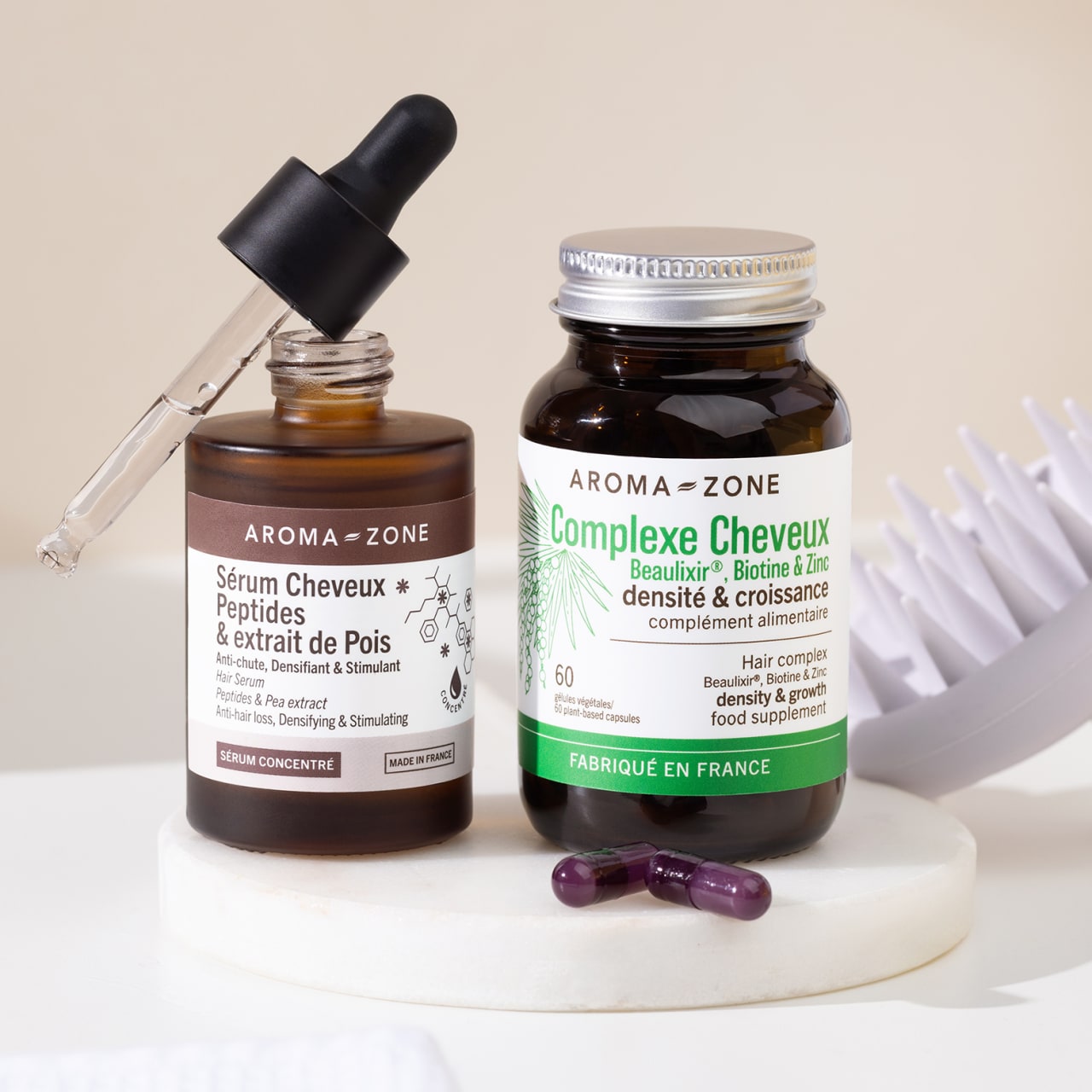
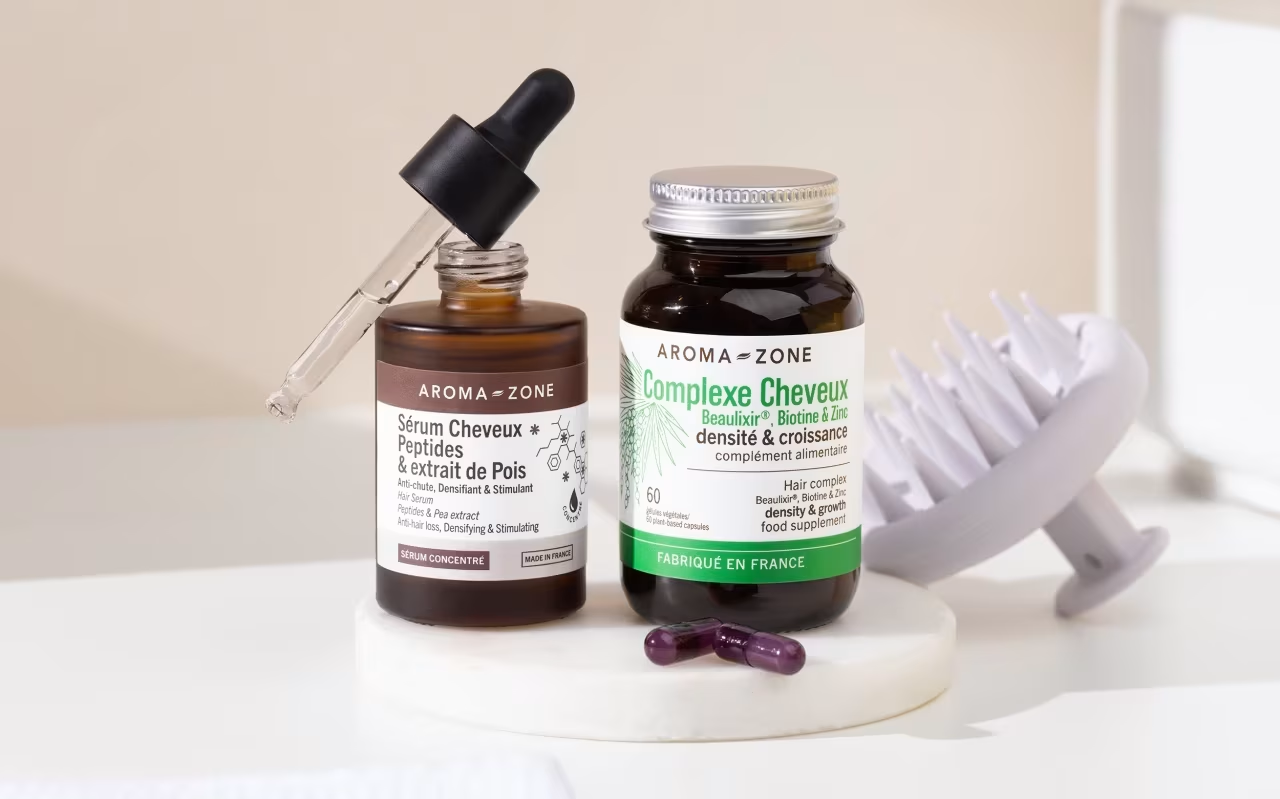
Biotin plays a role in the body's normal energy metabolism and in the production of keratin, the protein hair is largely made of, which is why a biotin shortfall is one of the more recognised nutritional causes of thinning or brittle-feeling hair. It's typically included as part of a wider formula rather than sold on its own, Aroma-Zone's Hair Complex capsules bring it together with other nutrients in one daily dose.
Selenium
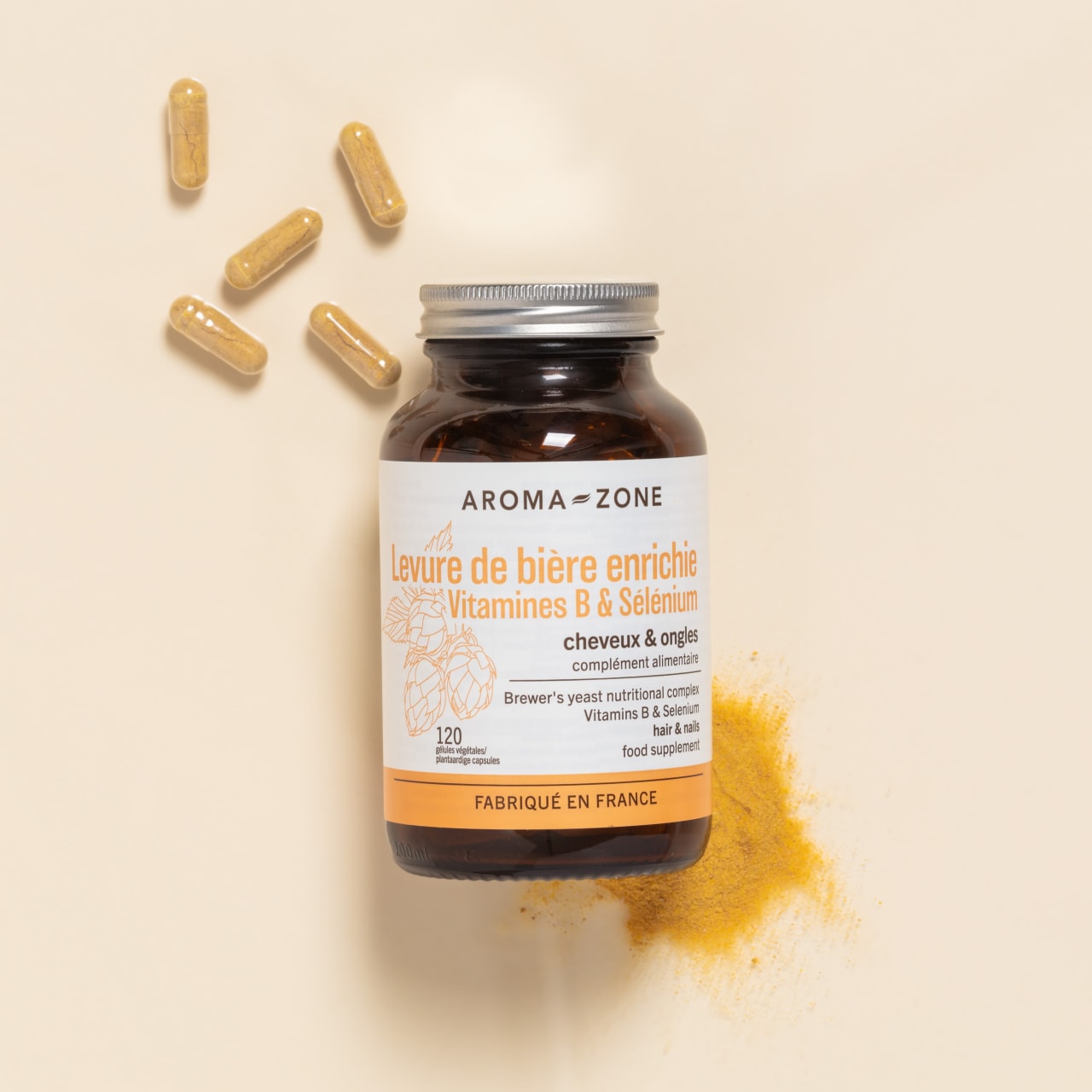
Selenium supports the body's normal antioxidant processes, including protecting cells, hair follicles among them, from everyday oxidative stress. It tends to appear alongside other nutrients in a multi-ingredient formula, and is also naturally present in foods like brewer's yeast, which is one reason it sometimes shows up there too, our Enriched Brewer's Yeast is one such option.
Zinc
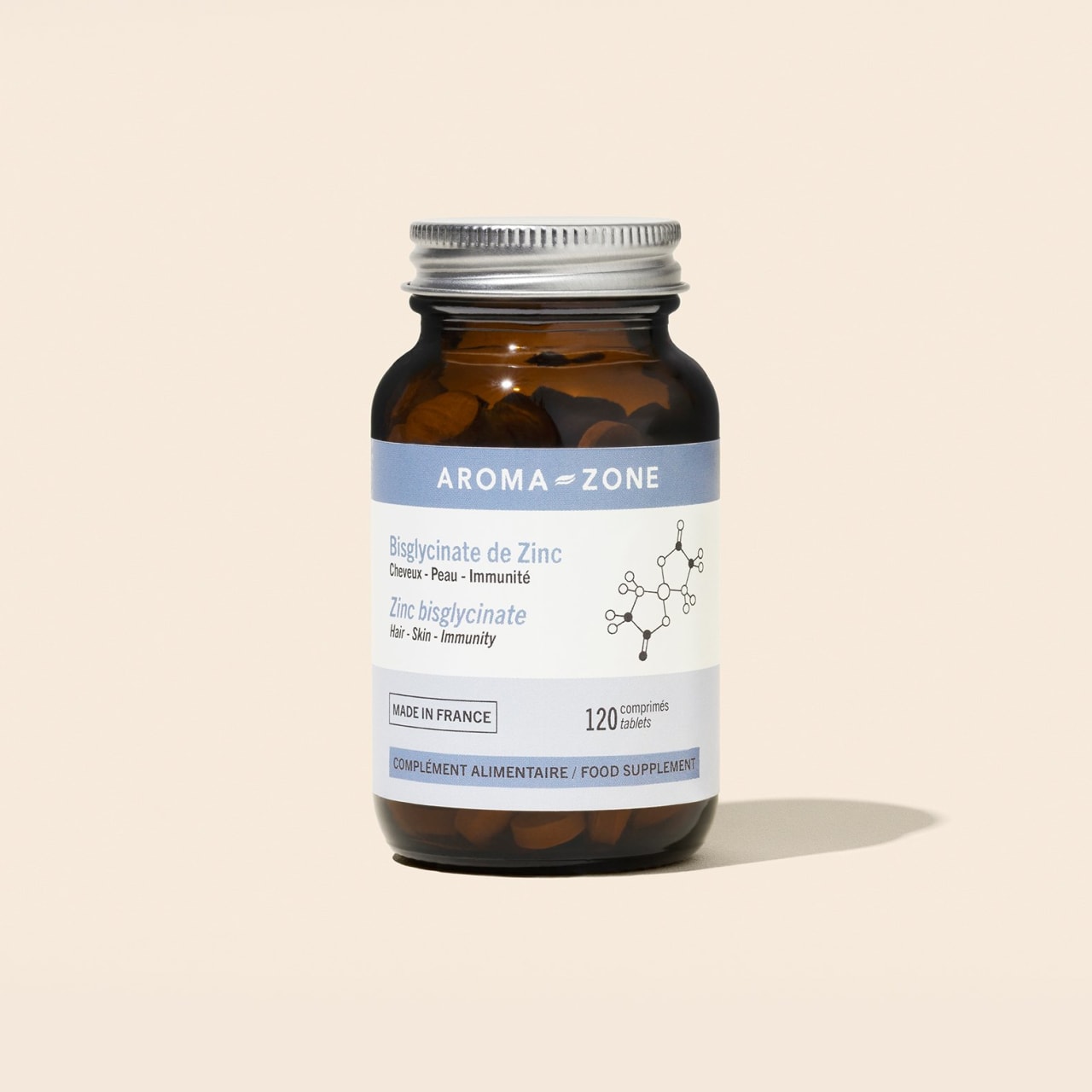
Zinc is involved in normal protein synthesis and cell division, relevant given hair follicles are among the most active, fastest-dividing cells in the body, and a zinc shortfall is a recognised nutritional cause of hair thinning. It's available in a few different forms, Aroma-Zone's Zinc Bisglycinate is one option if you'd rather take it on its own than as part of a wider blend.
Disclaimer: What's actually proven, and what's more traditional
It's worth being upfront about this, because not every ingredient marketed for hair has the same level of backing. Under UK and EU rules, only a small handful of nutrients carry an officially recognised claim specifically for hair, biotin, selenium and zinc, each of which is recognised as contributing to the maintenance of normal hair. Plenty of other ingredients commonly found in hair supplements, amino acids, certain proteins, botanical extracts, are valued more for general nutritional support and a long-standing reputation in hair care routines than for a specific, individually proven effect on hair itself. Both have a place, it's just worth knowing which is which.
Choosing a form that fits your routine
Capsules, tablets and powders all do the same underlying job, the difference is really about what you'll actually remember to take.Capsules and tablets suit a quick morning habit, a powder like marine collagen is easy to stir into a smoothie or glass of water if you'd rather not take pills. There's no real advantage of one form over another beyond personal preference and consistency.
Getting the most out of a hair supplement
Consistency is what matters most here, hair grows slowly, so most supplements need several months of regular use before you'd realistically expect to notice anything. Pairing a supplement with a supportive topical routine, and generally sensible hair care habits, tends to make more sense than relying on either alone.
A few sensible precautions
Always stick to the recommended daily dose stated on the packaging rather than exceeding it. Food supplements are meant to complement a varied, balanced diet, not replace one, and should be kept well out of reach of children.
If you're pregnant, breastfeeding, taking medication or managing an existing health condition, it's worth checking with a doctor or pharmacist before starting anything new. And if hair loss feels sudden, patchy, or is genuinely worrying you, that's a conversation worth having with a GP rather than something to address with a supplement alone.


