What are the benefits of spirulina?

Spirulina (botanical name: Arthrospira platensis) is a blue-green micro-algae, originally found in the warm, fresh waters of the inter-tropical belt.

The term "micro-algae" is actually shorthand for a family of filamentous cyanobacteria with exceptional nutritional and antioxidant properties, thanks to their protein, vitamin, mineral and phycocyanin content.

According to the World Health Organisation (WHO), they are "the best food for humanity in the 21st century". WHO also reports that they are capable of combating malnutrition, while having a relatively low impact on the planet's health.

In this article, you will find out all about the many benefits of spirulina, as well as its effects and whether it should be taken as a food supplement or used in cosmetics.

Reading time: +4 min.

Spirulina: definition and origins

What is spirulina?

Spirulina (botanical name: Arthrospira platensis) is a superfood. It is characterised by easy assimilation and a multitude of benefits. It is an exceptional source of protein, surpassing red meat. It also offers a variety of nutrients, including D, K, B1, B2, B3, B6, B8, B9 and B12 vitamins, carotenoids such as beta-carotene, iron, minerals, trace elements, gamma-linolenic acid, chlorophyll and phycocyanin.

Spirulina is a blue-green micro-algae. Also known as cyanobacteria, it is a primitive micro-organism that appeared among the first forms of life on Earth. It is characterised by its spiral shape, hence its name. In the wild, it is found in India, Mexico, Africa and Asia. However, Europe and the United States have developed specialised farms to grow it.

If you choose to eat it, pay close attention to the quality of the environment and certifications, as its cultivation is sensitive to contamination by pollutants, particularly heavy metals. To find out more about food supplements, see our dedicated guide.

Why take organic spirulina?

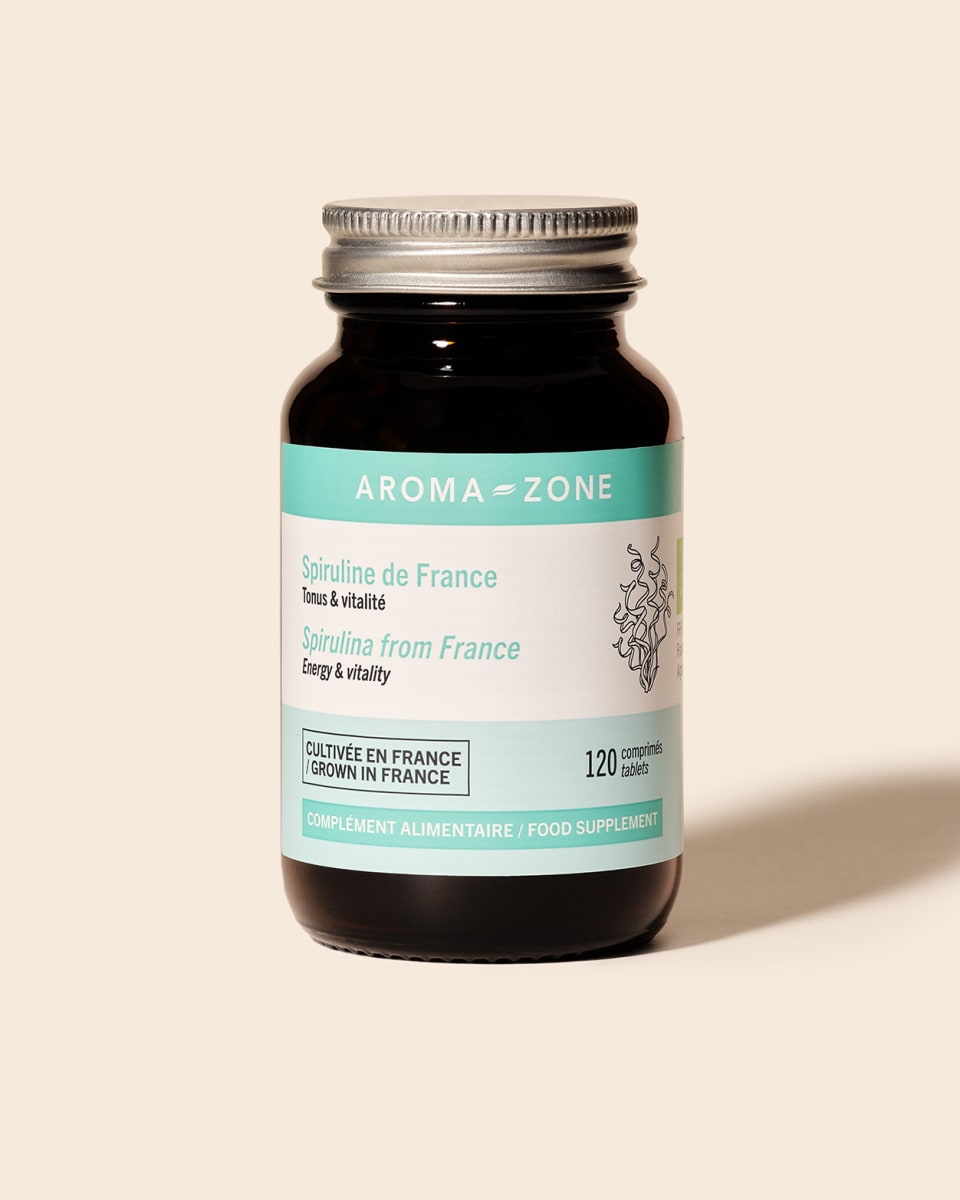
At Aroma-Zone, we have chosen organic quality spirulina. It is grown in closed, ventilated tanks under the supervision of experienced microbiologists. The quality of the water it is grown is also controlled. After the water has been filtered, the spirulina is washed. Then, it is dried at a low temperature to preserve its qualities and richness in nutrients and reduced to a fine powder. Aroma-Zone Spirulina is guaranteed to be non-irradiated and non-ionised.

Heavy metal and microbiological analyses also attest to its quality and the absence of various forms of contamination.

Spirulina: 7 benefits you should know about

1. The benefits of spirulina for fatigue and immunity

Often described as a superfood, spirulina plays a valuable role in combating fatigue and boosting the immune system. When vitality declines, fatigue sets in or stress peaks, spirulina is a natural source of energy. It is also invaluable in strengthening the body's natural resistance to infection. The combination of these two properties make spirulina one of the most sought-after food supplements.

Spirulina provides immune support, thanks to compounds such as linoleic acid, phycocyanin and other antioxidants. These elements help to regulate the immune system's response to the presence of micro-organisms. Therefore, they better protect the body against infection.

2. The benefits of spirulina on deficiencies: iron, fertility tests, vegetarians, vegans, etc.

Spirulina is a valuable ally for making up various nutritional deficiencies, although confirmation by medical analysis is necessary. It is distinguished by its richness in high-quality protein, averaging 57g per 100g. For people following a vegan diet, spirulina is an effective way to compensate for the absence of meat consumption by providing a rich source of protein.

Spirulina also contributes to muscle mass development and strength. It contains a significant amount of iron, which is essential for preventing anaemia, a common deficiency that weakens the body and increases the risk of disease. On average, spirulina contains around 28.5 mg of iron per 100 g, three times more than red meat.

Spirulina is also a generous source of vitamins, particularly from the B group, including riboflavin (B2), nicotinamide (B3), pyridoxine (B6) and folic acid (B9). It also contains vitamins A and E.

3. The benefits of spirulina during pregnancy and while breastfeeding

During pregnancy and while breastfeeding, nutrient requirements increase considerably. Spirulina offers a natural and economical solution to meet these increased needs, without affecting the health of the foetus or infant. Although spirulina can be beneficial, it is always advisable to consult a health professional for appropriate advice during pregnancy.

4. The benefits of Spirulina for detoxification and weight loss

Spirulina plays an essential role in detoxifying the body. Its richness in chlorophyll, a green pigment, helps to detoxify the body. Chlorophyll has the ability to eliminate toxic elements, purifying the blood. This detoxifying action works in a similar way to photosynthesis: it encourages red blood cell production, transporting oxygen around the body and boosting overall health. Its components have the ability to trap and eliminate toxins.

What's more, thanks to its high protein content, spirulina can make you feel full, which can be beneficial for weight management.

5. The benefits of Spirulina for athletes

Spirulina has numerous benefits for athletes, whether professional or amateur.

By consuming up to 15 grams a day of this superfood, athletes meet their increased nutritional needs as a result of intense physical activity. It is also gentle on the digestive system. Spirulina contributes towards recovery after exercise and muscle mass gain, making it a valuable asset for sportspeople.

Spirulina helps to combat physical fatigue and reduce cramps and muscle aches. It works by encouraging lactic acid elimination, the main cause of muscle soreness after exercise. In addition, spirulina improves the use of lipids during physical effort, optimising glutathione levels, a crucial element for energy production for athletes.

6. The benefits of spirulina for hair

Spirulina is a precious ally for healthy hair. As a food supplement, it provides essential elements for keratin production, a protein fundamental to hair health. After just a few weeks of treatment, the benefits are clear to see: hair is less damaged, has more shine and growth is stimulated.

What's more, spirulina is an ingredient of choice in fortifying haircare products. In particular, it is beneficial for people suffering from alopecia, a condition characterised by hair loss. These individuals are often advised to take keratin, a protein made up of amino acids, such as methionine and cysteine. Keratin strengthens the hair, stimulates growth and regulates sebum production.

Spirulina has an exceptional advantage: it is rich in all the amino acids needed for protein synthesis, in particular cysteine and methionine. It also contains significant amounts of zinc and B vitamins, which are essential for preventing hair loss and dryness. When combined with fats, it is an ideal ingredient for haircare, offering a complete solution for hair health and beauty.

7. The benefits of spirulina for the skin

Spirulina has anti-inflammatory and antioxidant properties, as well as a high nutritional content. Therefore, it can improve the appearance of the skin. For skin problems, such as acne, blemishes, redness, or signs of ageing (dark spots, dryness, wrinkles, loss of elasticity), spirulina can be a precious asset, whether it is used as an oral treatment or for cosmetic use. Spirulina contains antioxidants that help to combat the free radicals and oxidative stress responsible for premature ageing.


How should Spirulina be taken?

Like all superfoods with long-term effects, spirulina should be taken as a 3-month course of treatment, gradually increasing the dose over a few days to start with.

Start with 2 tablets a day and gradually increase to 6 tablets, swallowing them with a glass of water. A jar of Aroma-Zone French Spurulina tablets corresponds to 1 to 2 months of treatment.

This gives you a daily intake of 2 to 3 grams. Athletes or vegans can go up to 5 grams a day:

  • To benefit from its nutritional effects: take it with or just before a meal.

  • To take advantage of its effect on your appetite: take it outside mealtimes.

A single dose in the morning or 2 doses, 1 in the morning and another at midday, are preferable, as spirulina can be slightly energising and speed up digestion. The following forms are available on the market:

  • Spirulina capsules: For oral consumption. Capsules don't have the strong taste and smell of spirulina, which can put some people off taking it. We prefer coatings from vegetable origin.

  • Spirulina tablets: To be taken orally for an easy dosage. The smell of spirulina is very strong, but the taste is less pronounced with tablets than in other forms.

  • Spirulina flakes: Flakes can be diluted in a drink or sprinkled on salads or hot dishes (at the last minute, to avoid altering their composition). This form of spirulina is mostly unprocessed, but is textured and full of flavour.

  • Spirulina powder: Aroma-Zone spirulina can be used for both cosmetic and nutritional purposes. You can add 1 to 30% of its total weight to your mixtures (masks, wraps, soaps, etc.) or use it in smoothies, if you enjoy the taste.

Cosmetic Active Ingredient - Spirulina Powder

Can you take spirulina every day?

It is generally considered safe and beneficial to consume spirulina on a daily basis, provided you follow the recommended dosage. This is because spirulina is a natural source of proteins, vitamins, minerals and antioxidants, which can support the immune system, improve energy and promote overall good health. However, as with any food supplement, it's important to listen to your body and watch out for any reactions. Some people may be sensitive to spirulina, particularly those suffering from conditions such as phenylketonuria, algae allergies, or liver or muscle problems. It is, therefore, advisable to start with a small dose and increase gradually, consulting a health professional if in doubt.

What are the contraindications and side effects of spirulina?

Contraindications of spirulina

This is another of the advantages of spirulina: it has no contraindications to speak of, which rare in the food supplement market! This makes it suitable for everyone, from the elderly to those who are pregnant and breastfeeding.

Who shouldn't take Spirulina?

Only people suffering from phenylketonuria, a hereditary genetic disease, which prevents them from correctly assimilating a substance naturally present in the diet (phenylalanine) should refrain from consuming it.

In addition, people with allergic, muscular or hepatic conditions should avoid spirulina because of its phenylalanine content.

What are the side effects of spirulina?

If you do not have a high level of physical activity, we advise against taking more than 5 grams of spirulina a day. In the event of an overdose, you may experience the following symptoms: headaches, nausea, diarrhoea, digestive problems or skin rashes. If this happens to you, stop your course of treatment for a few days or simply reduce your daily intake.

Furthermore, given the risks of spirulina contamination (cyanotoxins, bacteria and heavy metals), it is important to be well informed about the spirulina you buy. ANSES (French Agency for Food, Environmental and Occupational Health and Safety) recommends "giving preference to supply channels that are best controlled by the public authorities: compliance with (French) regulations, traceability, identification of the manufacturer".


Focus on our naturopathic editor: Lou Dumas

Lou Dumas graduated from HEC in 2012. She gained ten years' experience in marketing cosmetics and fragrances before going independent as a consultant in this field. She recently completed a 3-year course in naturopathy at the Collège Européen de Naturopathie Holistique (CENATHO, Paris), with the aim of supporting the physical and mental health of the individuals she works with through a holistic approach to lifestyle.

Find out more

Who shouldn't take spirulina?

Although spirulina is generally considered safe for most people, some people should avoid taking it or consult a health professional before doing so.

People allergic to seafood or sensitive to algae may react to spirulina. In addition, people with an allergic background or a muscular or hepatic vulnerability, or suffering from phenylketonuria, a rare genetic disease, should avoid spirulina because of its phenylalanine content. During pregnancy or while breastfeeding, you should also seek medical advice before taking spirulina supplements.

Is it good to take spirulina every day?

Taking spirulina regularly can be beneficial to your health, but it's important to do so in moderation and to follow dosage recommendations. Daily use can help provide a steady supply of essential nutrients, boosting the immune system, improving skin health and promoting general well-being. However, it is advisable to consult a healthcare professional to determine the appropriate dosage according to individual needs.

What are the benefits of spirulina for the body?

Spirulina offers an impressive range of health benefits. It is rich in high-quality protein, making it an excellent supplement for vegetarians and vegans. What's more, its high content of nutrients such as iron, beta-carotene, B vitamins and omega-3 fatty acids makes it a powerful antioxidant that can help boost the immune system, improve cardiovascular health, promote healthy skin and hair, support cognitive function and aid weight management. In addition, spirulina is often used for its anti-inflammatory and detoxifying properties, as well as for its potential to reduce cholesterol and blood sugar levels.

What are the benefits of spirulina for sports and bodybuilding?

Spirulina is popular with athletes for its nutritional richness: it provides complete proteins, iron, antioxidants, and various micronutrients that are useful for energy metabolism. Although no specific health claims are authorised, its high protein content can help support the daily intake necessary for muscle maintenance, while its antioxidants help the body cope with the oxidative stress generated by exercise. Some athletes also incorporate it into their routine to aid recovery as part of a balanced diet. To learn more, check out our article Spirulina, a protein-rich supplement.

Focus on our naturopathic editor: Lou Dumas

Lou graduated from HEC in 2012. She has ten years of experience in marketing cosmetics and perfumes before becoming an independent consultant in this field. She recently completed a three-year naturopathy course at the European College of Holistic Naturopathy (CENATHO, Paris) with the aim of supporting the physical and mental health of the individuals she works with through a comprehensive approach to healthy living.