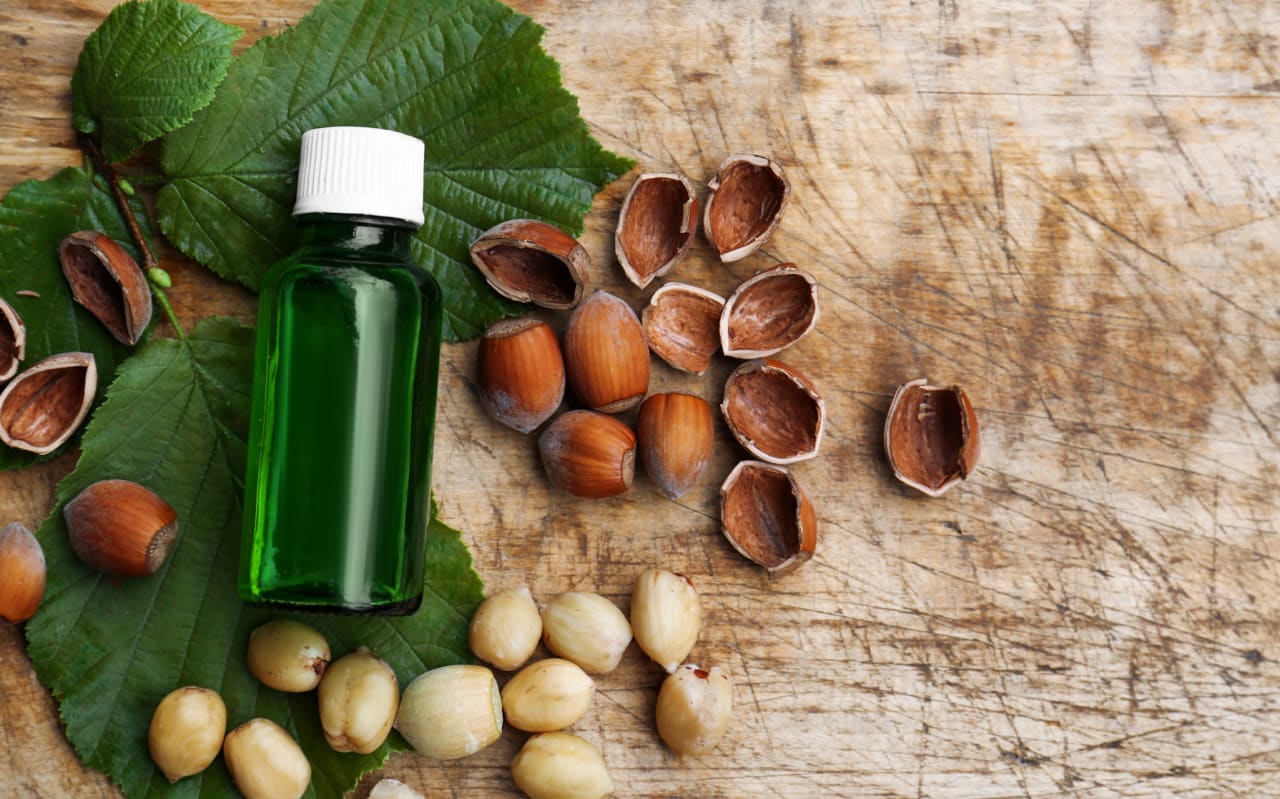


The common hazel, Corylus avellana, also known as the European hazel, is a fast-growing deciduous shrub belonging to the Betulaceae family. Corylus is derived from the Greek Korus, meaning ‘helmet’, referring to the shape of the cupules that surround the hazelnut. Avellana refers to the hazelnut and alludes to the Italian town of Avellino, where hazel trees were planted and grew in abundance. The genus Corylus comprises around fifteen species. Its origins are ancient, and traces of it can be found as far back as the Tertiary period. Corylus avellana became a dominant species in Europe around 9,000 years ago. The common hazel is cultivated in many countries, particularly in Turkey. It is a shrub 3 to 8 metres tall, which tends to produce suckers to varying extents; it is found in temperate regions and grows wild in the undergrowth or on the forest edge. Its roots are unique in that they live in symbiosis with truffles. The hazel has a bushy, spreading habit, often with several trunks arising from the base. When young, its bark is smooth, marked with pale lenticels; it cracks with age. The colour of the trunk varies from grey-brown to coppery brown. Its young branches are often downy. Its green, deciduous leaves are alternate, heart-shaped, with double-serrated margins. They turn yellow in autumn. It flowers early, from January to March, even before the leaves appear. The species is monoecious: it bears both male and female flowers on the same tree. The male flowers, or catkins, appear before the female flowers. The catkins are long and pendulous, resembling caterpillars and reaching lengths of 5 to 10 cm. They are composed of numerous male flowers clustered in spikes. In spring, they turn yellow before releasing their pollen. The female flowers are more inconspicuous and appear as small red buds. The fruit is well known, as it is the hazelnut. It grows in small clusters called ‘trochets’, consisting of two or three fruits. Its shell is hard, ovoid and green in colour; it dries out when ripe.
Hazelnuts are harvested in September–October. The hazel is a very hardy shrub that adapts to various soil types, although it prefers calcareous, well-drained soils. It tends to form dense coppices, making it a useful plant for soil stabilisation and the creation of hedges. Its wood is flexible, light and relatively strong, with a fine grain and a light colour ranging from creamy white to light brown. It has traditionally been used for making wickerwork, as well as walking sticks and canes. Several parts of the plant are used for herbal medicine and offer numerous benefits.