
Organic Rosemary Verbenone Hydrosol
Anti-blemishes
Sebum-regulating
£5.00
1 article = 200 ml
Price per L = £25.00
free delivery up to £25 in United Kingdom
100% secure payment CB, Visa, Mastercard, Paypal, Apple Pay, Google Pay
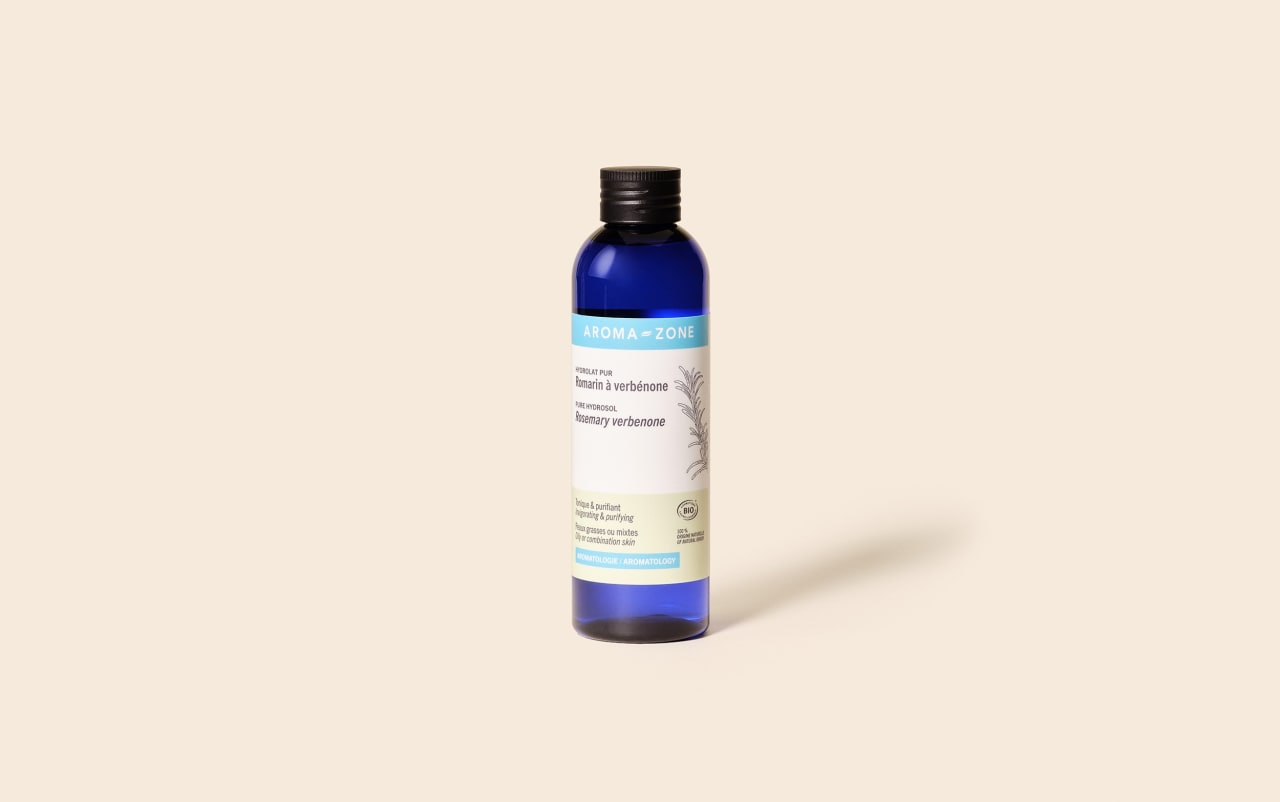
Organic Rosemary Verbenone Hydrosol
200 ml

Ecocert - Cosmos certified

From France

100% Pure And Natural
Properties
Organic Rosemary Verbenone Hydrosol is known for the following properties:
Astringent, tones the skin
Balances oily and acne-prone skin
Purifying, cleanses problem skin and helps to bring impurities to the surface and unclog pores
Invigorates the skin and combats the effects of ageing
A tonic, it has a beneficial effect on the scalp, preventing hair loss and dandruff
Indications
Combination skin
Acne-prone skin
Mature skin lacking tone
Problem scalps (irritated, oily & dandruff prone)
See our article on the natural care of blemished, oily and acne-prone skin
Properties
Organic Rosemary Verbenone Floral Water is renowned for the following wellness properties:
Energising, helps to refocus and concentrate
Enhances memory, analysis and synthesis
Brings clarity to the mind
Facilitates language development
Reinforces self-confidence
Fosters Emotional Stability
Indications
Difficulty in memorisation
Lack of concentration
Pessimistic, critical and distrustful attitude
Tendency to "sulk" in conflict situations
Feeling constantly cold, even in summer
Excess of kapha
Uses beauty
As an ingredient in your blends for spraying onto the skin of your face and neck after cleansing. Then apply your skincare cream or oil immediately to damp skin
Incorporated as an aqueous phase in your homemade cosmetic formulas, it is ideal for making:
A deodorant
A purifying treatment
A runny cream for combination or problem skin
A mattifying lotion
A refreshing gel
A purifying mask
Use as a steam treatment or as an ingredient in your hot compress blends to bring impurities to the surface, unclog pores, tone and redefine the skin
Synergies
To treat dandruff: Geranium & Tea Tree Hydrosols, Burdock & Peony Powders, Bisabolol, Allantoin
For purifying effects: Propolis, Burdock Root Powder, Jupiter Beard CO₂ Extract, Tea Tree Hydrosol
For mattifying effects: Lavender & Linalool Thyme Hydrosol, Arrowroot, Bamboo Sap Powder, Alum Powder
Instant recipe by Aroma-Zone
Stimulating Scalp Rub:
Rosemary Verbenone Hydrosol
3 tablespoons
Cider vinegar
1 tablespoon
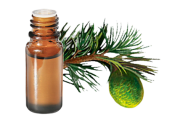
Cedar Essential Oil
3 drops
Step 1
Gently massage the scalp.
Step 2
Leave on for five to ten minutes before shampooing.
Cultivation
Organic, certified by Ecocert FR-BIO-01
Quality
Fresh product
100% pure
No preservatives
Microbiologically tested by the Aroma-Zone quality laboratory
Production process
Steam distillation
Part of the plant used
Branches
Botanical name
Rosmarinus officinalis CT verbenone
Botanical family
Lamiaceae
Function
Cosmetic ingredient
INCI designation: Rosmarinus officinalis flower/leaf/stem water
Concentration
To make 1 litre of hydrosol, you need 1 kilo of twigs, known as the 1:1 ratio. This minimum extraction ratio, which is something we strictly follow at Aroma-Zone, guarantees an intense fragrance, better conservation and, above all, a high concentration of aromatic molecules in the hydrosol, a proof of its quality.
Other names
Rosemary water, Corsican rosemary, Sardinian rosemary
Learn more
An evergreen shrub from the Lamiaceae family, Rosemary is very common around the Mediterranean, where it particularly thrives in the marine climate.
Traditionally used in phytotherapy for its digestive, cholagogue and choleretic properties, Rosemary is also widely used in cooking for flavouring and in the food industry for its antioxidant and preservative properties. It was frequently used in the composition of herbal elixirs and rejuvenating waters.
As far back as the 14th century, it became famous as a basic compound in 'Eau de la Reine de Hongrie' - the forerunner of Eau de Cologne - and 'Vinegar of the Four Thieves'.
From a cosmetic point of view, Rosemary is reputed to restore suppleness to the skin and bring dynamism and beauty to the skin and hair. Traditionally used internally to energise and regenerate the liver, Rosemary Verbenone Hydrosol is also very popular when added to cosmetic preparations to regenerate and soothe problem skin and scalp, and to add a soft, fresh, aromatic fragrance to your creams and skincare products.
Organoleptic properties
Appearance: Fluid liquid, sometimes slightly cloudy (with a possible light separation of an essential oil layer) due to its high content of aromatic compounds
Colour: colourless
Odour: fresh, aromatic and botanical, with honey notes
Taste: refreshing, powerful, aromatic
pH
4.5 - 6.00
Hydrosols are delicate and sensitive to contamination. As our Aroma-Zone Hydrosols are fresh, pure products with no added preservatives, we recommend storing them in the refrigerator and using them within six months of opening. Always make sure your hands are clean and that any utensils or bottles in contact with the Hydrosol during homemade preparations are properly disinfected. If you notice a change in appearance or fragrance, discontinue use.
Warning
The properties, indications and methods of use described above are derived from scientific literature and/or reference books or websites in aromatherapy, hydrolatherapy and phytotherapy. This general information is provided for informational purposes only and cannot under any circumstances be considered as medical information. This information cannot under any circumstances replace a diagnosis, consultation or medical follow-up, nor engage our liability.
Environmental qualities and characteristics product sheet
Reference
0076701 - HY Organic Rosemary verbenone hydrosol 200 ml
Main packaging material
RPET (recycled PET) bottle
Recyclability
Most packaging can be recycled
Recycled material
Packaging contains at least 85% recycled material
Rewards and penalties
Aroma-Zone gets a bonus for managing packaging made from recycled plastic.

EO = Essential Oil
VO = Carrier Oil or Macerated Oil
Use all 3 formulas to optimise results.
Mountain savory or thymol thyme hydrosol: 25 ml
Yarrow hydrosol: 25 ml
Use: Mix the hydrosols in a non-metallic bowl and pour in 100 ml of warm water. Cover your head with a towel and steam your face for 10 to 15 minutes. Immediately afterwards, spray with neroli, chamomile or St John's wort hydrosols and leave to air dry. Repeat 2 times a week.
Yarrow, rosemary verbenone and/or linalool thyme hydrosol.
Use: One or all of these hydrosols should be used as a cleanser and toner for acne-prone skin twice a day. Soak a piece of cotton wool in it or them and gently pat over the skin after cleansing with your usual cleanser; leave to air dry.
Yarrow or wild carrot hydrosol: 30 ml
Peppermint essential oil: 1 drop diluted beforehand in 4 drops of Solubol.
Use: Dilute in 1.5 litres of water and drink throughout the day. Repeat every day for 3 weeks; stop for a week and repeat again.
Rosemary verbenone hydrosol: 100 ml
Bay laurel hydrosol: 100 ml
Non-carbonated mineral water: 1 litre
Use: 1 teaspoon of the mixture in a cup of hot water 2 to 3 times a day, depending on progress, or 1 tablespoon in 1 litre of water to drink during the day. Carry out a 40-day course of treatment.
As a complement:
Black spruce essential oil
Use : Massage a few drops diluted in a little carrier oil on the adrenal glands in the morning upon waking.
Add 4 to 5 tablespoons of Mint hydrosol, alone or with Rosemary hydrosol, to a bowl of warm water. If necessary, add coarse salt (about 150 g).
15 ml sage hydrosol
15 ml Rosemary hydrosol
15 ml Juniper hydrosol
Method: Add the hydrosols to the bath water.
Use: Leave in the water for at least 10 minutes.
60 ml of Rosemary hydrosol
30 ml of Aloe vera gel
9 ml of apple cider vinegar
10 drops of Scots pine essential oil
Directions: Pour the hydrosol and Aloe vera gel into a 100 ml bottle. Measure the vinegar into a bowl and add the essential oil drop by drop. Pour the mixture into the bottle, shake vigorously and close. Fit the bottle with a spray bottle.
Use: Spray onto the face (with eyes closed) in the morning, then wipe off with cotton wool or a handkerchief.
Cypress hydrosol: 50 ml
Helichrysum italicum Hydrosol: 50 ml
Juniper Hydrosol: 50 ml
Rosemary verbenone hydrosol: 50 ml
Use: 1 tablespoon in 1 litre of water to be drunk during the day, for 40 days; repeat if necessary External use:
Cypress essential oil : 20 drops
Vetiver essential oil: 6 drops
Lemon zest essential oil: 10 drops
Juniper essential oil: 10 drops
Rosemary verbenone essential oil: 6 drops
Hazelnut oil : 30 ml
Use: Massage locally into the areas to be treated 2 times a day Note Aroma-Zone: Lemon essential oil is photosensitising. Do not expose yourself to the sun after applying this preparation. We advise you to replace it with Lemon essential oil without furocoumarins, which is not photosensitising.
Sandalwood or rosemary verbenone hydrosol
Directions for use: Soak a cotton pad and apply to the affected area like a compress. This action will promote healing of the bottom layers of raw skin and reduce pain when the upper layers peel off.
20 ml of Jojoba carrier oil
10 ml of Rosemary hydrosol
2 g of beeswax
5 drops of Rosewood essential oil
5 drops of grapefruit seed extract
Directions: Melt the beeswax in the carrier oil in a bain-marie. When the wax has melted, remove from the heat and pour in the Rosemary hydrosol little by little, emulsifying vigorously with a whisk. When the mixture is smooth, add the essential oil and preservative. To allow the mixture to set, chill in the fridge for 30 minutes.
For a 50 ml glass jar
Equipment: 1 saucepan; 1 mortar; 1 pestle; 1 mini whisk; 1 weighing scale.
Aloe vera macerated oil: 15 g
Organic Rosemary verbenone hydrosol: 5 g
Lanolin plant substitute: 2 g
Rice bran wax: 2 g
Shea butter: 1 g
Liquorice powder: 1 teaspoon
Propolis plant tincture: 5 drops
Natural vitamin E: 4 drops
Directions: Pour the Aloe vera macerated oil, rice bran wax and shea butter into the mortar. Heat the mixture in a saucepan over a bain-marie until the rice wax and shea butter have completely melted. Remove the pan from the heat and wait for the mixture to cool slightly. Add the rosemary hydrosol in small streams, drawing 8s with the pestle on the bottom of the mortar to set the emulsion. Add the liquorice powder, lanolin plant substitute, propolis plant tincture and vitamin E, continuing to make figure-of-eight movements with the pestle. Pour the mixture into the jar and store in a cool place.
Aroma-Zone important note: It is not easy to create a stable emulsion (cream, lotion) using only a wax. Waxes have a low emulsifying power, so we advise you to add an emulsifier. We also recommend adding a preservative to ensure that the preparation is preserved.
30 ml rosemary hydrosol
60 ml Vodka
Dried zest of one lemon
80 drops (4 ml) cedarwood essential oil
80 drops (4 ml) Seville orange essential oil
40 drops (2 ml) rosemary essential oil
Directions: Place the lemon zest in a sterilised glass jar, without compacting it down. Cover with the vodka and hydrosol, then add the essential oils. Leave to mature for 21 days, shaking the jar every day. Filter the mixture through a coffee filter and then pour into a bottle.
Directions for use: A light eau de toilette, perfect for men.
30 ml rosemary verbenone hydrosol
10 ml true lavender hydrosol
10 ml lemon balm hydrosol
Use: apply the lotion to the face morning and evening using a cotton pad.
2 tablespoons of Rhassoul
Rosemary verbenone hydrosol
10 drops of Cedar essential oil
Directions: Mix the Rhassoul with the essential oil, then add the hydrosol until you reach the desired consistency.
Use: Apply and leave on for 10 to 20 minutes before rinsing thoroughly.
40% Rosemary verbenone hydrosol
25% sage hydrosol
25% Lavender hydrosol
10% apple cider vinegar
Note: Prepare only the amount needed for rinsing.
Neutral foaming base: 60 ml
Rosemary hydrosol: 30 ml
White clay: 5 ml
Jojoba carrier oil: 5 ml
Rosemary essential oil: 10 drops
Sage essential oil: 10 drops
Directions: Dissolve the white clay by gradually adding the hydrosol. Add the carrier oil and essential oils. Pour the mixture and foaming base into a sterilised bottle, stirring gently. Over time, the phases of this shampoo will separate, but simply shake the bottle before each use to restore its even distribution.
For 125 ml bottles:
Oily hair
1/3 of a 125 ml bottle of foaming base
10 drops lemon essential oil
10 drops cypress essential oil
Directions: Top up with juniper, tosemary or thyme hydrosols.
Hair loss
1/3 of a 125 ml bottle of foaming base
10 drops sage essential oil
8 drops juniper essential oil
3 drops cedarwood essential oil
Directions: Top up with juniper, boxwood or lavender hydrosols.
Dandruff
1/3 of a 125 ml bottle of foaming base
8 drops cade juniper essential oil
6 drops sage essential oil
4 drops rose geranium essential oil
Directions: Top up with juniper or lavender hydrosols.
"Hydrosol Therapy: A Handbook for Aromatherapists and Other Practitioners"
Lydia Bosson and Guénolée Dietz - Editions Amyris
'Hydrosols, the next aromatherapy'
Suzanne Catty
'Pharmacognosie. Phytochimie et plantes médicinales' 3ème éd.'
Jean Bruneton
'Plantes, huiles et parfums de beauté'
Marie-Françoise Delarozière and Raymonde Trierweiler
L’aromathérapie
Nelly Grosjean
L’aromathérapie
Dominique Baudoux
'Aromatherapy (Illustrated Guide)'
Clare Walters
Inhibitory Activity of Hydrosols, Herbal Teas and Related Essential Oils Against Filament Formation and the Growth of Candida Albicans.
Inouye S, Takahashi M and Abe S. Nippon Ishinkin Gakkai Zasshi (Japanese Journal of Medical Mycology), 2009, 50(4), 243–251.
Chemical composition and antimicrobial activity of Rosmarinus officinalis L. oils from Sardinia and Corsica.
Pintore G. et al. Flavour and Fragrance Journal. 2002, 17(1), 15–19.
Comparative evaluation of 11 essential oils of different origin as functional antioxidants, antiradicals and antimicrobials in foods.
Sacchetti G et al. Food Chemistry, 2005, 91(4), pp 621–63.
'The essential guide to natural skin care'
Hélène Berton
'Cosmétiques naturels'
Tiphaine Chagnoux and Hélène Baron
'Votre beauté au naturel'
Chantal Clergeaud
'90 recettes de beauté bio à faire soi-même'
Sophie Macheteau and Vanina Guet
'Mes petits cadeaux cosmétiques BIO'
Marie Bousquet and Christie Vanbremeersch
'Cuisiner avec les huiles essentielles et les eaux florales'
Emmanuel and Valérie Cupillard
'L'aromathérapie énergétique ; guérir avec l'âme des plantes'
L. Bosson - Editions Amyris
'Aromatherapy body and soul'
André Bitas - Editions Amyris
'Understanding hydrosols: the specific hydrosols for aromatherapy'
Len and Shirley Price p.175 (recipe by M. Green and K. Keville)
http://www.aucoeurdesracines.fr/blog/les-hydrosols-en-cuisine
http://dame-bio.fr/recettes/smoothie-de-concombre-parfume-a-lhydrolat-de-romarin-sans-lactose
http://www.plantes-et-sante.fr/article/manger-sain-eaux-florales-recettes-culinaires.html?page=2
http://www.bien-etre-au-naturel.fr/les-eaux-florales-ou-hydrolats-aromatiques
24. http://www.homejardin-loisirs.com/romarin-hydrolat/tout_savoir_et_utiliser_en_toute_confiance.html
Frequently Asked Questions
Essential Oils
1 ml = approximately 35 drops (with our Aroma-Zone dropper caps)
Carrier Oils
1 pump (Aroma-Zone aluminium pump) = approx. 0.15 ml
Mass / Volume conversion (for a liquid)
Mass (g) = Density x Volume (ml) at 20°C
Further information
1 full teaspoon = between 3 and 4.5 ml
1 full tablespoon = between 7.5 and 10 ml
However, these spoon ratios depend on a number of factors (e.g. viscosity of the liquid, temperature, depth and size of the spoon, rheological behaviour of the liquid), and we strongly advise you to use precise measuring equipment, such as graduated test tubes, graduated pipettes, and precision scales.
Loading...
Very good products, and from this company I like the possibility of being guided to try managing raw materials myself. Very interesting.
This product is TOP. I use it every day as a facial toner, it's fresh, fragrant, and gives the skin a feeling of cleanliness and freshness. I recommend it.
Very good.
I use it to mix my green clay for my face mask, perfect.
Perfect for hair growth, I would recommend it!
Associated products
Associated tips
Face care tips

Hair care tips
Face care tips


