
Guide to essential oils

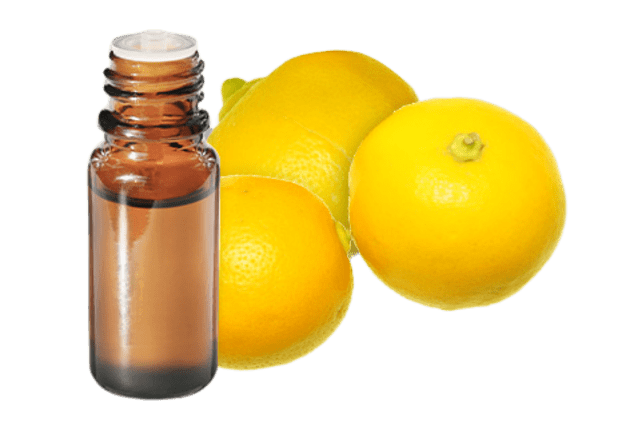
Essential oil of Furocoumarin-free Bergamot

Purifying, furocoumarin-free Bergamot essential oil is non-sensitising. This makes it ideal for use in skincare products for oily skin. As a tonic, it gives off a fresh, refined citrus scent, making it an essential ingredient in perfumes. In psycho-energetics, Bergamot essential oil is used in particular to increase concentration, facilitate expression, reduce fear and stimulate self-confidence.

How to use

  • Skin application and massage

    Skin application and massage

    Suitable

  • Cosmetic active ingredient

    Cosmetic active ingredient

    Appropriate

  • Aromatherapy bath

    Aromatherapy bath

    Suitable

  • Diffusion

    Diffusion

    Possible but not recommended

  • Food grade

    Food grade

    Appropriate

Features

Properties and uses

Precautions

Find out more

Features

Production process

Cold pressed then complete distillation by steam distillation

Part of the plant used

Zest

Botanical name

Citrus bergamia

Warning

The properties, information and methods of use below are quotes from reference books or websites on aromatherapy, hydrolatherapy and phytotherapy. This general information is provided for informative purposes only and in no way constitutes medical guidance. Under no circumstances can this information be used as a substitute for a medical diagnosis, consultation or follow-up, nor can it incur our liability. We recommend that you consult the guide to essential oils before using them, so that you are aware of any precautions that need to be taken. If in doubt, consult a doctor before using essential oils.

Properties and uses

Health

Beauty

Wellness

Kitchen

Find out more

Properties

For health, furocoumarin-free Bergamot essential oil is renowned for its health benefits:

  • Antifungal, it is effective against Candida-type fungi.

  • Purifying thanks to the terpenes it contains, it has antiseptic activity.

  • Digestive, carminative, laxative

Uses

In addition to treatments, it is traditionally used in the following cases:

  • Fungal infections

  • Disinfection

  • Difficult digestion, lack of appetite, constipation, colitis, etc.

Synergies

  • Air purification: Lemon essential oil

  • Purifying: Palmarosa, Laurel and Holy Basil essential oils

Precautions

  • Not recommended during the first 3 months of pregnancy or for children under the age of 7.

  • High doses may cause skin irritation. Can be incorporated up to 2% into your cosmetic preparation or "homemade" massage oil.

  • Certain natural compounds contained in this essential oil may present a risk of allergy for certain sensitive individuals when the essential oil is incorporated into a cosmetic composition (according to the 7th Amendment of the European Directive on cosmetic products (2003/15/EC)): limonene and, to a lesser extent, linalool, citral (neral and geranial).

  • As a general rule, always test-apply your mixture to the crease of the elbow at least 48 hours before use.

  • For use as a cosmetic ingredient, please refer to the specific precautions.

Find out more

ORGANIC furocoumarin-free Bergamot essential oil is obtained by steam distillation of Bergamot essential oil, initially obtained by cold pressing the zest of the fruit.

This technique removes the furocoumarin family components from the essential oil, including bergapten (5-MOP) and 8-methoxypsoralen. These compounds, which are useful in the treatment of vitiligo and depigmentation in general, have the disadvantage of causing photosensitisation reactions if exposed to the sun.

Aromatherapy recipes from the bibliography

EO = Essential Oil VO = Carrier Oil or Macerated Oil

Vitiligo (skin depigmentation) (D. Baudoux)

Health & wellbeingSkin problems

  • 3 ml Bergamot essential oil
  • 1 ml Clove essential oil
  • 1 ml tea tree essential oil
  • 3 ml Lemon essential oil

Use: 2 drops of the mixture on the depigmented area 2 times a day until there is a noticeable improvement.

Aroma-Zone Note: Lemon and Bergamot essential oils are photosensitising. Do not expose to the sun after applying this preparation. We advise you to use furocoumarin-free Lemon and Bergamot essential oils, which are not phototoxic.

Equivalents

Essential Oils

1 ml = approximately 35 drops (with our Aroma-Zone dropper caps)

Carrier oils

1 pump (Aroma-Zone aluminium pump) = approx. 0.15 ml

Mass / Volume conversion (for a liquid)

Mass (g) = Density x Volume (ml) at 20°C

Further information

1 full teaspoon = between 3 and 4.5 ml

1 full tablespoon = between 7.5 and 10 ml


However, these spoon ratios depend on a number of factors (e.g. viscosity of the liquid, temperature, depth and size of the spoon, rheological behaviour of the liquid), and we strongly advise you to use precise measuring equipment, such as graduated test tubes, graduated pipettes, and precision scales.

Bibliography

1

Comparison of the volatile constituents in cold-pressed bergamot oil and a volatile oil isolated by vacuum distillation Journal of agricultural and food chemistry, 2007, 55(19), 7847-785

BELSITO Emilia L. ; CARBONE Concetta ; DI GIOIA Maria L. ; LEGGIO Antonella ; LIGUORI Angelo ; PERRI Francesca ; SICILIANO Carlo ; VISCOMI Maria C.

2

In vitro activity of bergamot natural essence and furocoumarin-free and distilled extracts, and their associations with boric acid, against clinical yeast isolates Journal of Antimicrobial Chemotherapy, 2005, 55(1), 110-114

L. Romano, F. Battaglia, L. Masucci, M. Sanguinetti, B. Posteraro, G. Plotti, S. Zanetti and G. Fadda

3

www.ozmoz.fr

4

"Cosmétiques naturels - Conseils et recettes plaisirs pour préserver sa santé au quotidien"

Tiphaine Chagnoux and Hélène Baron

5

'Aromatherapy - Healing with essential oils'

Dominique Baudoux

6

"90 recettes de beauté bio à faire soi-même"

Sophie Macheteau and Vanina Guet

7

'L'ABC des huiles essentielles'

Dr Thierry Telphon

8

"La bible de l’aromathérapie"

Nerys Purchon

9

"Les cahiers pratiques de l'aromathérapie française - Grossesse "

Dominique Baudoux

10

"L'aromathérapie énergétique ; guérir avec l'âme des plantes"

L. Bosson

11

'Aromatherapy body and soul'

André Bitsas

12

'La cuisine aux huiles essentielles - Des recettes saines et créatives'

Aymeric Pataud

13

"Culinary essential oils"

Ariane Erligmann

14

'Cooking with essential oils and floral waters'

Emmanuel and Valérie Cupillard

15

"Huiles essentielles, huiles végétales, plantes aromatiques dans l’art de la cuisine"

Jean-Philippe Ortega

16

"Cuisinons avec les huiles essentielles - des trésors de saveurs et de vitalités"

Odile Davy and Martine Fayolle

17

"Comment entretenir sa maison"

Angela Martin

18

19

20

21

22