

Guide to essential oils

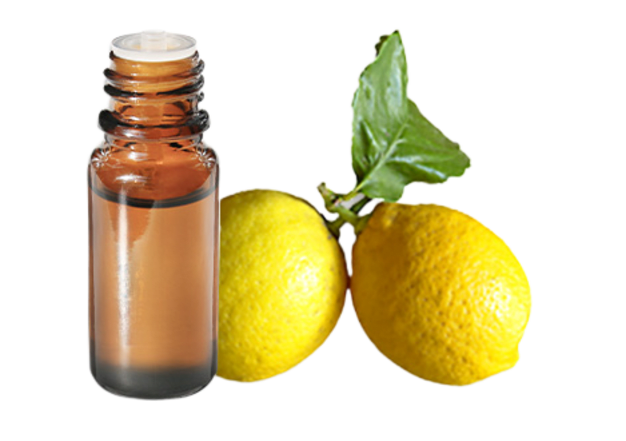
Essential oil of Furocoumarin-Free Organic Sicilian Lemon

Non-photosensitising, this furocoumarin-free essential oil is ideal as a cosmetic active ingredient. Purifying, furocoumarin-free lemon essential oil is excellent for treating oily skin and scalps. Strengthening, it is also well-regarded for improving brittle nails. Delightfully scented, this lemon essential oil has a divine, fruity fragrance that is highly valued in perfumery.

How to use

  • Skin application and massage

    Skin application and massage

    Appropriate

  • Cosmetic active ingredient

    Cosmetic active ingredient

    Appropriate

  • Diffusion

    Diffusion

    Appropriate

  • Food grade

    Food grade

    Suitable

  • Aromatherapy bath

    Aromatherapy bath

Features

Properties and uses

Precautions

Find out more

Features

Production process

Cold expression then steam distillation to remove furocoumarins

Part of the plant used

Zest (fruit pericarp)

Botanical name

Citrus × limon

Warning

The properties, information and methods of use below are quotes from reference books or websites on aromatherapy, hydrolatherapy and phytotherapy. This general information is provided for informative purposes only and in no way constitutes medical guidance. Under no circumstances can this information be used as a substitute for a medical diagnosis, consultation or follow-up, nor can it incur our liability. We recommend that you consult the guide to essential oils before using them, so that you are aware of any precautions that need to be taken. If in doubt, consult a doctor before using essential oils.

Properties and uses

Health

Wellness

Beauty

Kitchen

Find out more, etc.

For use in aromatherapy, we recommend unrectified lemon essential oil. However,furocoumarin-free lemon essential oil offers similar benefits. It is particularly popular in vapour form topurify the air and is traditionally recommended for preventing winter virus outbreaks. Its invigorating fruity fragrance is ideal for relieving nausea and motion sickness.

Properties

Furocoumarin-free lemon essential oil is recognised for its health benefits:

  • Helps boost natural immunity and regulate metabolism

  • Acts as a liver tonic and anti-nausea remedy

  • Purifies and serves as a general sanitiser

  • Rich in antiviral and antibacterial properties

  • Aids digestion, stimulates appetite, relieves gas, detoxifies, and thins the blood, with “<3>vitamin P-like” effects (improves microcirculation, reduces capillary permeability, and strengthens capillaries)

Uses

Furocoumarin-free lemon essential oil is traditionally used to help with the following:

  • Infectious and contagious diseases (winter infections, ENT infections, etc.), preventing outbreaks, weak immune systems, etc.

  • Digestive, hepatic and pancreatic fatigue, nausea

  • Premature ageing: capillary fragility Heavy legs, circulatory disorders

  • Air purification

Synergies

  • Immunity boosting: Ravintsara and Frankincense essential oils

  • Liver health support: Rosemary verbenone, Peppermint, and carrot essential oils

  • Healthy legs and circulation: Mediterranean cypress, Mastic tree, Italian helichrysum, and Calophyllum oils

In practice

Toning and strengthening: apply by rubbing on the solar plexus, diluted in a carrier oil, possibly combined with other essential oils.

Air purification: diffuse alone or blend with other essential oils (such as Scots pine, Silver fir, grapefruit, Frankincense) for a refreshing effect.

Precautions

  • Highly irritating in its pure form, this oil should always be used diluted for any skin application.

  • It is not recommended during the first trimester of pregnancy.

  • Some natural compounds in this essential oil may cause allergic reactions in sensitive individuals when used in cosmetic formulations (as per the 7th Amendment of the European Cosmetics Directive (2003/15/EC)): limonene, and to a lesser extent, citral (geranial and neral), and linalool.

  • As a precaution, always perform a patch test on the crook of your elbow at least 48 hours before using the product.

  • For use as a cosmetic ingredient, please refer to the specific precautions.

Find out more

Likely originating from Kashmir, the lemon has been grown in Asia for over 2,000 years. Having travelled to the Middle East, it was discovered by the Hebrews, who planted it during their captivity in Babylon and regarded it as a symbol of perfection and beauty.

Equivalents

Essential Oils

1 ml = approximately 35 drops (with our Aroma-Zone dropper caps)

Carrier oils

1 pump (Aroma-Zone aluminium pump) = approx. 0.15 ml

Mass / Volume conversion (for a liquid)

Mass (g) = Density x Volume (ml) at 20°C

Further information

1 full teaspoon = between 3 and 4.5 ml

1 full tablespoon = between 7.5 and 10 ml


However, these spoon ratios depend on a number of factors (e.g. viscosity of the liquid, temperature, depth and size of the spoon, rheological behaviour of the liquid), and we strongly advise you to use precise measuring equipment, such as graduated test tubes, graduated pipettes, and precision scales.

Aromatherapy recipes from the bibliography

EO = Essential Oil VO = Carrier Oil or Macerated Oil

Ricotta with carrot essential oil (O. Davy)

Kitchen

Serves 6

  • 500 g Ricotta cheese

  • 3 sprigs Dill, finely chopped

  • 100 g Sprouted quinoa seeds

  • 100 g Blanched almonds

  • 1/2 bunch finely chopped Parsley

  • 1/2 bunch finely chopped Mint

  • 500 g diced carrot

  • 150 ml Oat cream

  • Guérande salt

  • A pinch of Cayenne pepper

  • 100 g Rocket

  • 1/2 bunch of Chervil

Flavoured oil no. 1:

  • 3 tablespoons Olive oil

  • 2 drops carrot essential oil

  • 2 drops Lemon essential oil

  • 1 drop Orange essential oil

  • Flavoured oil no. 2:

  • 2 tablespoons Olive oil

  • 1 drop Cumin essential oil

  • 2 drops Lemon essential oil

Method: Soak the almonds in a glass of spring water for 4 hours. Mix the ricotta with flavoured oil no. 1. Add the sprouted quinoa, crushed almonds, chopped parsley and mint. Form 2 quenelles per person using 2 tablespoons. Steam the carrots for 6 minutes and season with salt. Blend the carrots with the oat cream, flavoured oil no. 2, and cayenne pepper. Spread some carrot coulis on the plate and place the 2 ricotta quenelles on top. Garnish with rocket and a few sprigs of chervil.

Citrus syrup (A. Pataud)

Kitchen

  • Lemon (Citrus limomum) essential oil: 2 drops

  • Sweet Orange (Citrus sinensis) essential oil: 1 drop

  • Grapefruit (Citrus paradisi) essential oil: 1 drop

Directions: Mix with 200 ml of syrup.

Use: Drizzle over your cakes: you'll be amazed at the results.

Vanilla Scallop Skewers (N. Le Foll and B. Da Costa)

Kitchen

Serves 4 - Preparation: 15 minutes - Marination: 30 minutes - Cooking time: 4 minutes

  • 12 scallops

  • 2 limes

  • 3 tablespoons olive oil

  • 3 tablespoons sesame seeds

  • 4 drops vanilla extract

  • 3 drops lemon essential oil

Directions: ask your fishmonger to remove the scallops from their shells. Rinse them, trim off the grey skins gently, and remove the coral if you prefer. Pat the scallops dry with paper towels and place them in a shallow dish. Mix the olive oil with 3 drops of lemon essential oil and 2 drops of vanilla extract, and pour this over the scallops. Cover with cling film and leave to marinate in the fridge for 30 minutes. Turn on the grill. Slice the lime thinly and thread the slices onto skewers, alternating with the scallops. Sprinkle with sesame seeds and grill the skewers for 4 minutes, positioning them about 10 cm from the grill. Serve with an aromatic herb salad or basmati rice combined with two drops of vanilla extract two minutes before it finishes cooking.

Bibliography

1

'Huiles essentielles - 2000 ans de découvertes aromathérapeutiques pour une médecine d'avenir'

Dominique Baudoux

2

Aromatherapy

Dr Jean Valnet - Éditions Maloine

3

"L'Aromathérapie exactement"

P. Franchomme and Dr D. Pénoël

4

'La Bible de l'aromathérapie'

Nerys Purchon

5

"ABC des huiles essentielles"

Dr Telphon

6

Aromatherapy

Nelly Grosjean

7

'Les huiles essentielles pour votre santé'

G. Roulier

8

'Les cahiers pratiques de l'aromathérapie française - Pédiatrie'

Dominique Baudoux - Editons Amyris

9

Aroma-News Newsletters

The NARD association

10

'Aromatherapy - Healing with essential oils'

Dominique Baudoux - Editions Amyris

11

'Antifungal Activity of Citrus Essential Oils.'

Jing L, Lei Z, Li L, Xie R, Xi W, Guan Y, Sumner LW, Zhou Z.

12

'The antimicrobial effects of Citrus limonum and Citrus aurantium essential oils on multi-species biofilms.'

Coelho Oliveira, Sarah Almeida, Mina Zambrana, Jéssica Rabelo, Reis Di Iorio, Fernanda Bispo, Aparecida Pereira, Cristiane, Cardoso Jorge, Antonio Olavo

13

'Phytothérapie'

F. Millet. 'Essential oils and lemon tree oil (Citrus limon (L.) Burm.). '

14

'Cuisinons avec les huiles essentielles.'

Davy O. and Fayolle M. Editions Anagramme.

15

'La cuisine aux huiles essentielles.'

Pataud A. Editions Ambre.

16

'La cuisine aux huiles essentielles.'

Le Foll N. and Da Costa B. Editions Filipacchi.

17

18

19

20

21

22