Profile
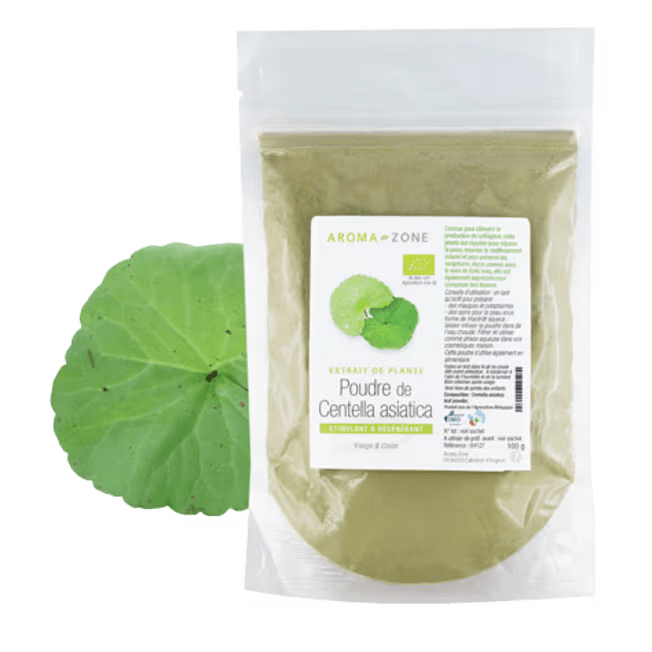
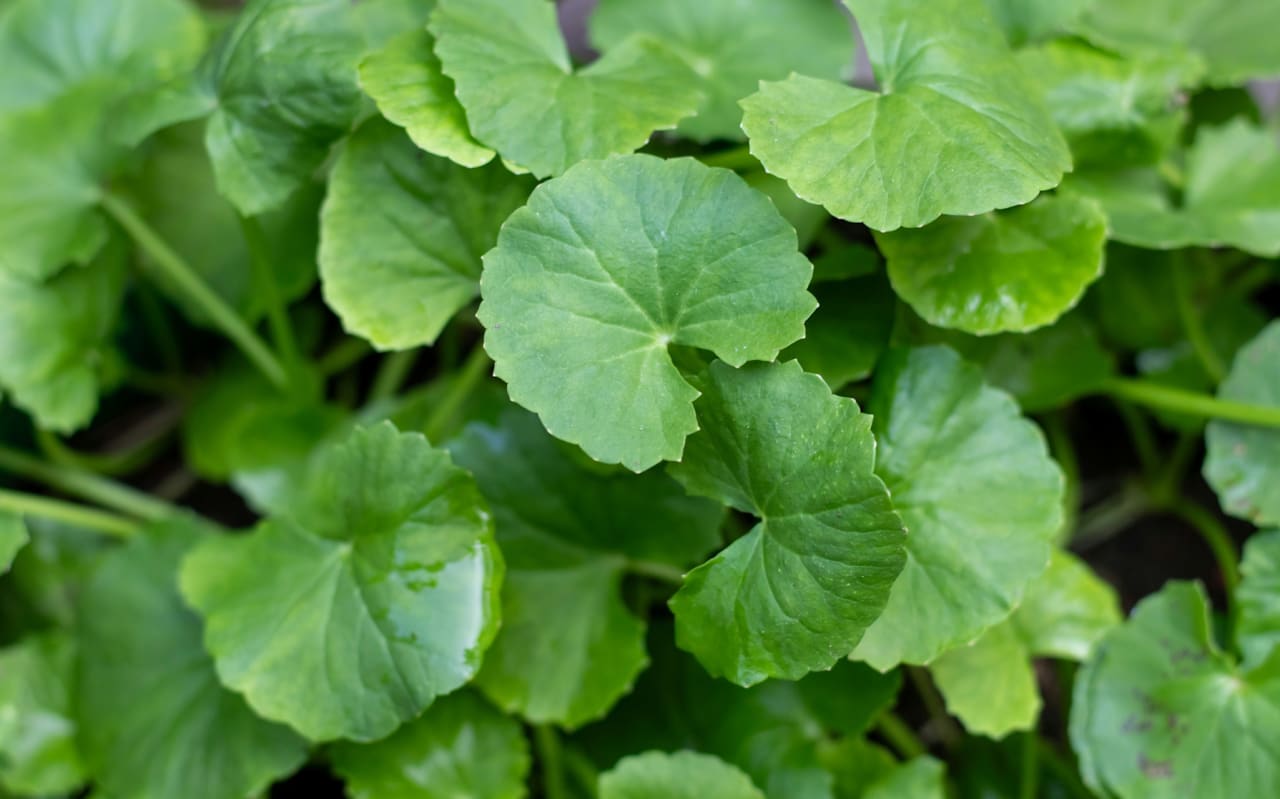
Also known as tiger grass, Gotu kola or Hydrocotyle, Centella asiatica is a creeping plant belonging to the Apiaceae family. It grows in tropical and subtropical regions, particularly in marshy areas of India, Pakistan, Sri Lanka, Madagascar, as well as parts of South Africa and Australia. It has long green stems topped with small green leaves shaped like hearts or circles, and produces small white, pink, or light purple flowers in umbels. Although it may seem rather ordinary at first glance, Centella asiatica possesses powerful medicinal properties thanks to its active ingredients. The main ones are triterpenic saponins, such as asiaticoside, madecassoside, and asiatic acid. These compounds give it potent healing, antimicrobial, anti-inflammatory, and antioxidant properties.
A plant renowned in traditional medicine
Centella asiatica has proven its worth for millennia in both Ayurvedic medicine and traditional Chinese medicine (TCM). It is renowned as a true elixir of life, said to promote longevity. Legend has it that Li Ching-Yun, a Chinese physician said to have lived for nearly 200 years, attributed his exceptional health to regularly consuming this plant! It has traditionally been used to treat nervous disorders, promote wound healing, address venous insufficiency and improve cognitive function. In certain areas of the Himalayas, yogis use it to aid meditation.
A plant full of potential
Today, Centella asiatica is considered a plant with considerable potential in modern herbal medicine. It has become a popular ingredient in cosmetic products thanks to its anti-ageing and restorative properties. It can therefore be a valuable addition into a skincare routine, improving skin elasticity and helping to prevent the first visible signs of aging. The plant is also the focus of extensive scientific research due to its powerful anti-inflammatory and antioxidant properties, which may help alleviate certain symptoms.