When and how should collagen be taken?

Skin quality, firmness, elasticity - collagen supplementation has been proven effective by clinical studies. This flagship anti-ageing or, better still, pro-ageing protein helps the skin to age well and retain its radiance while reducing wrinkles. This article gives you all the information you need to start a course of collagen with peace of mind. What's the best way to take collagen? What dose of marine collagen should I take every day? At what time of day? We'll answer all your questions!

Reading time: 0 min.

What is collagen?

Definition of collagen and its role in the human body

Collagen is the main protein in the skin, representing 80 to 85% of the dry weight of the dermis. This large, fibrous protein is a polysaccharide, a natural carbohydrate of the glycosaminoglycan family. Collagen is an almost complete protein, made up of 19 essential amino acids. Collagen is characterised by the regular repetition on the 3 alpha chains of the amino acid triplets Glycine - X - Y (where X and Y are other amino acids, most often X = proline and Y = hydroxyproline), the most common of which is the sequence Glycine-Proline-Hydroxyproline. These helices join together to form the collagen fibres that form the basis of the extra-cellular matrix.

We talk about collagen, but it would be more accurate to talk about collagens. Today we know 28 of them, 12 of which are expressed in the skin. Depending on their structure, size and role, these different collagens perform different functions in the body and are classified into several types. The most abundant in the human body are collagen types 1, 2, 3 and 4.

Collagen forms the basis of our connective tissues such as bones, skin, tendons and cartilage. Collagens play an essential role in cell adhesion and communication between keratinocytes and in the general cohesion of the epidermis.

It is collagen that gives the skin its cohesion, resistance, firmness and smoothness.

Hyaluronic acid, collagen, elastin and proteoglycans form an assembly that constitutes the support tissue of the skin and many other tissues.

The rise in popularity of collagen supplements for health and aesthetics

Collagen has had a strong presence in the world of cosmetics for many years. Now, spurred on by new clinical studies, collagen food supplements are taking centre stage for their proven effectiveness in improving the appearance of the skin.

Taking collagen in food supplement form helps to compensate in part for the natural decline in our stocks of natural collagen and to support the natural ageing process. By starting to take collagen from the age of 30, this supplementation can help the skin to age well and delay or reduce the appearance of wrinkles.

How does collagen work? Ingested as a food supplement, collagen peptides circulate in the bloodstream and reach the tissues, making the skin denser and more resistant.

What are the benefits of collagen?

For the skin: elasticity, moisturisation, wrinkle prevention

Fundamental to the skin, collagen acts as a major structural support for our tissues and contributes to keeping the epidermis healthy. It is collagen that gives our skin its volume and firmness. By partially compensating for the drop in our natural collagen levels, the marine collagen food supplement helps to:

  • plump up the skin, giving it a firmer, denser appearance

  • improve skin elasticity

  • prevent and reduce the appearance of fine lines and wrinkles

  • improve skin radiance and even skin tone

For joints: flexibility, pain relief, sport

Many studies suggest that supplementing with collagen for your joints is beneficial. In fact, marine collagen could provide relief for people suffering from discomfort in the joints or tendons and to improve mobility in the joints.

Thanks to its protein content of over 95%, collagen helps to increase muscle mass and maintain normal bone structure. Marine collagen is therefore an ideal food supplement for athletes. It supports the proper function of muscles, joints, tendons and cartilage, and helps reduce post-training discomfort.

For hair and nails: strengthening and shine

Marine collagen powder, rich in proline and glycine, essential for healthy skin and hair, strengthens the hair bulb and stimulates keratin production. These amino acids may also protect against oxidative stress, promoting good hair health hair density and growth. Collagen is a popular ingredient in hair care products for its repairing and volumising benefits, particularly in botanical formulas. In fact, a hair care routine enriched with plant collagen is the secret to lasting results.

For intestinal health: supporting the intestinal mucosa

The gastric mucosa protects the stomach from the acidity of gastric juices and acts as a barrier between the body and ingested substances. An imbalance in this mucosa, caused by stress, pollution, industrial food or medication, can lead to intestinal permeability and immune disorders. Studies suggest that marine collagen, rich in proline and glycine, can help repair damaged intestinal mucosa and boost local immune defences.

When should I take collagen?

Age: why does collagen production decrease with age?

Collagen naturally decreases with age; it's a natural and normal phenomenon. Our collagen reserves begin to decline slowly from the age of 25-30, then our collagen stocks fall by around 1% from the age of 40. It is from the age of 50 onwards that collagen levels decline most sharply, with a drop of 30%, and for women this is linked mainly to the hormonal variations of the menopause.

As we saw above, certain external environmental factors (pollution, UV rays, tobacco, alcohol, sugar), associated with our lifestyle, degrade our natural collagen fibres and help to reduce our collagen stocks.

According to your needs: slack skin, joint pain, brittle nails, etc.

You can choose to take marine collagen supplements to keep your skin looking young, support your sports activities or relieve joint pain. Here are a few examples of situations where you can opt for a marine collagen course.

Skincare: in the case of dry, dehydrated skin, if you want to restore radiance or volume, to firm up your skin, reduce the depth of wrinkles or fine lines, prevent the appearance of your first wrinkles, restore a more radiant, even complexion, etc.

Sports and bodybuilding: to promote lean muscle mass and post-workout recovery.

Joint discomfort: for joint pain or a lack of flexibility in the joints

Hair and nail skincare: to give the hair shine and vitality, in combination with brewer's yeast enriched with vitamins B and selenium.

Prevention: what age should I start and for what reasons

Collagen supplementation can be started as early as the age of 25 or 30 for a beneficial preventive effect. By improving skin quality, collagen supplementation could help delay the appearance of the first signs of ageing.

In the case of smoking, a stressful lifestyle, repeated exposure to UV rays without sun protection, lack of sleep, or very intense physical activity, collagen supplementation may also help from the age of 25 or 30 to prevent collagen proteins from degrading prematurely.

Collagen supplementation won't do anything before the age of 25.

How to take collagen for maximum effectiveness?

What dose of collagen should I take every day?

The most commonly recommended dose of collagen is 2.5 g to 10 g a day. Your collagen intake can be suited to your diet, your age and your main issues (skin skincare, muscle mass, joint comfort, etc.). Ideally, you should start by taking small amounts and gradually increasing your intake. Don't hesitate to ask a health professional for advice.

When should you take collagen?

Marine collagen can be taken at any time of day. For best results, it is important to take your food supplements regularly for them to be effective. The ideal solution is to find a way of using it that can be easily integrated into your daily routine, for example in the morning with breakfast, or in your morning coffee, in your evening herbal tea, or even in your post-training drink for sportspeople.

How long does a course of collagen last?

Collagen is best taken over the long term. Clinical studies generally recommend a course of 2 to 6 months to reap the long-term benefits of collagen. A period of three months would already be effective in improving skin elasticity and skincare.

How do I take collagen powder?

Collagen powder is a practical and versatile form of supplementation. Here are a few suggestions for incorporating it easily into your daily routine:

  1. Mixed into drinks: you can mix collagen powder into a variety of beverages, such as water, fruit juice, tea or coffee. Make sure you mix well to avoid lumps.

  2. In smoothies or shakes: add a teaspoon or tablespoon of collagen powder to your usual smoothies or protein shakes. This can be particularly helpful for people on a protein diet or with an active lifestyle.

  3. In culinary recipes: incorporate collagen powder into your favourite recipes, such as soups, sauces, desserts or even homemade energy balls. Just make sure you choose food that won't be cooked at too high a temperature, as excessive heat can break down collagen.

  4. Sprinkled on food: you can also sprinkle collagen powder on foods such as yoghurt, cereals, salads or fruit. This can be an excellent way of discreetly incorporating it into your daily diet.

Whichever method you choose, make sure you stick to the recommended doses and consult a healthcare professional if you have any concerns or specific questions about taking collagen powder.

Precautions and contraindications

The contraindications to a course of collagen taken by drinking or swallowing are few. We advise you to seek advice from your GP if you suffer from allergies, kidney failure or hypercalcaemia. In other cases, the following side effects are rare with collagen supplements:

  • Digestive problems (diarrhoea, constipation, bloating, gastric acidity).

  • Redness, irritation and skin rashes.

  • Fatigue and headaches.

If you experience any of these effects, stop your course of treatment and discuss them with your healthcare professional.

If you are pregnant or breast-feeding, always ask your doctor's advice before starting a supplement.

The different forms of collagen

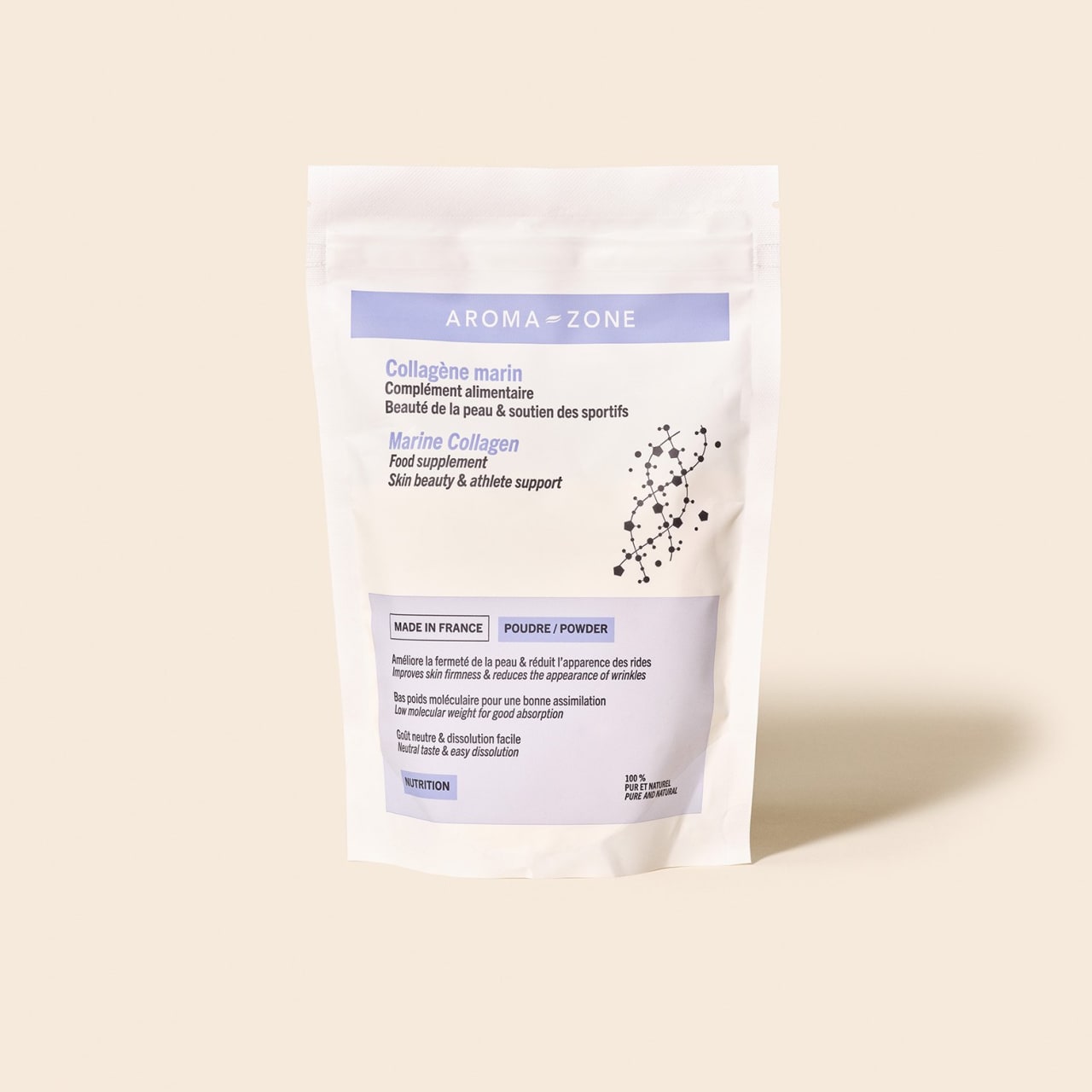
Collagen powder

Drinkable collagen (powder) offers high bioavailability, digestibility and optimal absorption, and lends itself to several uses.

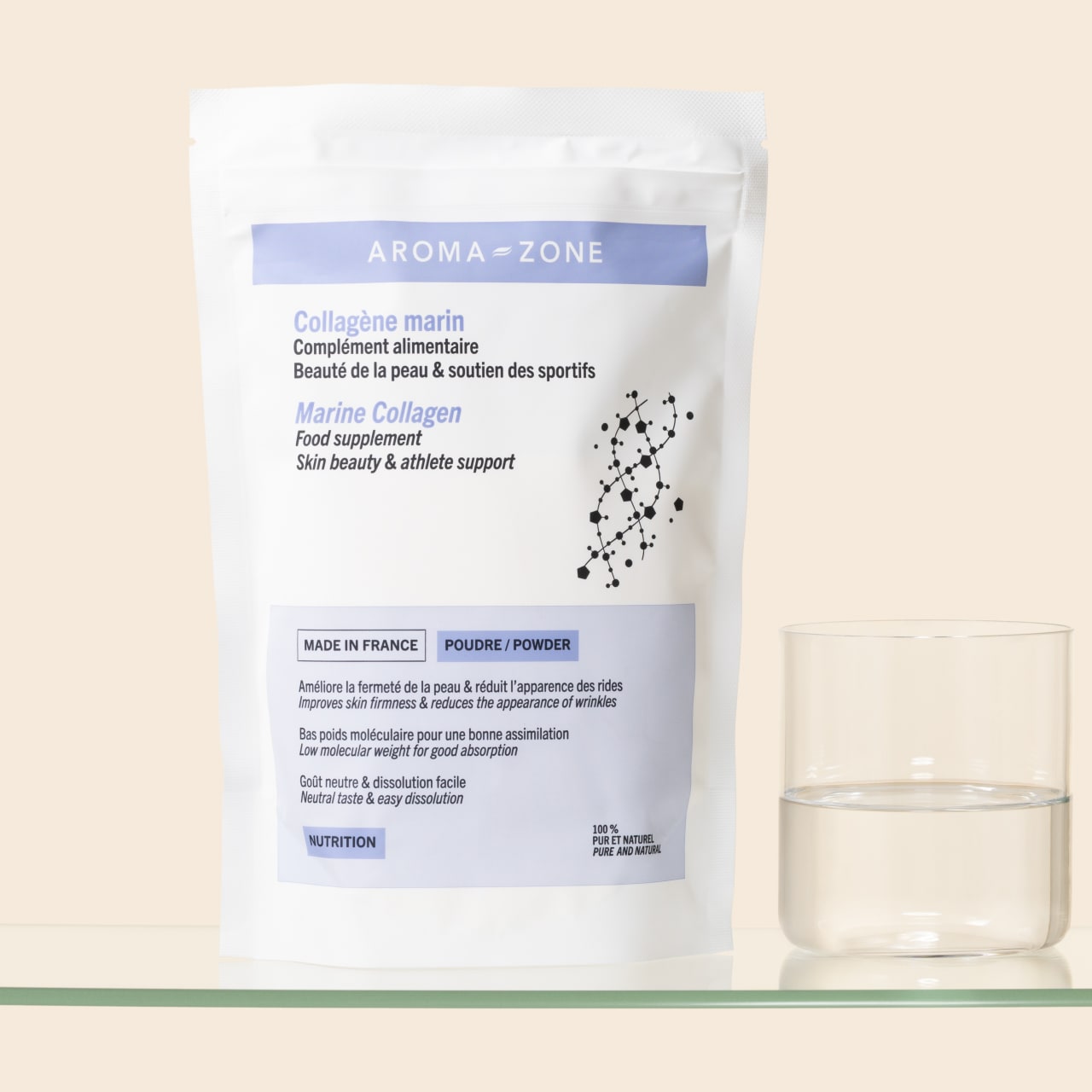
Marine collagen powder is most often made up of 100% hydrolysed collagen peptides, as is the case with Aroma-Zone marine collagen powder.

Of all the sources of collagen, marine collagen powder is reputed to be one of the most easily assimilated by the body. In fact, its structure is similar to human collagen. Marine collagen is highly concentrated in amino acids: proline, glycine and hydroxyproline.

Very easy to use, collagen powder dissolves easily and can be added to morning coffee, hot drinks, smoothies, yoghurts, etc. on a daily basis. It has a neutral taste and is pleasant to consume.

Collagen capsules

Collagen capsules are most often made from collagen powder, either 100% pure (consisting solely of collagen peptides), or in the form of a combination of active ingredients, such as hyaluronic acid or plant powders.

You can make your own marine collagen capsules using pullulan capsules.

Collagen-rich foods: bone broth, fish

Some traditional long-cooked dishes are rich in collagen, such as bone broth, pot au feu, fish and shellfish bone and cartilage broth (fish or shellfish stew), marrow bone, gelatine, etc. Today, these foods are less common on our tables, for ethical reasons or to avoid long, energy-consuming cooking. Food supplements can compensate for this drop in collagen in our modern diet.

For vegetarians or vegans, the best option is to choose foods that stimulate collagen synthesis and help to recreate collagen, in particular foods rich in vitamin C (sprouted seeds, peppers, kiwi fruit, berries and red berries, citrus fruit, parsley). Spirulina also boosts collagen synthesis.

Creams and topical products containing collagen

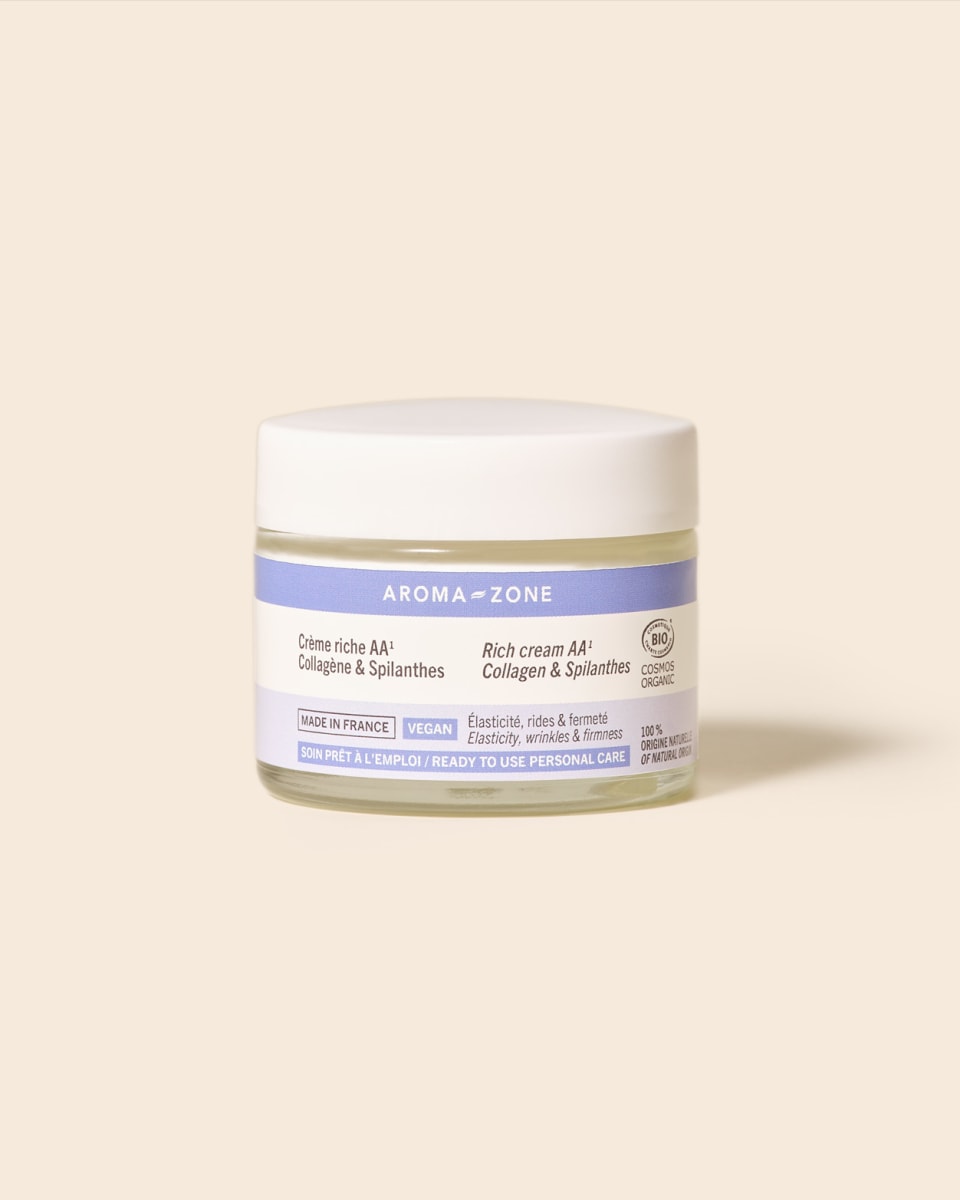
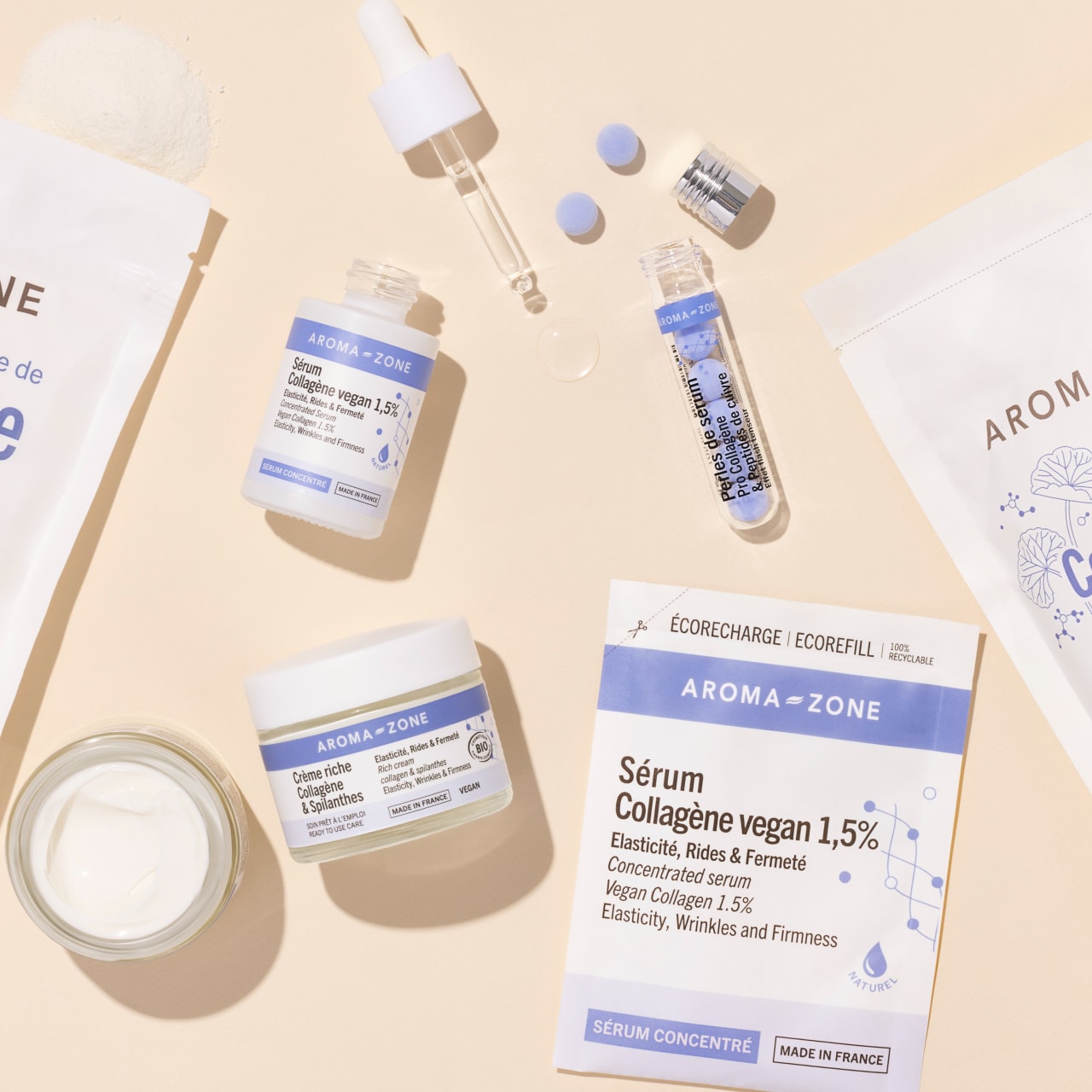
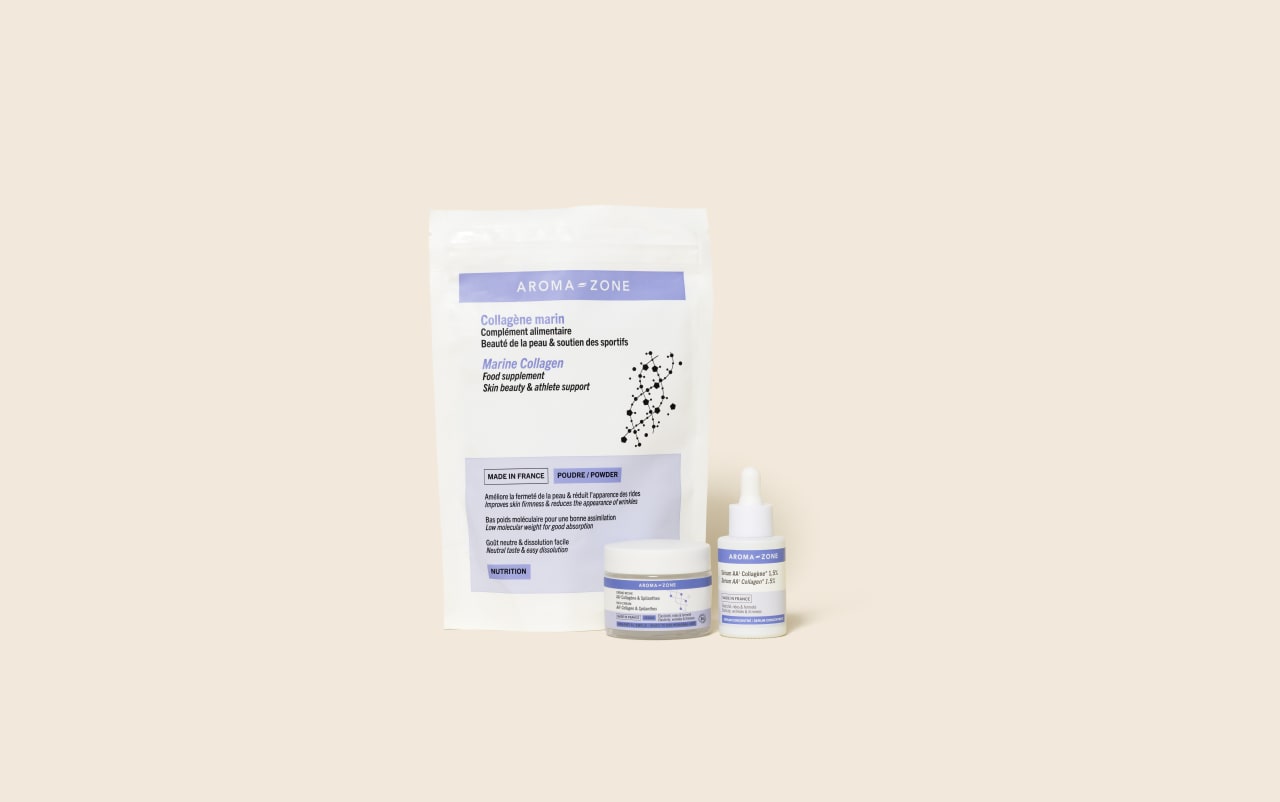
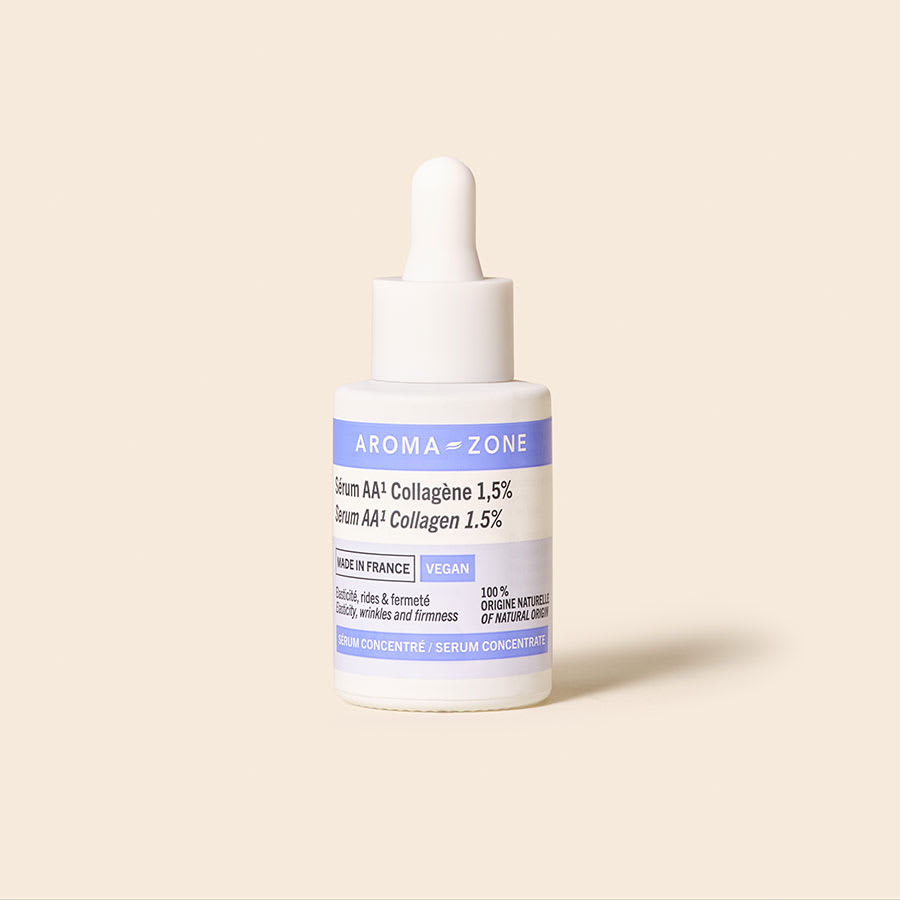
To complement and reinforce the effects of collagen food supplements, you can opt for a skincare routine that includes collagen-based skin care products (collagen concentrated facial serum, collagen cream, etc.).

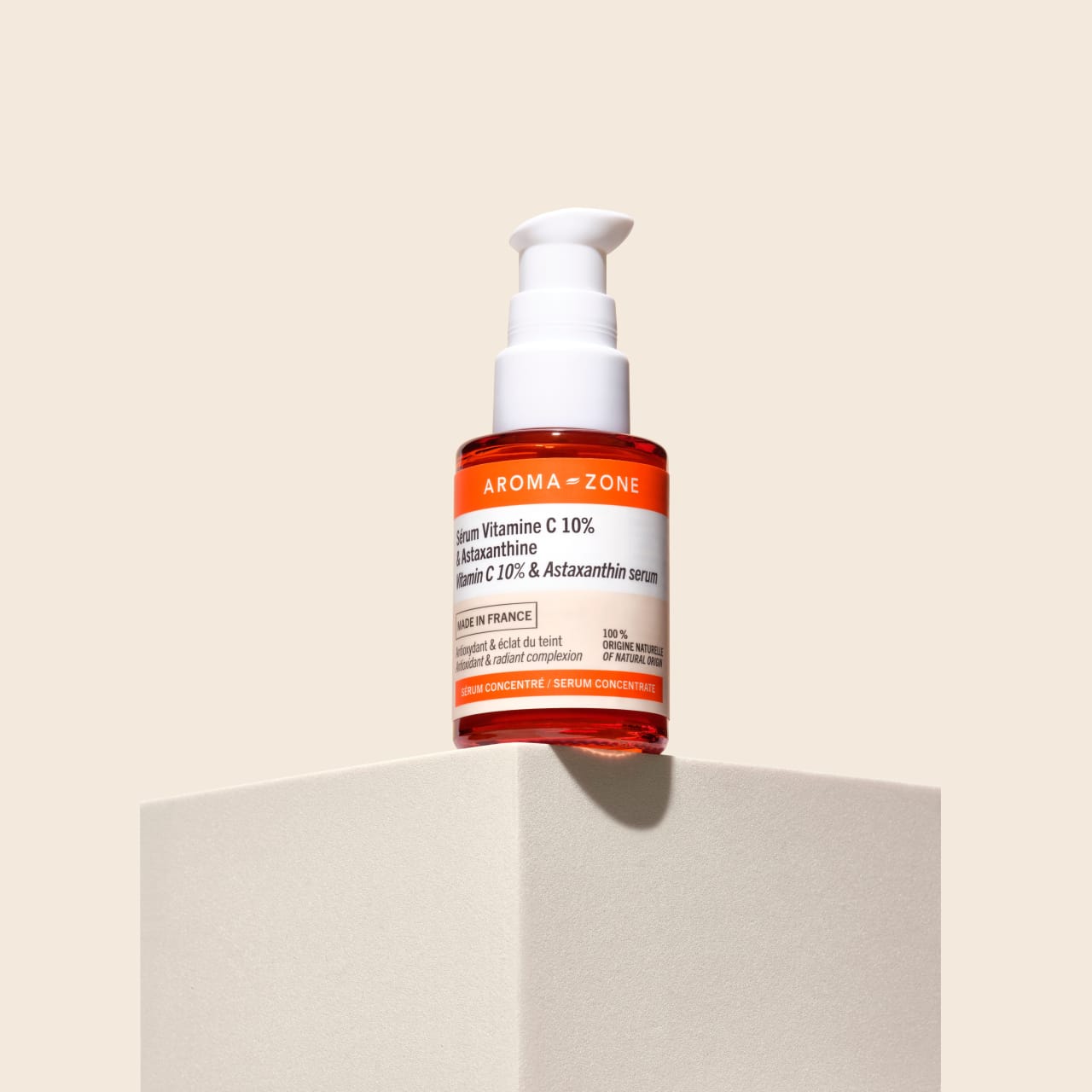
As a cosmetic active ingredient, collagen acts like a protective shield on the skin, keeping it hydrated and protecting it from external damage. It also boosts skin hydration, giving you a fresh, plump complexion, while improving skin texture and elasticity. Certain products also stimulate the natural production of collagen, promoting healthy, younger-looking skin, such as 10% Vitamin C and Astaxanthin Serum.

Discover our selection of collagen-based skin care products on Aroma Zone.

What can a lack of collagen be due to?

As we age, our bodies become less efficient at synthesising collagen, and our stocks of natural collagen diminish. Other external factors, such as oxidative stress and free radicals, alter collagen fibres and make them more fragile. Excessive UV rays, alcohol, smoking and lack of sleep alter collagen production. A diet too rich in sugars (found in pastries, white flour, pasta, Viennese pastries, etc.) causes protein glycation. Sugar deposits weaken collagen, making it brittle and breakable, leading to premature ageing.

A diet low in sources of vitamin C, an essential cofactor in collagen production, can lead to a reduction in collagen production.

Find out more

Is it good to take collagen every day?

Yes, it is possible to take collagen in supplement form every day. To see effective, long-lasting results, it is advisable to take collagen every day for at least 3 months. There are no contraindications to taking marine collagen continuously at the recommended doses, but it is particularly helpful for people with special needs, such as mature skin, intensive sportsmen and women, and people with joint or tendon discomfort…

What is collagen used for?

The collagen food supplement has a proven effectiveness on the skincare and firmness of the skin. It promotes skin elasticity, reduces the appearance of wrinkles and improves the radiance of the complexion.

It is also an ideal choice for athletes thanks to its high protein content, which helps to increase muscle mass and maintain normal bone structure.

Focus on our Naturopathic editor, Lucie Granjon

Passionate about plants and their properties, she has been working in the world of natural beauty and aromatherapy for over 10 years, after starting her career with a perfumer. Lucie supports ethical and committed brands in their development strategy, product formulation and the expert advice they give their customers. She has worked with our Aroma-Zone teams on several books, including "Le grand guide de l'Aromathérapie et des cosmétiques naturels". At the same time, she has been training for years in aromatherapy, herbalism and the distillation of essential oils, while supporting the work of French plant growers.

Bibliography

1

Specific natural bioactive type 1 collagen peptides oral intake reverse skin ageing signs in mature women.

Duteil L, et al. (2016). J Aging Res Clin Practice 5(2): 84- 92.

2

Effect of low dose type 1 fish collagen peptides combined or not with silicon on skin aging signs in mature women.

Duteil L, et al. (2018). JOJCS 6(4): 555692.

3

Matrice extracellulaire et vieillissement vasculaire. Med Sci (Paris) 22 (3) 273-278 (2006), DOI: 10.1051/medsci/2006223273

Marie-Paule Jacob

4

The Effectiveness of Oral Fish Collagen Supplementation on Skin Aging: A Systematic Review and Meta-analysis of Skin Hydration, Skin Elasticity, and Skin Wrinkles.

Imelda Gunawan, Retno Indar Widayati, Puguh Riyanto, Asih Budiastuti, Diah Adriani Malik, Muslimin, Widyawati, and Suhartono. American Journal of Dermatological Research and Reviews, 2023, 6:57

5

An Overview of the Beneficial Effects of Hydrolysed Collagen as a Nutraceutical on Skin

Sara Sibilla, Martin Godfrey, Sarah Brewer, Anil Budh-Raja and Licia Genovese. Properties: Scientific Background and Clinical Studies, The Open Nutraceuticals Journal, 2015, 8, 29-42.