The role of natural collagen
First of all, collagen does not exist in plants. This large protein is abundant in the human body and other animals. It is present in connective tissues such as bones, muscles, skin, tendons and cartilage, as well as in internal organs such as the walls of blood vessels.
Collagen is a macromolecule with a high molecular weight, around 300,000 Da, which plays a key role in holding our tissues together, giving them their strength, firmness and elasticity.
In everyday language, we call it collagen, but it would be more accurate to refer to it as collagens. To date, scientific studies have identified 28 different types of collagen in the human body. Collagen types 1, 2 and 3 are the most commonly found in the human body.
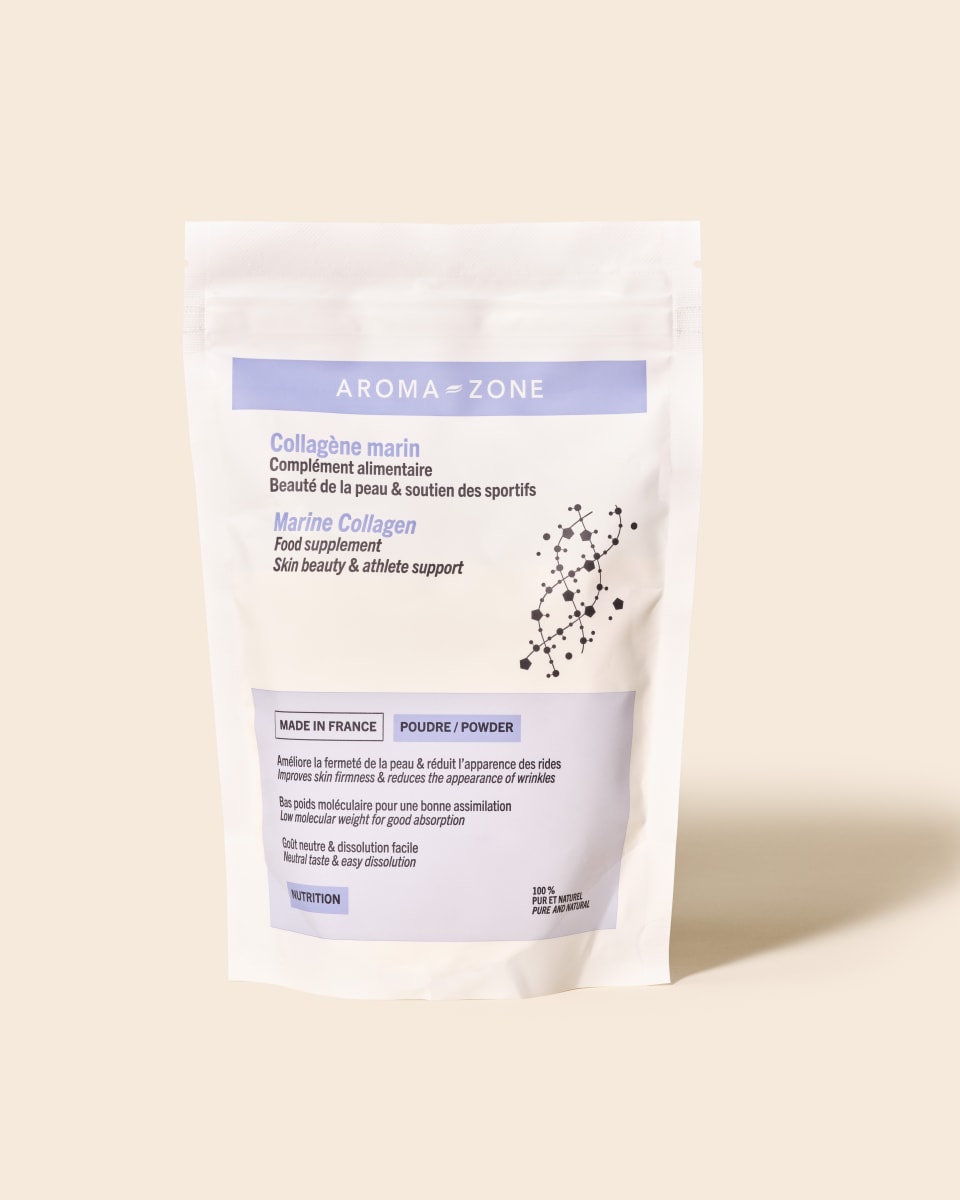
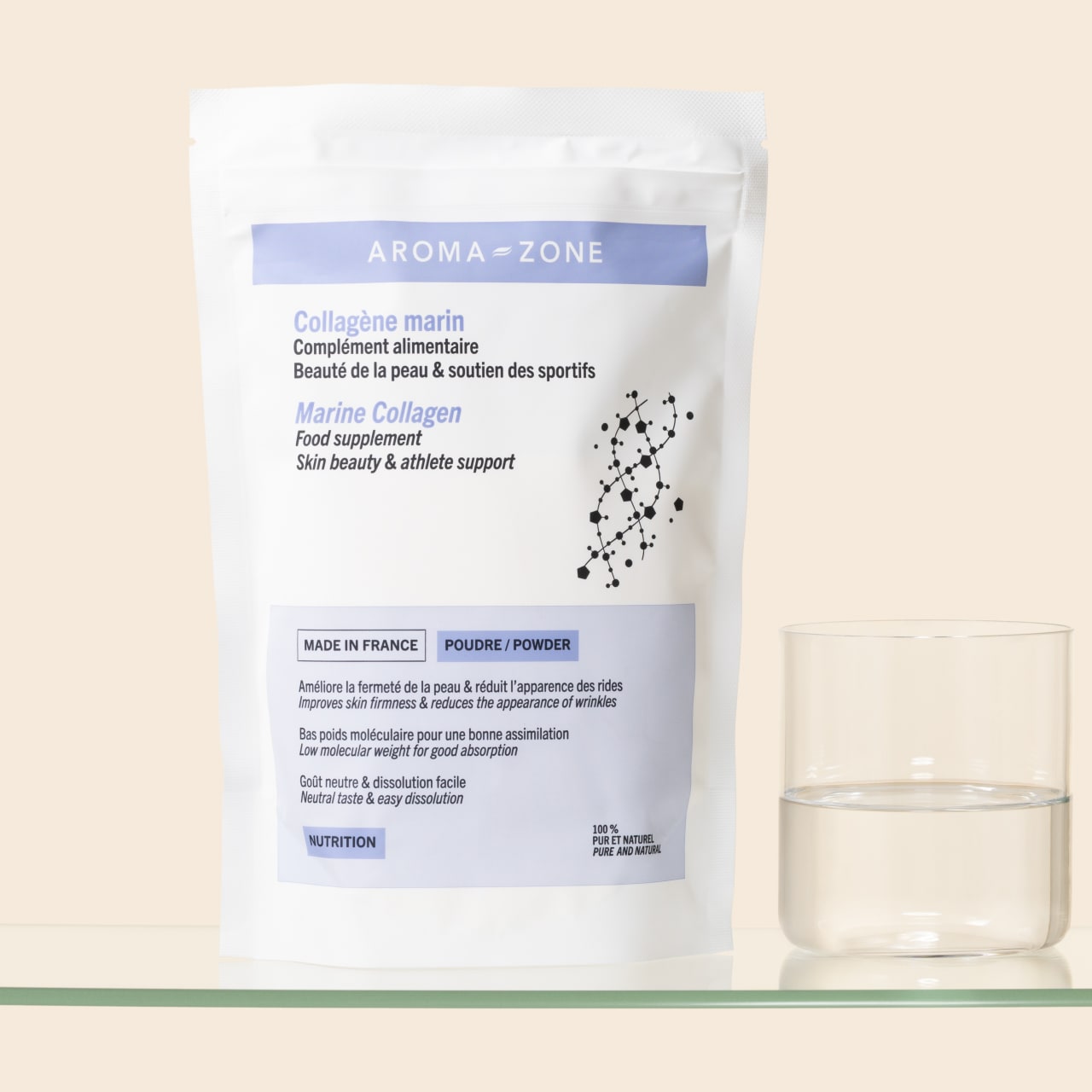
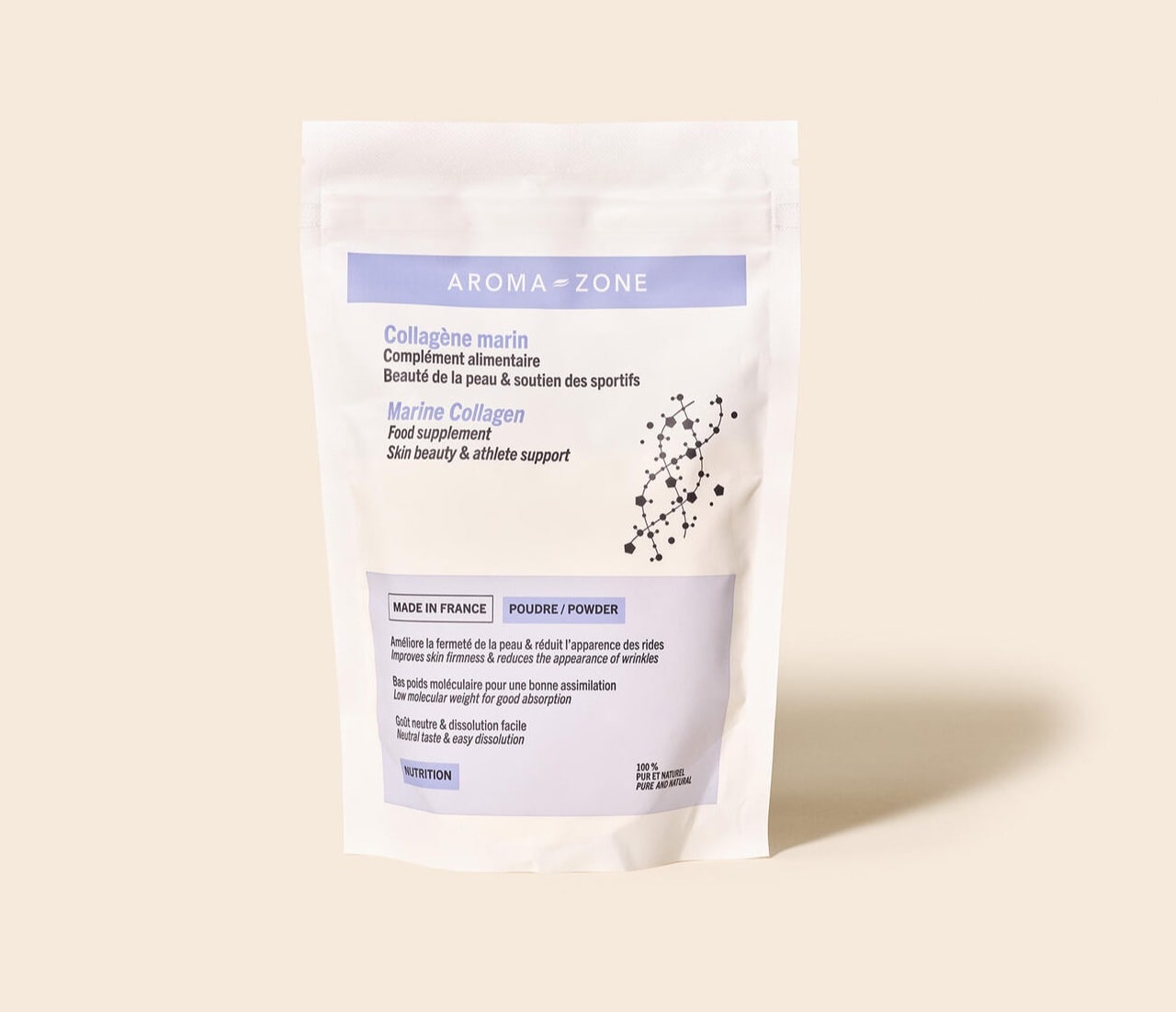
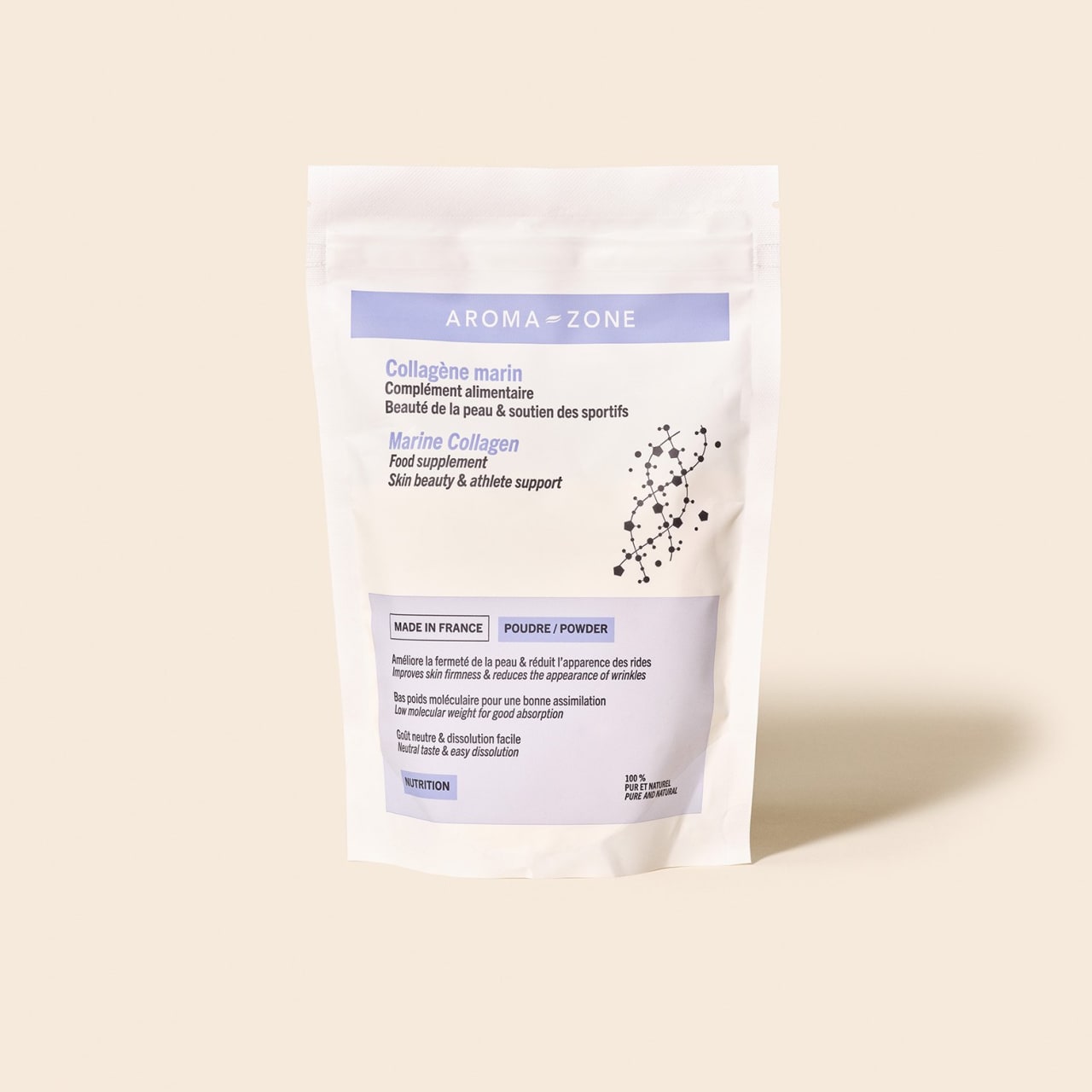
Marine collagen
The sources of collagen that you will find in the form of food supplements will always be animal-based. There is bovine collagen, porcine collagen or collagen derived from seafood (fish, shellfish) known as marine collagen.
This marine collagen is extracted from fish bones and skin or shellfish cartilage. These sources of marine collagen are often more sustainable because they come from the recycling of by-products from fishing or aquaculture. The traceability of this type of collagen is also one of the most transparent and has the least environmental impact, provided that the fishing or aquaculture practices are certifiably sustainable.
Marine collagen has a molecular structure similar to human collagen. It is rich in the amino acids proline, glycine and hydroxyproline. Marine collagen is therefore considered the best hydrolysed collagen for its high bioavailability.
What does hydrolysed mean?
Collagen is a very large molecule, which makes it insoluble in water and difficult to absorb through the intestinal wall. This is because the intestinal mucosa only allows molecules of very low molecular weight to pass through. To cross the intestinal mucosa, the collagen protein undergoes a process of hydrolysis. Large collagen proteins are broken down into peptides, small assemblies of amino acids. These low molecular weight marine collagen peptides (2000Da) are digested, cross the intestinal barrier and enter the bloodstream in the form of oligopeptides (small peptides). When they reach the skin and various tissues, these collagen oligopeptides stimulate both the mobility and spread of fibroblasts and the synthesis of collagen by our fibroblasts. The result? An increase in the density of fibroblasts and collagen fibres.
When hydrolysis uses targeted enzymes, as Aroma-Zone Marine Collagen Powderdoes, it's called enzymatic hydrolysis. The choice of enzymes, temperature and hydrolysis time are decisive in terms of the characteristics of the peptides obtained and the quality of the hydrolysed marine collagen food supplement, also known as hydrolysate.