The mechanisms underlying rosacea are not yet fully understood. However, several physiological and functional factors appear to play a role. These often act in combination, which helps explain why rosacea can manifest differently from person to person.
Excessive Reactivity of the Blood Vessels in the Face
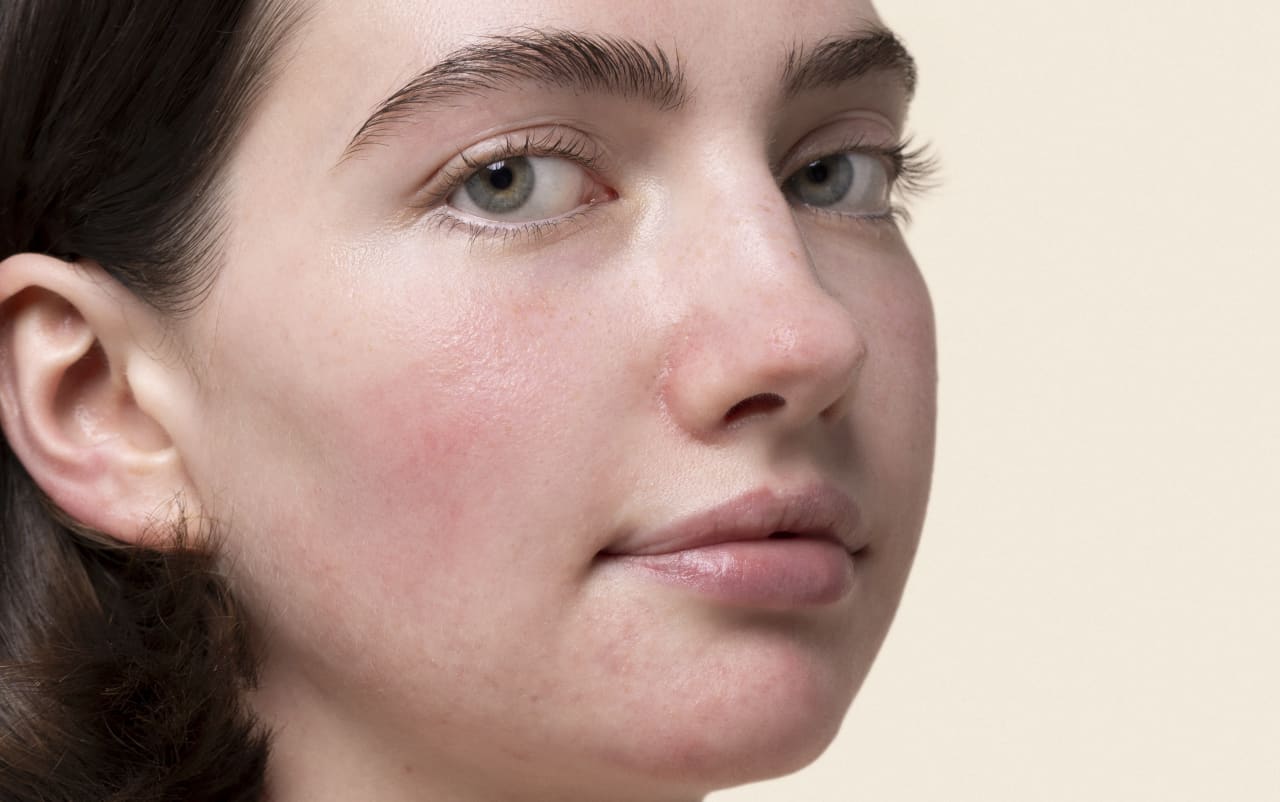
Rosacea is largely linked to a dysfunction of the skin’s microcirculation. The small blood vessels on the skin’s surface dilate more easily than normal, which contributes to persistent redness and a sensation of heat. This vascular fragility also explains the more visible capillaries, particularly on the cheeks and nose.
Persistent Skin Inflammation
Inflammation plays a central role in rosacea symptoms. It can cause redness, a sensation of heat, papules, or small pustules. In some people, the skin reacts excessively to even minor stimuli, perpetuating a long-lasting inflammatory state and increasing skin sensitivity.
A Genetic Predisposition
Rosacea often runs in families. Some people may have a genetic predisposition to increased vascular reactivity or skin inflammation, which can contribute to rosacea.
An amplified cutaneous immune response
In some people, the skin’s immune system overreacts to internal or external stimuli. This response contributes to the inflammation, redness and skin hypersensitivity characteristic of rosacea.
An Imbalance in the Skin Microbiome
The role of the skin microbiota is increasingly being studied. Imbalances in this flora may promote inflammation.
The involvement of the mite Demodex folliculorum, which is naturally present on the skin but is sometimes found in greater numbers in affected individuals, has also been suggested.
Increased Sensitivity to Certain Triggers
In those affected, the skin may react excessively to various internal or external stimuli, particularly when vascular reactivity is already high.
Sudden changes in weather, exposure to wind, cold or sunlight, as well as intense heat – particularly in saunas or steam rooms – can accentuate the dilation of blood vessels and contribute to sensations of flushing.
Certain foods or drinks, such as hot drinks, spicy dishes, or alcohol, can also cause redness by stimulating blood circulation in the face. Stress and intense emotions can trigger visible vascular reactions. Finally, inappropriate use of corticosteroids on the face can weaken the skin and aggravate rosacea symptoms.