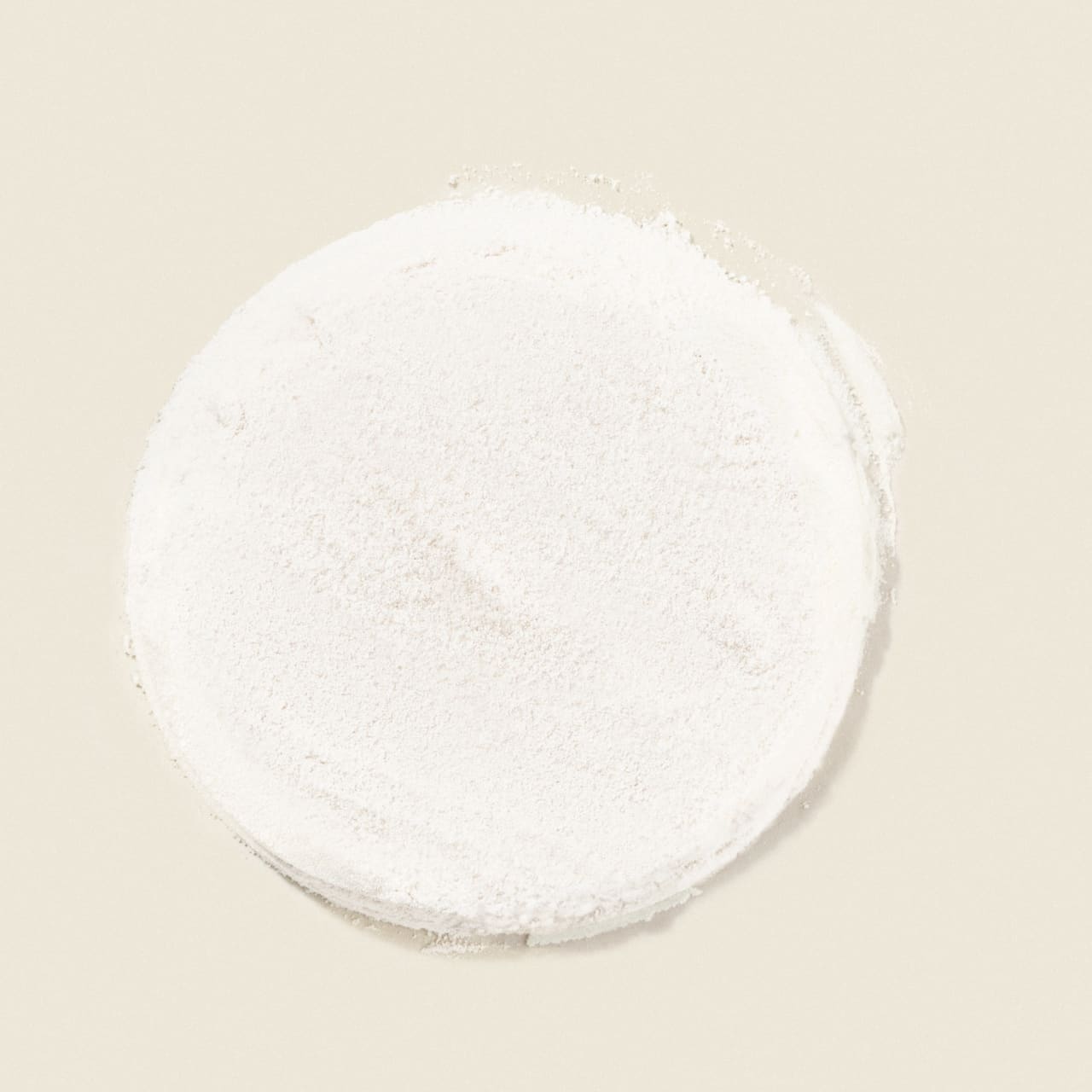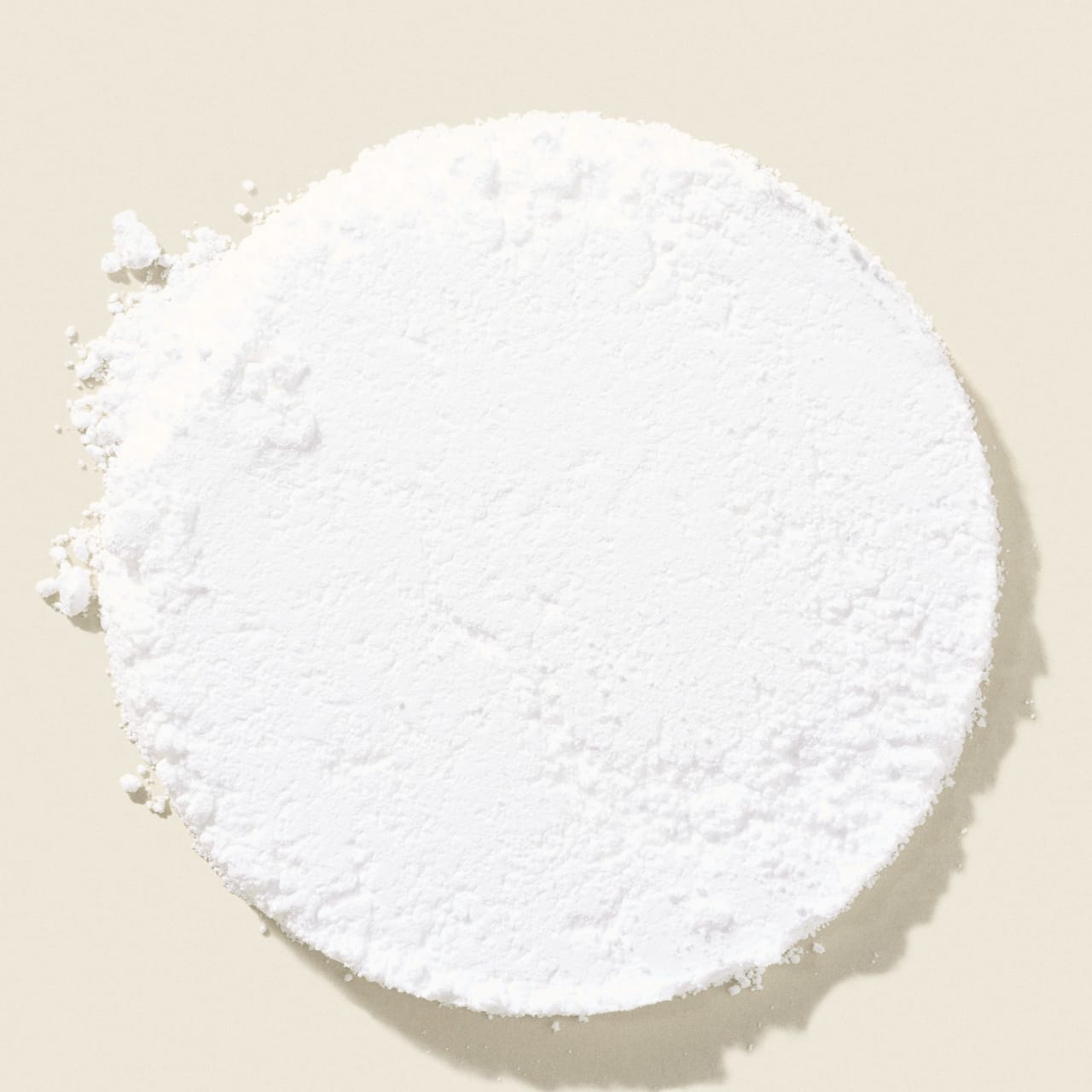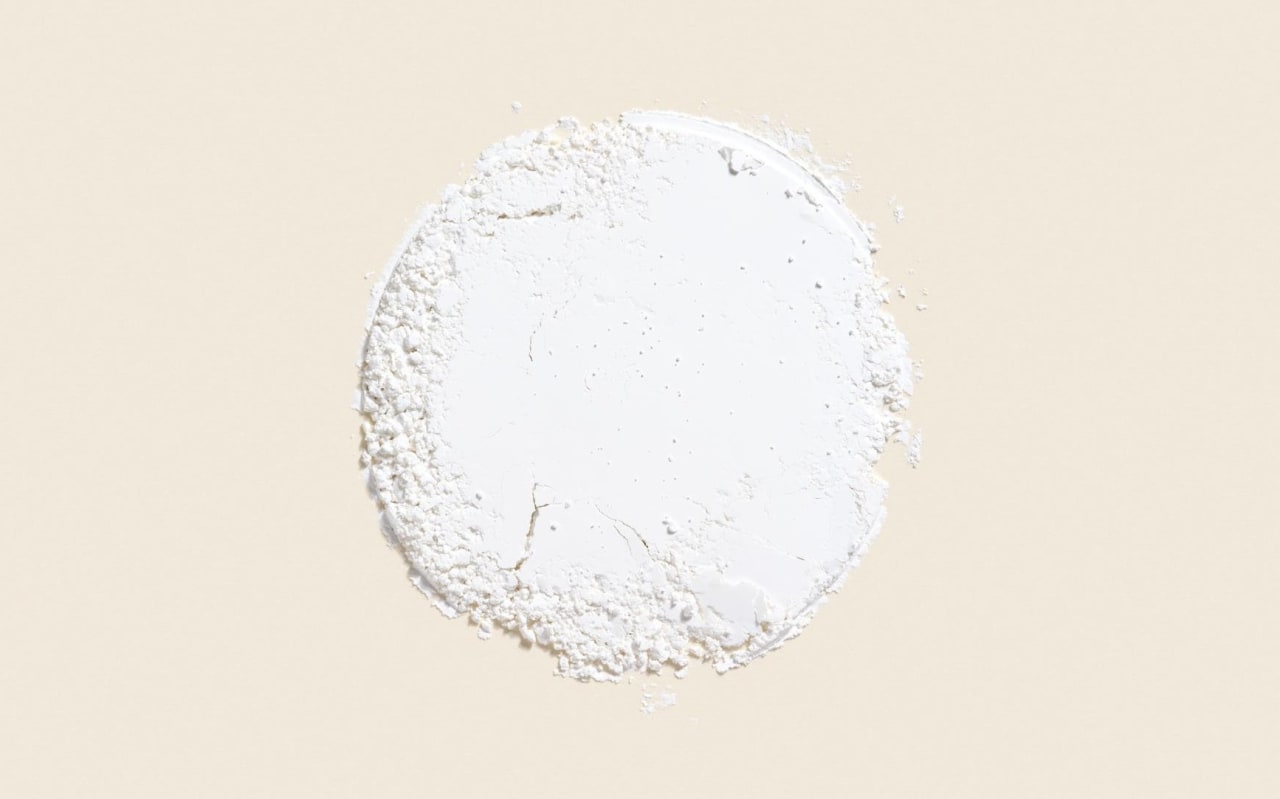
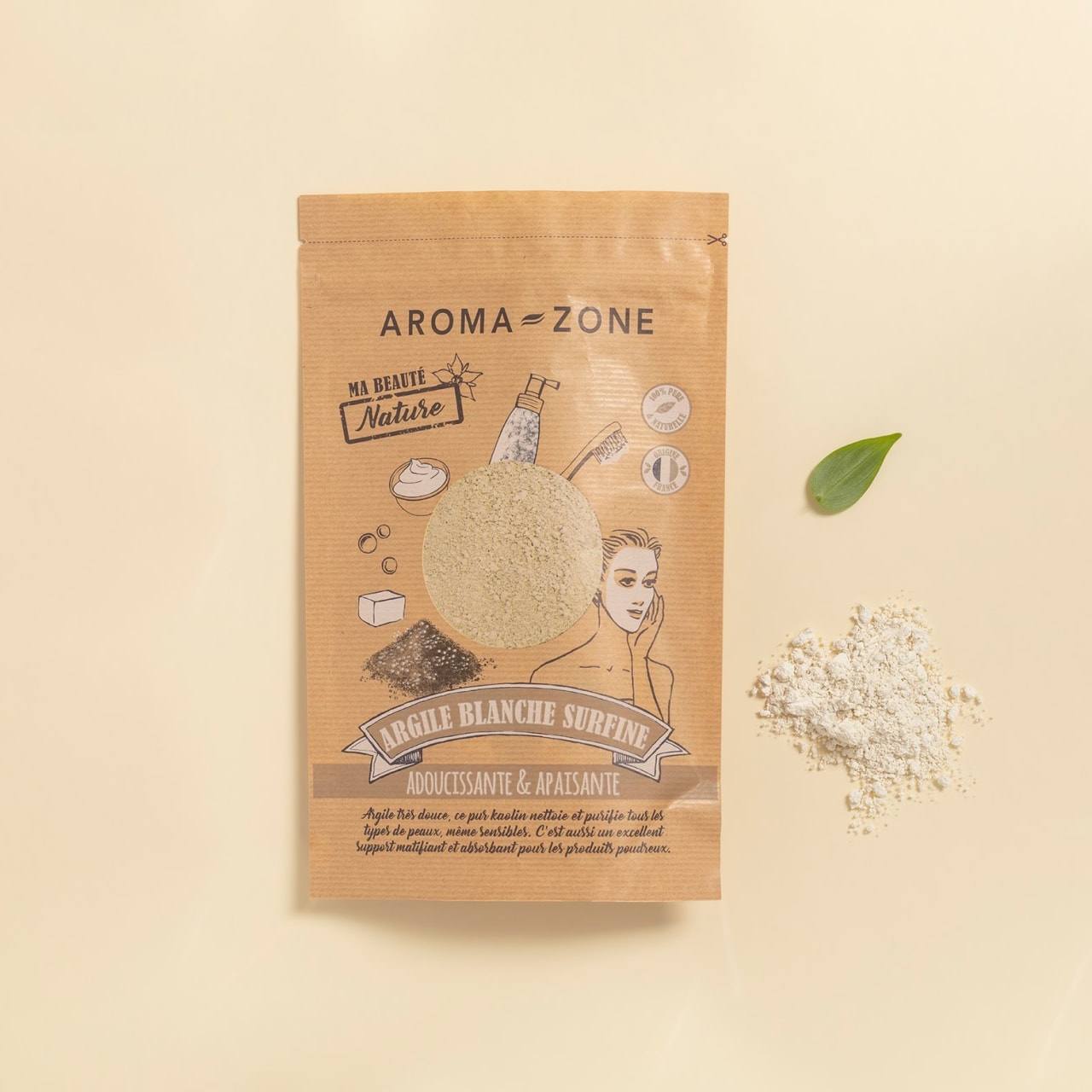
Kaolin stands out from other clays due to its exceptional gentleness. Less rich in mineral salts and less absorbent than clays such as montmorillonite or illite, it absorbs impurities and excess sebum more gently. This characteristic reduces the risk of drying out the skin and makes it a clay that is particularly suitable for sensitive, dry or reactive skin.
Aroma-Zone Kaolin
PURIFYING SOOTHING MATTIFYING
Gentle clay that purifies the skin without drying it out
Rich in silica and renowned for its gentleness, kaolin – also known as white clay – absorbs excess sebum and impurities whilst maintaining the skin’s natural balance. Ideal for sensitive or delicate skin.

Kaolin Aroma-Zone Profile
INCI Name: Kaolin
VEGAN
PRODUCTION METHOD
Kaolin is extracted from quarries and then simply dried and ground, without any chemical treatment. Unwashed and unirradiated, it retains its full mineral content. It is a highly pure mineral, comprising more than 95 per cent clay.
BIOCHEMICAL COMPOSITION
Kaolin is a natural mineral belonging to the phyllosilicate family, composed mainly of hydrated aluminium silicate. Its high alumina content, which gives it its white colour, as well as its high silica content, give it softening and restorative properties. Its lamellar, sheet-like structure explains its absorbent properties and its covering power.
ITS ACTIVE MOLECULES
Silica (silicon dioxide): the main component of kaolin. It contributes to the clay’s softening and absorbent properties, as well as its very soft texture
Alumina (aluminium oxide): approximately 23 per cent; contributes to the clay’s absorbent structure
Trace elements and mineral salts: present in smaller quantities (calcium, magnesium, potassium and zinc, depending on the deposit).
SUSTAINABILITY / TRACEABILITY
Kaolin is extracted from French quarries. This local source helps to minimise transport distances and forms part of an approach to making the most of mineral resources sourced from the region.

Kaolin: What Effect Does It Have on the Skin?
Kaolin, or white clay, works primarily through its absorption and adsorption properties, which are characteristic of clays. Absorption refers to its ability to capture liquids, such as excess sebum, much like a sponge. Adsorption, on the other hand, refers to the ability of clay particles to bind certain molecules to their surface, such as impurities and particles accumulated on the skin’s surface.
Thanks to these properties, kaolin helps to purify the skin, visibly refine the skin’s texture and improve the appearance of the complexion. With a lower concentration of mineral salts than some other clays, it is characterised by its exceptional gentleness and is particularly suitable for skincare products designed for sensitive or delicate skin.
Kaolin: Scientifically Proven Efficiency
The properties of kaolin and other clays used in cosmetics have been the subject of numerous scientific studies, particularly regarding their absorption and adsorption capabilities. Thanks to its specific mineral structure, kaolin is able to capture excess sebum as well as certain impurities present on the skin’s surface, thereby helping to purify and mattify the complexion.
Scientific research has shown that kaolinic clays can adsorb certain compounds naturally present in sebum, such as squalene or oleic acid. A study published in 2025 on kaolin-based cosmetic formulations also observed a reduction of approximately 30 per cent in sebum on the skin’s surface following the application of a clay mask for 2 hours.
Skin Tolerance
A Note from Adeline Nalin, Head Pharmacist and Toxicologist at Aroma-Zone

“Kaolin is a natural clay. It is very well tolerated by the skin at the concentrations used in cosmetics. As it is considered the gentlest clay, it is suitable for all skin types and is particularly well suited to sensitive skin.
It naturally contains trace amounts of heavy metals, which are routinely monitored through analytical testing.”
Adeline Nalin - Head Pharmacist and Toxicologist
A Plant Extract Safe for Your Health
A Note from Our Aroma-Zone Toxicologist
“Kaolin is an inert mineral substance that does not penetrate the skin and therefore has an excellent toxicological profile. Regular heavy metal tests are carried out on our raw materials to ensure that levels pose no risk to the consumer. It is therefore considered very safe for health when used at the concentrations recommended in cosmetic products.”
Adeline Nalin - Head Pharmacist and Toxicologist

A Note from the Dermatologist
“KAOLINITE, better known as white clay, is particularly prized for its great gentleness, making it suitable for sensitive and reactive skin. Thanks to its adsorbent properties, it helps to bind certain molecules to the skin’s surface, such as excess sebum, certain bacterial toxins or exudates present in weeping lesions.
Naturally rich in minerals such as zinc, potassium and calcium, it also has a mild protective, drying and soothing effect. In dermatology, it is used in particular on areas of maceration, on oily skin, and in certain treatments for nappy rash in infants.
Kaolin can be used as a mask or poultice, ideally combined with a hydrosol for greater skin comfort. However, care should be taken with dehydrated skin, as its absorbent properties may exacerbate feelings of dryness if the skincare routine is not appropriate.”
Dr Dima Haidar – Dermatologist
Formulation Focus with the Aroma-Zone R&D Laboratory
Thanks to its absorbent properties, kaolin is widely used in cosmetic formulations, particularly in make-up products. It offers a natural alternative to talc, providing a mattifying effect and a soft feel whilst being gentle on the skin.
For Which Skin Types?
Delicate and sensitive skin, dry and dehydrated skin, skin prone to discomfort.
Which Concerns Does This Address?
Excess sebum, shine, visible pores, impurities, discomfort in sensitive skin, dull complexion.
What Kaolin Does for the Skin
Absorbs excess sebum: helps to minimise shine throughout the day
Purifies the skin: captures impurities on the skin’s surface
Mattifies the complexion: leaves the skin visibly clearer and more even-toned
Helps unclog pores: promotes the removal of impurities and excess sebum
Refines the skin’s texture: the skin appears smoother and softer
Gentle on sensitive skin: gently purifies without drying out the skin, thanks to its gentle formula.
Kaolin: An Essential Ingredient for the Skin

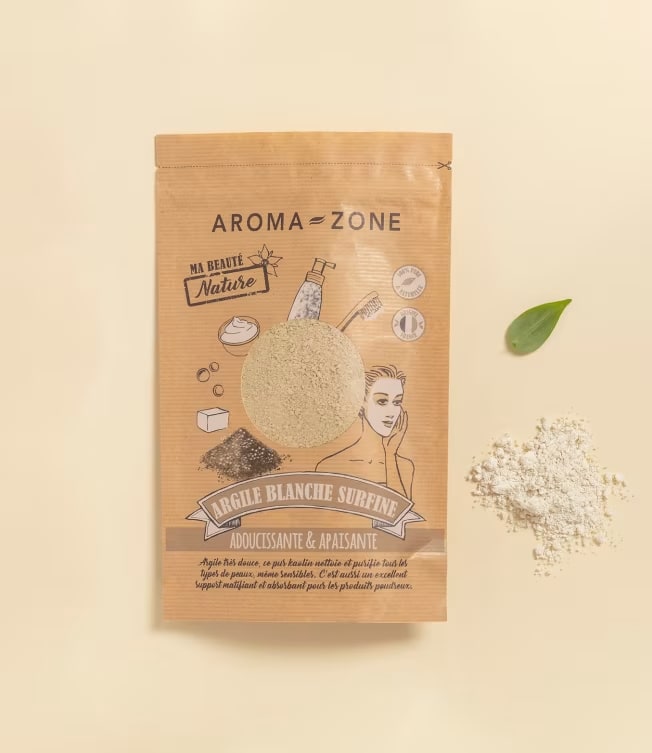
Extra-fine white clay (Kaolin)
To enjoy the benefits of kaolin, discover our Extra-Fine White Clay (Kaolin). Extracted from French quarries, then simply dried and ground, this natural clay, rich in silica, retains all its mineral richness. Very gentle, it is ideal for making purifying masks, mattifying skincare products or homemade cosmetics, particularly for sensitive, dry or delicate skin. Its fine texture helps to absorb impurities and excess sebum whilst respecting the skin’s natural balance.
Precautions
As a powdery product, kaolin must be handled with care to avoid inhalation. It is recommended that you use it away from any ventilation sources and keep it out of the reach of children.
As clay has the ability to absorb impurities, it is advisable not to reuse a preparation that has already been used.
FAQ

What is the difference between kaolin and other clays?

What is the difference between kaolin and other clays?

Which clay should you choose depending on your skin type?

Which clay should you choose depending on your skin type?
The choice of clay depends on your skin type and its needs.
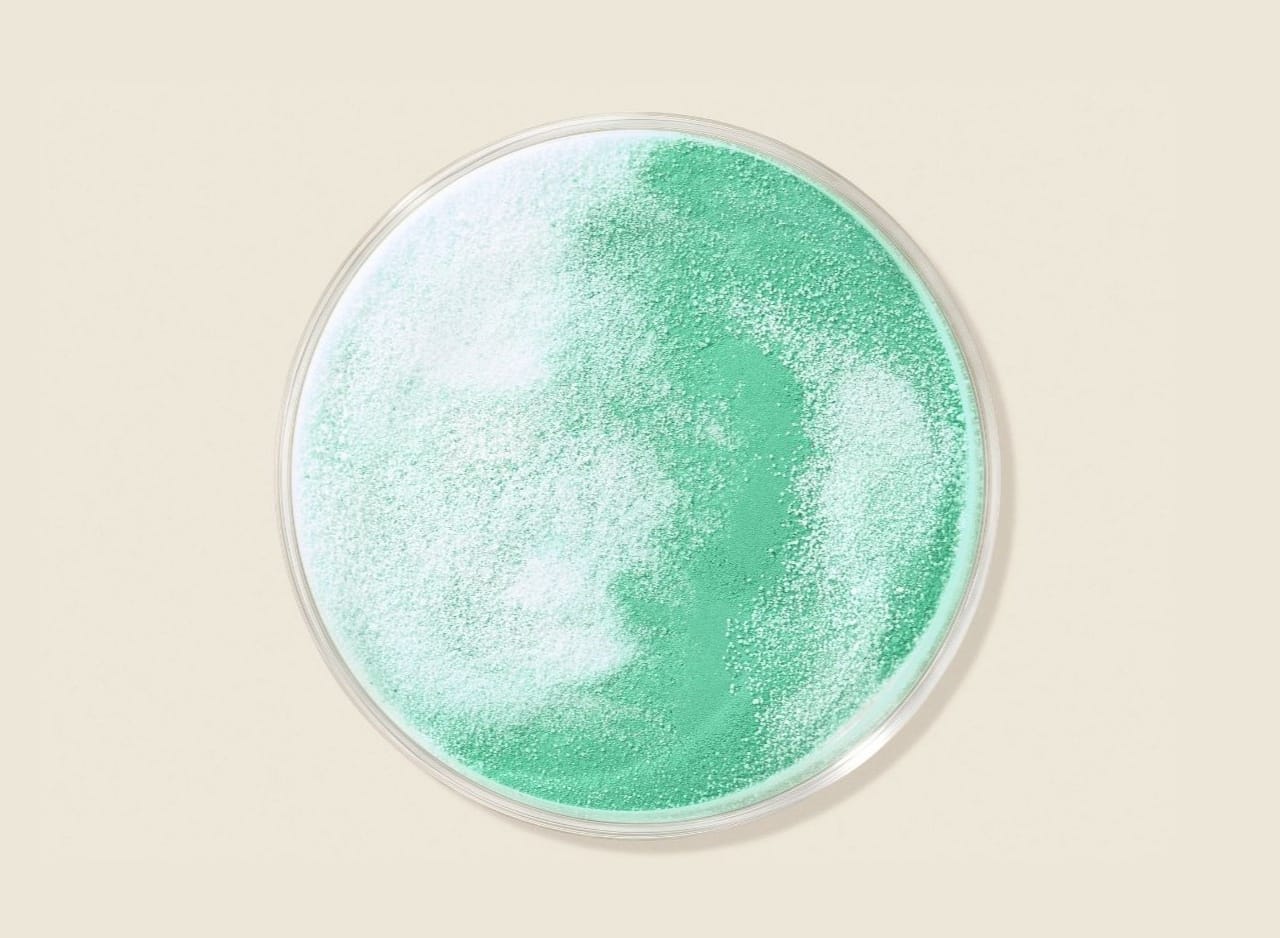
green clay, which is highly absorbent, is particularly suitable for oily skin or blemish-prone skin, as it helps to regulate excess sebum and deeply purify the skin.
Kaolin, or white clay, which is gentler, is suitable for sensitive, dry or reactive skin. It purifies the skin whilst maintaining its natural balance.
Red clays,, pink or and violet clays are prized for their ability to give the skin a healthy glow. They help to restore the complexion’s radiance and are suitable for dull or sensitive skin.

How to use kaolin as a face mask?

How to use kaolin as a face mask?
Kaolin is very easy to use as a mask. Simply mix it with water or a hydrolat until you obtain a smooth, even paste. The mask is then applied in a thick layer to clean skin, avoiding the eye area. It is recommended to leave it on for a few minutes, without allowing the mask to dry out completely, to maintain skin comfort. Once the application time is up, rinse thoroughly with lukewarm water.
Kaolin can also be combined with other ingredients such as vegetable oils, essential oils or plant powders to tailor the treatment to the skin’s needs. If you wish to incorporate essential oils into a clay paste, we recommend adding a small amount of oil or Solubol to make them soluble.
Spotlight On Our Specialist Writer, Marion Alves De Oliveira

Marion is a Doctor of Pharmacy, naturopath and coach. After twelve years working in the cosmetics industry, she now supports her clients in achieving greater overall balance and adopting a more mindful lifestyle, with a particular focus on sustainable nutrition. She is also the creator of a podcast, where she shares her insights to promote a lifestyle philosophy that respects both health and the environment.
Bibliography
1
Pinheiro G.O., Carvalho T.C., Silva-Valenzuela M.G., Valenzuela-Diaz F.R. Evaluation of the adsorbent properties of a Brazilian kaolin for use in the cosmetics industry. University of São Paulo, 2020.
2
Sarruf, F.D.; Issa, M.G.; Velasco, M.V.R.; Rosado, C.; Baby, A.R. Clay-Based Cosmetic Formulations: Mineralogical Properties and Short-Term Effects on Sebum Regulation and Skin Biomechanics. Cosmetics 2025, 12, 219. https://doi.org/10.3390/cosmetics12050219
3
Pura, A., Dusenkova, I. & Malers, J. Adsorption of Organic Compounds Found in Human Sebum on Latvian Illitic, Kaolinitic, and Chloritic Phyllosilicates. Clays Clay Miner. 62, 500–507 (2014). https://doi.org/10.1346/CCMN.2014.0620604
4
Viseras, C., Sánchez-Espejo, R., Palumbo, R. et al. CLAYS IN COSMETICS AND PERSONAL-CARE PRODUCTS. Clays Clay Miner. 69, 561–575 (2021). https://doi.org/10.1007/s42860-021-00154-5
5
Sarruf, F.D.; Contreras, V.J.P.; Martinez, R.M.; Velasco, M.V.R.; Baby, A.R. The Scenario of Clays and Clay Minerals Use in Cosmetics/Dermocosmetics. Cosmetics 2024, 11, 7. https://doi.org/10.3390/cosmetics11010007
6
Yahaya, Shehu & Jikan, Suzi & Badarulzaman, Nur Azam & Ajiya, Dahiru. (2017). Chemical Composition and Particle Size Analysis of Kaolin. Path of Science. 3. 1001–. 10.22178/pos.27-1.