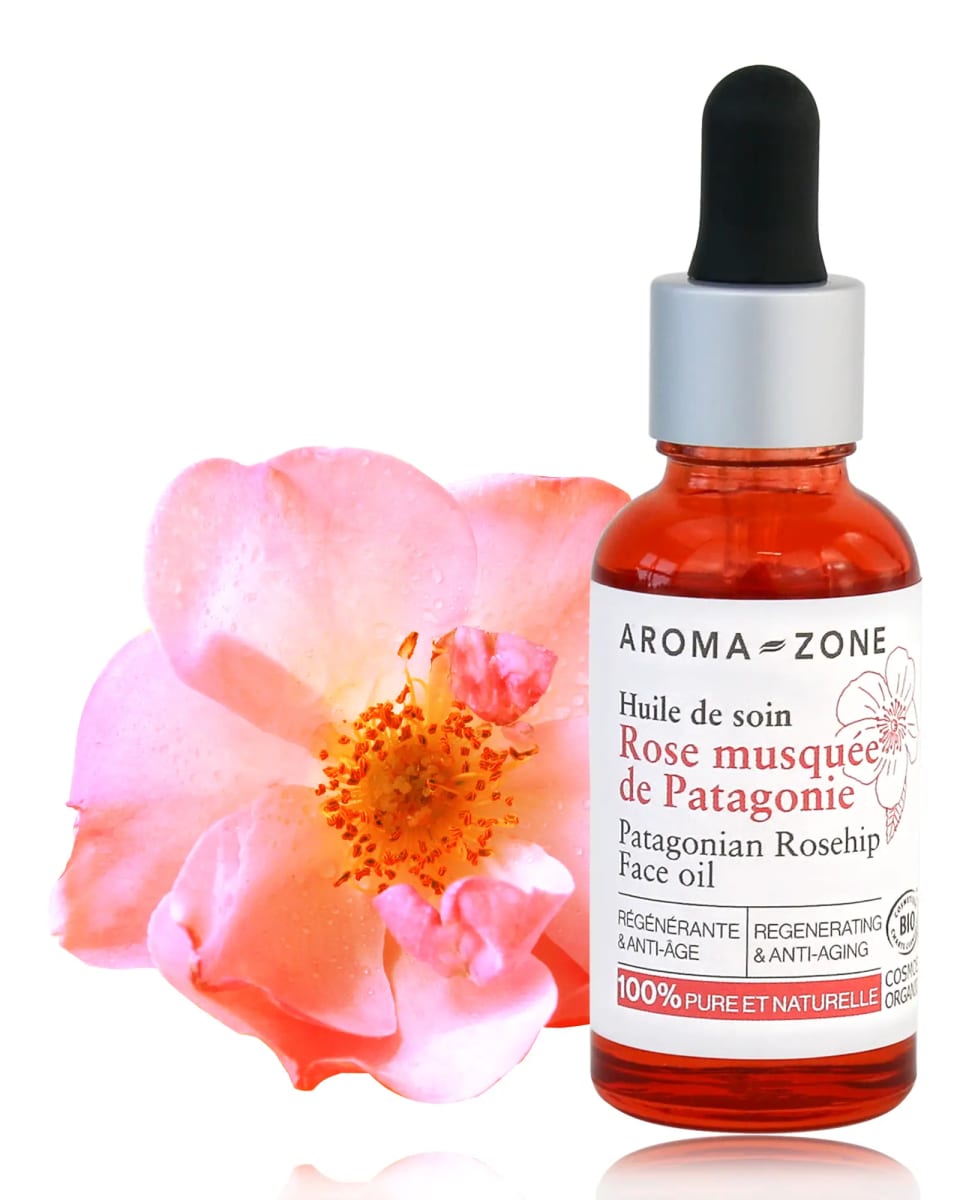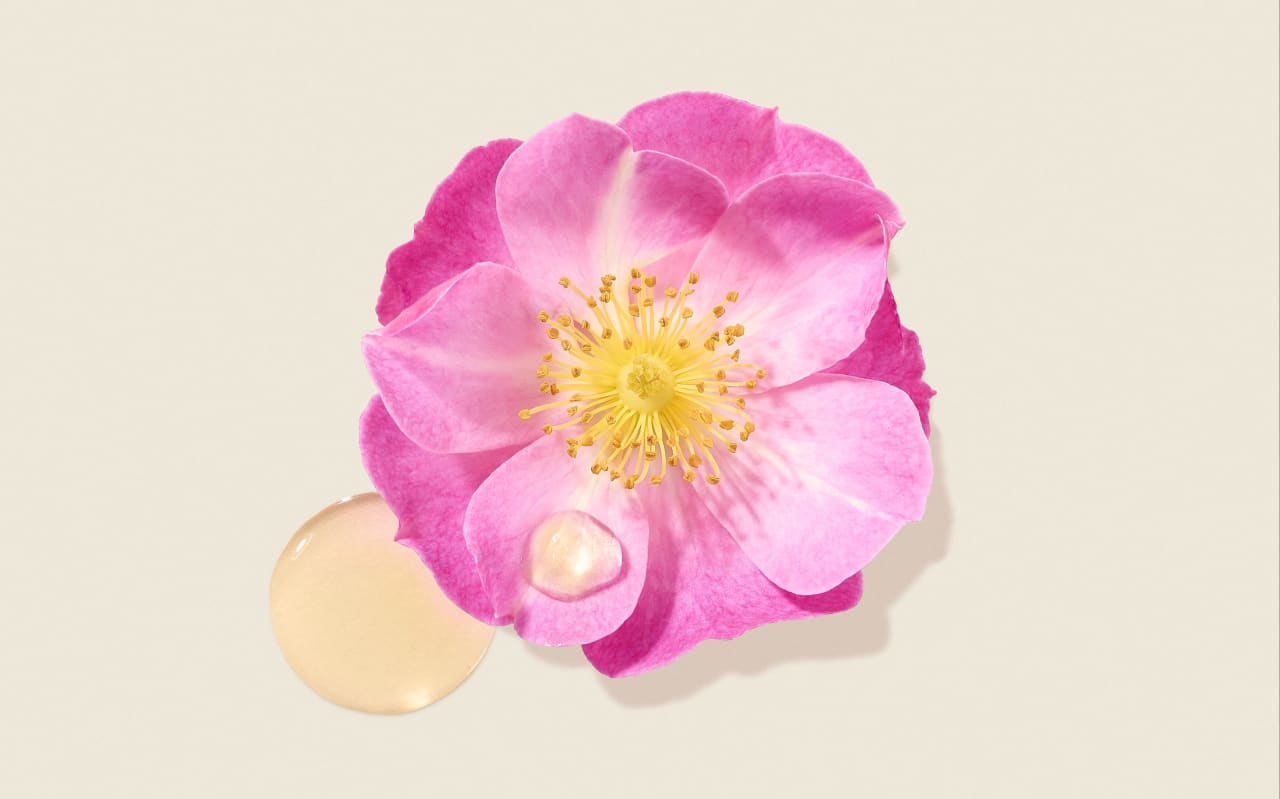
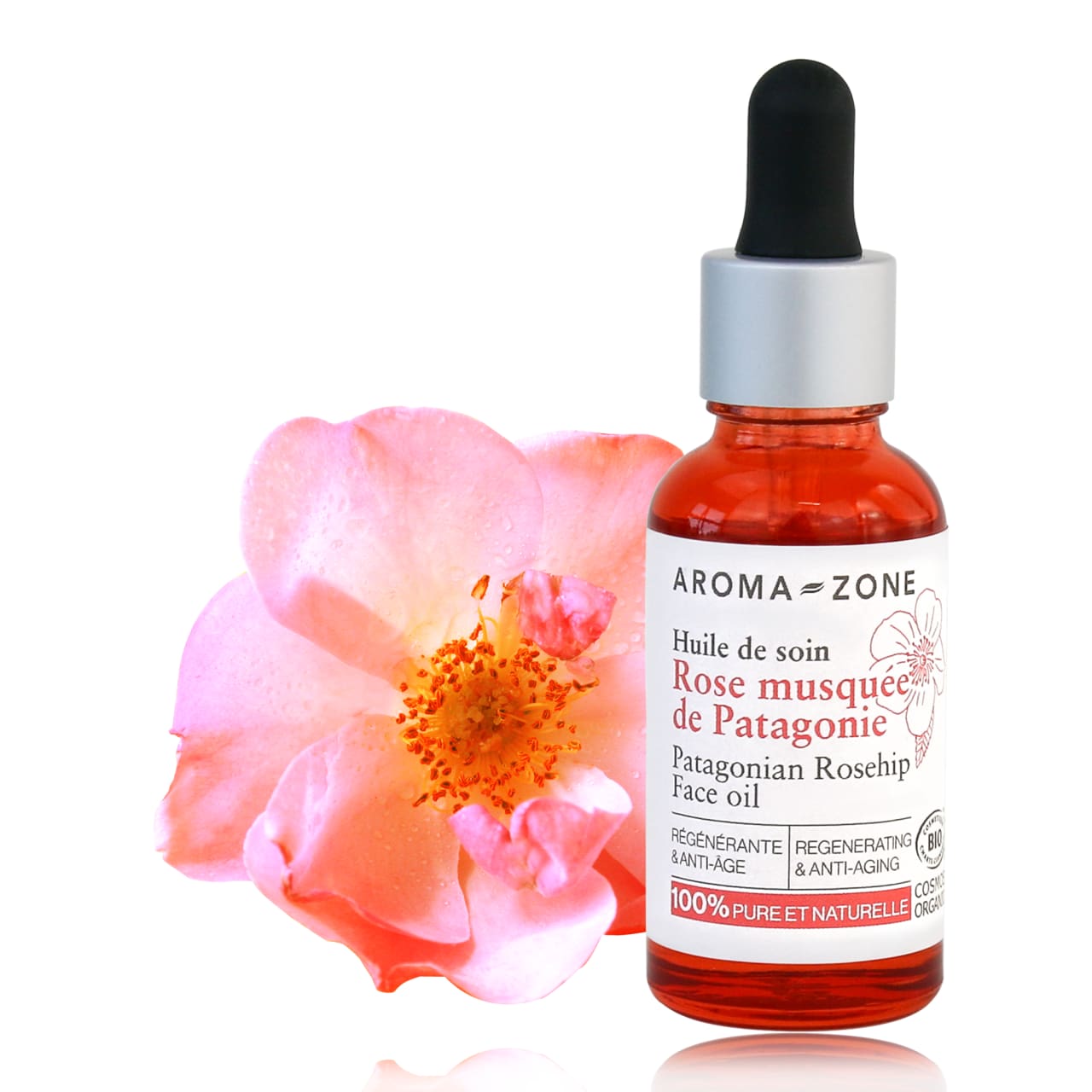
High-quality rosehip oil is obtained through cold-pressing, without refining or chemical solvent extraction, to preserve the integrity of its natural compounds. Its botanical and geographical origin must be clearly indicated, as must the traceability of each batch. Visually, it has an orange-yellow to amber color, a sign of its high carotenoid content, and a subtle, plant-based scent. The freshness of the batches is essential.
Aroma-Zone Rosehip Vegetable Oil
REGENERATING BRIGHTENING
The ultimate anti-aging oil. Versatile, multi-purpose, and a powerful regenerator and healer, this is the perfect oil for damaged skin, skin prone to wrinkles, sun-damaged skin, or tired skin. A true instant-boost treatment, it improves the skin’s appearance, evens out, and brightens the complexion from the very first applications.
By Delphine Duc

Aroma-Zone Rosehip Vegetable Oil Profile
INCI Name: Rosa rubiginosa seed oil, Rosa canina seed oil, Rosa moschata seed oil
Part of the plant used: Seeds of the fruit, known as “rosehip.” Rosehip seeds typically contain between 3% and 10% oil.
VEGAN
METHOD OF EXTRACTION
Cold-pressing, solvent extraction, or supercritical CO2 extraction. The rosehip oil used by Aroma-Zone is obtained through cold-pressing. Aroma-Zone chooses to offer you a virgin and organic quality, free of any additives
BIOCHEMICAL COMPOSITION
Fatty acid triglycerides:
Of which saturated fatty acids: palmitic acid (2–8% of fatty acids), stearic acid (approximately 1–3% of fatty acids)
Of which unsaturated fatty acids: linoleic acid (omega-6, 40–50% of fatty acids), alpha-linolenic acid (omega-3, 25–35% of fatty acids), oleic acid (omega-9, 10–25% of fatty acids)
Phytosterols (approximately 0.5%)
Other bioactive compounds: carotenoids (beta-carotene), polyphenols, tocopherols
ITS ACTIVE MOLECULES
Rosehip vegetable oil is rich in:
Linoleic acid
Alpha-linolenic acid
These are two essential fatty acids involved in skin lipid metabolism, particularly in the synthesis of ceramides. They strengthen the skin barrier, promote skin regeneration, and soothe the skin. These two unsaturated fatty acids give rosehip oil its exceptional regenerative properties.

Rosehip plant oil: Scientifically Proven Efficiency
A study* has highlighted the exceptional regenerative properties of rosehip seed oil. Applying rosehip seed oil twice a day resulted in a significant improvement in the appearance of scars, notably a reduction in redness and atrophy.
*See the Scientific Bibliography for more information.
Skin Tolerance
A Note from Adeline Nalin, Head Pharmacist and Toxicologist at Aroma-Zone

“Organic Chilean Rosehip Vegetable Oil (INCI: Rosa Moschata Seed Oil) is well-tolerated by the skin under normal cosmetic use. Its composition, rich in polyunsaturated fatty acids (linoleic acid, alpha-linolenic acid) and bioactive compounds, promotes skin regeneration. No sensitizing or irritating effects have been reported in the literature for external use.
However, due to its high content of unsaturated fatty acids, it may be slightly comedogenic on acne-prone skin. It is recommended to perform a patch test before applying to a large area, particularly in individuals with sensitive or reactive skin.”
Adeline Nalin - Head Pharmacist and Toxicologist
A Plant Extract Safe for Your Health
A Note from Our Aroma-Zone Toxicologist
“This oil is considered safe for human health when used in accordance with its intended external cosmetic use. It does not pose a significant systemic risk when applied to the skin. However, its high proportion of polyunsaturated fatty acids makes it susceptible to oxidation: proper storage (in an airtight bottle, away from light and heat) is essential to prevent the formation of oxidation byproducts that could cause skin irritation.”
Adeline Nalin - Head Pharmacist and Toxicologist

A Note from the Phytotherapist
“It is one of the most precious plant oils. Its deep orange color is a testament to its antioxidant properties; I first used it during pregnancy to protect my belly from stretch marks. And it really worked. Known for reducing all types of skin marks—fine lines, wrinkles, scars, and stretch marks—it also helps minimize dark spots. A wonderful all-rounder with a delicate scent that isn’t always appreciated at first but is quickly embraced.
Be careful with light-colored clothing after applying it, as it can stain! It is slightly comedogenic, so for anti-aging use on the face, combine it with hazelnut or jojoba oil to minimize this drawback.”
Caroline Gayet - Phytotherapist
For Which Skin Types?
Mature skin, marked skin: superficial scars, dark spots, irregularities… Dry skin, sensitive and reactive skin, dull skin, sun-exposed skin.
Which Concerns Does This Address?
Dry skin, lack of radiance, uneven complexion, oxidative stress, photoaging, loss of firmness and elasticity, wrinkles and fine lines, tightness and irritation, redness.
What Rosehip Vegetable Oil does for the skin
Cell Regeneration: Promotes skin regeneration
Anti-aging: Slows premature skin aging
Radiant complexion: Gives a radiant glow and evens out the complexion
Antioxidant: Protects against oxidative stress
Soothing: Nourishes, softens, and soothes dry skin.
Rosehip Vegetable Oil: An Essential Ingredient for the Skin

Organic Patagonian Rosehip Oil
An exceptional anti-aging treatment, this rare oil from Patagonia is a true concentrate of benefits for dry, mature, or marked skin. Rich in essential fatty acids, antioxidants, and carotenoids, this 100% natural facial treatment nourishes the skin, smooths wrinkles, restores radiance to the complexion, and combats loss of firmness. Cold-pressed, this virgin oil is used in a massage on the face, neck, and décolletage for smoother, plumper, and more radiant skin!
Precautions
No special precautions.
FAQ

How can you recognize a high-quality rosehip oil?

How can you recognize a high-quality rosehip oil?

Can it be combined with dermocosmetic active ingredients without any adverse interactions?

Can it be combined with dermocosmetic active ingredients without any adverse interactions?
Yes, rosehip oil can be combined with many dermocosmetic active ingredients without adverse interactions. It easily integrates into a routine containing moisturizing, soothing, or antioxidant active ingredients. It contributes to skin comfort and fits well into a gradual skincare routine, even for sensitive skin.

Why is rosehip oil particularly susceptible to oxidation?

Why is rosehip oil particularly susceptible to oxidation?
Rosehip oil is naturally rich in polyunsaturated fatty acids, particularly linoleic and linolenic acids. While this composition is highly beneficial for skincare, it also makes the oil more susceptible to oxidation when exposed to air, light, and heat. Proper storage (in an opaque, tightly sealed bottle, protected from light, and ideally kept cool) is therefore essential to preserve its quality.
For this reason, we recommend storing it in a cool place, protected from light and air, and using it preferably within 8 months of opening.

Is rosehip oil suitable for sensitive or reactive skin?

Is rosehip oil suitable for sensitive or reactive skin?
Yes, rosehip oil is generally well-tolerated by sensitive or reactive skin thanks to its balanced composition of fatty acids and antioxidants. As with any new product, a patch test is recommended beforehand, especially for very reactive skin.

Can it be used during pregnancy or while breastfeeding?

Can it be used during pregnancy or while breastfeeding?
Rosehip oil, as a plant-based oil intended for cosmetic use, can be used during pregnancy and breastfeeding, provided it is pure, unrefined, and of cosmetic grade.
Please note: we are referring to vegetable oil here; it should not be confused with rose essential oil, which has specific precautions for use and should not be used during pregnancy or breastfeeding.
If in doubt or if you have very sensitive skin, it is always best to consult a healthcare professional.
Spotlight on our specialist editor, Delphine Duc.

Delphine DUC, a biological engineer specializing in cosmetology, has been passionate about the field of cosmetics for nearly 10 years. I started making my own homemade cosmetics using Aroma Zone products to address my skin concerns, then decided to train as a cosmetologist, and finally to create a custom-made cosmetics brand to address everyone’s unique skin concerns.
Bibliography
1
SKIN CARE, Skin,
An Aroma-Zone publication by La Plage
2
Choe E., Min D.B.
Mechanisms and Factors for Edible Oil Oxidation. Comprehensive Reviews in Food Science and Food Safety, 2006;5(4):169-186. DOI: 10.1111/j.1541-4337.2006.00009.x
3
Stahl W., Sies H.
Photoprotection by dietary carotenoids: concept, mechanisms, evidence, and future development. Molecular Nutrition & Food Research, 2012;56(2):287-295. DOI: 10.1002/mnfr.201100232
4
Valerón-Almazán P., Gómez-Duaso A.J., Santana-Molina N., García-Bello M.A., Carretero G.
Evolution of Post-Surgical Scars Treated with Pure Rosehip Seed Oil. Journal of Cosmetics, Dermatological Sciences and Applications, 2015;5(2). DOI: 10.4236/jcdsa.2015.52019
5
Wang X., Jia Y., He H.
The Role of Linoleic Acid in Skin and Hair Health: A Review. International Journal of Molecular Sciences, 2024;26(1):246. DOI: 10.3390/ijms26010246