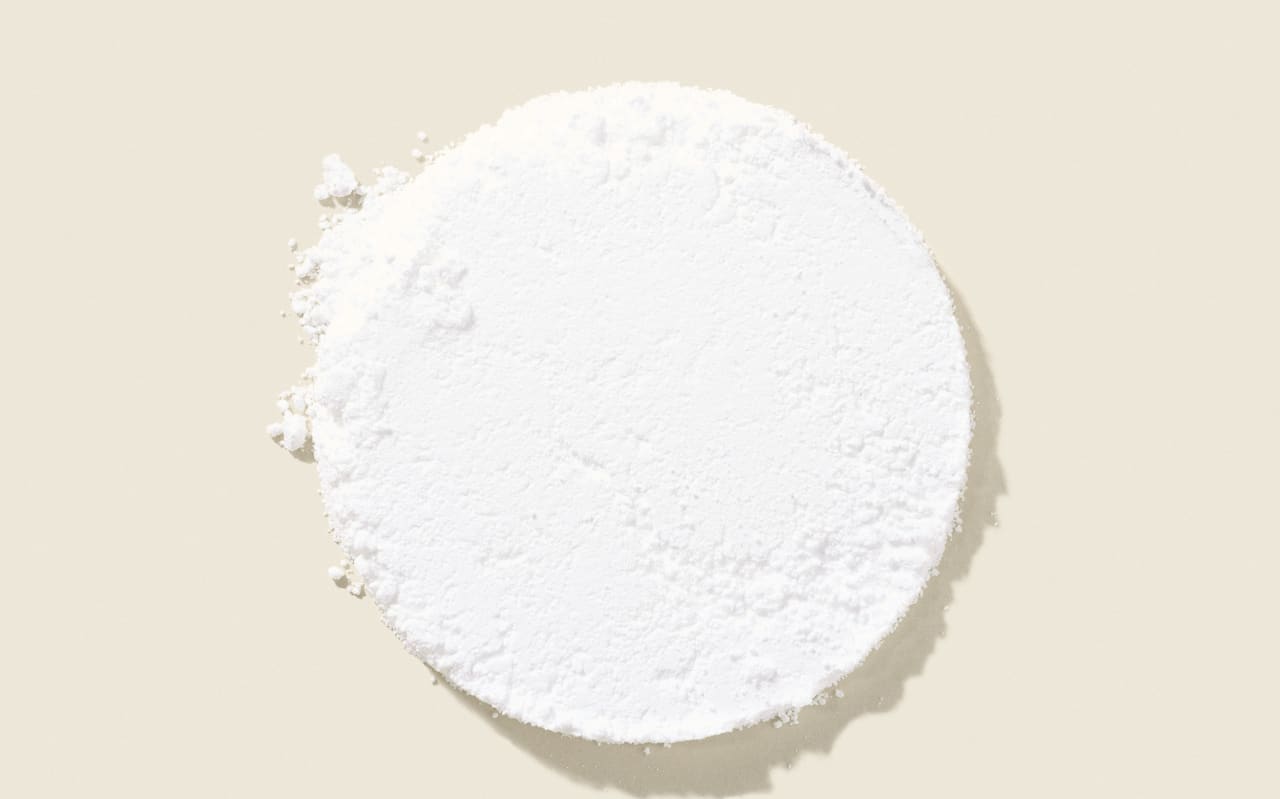
Aroma-Zone Polyglutamic Acid active ingredient

PRO-AGE MOISTURIZER


The intense moisturizer that preserves our natural hyaluronic acid


A true hyaluronic acid booster, this active ingredient acts as an intense moisturizer and a powerful anti-aging agent. 


Reading time: 0 min.

Polyglutamic Acid Aroma-Zone profile

INCI Name : Sodium polyglutamate

VEGAN

BIOCHEMICAL COMPOSITION

Polyglutamic acid is composed of D-glutamic acid and L-glutamic acid. High-molecular-weight polyglutamic acid (approximately 2000 kDa) forms a protective barrier on the skin’s surface, while low-molecular-weight polyglutamic acid (approximately 1 kDa) penetrates the skin to act at a deeper level.

SUSTAINABILITY & TRACEABILITY

100% natural origin, the polyglutamic acid used by Aroma-Zone is produced through non-GMO fermentation.


Polyglutamic Acid : what effect does it have on the skin ?

Polyglutamic acid is a polypeptide (a chain of amino acids) naturally found in fermented soybeans, known as natto. Its strong affinity for water molecules and its ability to stimulate the skin’s natural hydration factor give it intense moisturizing properties. This polymer has an exceptional ability to retain water, estimated at 5,000 times its weight, making it even more effective than hyaluronic acid in terms of skin hydration. PGA acts like a sponge, forming a protective film on the skin’s surface that “swells” upon contact with water. It therefore effectively hydrates the epidermis while limiting transepidermal water loss (TEWL). This molecule is not naturally present in the body, but it preserves the hyaluronic acid naturally present in our skin and stimulates collagen production.

Tests* conducted on a human skin model have demonstrated polyglutamic acid’s ability to strengthen the skin barrier and to boost hyaluronic acid levels in cells.

Skin tolerance

A note from Adeline Nalin, our Head Pharmacist and Toxicologist at Aroma-Zone

“An in vitro study on a reconstituted skin model using γ-PGA (high molecular weight) showed that it stimulates skin barrier markers (filaggrin, loricrin, involucrin, etc.) in keratinocytes, and increases the expression of aquaporin 3 (linked to hydration) and hyaluronic acid synthesis [Hyun-Ju Ko et al, Poly-γ-Glutamic Acid from a Novel Bacillus subtilis Strain: Strengthening the Skin Barrier and Improving Moisture Retention in Keratinocytes and a Reconstructed Skin Model, Int J Mol Sci, 2025 Jan 24;26(3):983]. This suggests not only good tolerability but also a beneficial effect on the barrier and hydration. Some skin irritation is always possible in the most sensitive skin types; however, our Hyaluronic Acid & Polyglutamic Acid Cream demonstrates excellent skin tolerance results, including on sensitive skin.”

Adeline Nalin - Head Pharmacist and Toxicologist

A safe ingredient for your health

A note from our Aroma-Zone Toxicologist

“The high molecular weight of the polyglutamic acid used by Aroma-Zone limits its penetration into the deeper layers of the skin, which explains its high tolerance. Some skin irritation is always possible in the most sensitive skin types; however, our Hyaluronic Acid & Polyglutamic Acid Cream demonstrates excellent skin tolerance results, including on sensitive skin.”

Adeline Nalin - Head Pharmacist and Toxicologist

A note from the Dermatologist


“Polyglutamic acid can hold up to 5,000 times its weight in water, making it an excellent ally for intensely hydrating the skin and strengthening the skin barrier. I therefore recommend it primarily for dry, dehydrated, or irritated skin. It can be used in the morning and/or evening, alone or in combination with other active ingredients, for example after a vitamin C-based serum or after applying an exfoliant.”


Dr. Dima Haidar - Dermatologist

Formulation focus with the Aroma-Zone R&D laboratory

Polyglutamic acid is gaining significant traction thanks to its exceptional moisturizing power : like hyaluronic acid, it retains water, but up to 5,000 times its weight, with comparable molecular weights. In formulations, it provides intense and long-lasting hydration, but also stands out because it counteracts the enzyme that breaks down hyaluronic acid (hyaluronidase, naturally present in our skin). It thus helps preserve the skin’s natural hyaluronic acid reserves while enhancing the plumping effect of moisturizers.

For which skin types ?

All skin types, dehydrated skin, first signs of aging, mature skin.

What issues does this address ?

Dehydration, loss of firmness and elasticity, wrinkles and fine lines.

What Polyglutamic Acid does for the skin

  • Intensely hydrates the skin

  • Reduces wrinkles and fine lines

  • Firms the facial contours

  • Improves skin elasticity.

Polyglutamic Acid : an essential ingredient for the skin

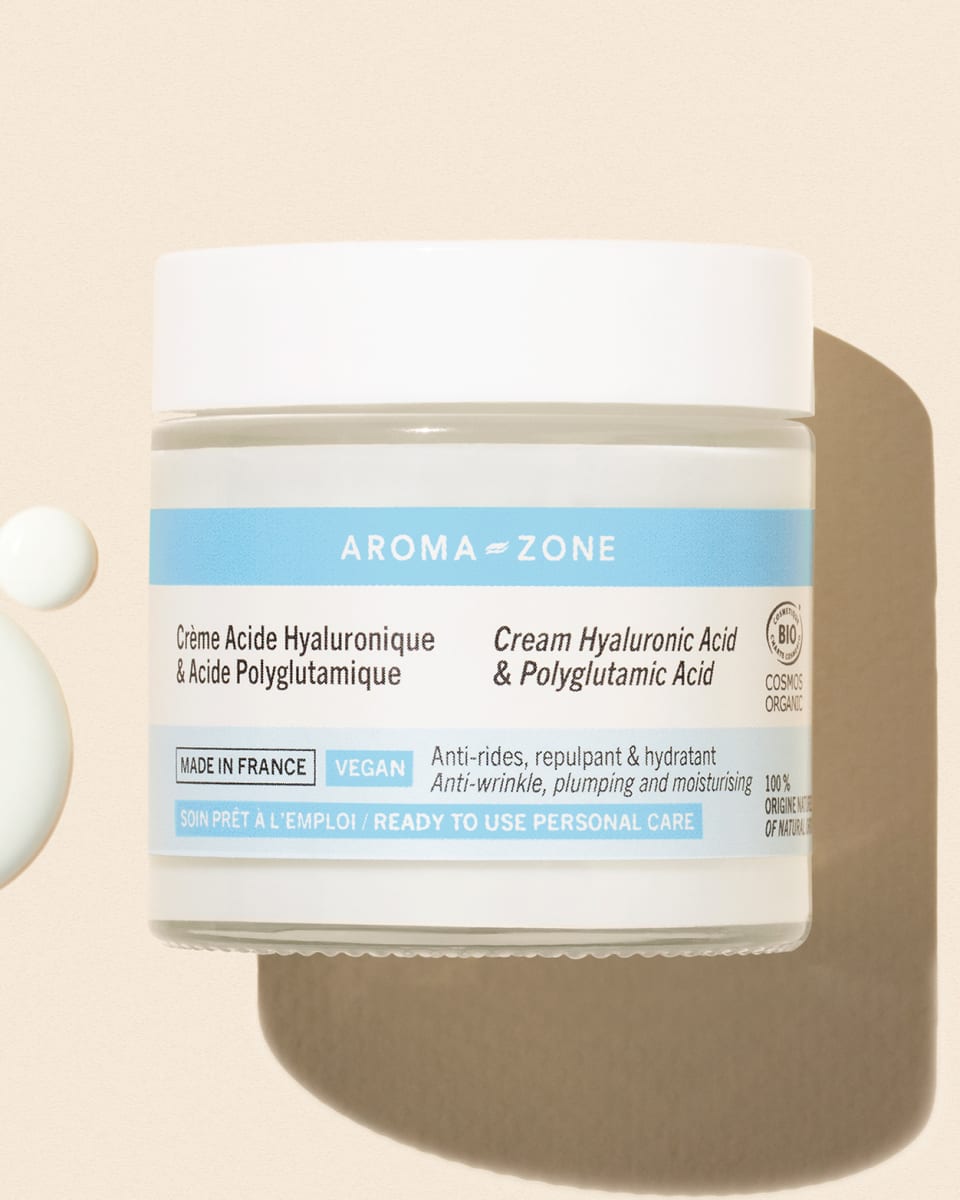
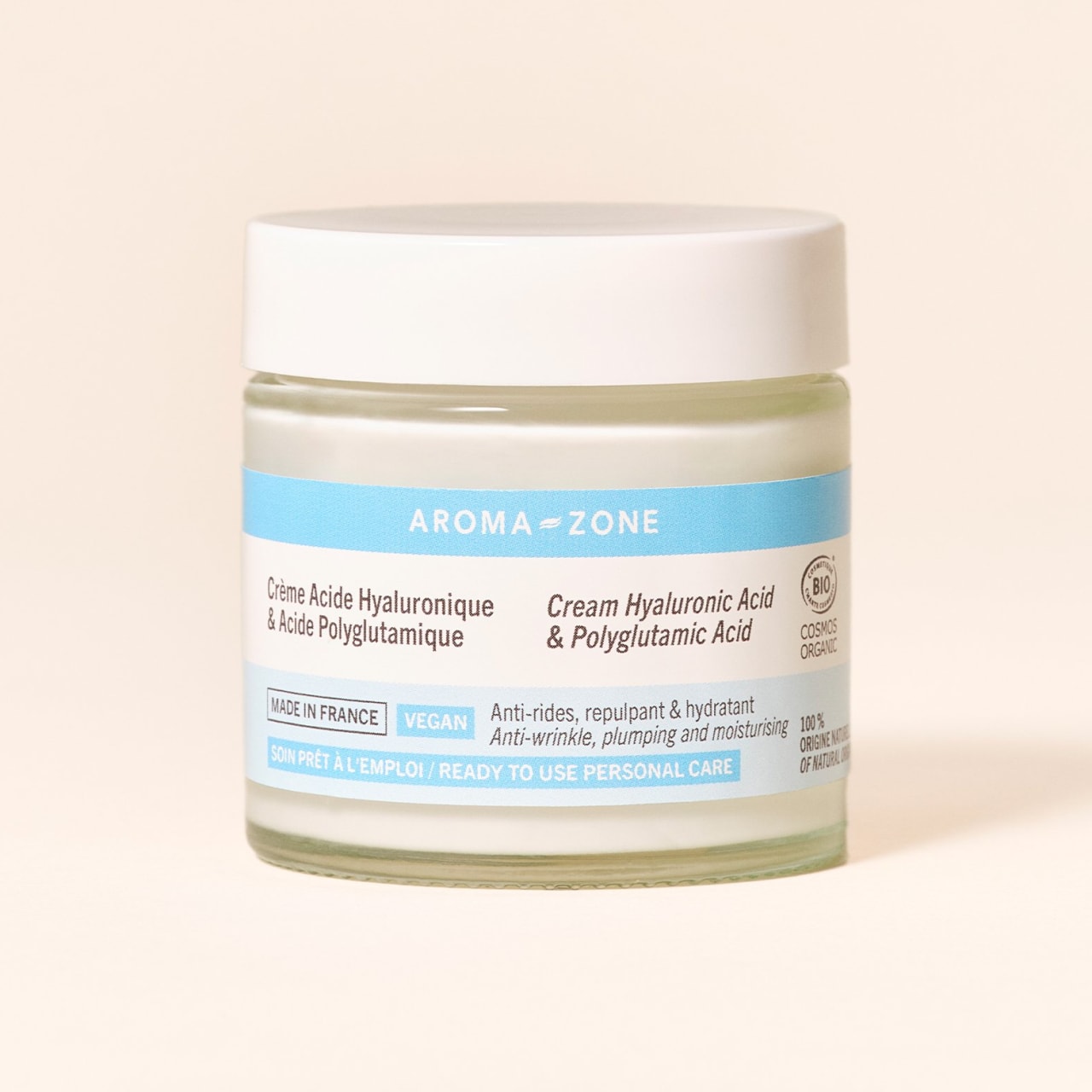
Hyaluronic Acid & Polyglutamic Acid Cream

FAQ

What are the differences between polyglutamic acid and hyaluronic acid?

Hyaluronic acid (HA) and polyglutamic acid (PGA) are two moisturizing active ingredients with distinct modes of action. HA, naturally present in the skin, retains up to 1,000 times its weight in water and provides a plumping effect. The low molecular weight form penetrates deeply, while the high molecular weight form acts on the surface. PGA, derived from bacterial fermentation, retains up to 5,000 times its weight in water and forms a protective film that limits evaporation. It also stimulates the production of natural HA. HA adds volume, while PGA improves the skin barrier. Their combination optimizes hydration and anti-aging benefits.

With hyaluronic acid

The combination of polyglutamic acid and hyaluronic acid provides the skin with a synergy of active ingredients that hydrate and plump, combining their exceptional water-retention capabilities for smooth, plump skin.

Discover hyaluronic acid

With ceramides

To restore the skin barrier and prevent dehydration, using ceramides with polyglutamic acid is an ideal solution, especially for dry and/or sensitive skin.

Discover ceramides

With Vitamin C

The combination of polyglutamic acid and vitamin C helps restore plump, radiant skin and provides enhanced protection against free radicals.

Discover Vitamin C

With Peptides

Peptides have anti-aging and firming effects; combining them with polyglutamic acid optimizes the anti-aging effects of these two active ingredients by promoting cell regeneration, filling in wrinkles, and improving skin elasticity.

Discover peptides

With Niacinamide

For a perfect balance between hydration and sebum control, this combination of active ingredients helps prevent breakouts while keeping skin well-hydrated. Perfect for combination to oily skin.

Discover niacinamide

Which foods contain polyglutamic acid?

Certain foods naturally contain polyglutamic acid; it is found notably in natto, a Japanese fermented soy-based food, which is a particularly rich source of polyglutamates. This acid is produced by the fermentation of certain bacteria, such as Bacillus subtilis, which convert soy proteins into a glutamic acid polymer.

Can polyglutamic acid be used at the same time as hyaluronic acid?

Spotlight on our specialist editor, Delphine Duc.

Delphine DUC, a biological engineer specializing in cosmetology, has been passionate about the field of cosmetics for nearly 10 years. I started making my own homemade cosmetics using Aroma Zone products to address my skin concerns, then decided to train as a cosmetologist, and finally to create a custom-made cosmetics brand to address everyone’s unique skin concerns.

Bibliography

1

SKINCARE, The Skin, an Aroma-Zone publication by La Plage

2

Brown Algae as a Valuable Substrate for the Cost-Effective Production of Poly-γ-Glutamic Acid for Applications in Cream Formulations.

Parati, M.; Philip, C.; Allinson, S.L.; Mendrek, B.; Khalil, I.; Tchuenbou-Magaia, F.; Kowalczuk, M.; Adamus, G.; Radecka, I. Polymers 2024

3

Poly-α-Glutamic Acid from a Novel Bacillus Subtilis Strain: Strengthening the Skin Barrier and Improving Moisture Retention in Keratinocytes and a Reconstructed Skin Model. International Journal of Molecular Sciences 2025, 26 (3), 983.

4

Serra, M.; Gudina, E.; Botelho, C.; Teixeira, J. A.; Barros, A. N.

5

Serra M, Gudina E, Botelho C, Teixeira JA, Barros AN. Polyglutamate: Unleashing the Versatility of a Biopolymer for Cosmetic Industry Applications. Cosmetics. 2024; 11(3):76.

6

Ben-Zur, N.; Goldman, D. Polyglutamic Acid:

7

A Novel Peptide for Skin Care. 2014.