Aroma-Zone Vitamin C - Ascorbic acid Active Ingredient

RADIANCE-BOOSTING UNIFYING ANTIOXIDANT


A powerful antioxidant, Vitamin C boosts collagen synthesis. With its skin-evening properties, it prevents dark spots. It is the go-to ingredient for dull, stressed, and tired skin, protecting it from free radicals and premature aging.


Reading time: 0 min.

Vitamin C Aroma-Zone Profile

INCI Name: Ascorbic acid

NATURAL / SYNTHETIC: Naturally derived active ingredient

VEGAN

BIOCHEMICAL COMPOSITION

Vitamin C is an organic acid. Since ascorbic acid is highly unstable in liquid formulations, Vitamin C is often found in cosmetics as ascorbyl glucoside—a derivative in which it is bound to a sugar molecule, which stabilizes it. Once absorbed by the skin, ascorbyl glucoside releases Vitamin C through the action of an enzyme, alpha-glucosidase.

TRACEABILITY & SUSTAINABILITY

The ascorbyl glucoside used by Aroma-Zone is obtained through a process combining fermentation and green chemistry.


Vitamin C: What Effect Does It Have on the Skin?

Vitamin C, or ascorbic acid, is a vitamin essential for collagen synthesis , which is responsible for skin firmness. Its powerful antioxidant activity allows it to neutralize free radicals, reactive species that tend to accumulate in the skin when it is exposed to environmental aggressors (sun, tobacco, pollution). Free radicals cause numerous skin damages: sagging tissue, wrinkles, irritation… By capturing them, Vitamin C combats premature aging of exposed skin.

It also helps maintain skin firmness by inhibiting the enzymes responsible for the breakdown of collagen fibers. Vitamin C is also beneficial for skin radiance: thanks to its inhibitory effect on tyrosinase, an enzyme involved in melanin production, Vitamin C reduces hyperpigmentation spots. The complexion is evened out and more radiant.

What is the difference between Ascorbyl Glucoside and pure Vitamin C (L-ascorbic acid)?

L-ascorbic acid is the most chemically active form, but also the most unstable. Ascorbyl glucoside is a stabilized derivative, bound to a sugar, that is more resistant to oxidation and has excellent skin tolerance. Once on the skin, it gradually releases active Vitamin C. This makes it a gentler ingredient, better suited for sensitive skin and long-lasting formulas.

Vitamin C: Scientifically Proven Efficiency

A study demonstrated the effect of a cream containing 5% Vitamin C on photoaging: after 6 months of use, skin density increased and wrinkles, even deep ones, were reduced.

Skin Tolerance

A Note from Adeline Nalin, Head Pharmacist and Toxicologist at Aroma-Zone

“Ascorbyl glucoside converts into Vitamin C directly in the skin, allowing it to fully perform its role as a powerful antioxidant. It protects the skin against free radicals and oxidative stress, the main causes of skin aging. More stable than pure Vitamin C, it resists oxidation and offers better skin tolerance, even for sensitive skin.”

Adeline Nalin - Head Pharmacist and Toxicologist

A Safe Ingredient for your Health

A Note from Our Aroma-Zone Toxicologist

“Ascorbyl glucoside is a safe active ingredient that can be used without risk in cosmetic products. It provides effective antioxidant action and helps prevent the signs of aging.”

Adeline Nalin - Head Pharmacist and Toxicologist

A Note from the Dermatologist 


“In my opinion, Vitamin C is the best antioxidant in skincare. It’s perfect for reviving the skin’s radiance and combating signs of fatigue. It helps even out the complexion and fade dark spots for brighter skin. It helps protect the skin against the harmful effects of free radicals caused by pollution or UV rays. It is therefore a key ingredient in preventing skin aging.

Note: It is suitable for most skin types, but those with sensitive or reactive skin should start with low concentrations. For optimal results, I recommend introducing it gradually, preferably in the morning under your moisturizer, and pairing it with sunscreen when outdoors.”


Dr. Dima Haidar - Dermatologist

Formulation Focus with the Aroma-Zone R&D Laboratory

Ascorbic acid, the pure form of Vitamin C, is highly unstable: it oxidizes rapidly upon contact with water, air, or light, thereby losing its effectiveness. To ensure long-lasting action, the laboratory uses a stabilized form, Ascorbyl Glucoside. This derivative protects Vitamin C from oxidation and allows the product to be formulated at a milder pH, close to the skin’s physiological pH (approximately 5.5), thereby improving skin tolerance.

Once applied to the skin, Ascorbyl Glucoside is converted into pure, active Vitamin C thanks to enzymes naturally present in the skin. This gradual release ensures an effective, stable antioxidant action that is compatible with all skin types, even sensitive skin.

For Which Skin Types?

All skin types, skin subject to oxidative stress, dull skin, exposed skin, first signs of aging, mature skin.

Which Concerns Does This Address?

Lack of radiance, uneven complexion, hyperpigmentation spots, oxidative stress, photoaging, fine lines and wrinkles, loss of firmness and elasticity.

What Vitamin C Does for the Skin

  • Boosts skin radiance

  • Reduces dark spots

  • Reduces the appearance of wrinkles

  • Firms the facial contours

  • Improves skin elasticity.

Vitamin C: An Essential Ingredient for the Skin

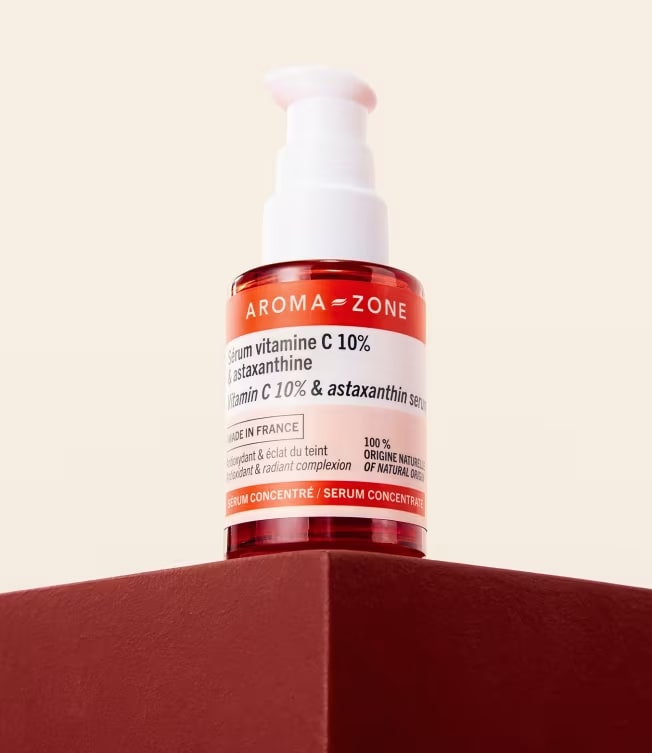
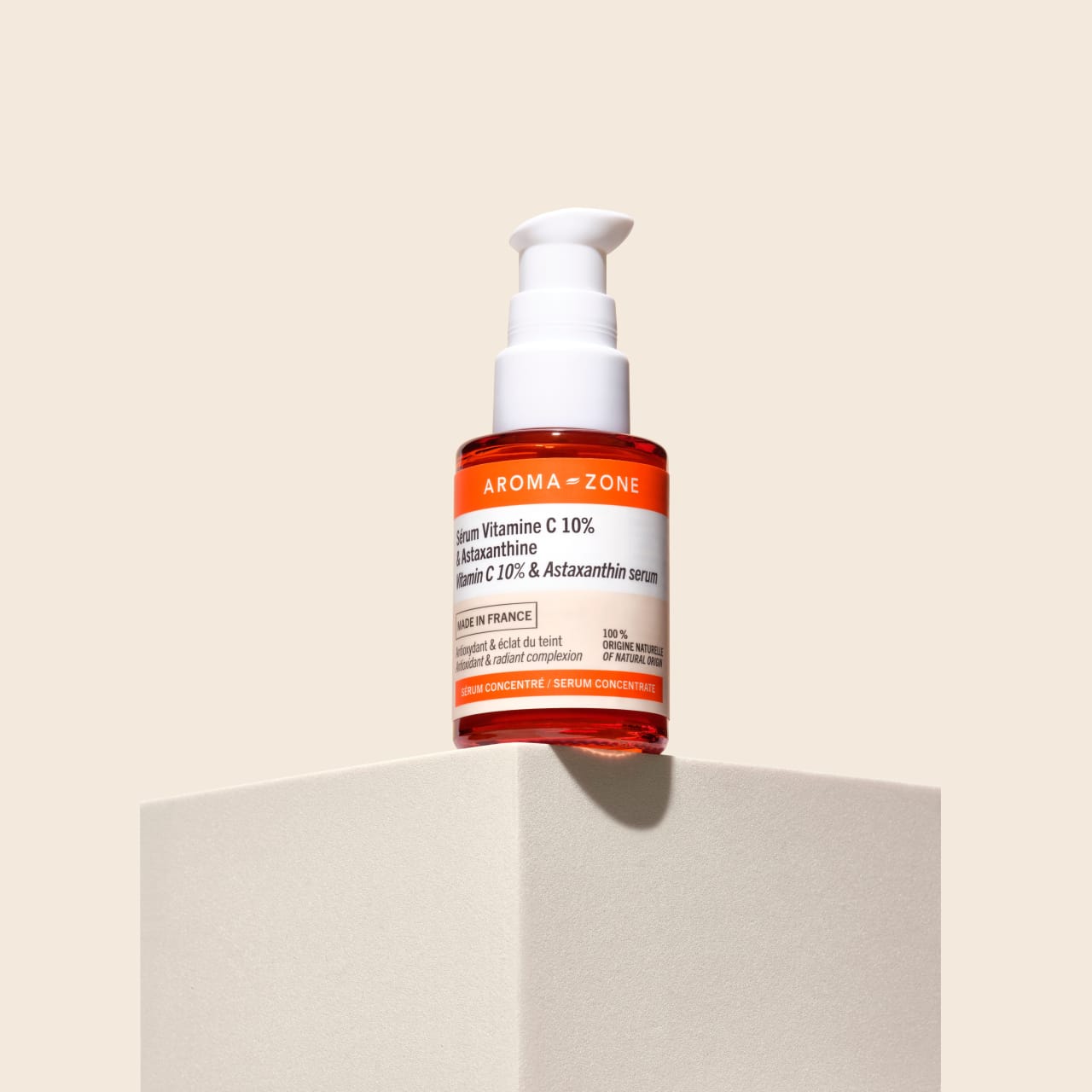
Concentrated Vitamin C 10% & Astaxanthin Serum

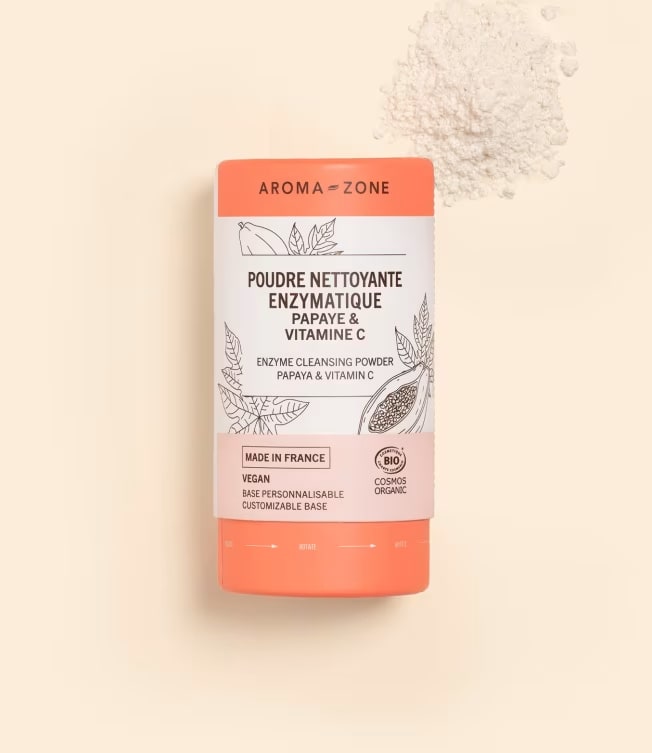
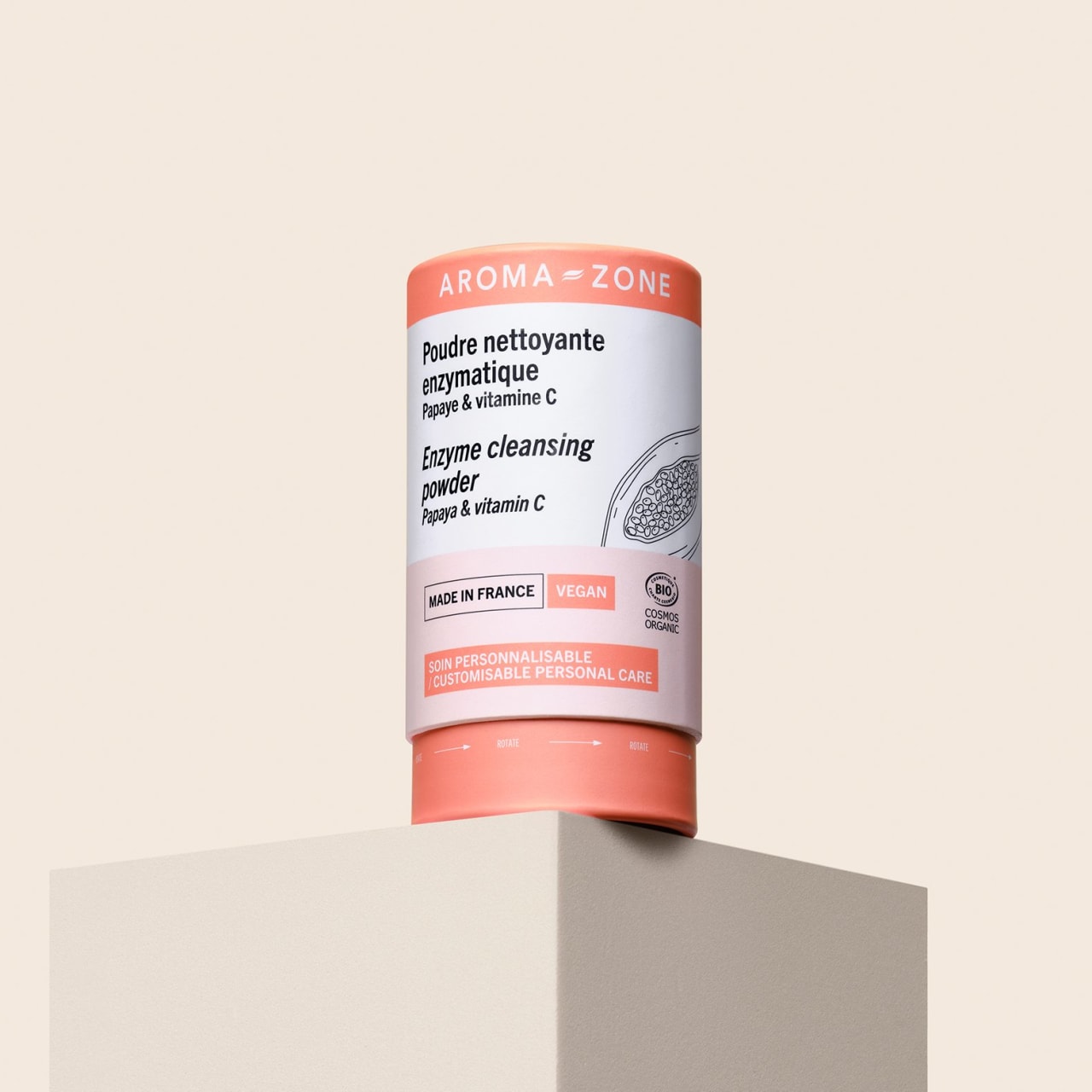
Papaya & Vitamin C Enzymatic Cleansing Powder

Vitamin C Serum Pearls

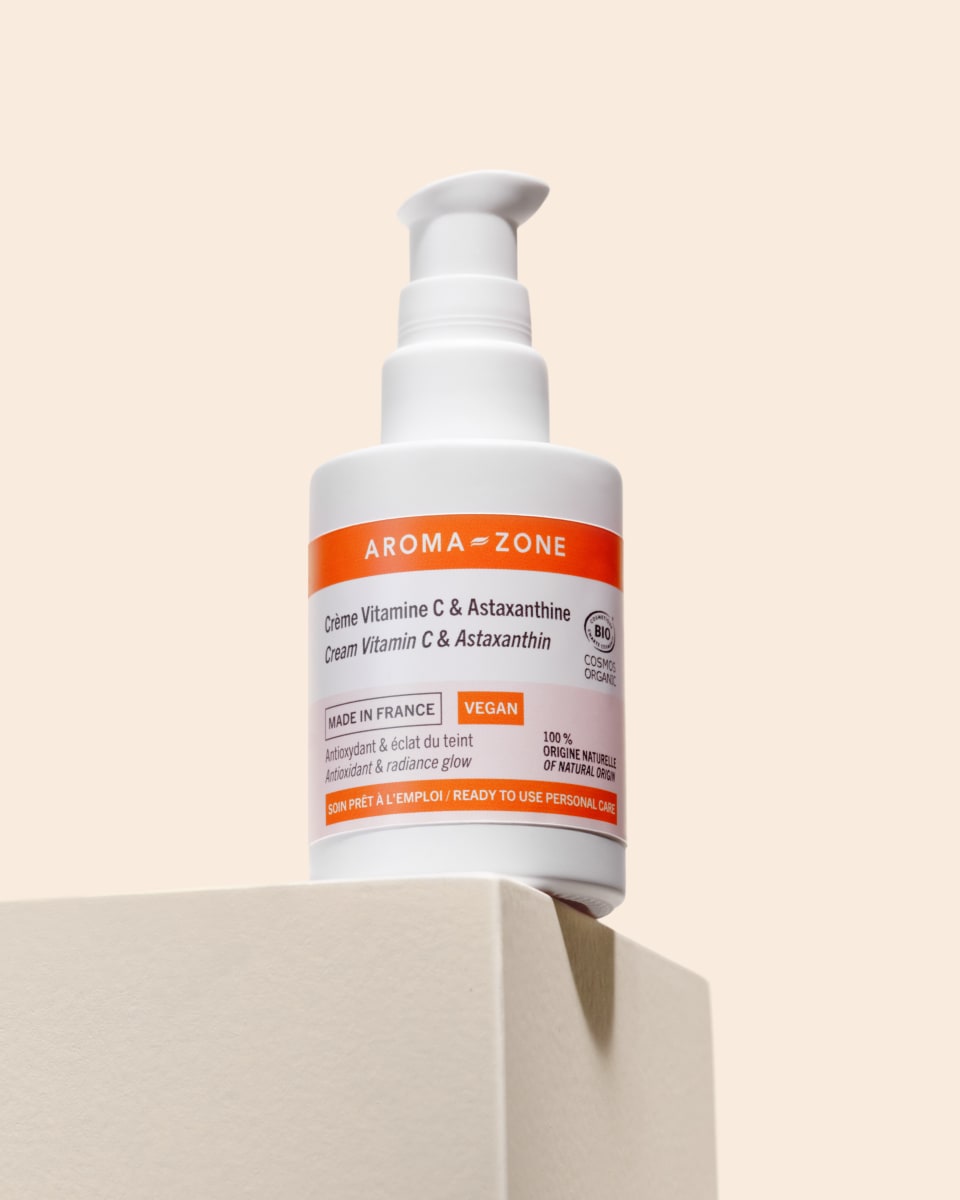
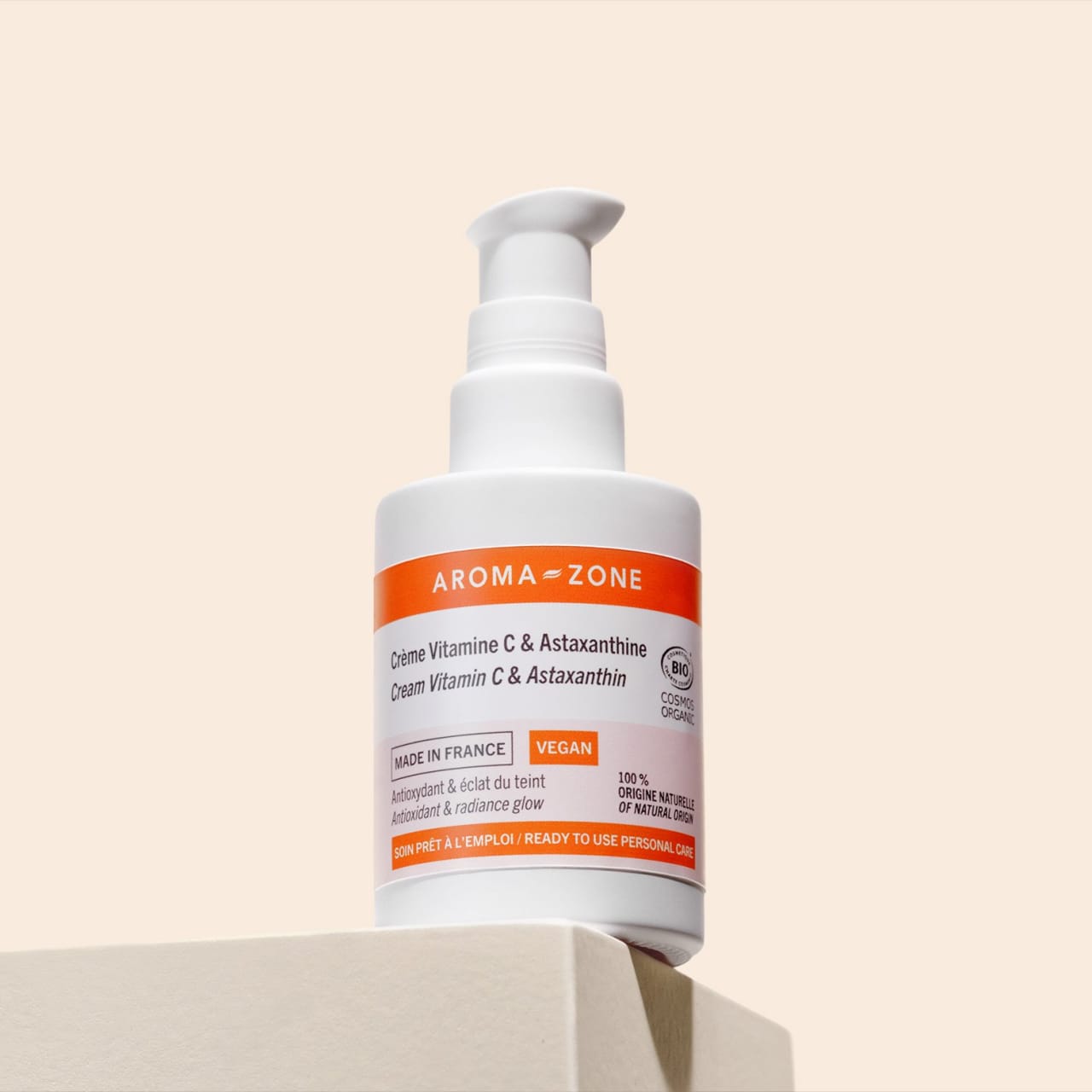
Vitamin C & Astaxanthin Cream

FAQ

How does Vitamin C stimulate collagen synthesis?

Vitamin C acts as an essential cofactor for two key enzymes: prolyl hydroxylase and lysyl hydroxylase. These enzymes enable the stabilization of the triple-helix structure of collagen . Without Vitamin C, this process is less effective, which limits the quality of the collagen produced. In its form as Ascorbyl Glucoside, the active ingredient gradually releases active Vitamin C into the skin, thereby supporting skin firmness and tone.

Is Vitamin C used in dietary supplements different from cosmetic Vitamin C?

Yes. Oral supplements generally use L-ascorbic acid to support nutritional intake. In cosmetics, Vitamin C must be stable, well-tolerated, and capable of acting locally. Ascorbyl glucoside is a particularly stable derivative, ideal for formulations, which is converted into Vitamin C directly at the skin level thanks to alpha-glucosidase.

Can you use a product containing Vitamin C in the sun?

Vitamin C is not photosensitizing. However, in its pure form (L-ascorbic acid), it requires an acidic pH to remain stable, which can make the skin more sensitive and less comfortable when exposed directly to the sun. Stabilized derivatives such as Ascorbyl glucoside are better tolerated and can be applied in the morning, even on a sunny day. However, it remains essential to apply sunscreen after your skincare routine, as UV rays weaken the skin and reduce the benefits of antioxidants.

Does a Vitamin C serum lose its concentration of active ingredients over time?

Pure forms of L-ascorbic acid are highly sensitive to oxidation, which can reduce their effectiveness. Ascorbyl glucoside, on the other hand, is a stabilized form that is more resistant to heat, air, and light. This stability helps preserve its antioxidant properties over time, provided the product is stored properly, kept closed, and protected from excessive light.

Can Vitamin C be combined with Niacinamide, AHAs/BHAs, or Retinol?

Yes, these combinations are possible. Vitamin C pairs very well with Niacinamide, a complementary active ingredient that helps strengthen the skin barrier and promote an even complexion.

With AHAs or BHAs, this combination is also possible, but it is best to use them at different times of the day (for example, exfoliants in the evening and Vitamin C in the morning) to minimize the risk of irritation.

Regarding Retinol, the combination can be beneficial but requires good skin tolerance: it is recommended to introduce it gradually and reserve Retinol for the evening, while Vitamin C naturally fits into your morning routine. The idea is to tailor these active ingredients to your skin’s sensitivity and observe your skin’s response to create a personalized and effective routine.

Spotlight on our specialist editor, Marion Alves De Oliveira

Marion is a Doctor of Pharmacy, naturopath, and life coach. After twelve years in the cosmetics industry, she now guides her clients toward holistic balance and a more mindful lifestyle, drawing on her expertise in sustainable food practices. As the creator of a podcast, she shares her insights to promote a philosophy of living that respects both health and the environment.

Bibliography

1

SKINCARE, The Skin, an Aroma-Zone publication by La Plage

2

Caritá, A. C.; Fonseca-Santos, B.; Shultz, J. D.; Michniak-Kohn, B.; Chorilli, M.; Leonardi, G. R. Vitamin C

3

Humbert, P. G.; Haftek, M.; Creidi, P.; Lapière, C.; Nusgens, B.; Richard, A.; Schmitt, D.; Rougier, A.; Zahouani, H. Topical Ascorbic Acid on Photoaged Skin

4

Sasidharan, O.; Gholap, A.; Rastogi, R. A Review of Clinical Efficacy of Topical Vitamin C and Its Derivatives.

5

Ravetti, S.; Clemente, C.; Brignone, S.; Hergert, L.; Allemandi, D.; Palma, S. Ascorbic Acid in Skin Health.