Spirulina contains analogs of Vitamin B12, but their bioavailability in humans remains limited. It cannot therefore replace vitamin B12 supplementation for vegetarians or vegans, even though it helps enrich overall nutritional intake.
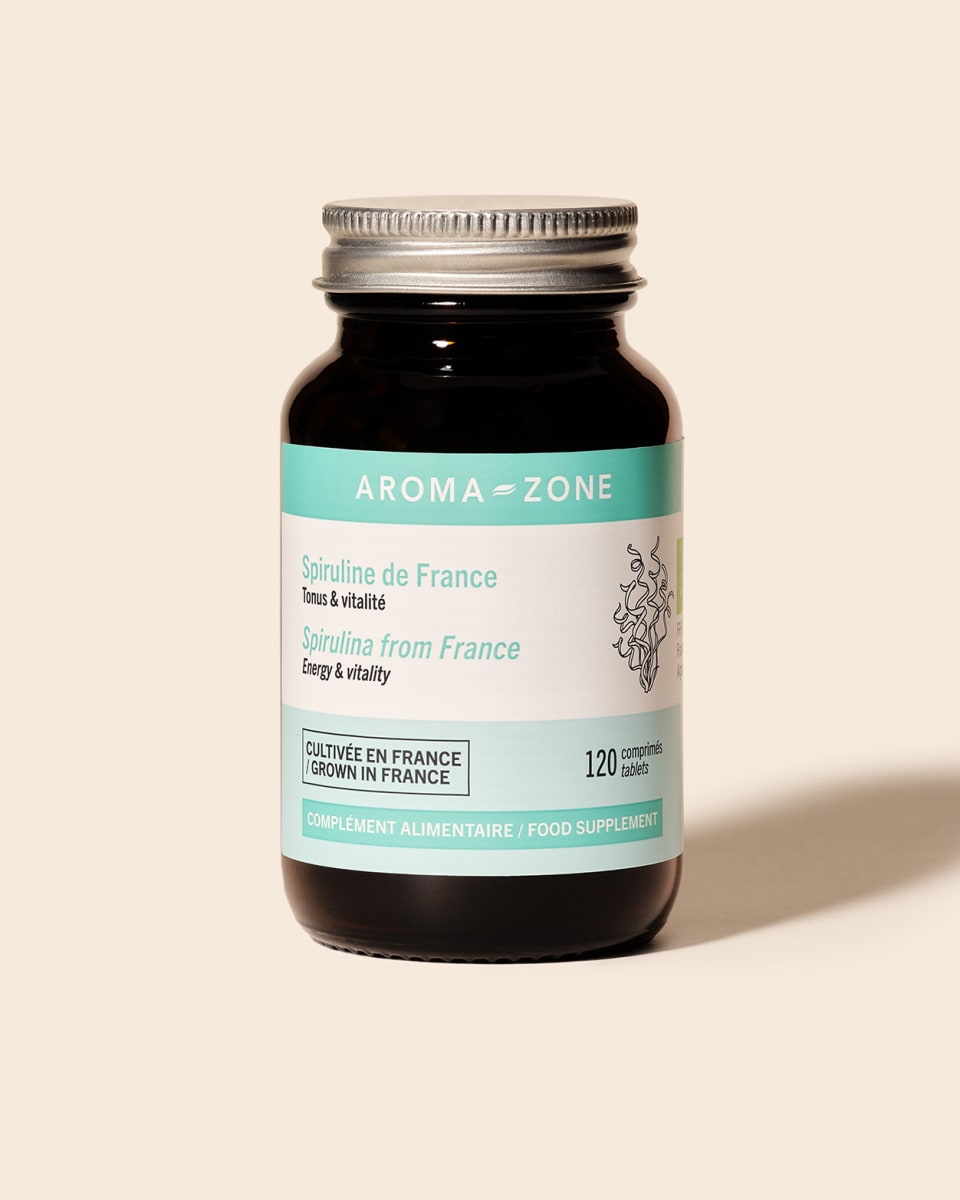
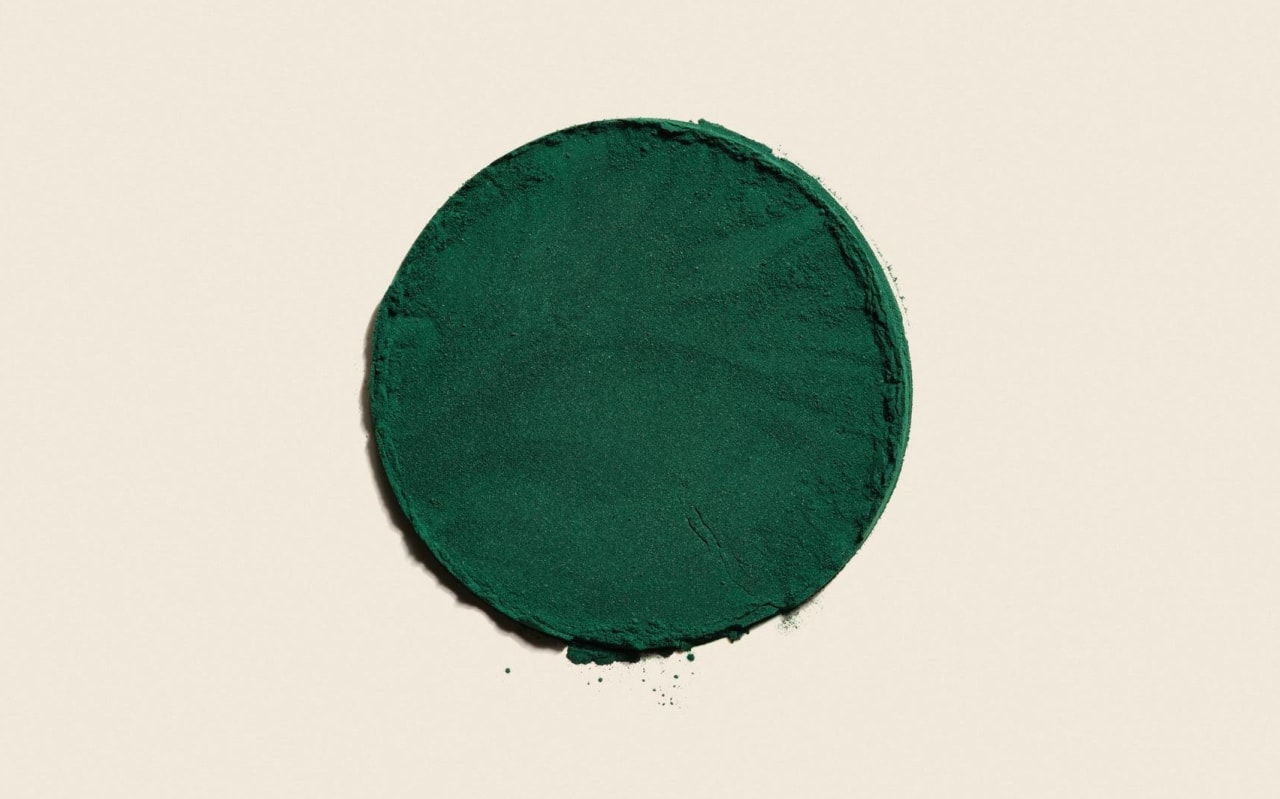
Aroma-Zone Spirulina
REVITALIZING ANTIOXIDANT
The superfood that supports energy and nutritional balance
Rich in protein, iron, and antioxidants such as phycocyanin, spirulina is known for its nutritional richness. It helps support vitality and can be helpful during periods of fatigue or imbalance.

Aroma-Zone Spirulina profile
VEGAN
PRODUCTION METHOD
Spirulina is cultivated in freshwater ponds exposed to sunlight, where it grows in nutrient-rich alkaline water. In organic farming, it is grown under strict monitoring of water quality and cultivation parameters (pH, temperature, oxygenation) to ensure optimal growth.
After harvesting, Spirulina is filtered and then dried at low temperatures to preserve its nutrients. It is then cold-pressed into tablets, without additives.
BIOCHEMICAL COMPOSITION
Often referred to as “ microalgae,” Spirulina is actually a cyanobacterium. It is distinguished by its exceptional nutritional density :
60 to 70% protein : Spirulina is one of the most protein-rich natural foods and provides many amino acids necessary for tissue maintenance and proper bodily function
Phycocyanin : a blue pigment characteristic of Spirulina, known for its antioxidant properties, which helps protect cells against oxidative stress
Chlorophyll : a green pigment essential for photosynthesis; chlorophyll is often associated with detoxifying properties and improved tissue oxygenation
Iron : an essential mineral that aids in the transport of oxygen in the blood, helping to reduce fatigue and support energy levels
B vitamins : vitamins involved in energy production and numerous metabolic processes
Beta-carotene : an antioxidant pigment that is a precursor to Vitamin A, which helps protect cells against oxidative stress
Minerals and trace elements : Spirulina also provides various essential nutrients (Magnesium, Potassium, Zinc…) that contribute to overall nutritional balance.
SUSTAINABILITY / TRACEABILITY
Aroma-Zone Spirulina is grown in France on an aquaculture farm committed to organic farming without pesticides or chemicals. This local, controlled production ensures optimal traceability and strict quality control, particularly regarding the absence of contaminants and heavy metals.

Spirulina : what effect does it have on the body ?
Thanks to its high content of nutrients and antioxidant pigments, Spirulina works on multiple levels.
Its high content of protein and iron helps support vitality and reduce fatigue, particularly by aiding in the transport of oxygen throughout the body.
It also provides antioxidant pigments, such as phycocyanin and carotenoids, which help protect cells against oxidative stress.
Its nutritional density makes it a valuable supplement during periods of increased need, such as for athletes, people following a vegetarian diet, or in cases of temporary fatigue.
Finally, thanks to its high protein and micronutrient content, it is often used as part of a comprehensive nutritional approach to support hair vitality and beauty.
Spirulina : scientifically proven efficiency
Numerous preclinical and clinical studies have highlighted the biological properties of Spirulina, particularly those related to its high content of phycocyanin and micronutrients.
The antioxidant and anti-inflammatory properties of its components are the most well-documented. Phycocyanin helps neutralize free radicals and limit the mechanisms involved in oxidative stress.
Studies also suggest a beneficial effect on certain physiological markers, particularly lipid metabolism and the regulation of the inflammatory response. Research has also observed improvements in certain blood parameters, such as hemoglobin.
In athletes, Spirulina supplementation may help limit the effects of physiological stress associated with intensive training, particularly by supporting certain immune markers.
Regarding the skin, in vitro studies show that Spirulina and its components can positively influence the proliferation of fibroblasts and keratinocytes, as well as the production of collagen.
Safety
A note from Adeline Nalin, our Head Pharmacist and Toxicologist at Aroma-Zone

“Spirulina is well-tolerated by the skin. It contains numerous antioxidant molecules that help combat premature aging of the body’s cells. Cases are rare, but sensitivity to cyanobacteria may exist.
It should be noted that allergies to seafood are primarily linked to specific animal proteins that are absent from Spirulina. Furthermore, the extracts used in cosmetics are purified, which further reduces their allergenic potential.”
Adeline Nalin - Head Pharmacist and Toxicologist
A plant extract safe for your health
A note from our Aroma-Zone Toxicologist
“Spirulina is a natural ingredient; its safety assessment is based on a rigorous analysis of its origin, manufacturing process, and composition (including impurities).
It is considered safe when used in low concentrations in cosmetic products (between 0.1% and 5%).”
Adeline Nalin - Head Pharmacist and Toxicologist
Who is it for ?
People prone to temporary fatigue, athletes, people following a vegetarian or vegan diet, and those seeking to support vitality or hair health.
Dull, tired, irritated, and sensitive skin, as well as problem or mature skin.
What issues does this address ?
Temporary fatigue, increased nutritional needs, iron intake, vitality support, hair beauty treatment.
Boosts skin vitality, combats oxidative stress, promotes detoxification.
What Spirulina does for the body
Exceptionally nutrient-rich : Spirulina is a particularly valuable dietary supplement for supporting daily nutritional balance
Complements protein intake, which is essential for maintaining tissues and the body’s proper functioning
Its iron content also contributes to normal energy metabolism and the reduction of fatigue
Provides antioxidant pigments such as phycocyanin and beta-carotene, which help protect cells against oxidative stress
Its nutritional density makes it a particularly popular supplement during periods of fatigue, among athletes, or in diets low in animal products.
Spirulina : an essential ingredient for the body
Precautions
Spirulina is not a substitute for a varied and balanced diet or a healthy lifestyle. Follow the recommended daily doses.
Pregnant or breastfeeding women should consult a healthcare professional.
Spirulina is not recommended for people with phenylketonuria, hemochromatosis, high uric acid levels, or muscle or liver conditions. Keep out of reach of children.
The presence of phycocyanin may, in rare cases, cause allergic reactions.
FAQ

Does Spirulina contain Vitamin B12?

Does Spirulina contain Vitamin B12?

Why is Spirulina particularly suitable for vegetarian and vegan diets?

Why is Spirulina particularly suitable for vegetarian and vegan diets?
Spirulina contains no animal-derived ingredients, making it suitable for vegetarian and vegan diets. It is naturally rich in protein and also provides iron—two nutrients that can be harder to obtain in these types of diets. However, the amount consumed at recommended doses remains moderate: spirulina complements the diet but cannot replace a varied and balanced protein intake.

Can spirulina be consumed during pregnancy?

Can spirulina be consumed during pregnancy?
Spirulina can be consumed during pregnancy and breastfeeding, provided you consult a healthcare professional.
Thanks to its high iron and protein content, it can help supplement nutritional intake during a period of increased nutritional needs as part of a balanced diet.

What are the benefits of spirulina for the skin?

What are the benefits of spirulina for the skin?
Thanks to its high antioxidant content, Spirulina helps protect cells against oxidative stress, a factor involved in skin aging. Its high nutritional density of protein, iron, and micronutrients also helps support the body’s overall balance, which can be reflected in the skin’s appearance, particularly in cases of fatigue or a dull complexion. It is therefore often used as part of a holistic “inside-out” approach to support skin that is dull, tired, or exposed to external aggressors.

What is a “superfood”?

What is a “superfood”?
The term “superfood” is generally used to refer to foods that are naturally rich in essential nutrients (vitamins, minerals, antioxidants).
Spirulina is often cited as an example of a superfood due to its exceptional composition: it is concentrated in protein, iron, antioxidant pigments such as phycocyanin, as well as various micronutrients. This richness makes it a valuable supplement for supporting the body, particularly during periods of fatigue or increased nutritional needs.
Spotlight on our specialist editor, Marion Alves De Oliveira

Marion is a Doctor of Pharmacy, naturopath, and life coach. After twelve years in the cosmetics industry, she now guides her clients toward holistic balance and a more mindful lifestyle, drawing on her expertise in sustainable food practices. As the creator of a podcast, she shares her insights to promote a philosophy of living that respects both health and the environment.
Bibliography
1
SKINCARE, Skin,
An Aroma-Zone publication by La Plage
2
Podgórska-Kryszczuk I. Spirulina - An Invaluable Source of Macro- and Micronutrients with Broad Biological Activity and Application Potential.
Molecules. 2024;29(22):5387. doi:10.3390/molecules29225387.
3
Ikeda IK, Sydney EB, Sydney ACN. Potential application of Spirulina in dermatology.
J Cosmet Dermatol. 2022;21(10):4205-4214. doi:10.1111/jocd.14997.
4
Selmi C, Leung PS, Fischer L, et al. The effects of Spirulina on anemia and immune function in senior citizens.
Cell Mol Immunol. 2011;8(3):248-254. doi:10.1038/cmi.2010.76.
5
Zhang Y, Zhang Y, Wu W, et al. Effects of Spirulina supplementation on immune cell parameters in elite college athletes.
Nutrients. 2022;14(20):4346. doi:10.3390/nu14204346.