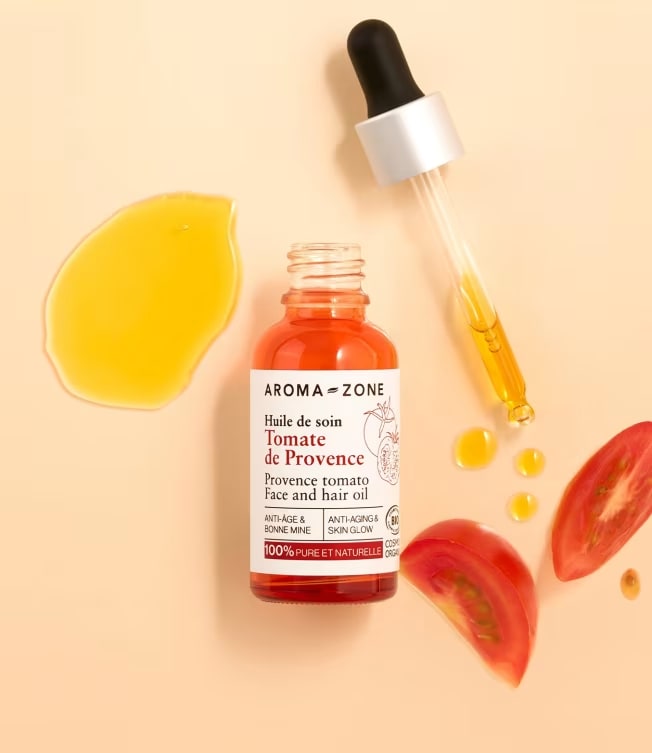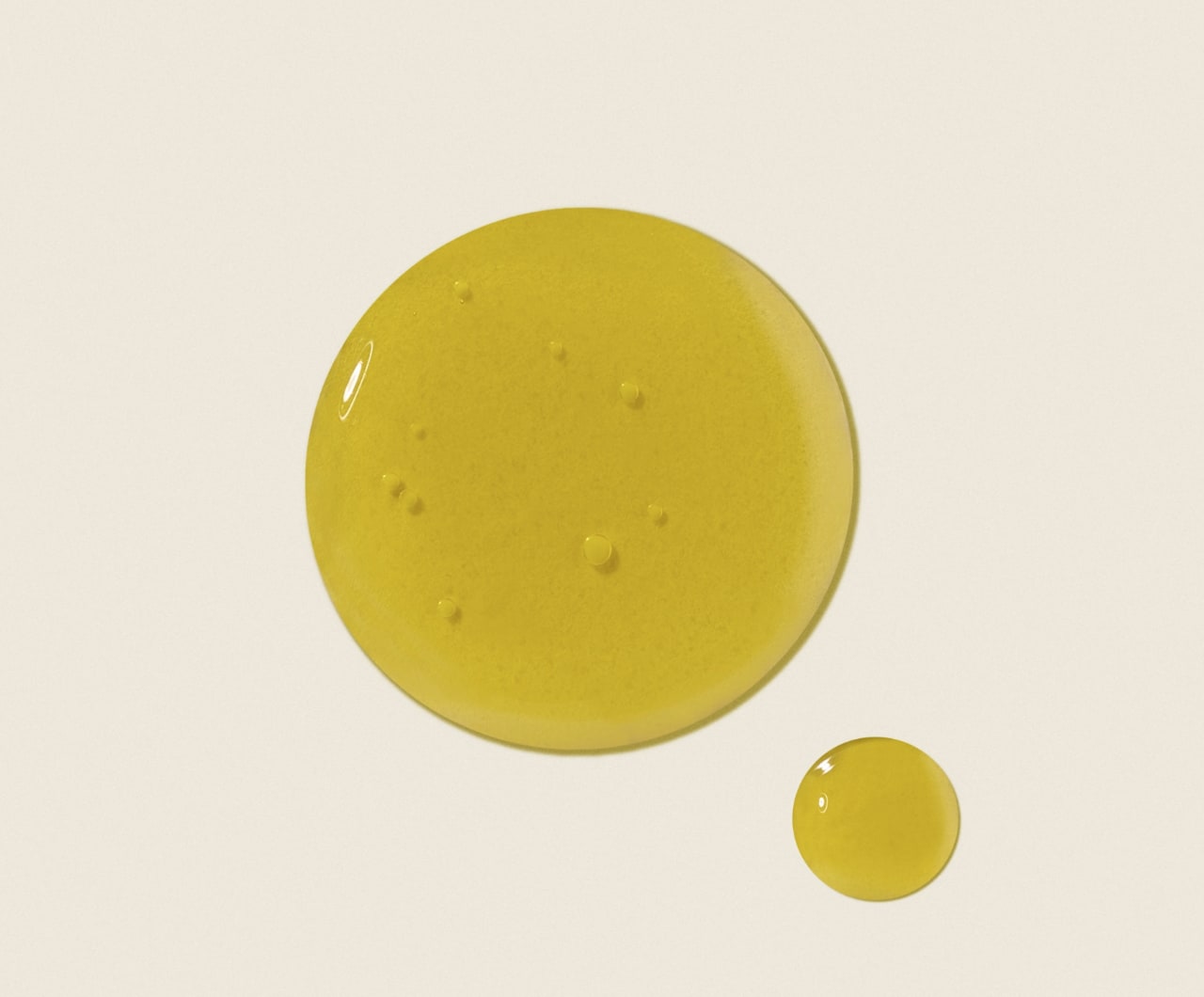
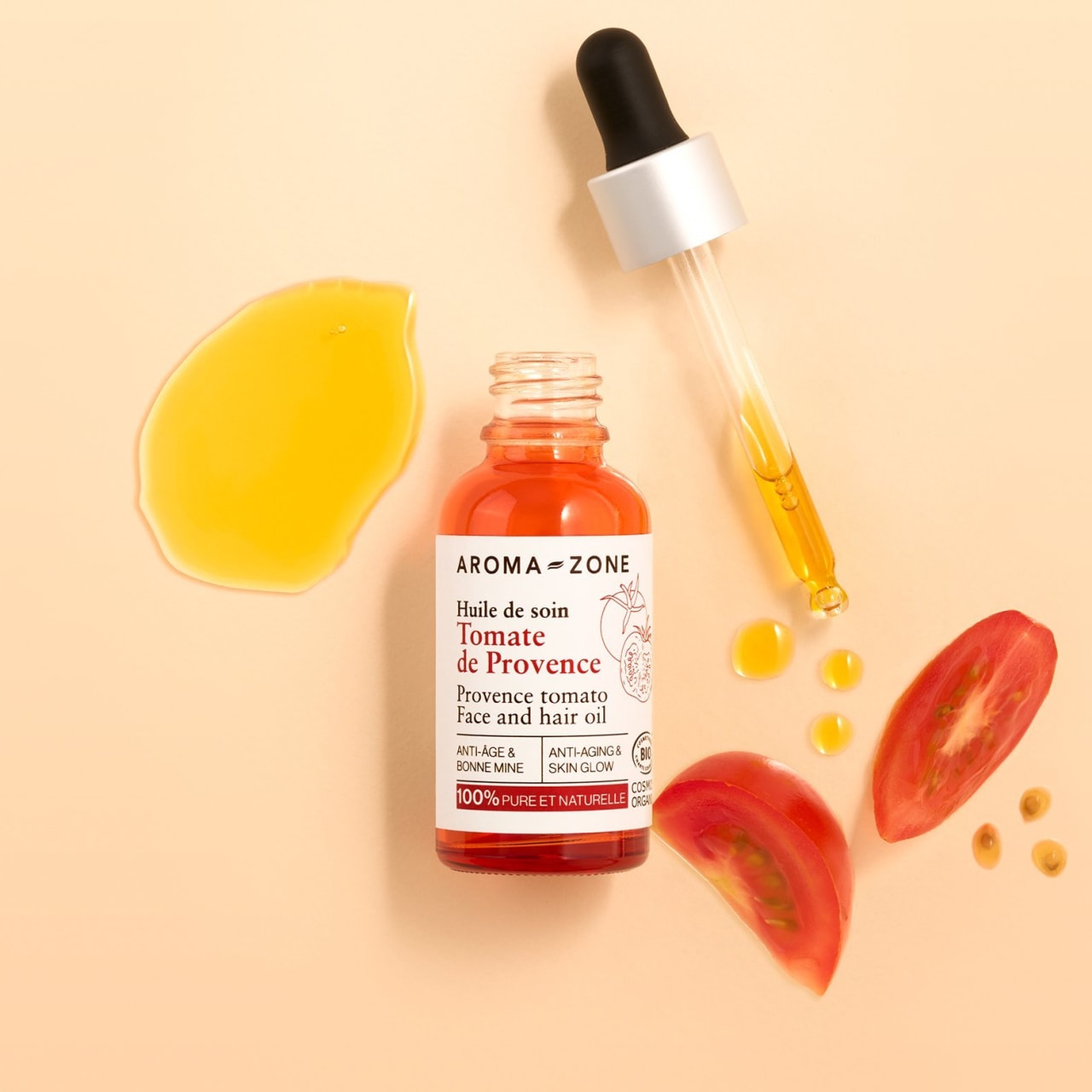
Aroma-Zone Tomato vegetable oil

BRIGHTENING PROTECTIVE ANTI-AGING


Rich in powerful antioxidants, this oil protects the skin from free radicals, combats sun damage, and prevents premature skin aging. Thanks to its lycopene content, it illuminates all skin types with a sun-kissed glow.


Reading time: 0 min.

Tomato oil Aroma-Zone profile

INCI Name : Solanum lycopersicum seed oil

Part of the plant used : Seeds. Tomato seeds typically contain between 20% and 40% oil and are recovered during the pressing of the fruit.

This oil repurposes organic tomato seeds from juice and puree production as part of a sustainable approach.

VEGAN - ORGANIC FARMING

PRODUCTION METHOD

Cold-pressed or supercritical CO2 extraction.

BIOCHEMICAL COMPOSITION

  • Triglycerides (>98%) :

    • of which saturated fatty acids : palmitic acid (5–15% of fatty acids)

    • of which unsaturated fatty acids : linoleic acid (omega-6, 45–60% of fatty acids), oleic acid (omega-9, approximately 15–30% of fatty acids), alpha-linolenic acid (1–7%)

  • Phytosterols (approximately 0.5%)

  • Other bioactive compounds : tocopherols, carotenoids (lycopene), polyphenols.

ACTIVE INGREDIENTS

Tomato seed oil is rich in linoleic acid, one of the most important essential fatty acids for skin health. This unsaturated fatty acid allows the oil to penetrate the skin, leaving it feeling silky smooth. Linoleic acid is a component of ceramides and helps maintain the integrity of the skin barrier, also known as the “stratum corneum.” Thanks to this, tomato seed oil protects the skin from dehydration, nourishes it, and soothes it.

This oil is also rich in carotenoids, natural pigments, and more specifically in lycopene. It is lycopene that gives the tomato its bright red color. This molecule is a powerful antioxidant : it helps neutralize free radicals that accumulate in the skin following exposure to the sun, pollution, or tobacco. These free radicals damage tissues, dull the complexion, and cause premature skin aging. Thanks to its lycopene content, tomato seed oil restores radiance to dull and tired complexions.

SUSTAINABILITY

Aroma-Zone Tomato Seed Oil is part of an initiative to make use of plant byproducts. It is obtained from the seeds of organic tomatoes produced during the manufacturing of juice and purees, recovered during food processing in Provence.

These seeds, naturally rich in essential fatty acids and antioxidants, are typically underutilized despite containing approximately 20% oil. Their conversion into vegetable oil thus allows for the repurposing of an existing resource, while creating a rare cosmetic oil rich in lycopene and carotenoids.

Sourced from a local, short-supply-chain network, this organic oil combines cosmetic quality, traceability of raw materials, and the sustainable use of plant resources.


Tomato vegetable oil : scientifically proven efficiency

Lycopene is a molecule that has been extensively studied for its antioxidant and anti-aging properties. In a study examining its skin-beneficial properties, volunteers applied an emulsion gel containing lycopene. After 12 weeks, their skin was more hydrated and elastic. Their redness had also decreased.

Skin tolerance

A note from Adeline Nalin, our Head Pharmacist and Toxicologist at Aroma-Zone

“Solanum Lycopersicum Seed Oil consists mainly of polyunsaturated fatty acids (primarily linoleic acid). This oil is considered safe by the Council on Ingredient Review and other reviews. It causes little irritation, and no cases of sensitization have been reported in the literature. Note that the proteins contained in the seeds have been identified as potential allergens in people sensitized to tomatoes (through dietary exposure)—but the refined oil does not contain these proteins (or only in trace amounts); however, a residual risk of skin allergy in highly sensitive individuals cannot be completely ruled out.”

Adeline Nalin - Head Pharmacist and Toxicologist

A plant extract safe for your health

A note from our Aroma-Zone Toxicologist

“Our tomato skincare oil has undergone ocular and skin tolerance tests, which confirm excellent local tolerance.”

Adeline Nalin - Head Pharmacist and Toxicologist

A note from the Phytotherapist


“You’re familiar with Carrot Oil and its healthy glow effect; now, here’s Tomato Oil for the same purpose. Just as rich in antioxidants thanks to the lycopene it contains, it gives you a healthy glow, evens out your complexion, and slows the effects of aging. Virtually unknown, it deserves to be better known, especially since the supply chain is local. I invite you to combine it with Carrot Oil Macerate to enhance its effects. By adding a few drops of Rose Geranium essential oil (up to 1%) to this treatment, you’ll create a truly regenerating facial treatment.

Consult the precautions for use for each essential oil before use and follow the recommended dosages.”


Caroline Gayet - Phytotherapist

For which skin types ?

All skin types : dull skin, sun-exposed skin, dry skin, sensitive and reactive skin, dehydrated skin, mature skin.

What issues does this address ?

Lack of radiance, uneven complexion, oxidative stress, photoaging, loss of firmness and elasticity, fine lines and wrinkles.

What Tomato vegetable oil does for the skin

  • Sunless healthy glow and brightening effect

  • Protects the skin from oxidative stress

  • Promotes skin regeneration

  • Nourishes, softens, and soothes the skin

  • Keeps skin hydrated

  • Reduces the appearance of wrinkles

  • Tightens the facial contours.

Tomato vegetable oil : an essential ingredient for the skin

Aroma-Zone Organic Tomato Vegetable Oil from Provence

Precautions

FAQ

Does the extraction process preserve the lycopene and beta-carotene in this oil?

Yes. Aroma-Zone Tomato skincare oil is obtained through supercritical CO₂ extraction, a process free of chemical solvents, carried out at low temperatures. This method effectively extracts the lipid compounds from tomato seeds while preserving the naturally occurring carotenoids—including lycopene and beta-carotene—which are sensitive to heat and oxidation. The result is a highly pure oil that remains true to the tomato’s natural profile.

How can you recognize a high-quality tomato vegetable oil?

The quality of a tomato vegetable oil is based on both laboratory-verified analytical criteria and clearly identified sourcing and manufacturing standards.

From an analytical standpoint, a high-quality oil is characterized by:

  • A high content of unsaturated fatty acids, particularly linoleic acid (omega-6), ensuring good skin affinity

  • A measured presence of carotenoids, including lycopene, which are responsible for the orange-to-red color and antioxidant activity

  • Low oxidation, as indicated by controlled peroxide values, ensuring the oil’s freshness and stability

  • High purity, with a composition consisting mainly of triglycerides.

The quality of a tomato vegetable oil also depends on a clearly identified botanical origin (Solanum lycopersicum), a respectful extraction method—such as supercritical CO₂ extraction without chemical solvents or cold pressing—as well as the use of raw materials from organic farming. It also relies on a clearly traceable origin, with a short supply chain and an approach that maximizes the use of plant by-products. All of these criteria ensure a stable, well-tolerated cosmetic oil that remains true to the natural richness of the tomato.

Does tomato oil help strengthen the skin’s natural defenses against UV rays?

Tomato Vegetable Oil is in no way a substitute for sunscreen. However, thanks to its natural richness in lycopene and other antioxidant carotenoids, it helps the skin better cope with oxidative stress caused by sun exposure. These compounds help neutralize free radicals generated by UV rays, which are known to accelerate skin aging and dull the complexion. It is therefore particularly beneficial as a complementary skincare product, either before or after sun exposure.

How does Tomato Oil differ from Carrot Oil (Carrot Oil Macerate)?

Tomato Vegetable Oil and Carrot Oil Macerate both provide a healthy glow, but differ in their nature and composition. Tomato Oil is a vegetable oil extracted directly from the seeds, naturally rich in lycopene and linoleic acid. It has a fine, penetrating texture and significant antioxidant properties. Carrot oil macerate is obtained by macerating the roots of carrots in a carrier oil (sunflower oil) and is distinguished by its high beta-carotene content. It is primarily designed to enhance skin radiance and prepare the skin for sun exposure.

Both oils can be combined in a routine for a complementary brightening and antioxidant effect.

Why is lycopene of particular interest compared to beta-carotene?

Lycopene and beta-carotene belong to the carotenoid family, but their properties differ. Lycopene is known for its particularly high antioxidant power, which is superior to that of beta-carotene under certain conditions. It effectively neutralizes free radicals generated by UV rays, pollution, or oxidative stress. Unlike beta-carotene, lycopene is not a precursor to Vitamin A, but it is of particular interest for the prevention of photoaging and the protection of skin radiance.

How does Tomato Vegetable Oil differ from other antioxidant-rich vegetable oils?

Tomato Vegetable Oil is naturally rich in lycopene, a carotenoid with strong antioxidant properties, rarely found in such high concentrations in vegetable oils. This unique quality makes it particularly beneficial for skin exposed to external aggressors, as a complement to a skincare routine designed to preserve the skin’s radiance.

Compared to argan oil, which is primarily known for its vitamin E content and nourishing fatty acids, tomato oil stands out for its carotenoid profile and natural illuminating effect. Compared to Grape Seed Oil, prized for its lightness and high polyphenol content, offers a different antioxidant approach, more focused on neutralizing oxidative stress linked to environmental exposure. ThePomegranate oil, on the other hand, is renowned for its unique composition of rare fatty acids and its effect on skin suppleness, while Tomato oil complements these benefits by contributing to a radiant complexion.

These plant-based oils can thus be used in combination, depending on the skin’s needs, as part of a personalized natural skincare routine.

Spotlight on our specialist editor, Marion Alves De Oliveira

Marion is a Doctor of Pharmacy, naturopath, and life coach. After twelve years in the cosmetics industry, she now guides her clients toward holistic balance and a more mindful lifestyle, drawing on her expertise in sustainable food practices. As the creator of a podcast, she shares her insights to promote a philosophy of living that respects both health and the environment.

Bibliography

1

SOINS, La peau, une parution Aroma-Zone aux éditions La Plage

2

KRIST, S. (2020). Vegetable Fats and Oils; Springer Nature.

3

Sangeetha, K.; Ramyaa, R. B.; Mousavi Khaneghah, A.; Radhakrishnan, M. Extraction, Characterization, and Application of Tomato Seed Oil in the Food Industry: An Updated Review. Journal of Agriculture and Food Research 2023, 11, 100529.

4

Sohail, M.; Muhammad Faran Ashraf Baig, M.; Akhtar, N.; Chen, Y.; Xie, B.; Li, B. Topical Lycopene Emulgel Significantly Improves Biophysical Parameters of Human Skin. European Journal of Pharmaceutics and Biopharmaceutics 2022, 180, 281–288.

5

Burnett, C. L., Fiume, M. M., Bergfeld, W. F., Belsito, D. V., Hill, R. A., Klaassen, C. D., Liebler, D. C., Marks, J. G., Shank, R. C., Slaga, T. J., Snyder, P. W., Andersen, F. A. Safety Assessment of Plant-Derived Fatty Acid Oils. International Journal of Toxicology, 2017, 36(Supplement 3), 1S–140S. Cosmetic Ingredient Review (CIR).