Aroma-Zone Enzymes active ingredient

EXFOLIANT


A gentle source of exfoliation, enzymes restore the skin’s radiance without ever irritating it.


Reading time: 0 min.

Enzymes Aroma-Zone profile

INCI Name : Protease / Lipase / Papain

VEGAN

BIOCHEMICAL COMPOSITION

The enzymes used in cosmetics are proteases and lipases. They break down proteins and fats.

SUSTAINABILITY / TRACEABILITY

Naturally derived active ingredient. The enzymes used by Aroma-Zone are naturally derived and produced using biotechnology (fermentation).

Enzymes : what effect does it have on the skin ?

Enzymes are biomolecules (proteins) that catalyze (i.e., facilitate and accelerate) biochemical reactions in living organisms. There are many types of enzymes, each specific to a given chemical reaction.

The secret behind their exfoliating action on the skin : the enzymes used in cosmetics break the bonds between the surface cells of the epidermis. These cells then gently peel away.

Enzymes : scientifically proven efficiency

As early as the 1960s, researchers demonstrated the ability of enzymes to exfoliate the epidermis.

Skin tolerance

A note from Adeline Nalin, our Head Pharmacist and Toxicologist at Aroma-Zone

"Natural enzymes, used in cosmetics as exfoliants, dissolve dead skin cells without damaging the skin. They target keratin and other proteins in the stratum corneum. Enzymes work by attacking only dead cells, which are rich in inactive proteins, without harming living cells. Enzymatic exfoliation is considered safe for most skin types and is recommended for those with sensitive skin. The enzymes’ action is more superficial and therefore gentler, offering good skin tolerance."

Adeline Nalin - Head Pharmacist and Toxicologist

A safe ingredient for your health

A note from our Aroma-Zone Toxicologist

“Enzymatic skincare is considered a gentle alternative that preserves the skin barrier and has a targeted action since it acts only on dead cells. It is a real asset for sensitive skin. However, it is important not to use them if the skin barrier is too weakened (e.g., very dry or irritated skin) and not to combine them with other harsh ingredients that could increase the risk of irritation.”

Adeline Nalin - Head Pharmacist and Toxicologist

A note from the Dermatologist


“If you’re looking to gently exfoliate your skin, you can opt for enzymes. They help remove dead skin cells and excess sebum, while making the skin more radiant and respecting the skin barrier—unlike other more powerful exfoliants or mechanical scrubs. In my opinion, this is a good choice for skin that is both sensitive and dull/oily/or uneven in texture. Tip : Use it 2 or 3 times a week, and don’t forget to moisturize your skin after each application.”


Dr. Dima Haidar - Dermatologist

Formulation focus with the Aroma-Zone R&D laboratory

The enzymes used combine proteases and lipases, two families with complementary actions.

Proteases target proteins in the stratum corneum, particularly those that hold dead cells together, facilitating their removal.

Lipases, on the other hand, act on lipid residues present on the skin’s surface, such as excess sebum.

This dual action provides exfoliation that is both effective and particularly gentle on sensitive skin.

For which skin types ?

All skin types, dull skin, oily skin.

What issues does this address ?

Uneven complexion, lack of radiance, hyperpigmentation spots, excess sebum.

What Enzymes do for the skin

  • Gives the complexion a radiant glow

  • Refines and evens out skin texture

  • Regulates excess sebum.

Enzymes : an essential ingredient for the skin

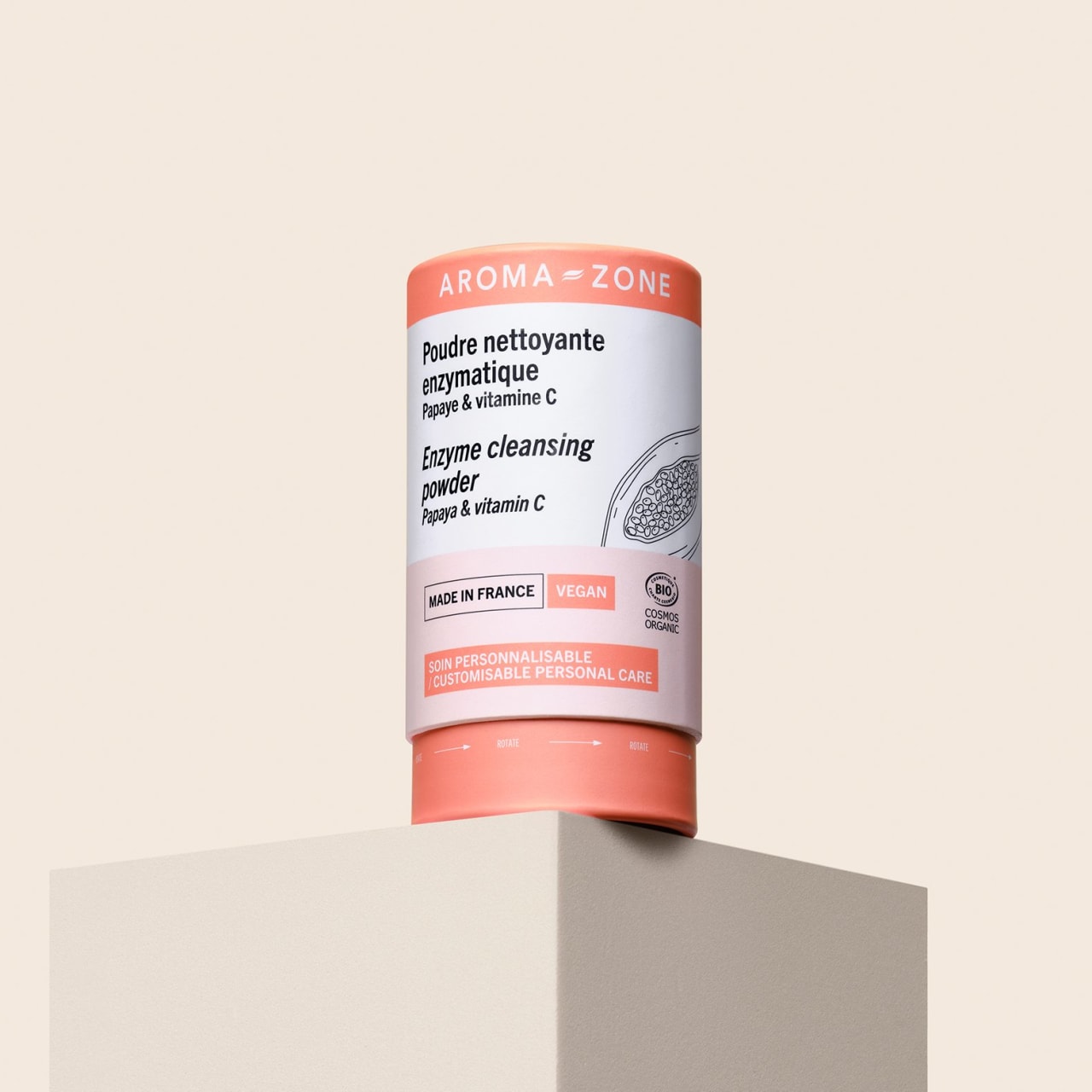
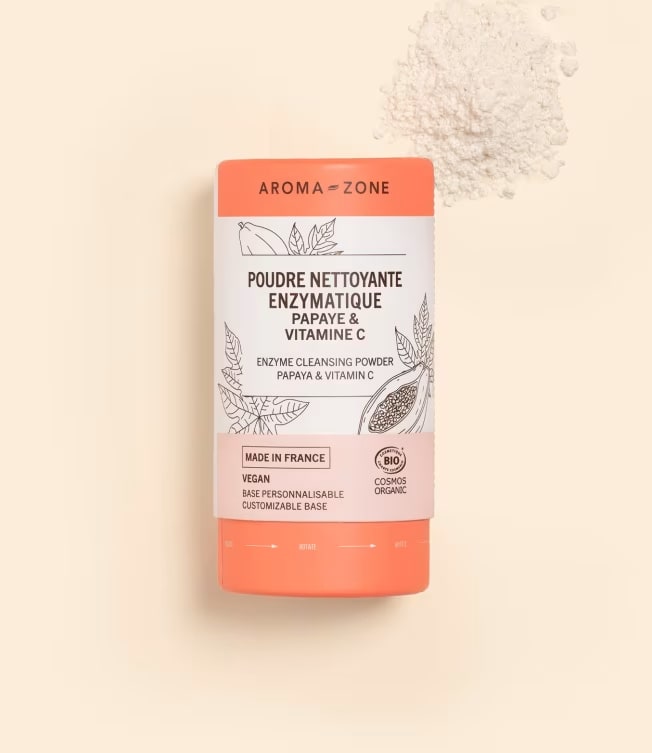
Enzymatic & Vitamin C Cleansing Powder

FAQ

What is the difference between enzymatic exfoliation and chemical exfoliation (AHA/BHA)?

Grain-free scrubs fall into two categories: enzymatic exfoliants and acid-based exfoliants (AHA/BHA).

Natural enzymes (papain, proteases, lipases…) help gently and gradually remove dead skin cells from the surface. Their action is considered the gentlest form of exfoliation, as it is non-abrasive and does not involve a significant change in skin pH.

AHAs and BHAs are acids that temporarily alter the skin’s pH to loosen dead skin cells. Their action can be more intense depending on the concentration and skin sensitivity.

Another difference: since plant enzymes are more difficult to stabilize, they are often sold in powder form to be activated with water.

How do natural enzymes target dead skin cells without irritating the skin?

Enzymes are proteins capable of catalyzing specific biological reactions. In cosmetics, certain enzymes act on the proteins found in dead skin cells on the surface of the epidermis. They facilitate their natural shedding without mechanical action or friction. This targeted action helps smooth out imperfections and refine skin texture, while respecting the skin barrier.

How do natural enzymes contribute to cosmetics that are gentler on the skin and the microbiome?

Enzymes used in cosmetics are selected for their specific and controlled action. By promoting gentle exfoliation, they limit skin overstimulation that can compromise the skin barrier. A healthy skin barrier helps maintain the skin’s overall balance, including that of its microbiome, that is, the collection of microorganisms naturally present on its surface.

How long does it take to see the effects of enzymatic exfoliation?

From the very first use, skin appears clearer and more radiant after rinsing. With regular use, skin texture gradually becomes smoother and more even.

Can natural enzymes be used on acne-prone skin?

Yes, natural enzymes are particularly well-suited for acne-prone skin. By helping to remove dead skin cells and excess sebum accumulated in the pores, they help purify the skin without abrasion. Their gentle nature allows for regular use, or daily use as part of a double cleansing routine.

Spotlight on our specialist editor, Marion Alves De Oliveira

Marion is a Doctor of Pharmacy, naturopath, and life coach. After twelve years in the cosmetics industry, she now guides her clients toward holistic balance and a more mindful lifestyle, drawing on her expertise in sustainable food practices. As the creator of a podcast, she shares her insights to promote a philosophy of living that respects both health and the environment.

Bibliography

1

SKINCARE, The Skin, an Aroma-Zone publication by La Plage

2

Dobson, R. L.; Bosley, L. The Effect of Keratinase on Human Epidermis*. Journal of Investigative Dermatology 1963, 41 (3), 131–133.

3

Gonçalves, S. Use of Enzymes in Cosmetics: Proposed Enzymatic Peel Procedure. 2021, 1, 29–35.