Aroma-Zone Fruit Acids - AHA active ingredient

RADIANT REGENERATING EXFOLIANT


The natural active ingredient with a skin-renewing effect


Exfoliating, purifying, and regenerating, AHA fruit acids are the active ingredients that transform dull, tired skin. Thanks to their skin-renewing effect, they boost the complexion's radiance and give it an instant glow.


Reading time: 0 min.

Fruit Acids - AHA Aroma-Zone profile

INCI Name : Aqua & Vaccinium myrtillus fruit extract & Saccharum officinarum extract & Citrus aurantium dulcis fruit extract & Citrus limon fruit extract & Acer saccharum extract

VEGAN

BIOCHEMICAL COMPOSITION

Aroma-Zone’s AHA - Fruit Acids active ingredient contains 45 to 55% fruit acids, including lactic, glycolic, and tartaric acids. Glycolic acid is the smallest of the AHAs, so it is best absorbed by the skin and the most active.

TRACEABILITY & SUSTAINABILITY

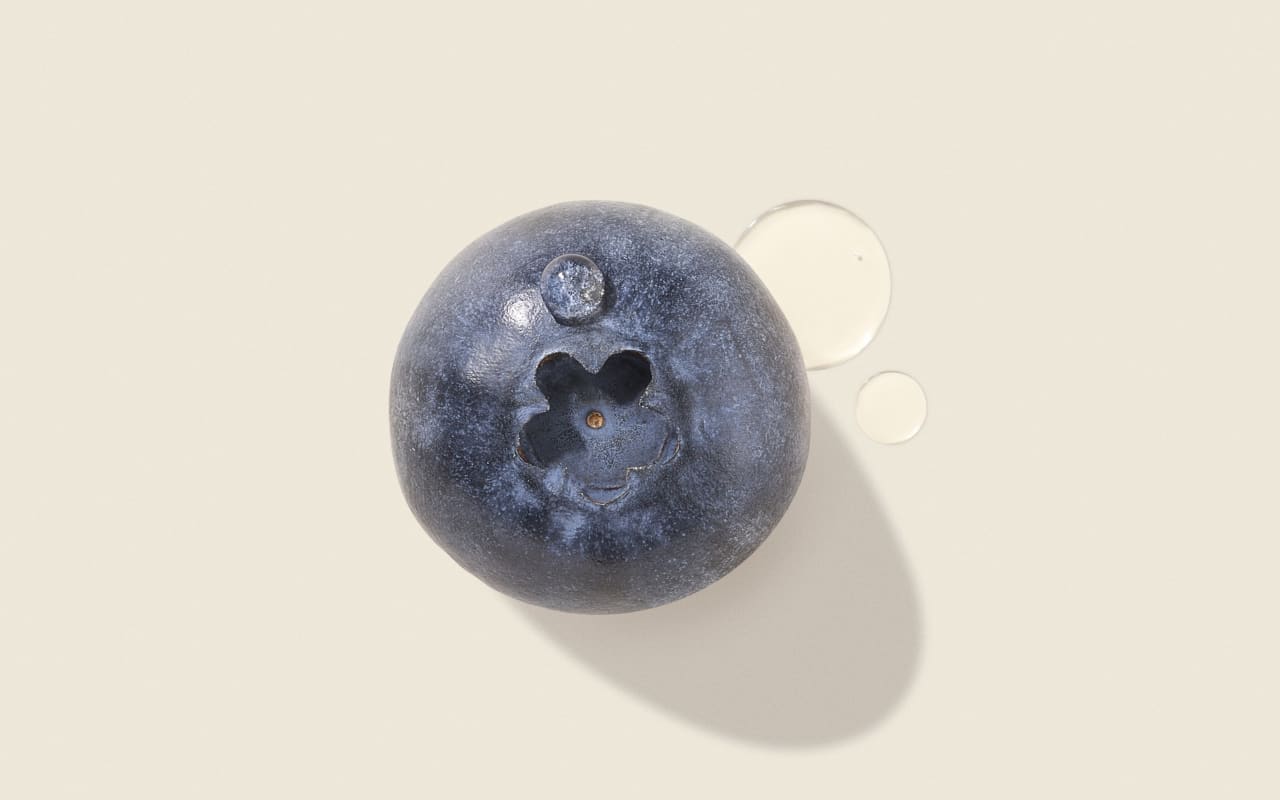
Naturally derived active ingredient. The AHAs used by Aroma-Zone are derived from fruits and plants : blueberry, sugarcane, orange, lemon, and maple.

Fruit Acids - AHA : what effect does it have on the skin ?

Alpha-hydroxy acids (AHAs), or fruit acids, are organic acids naturally found in many fruits.

They act as exfoliants : they remove dead skin cells from the surface of the epidermis—known as corneocytes—by breaking down the bonds that hold them together. This refines skin texture, evens out the complexion, and reduces imperfections. 

AHAs also stimulate cell renewal. They increase the synthesis of collagen, which is responsible for skin firmness, and that of glycosaminoglycans (such as hyaluronic acid), which are responsible for skin hydration. The skin is plumped up and wrinkles are smoothed out.

Fruit Acids - AHA : scientifically proven efficiency

A study* has demonstrated the effectiveness of applying a lotion containing AHAs in reducing signs of photoaging in the epidermis and dermis. Collagen density increases, elastin fibers improve in quality, and glycosaminoglycan levels rise.

*See the bibliography at the end of this article.

Skin tolerance

A note from Adeline Nalin, our Head Pharmacist and Toxicologist at Aroma-Zone

“AHAs are generally recognized as safe; however, due to their exfoliating properties, they can cause specific side effects, including mild skin irritation, redness, and a tingling sensation upon application. These side effects are generally temporary, however, and tend to subside with continued use of AHAs or by adjusting their concentration or frequency of application.

It is important to understand the underlying mechanism of these side effects. Indeed, the exfoliation process, which promotes the removal of dead skin cells, disrupts the skin’s barrier function, leading to increased transepidermal water loss and, consequently, heightened sensitivity. It also leads to a thinning of the stratum corneum, thereby reducing its ability to provide a natural barrier against UV rays. Consequently, the skin becomes more sensitive to the sun. It is therefore essential to use sunscreen and avoid sun exposure while using AHAs, and even for up to a week after the last application.

A gradual approach using lower concentrations of AHAs is particularly beneficial for people with sensitive or reactive skin. This method allows the skin to acclimate gradually, thereby reducing the risk of adverse reactions. Additionally, formulating AHA-based products at a lower pH can enhance their efficacy while minimizing skin irritation. By adjusting the pH, the exfoliating properties of AHAs can be maintained while minimizing their potential to disrupt the skin barrier and cause irritation.

Incorporating soothing and moisturizing ingredients alongside AHAs can further improve the tolerability of topical formulations and strengthen the skin barrier function.”


Adeline Nalin - Head Pharmacist and Toxicologist

A safe ingredient for your health

A note from our Aroma-Zone Toxicologist

“The recommended concentrations allow for gentle exfoliation and help maintain skin health. It is important to note that determining the optimal concentration of AHA requires taking individual skin types into account.

The use of AHAs is safe at the concentrations found in our cosmetic products.

However, it is important to follow certain guidelines for optimal use: introduce them gradually, avoid combining them with irritating active ingredients at the very beginning, monitor your skin’s tolerance—if persistent redness occurs, space out or discontinue use—and always apply sunscreen.”

Adeline Nalin - Head Pharmacist and Toxicologist

A note from the Dermatologist


“For me, AHAs are a must-have in any anti-aging, anti-acne, or anti-dullness routine thanks to their exfoliating action. Be careful, though—there are many types of AHAs, and their concentrations (and thus their potential for irritation) vary widely.

My advice: introduce them gradually, preferably applying them in the evening 2 or 3 times a week, while making sure to use sunscreen, as they can make the skin more sensitive to the sun.

Spoiler: Like any exfoliant, they may cause a "purge" at the start of use.

Warning: AHAs are not suitable for sensitive, dry, or irritated skin.”


 Dr. Dima Haidar - Dermatologist

Formulation focus with the Aroma-Zone R&D laboratory

AHAs are fruit extracts that encompass a wide range of acids. The maximum recommended concentration is 10%, but there are no strict regulations regarding this. AHAs acidify the formula, so it is necessary to adjust the pH with buffering agents to prevent it from becoming too low.  Our glycolic acid-based serum has a pH between 3.8 and 4.2.

AHAs are used to perform a so-called "chemical" peel, as opposed to enzymatic or mechanical peels.

For which skin types ?

The AHA active ingredient is suitable for dull skin, mature skin, and skin with imperfections.

What issues does this address ?

This active ingredient helps address lack of radiance, uneven skin tone, hyperpigmentation, fine lines and wrinkles, as well as blackheads and whiteheads.

What Fruit Acids - AHA do for the skin

  • "Skin-renewing" effect

  • Boost the complexion’s radiance

  • Smooth out fine lines and wrinkles

  • Reduce imperfections

  • Remove dead skin cells

  • Stimulate cell renewal

  • Smooth fine lines and signs of aging

  • Reduce dark spots and imperfections

  • Allow for better absorption of subsequent skincare products.

Fruit acids - AHA : an essential ingredient for the skin

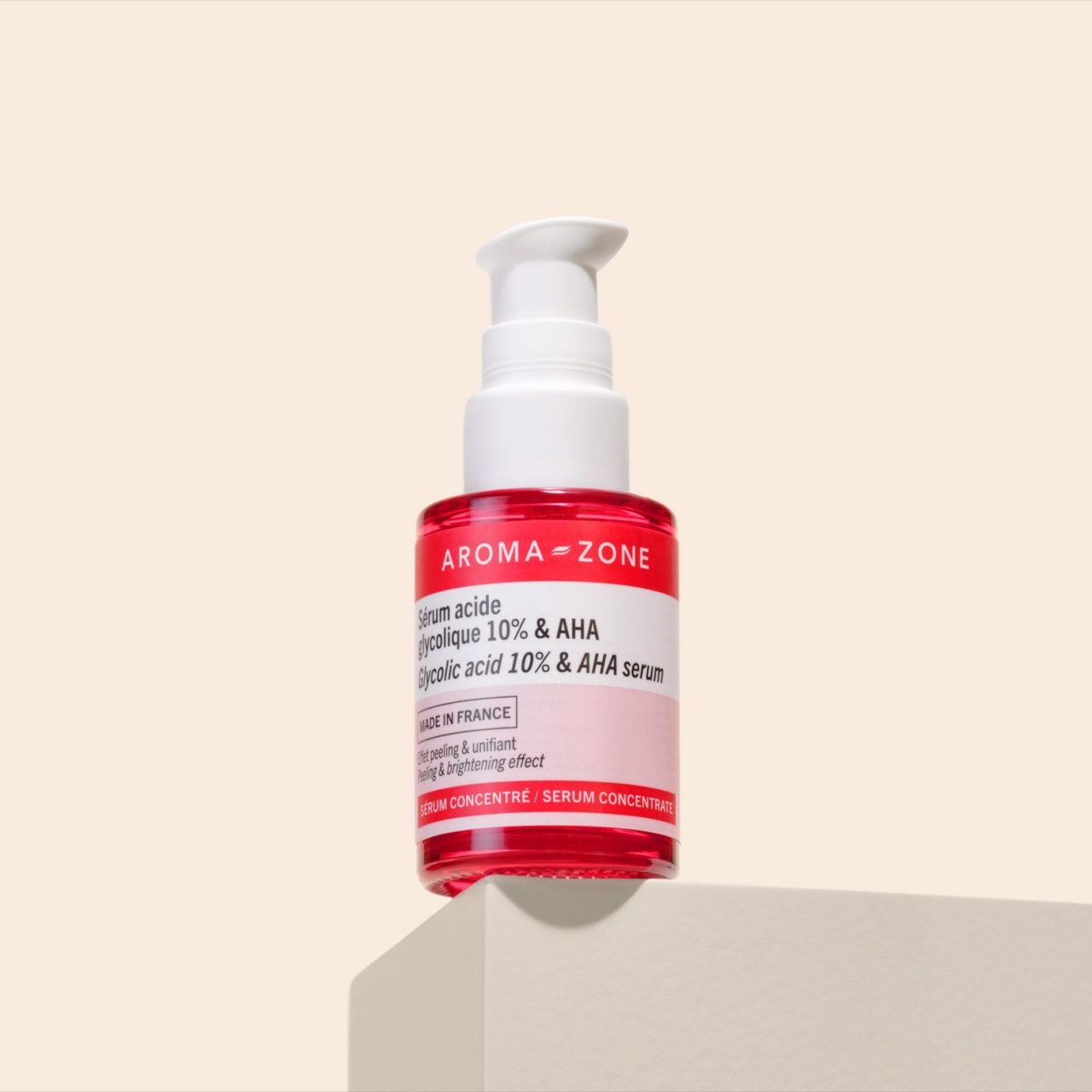
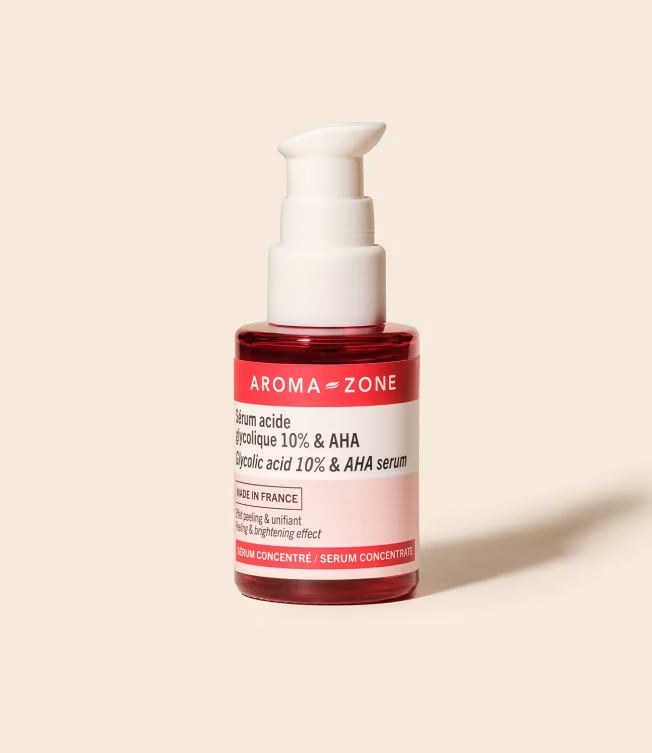
10% Glycolic Acid & AHA Concentrated Serum

FAQ

What are the differences between AHA and BHA?

AHA (alpha-hydroxy acids), such as glycolic acid or lactic acid, act primarily on the skin’s surface to exfoliate and smooth the skin texture, while BHA (beta-hydroxy acids), such as salicylic acid, have a particular affinity for sebum-rich areas, making them better suited for pores and blemishes.

Both provide powerful keratolytic and exfoliating action, but each offers more or less targeted benefits depending on your specific concerns.

  • For pimples, blackheads, ingrown hairs, enlarged pores, excess sebum, or dry or oily dandruff: turn to salicylic acid. It is one of the essential natural active ingredients for caring for oily and/or acne-prone skin. Salicylic acid also has a soothing effect, which is not the case with fruit acids

  • For skin spots, sun-damaged skin, skin affected by smoking or pollution, dull complexion, wrinkles, fine lines, acne scars, or rough skin: opt instead for AHA fruit acids. These active ingredients help renew your skin in the blink of an eye, while addressing the signs of aging.

What are the precautions for using AHAs (fruit acids)?

These are powerful active ingredients; always follow the recommended dosages. On sensitive skin, start with a fairly low dosage. Discontinue use if irritation occurs. Do not use if you are allergic to aspirin or salicylic compounds. Test your preparations on the inside of your elbow for at least 48 hours to ensure no adverse reactions occur.

Which acids should not be mixed?

AHA fruit acids pair very well with some of our flagship active ingredients: 

  • Niacinamide: works well with AHAs; when used at the correct concentrations, it can help soothe and even out the complexion

  • Hyaluronic acid and polyglutamic acid: perfectly compatible with AHAs, they boost hydration and help maintain skin comfort

  • AHAs (fruit acids) also combine with soothing active ingredients, such as the active ingredient Bisabolol or Allantoin. This combination helps increase the tolerance of sensitive skin to fruit acids.

However, caution is advised with certain active ingredients: 

  • Azelaic acid: This is also an exfoliant. Therefore, it is advisable not to use them at the same time; wait until you have finished using one before starting a routine with the other, to minimize the risk of discomfort

  • Retinal and bakuchiol: Do not use directly in combination with AHAs to avoid excessive exfoliation. As with azelaic acid, it is recommended not to use them in the same routine or during the same period. 

In general, we do not recommend combining them with alkalizing ingredients. In fact, fruit acid AHAs are acidic, and the pH of formulas containing them must remain between 3.8 and 5.5 for optimal effectiveness. This is why fruit acid AHAs are also incompatible with clays, as clays are alkaline. Finally, fruit acids (AHAs) should not be added to our peel-off mask (which does not work in an acidic environment) or to vitamin C (L-ascorbic acid), as its effectiveness also depends on a specific pH that is not compatible with that required by AHAs.

AHAs and the sun—is there a risk?

It depends on the dosage.

To summarize briefly, the active ingredient AHA (fruit acids) is not photosensitizing. Due to their exfoliating effect, AHAs can very slightly thin the stratum corneum (the thickness of the epidermis) and thus reduce the skin’s ability to protect itself from the sun. This is why you may sometimes read that fruit acids and sun exposure don’t mix well.

However, this depends on the type of product used, the frequency of use, and the concentration of fruit acids. Applying a fruit acid mask every two weeks will not have the same effects as daily use of a highly concentrated AHA serum.

Always apply sunscreen with a high SPF when exposed to the sun (regardless of the type of skincare product you use!).

If you use our 10% Glycolic Acid & AHA Concentrated Face Serum, apply it only in the evening, use daily sunscreen, and avoid sun exposure for up to one week after the last application.

Spotlight on our specialist editor, Delphine Duc.

Delphine DUC, a biological engineer specializing in cosmetology, has been passionate about the field of cosmetics for nearly 10 years. I started making my own homemade cosmetics using Aroma Zone products to address my skin concerns, then decided to train as a cosmetologist, and finally to create a custom-made cosmetics brand to address everyone’s unique skin concerns.

Bibliography

1

SKIN CARE, The Skin, an Aroma-Zone publication by La Plage

2

Babilas, P.; Knie, U.; Abels, C. Cosmetic and Dermatologic Use of Alpha Hydroxy Acids. JDDG

3

Baldo, A.; Bezzola, P.; Curatolo, S.; Florio, T.; Lo Guzzo, G.; Lo Presti, M.; Sala, G. P.; Serra, F.; Tonin, E.; Pellicano, M.; Pimpinelli, N.

Efficacy of an Alpha-Hydroxy Acid (AHA) Based Cream, Even in Monotherapy, in Patients with Mild-Moderate Acne. G Ital Dermatol Venereol 2010, 145 (3), 319–322.

4

Ditre, C. M.; Griffin, T. D.; Murphy, G. F.; Sueki, H.; Telegan, B.; Johnson, W. C.; Yu, R. J.; Van Scott, E. J.

5

Smith, W. P. Comparative Effectiveness of α-Hydroxy Acids on Skin Properties.