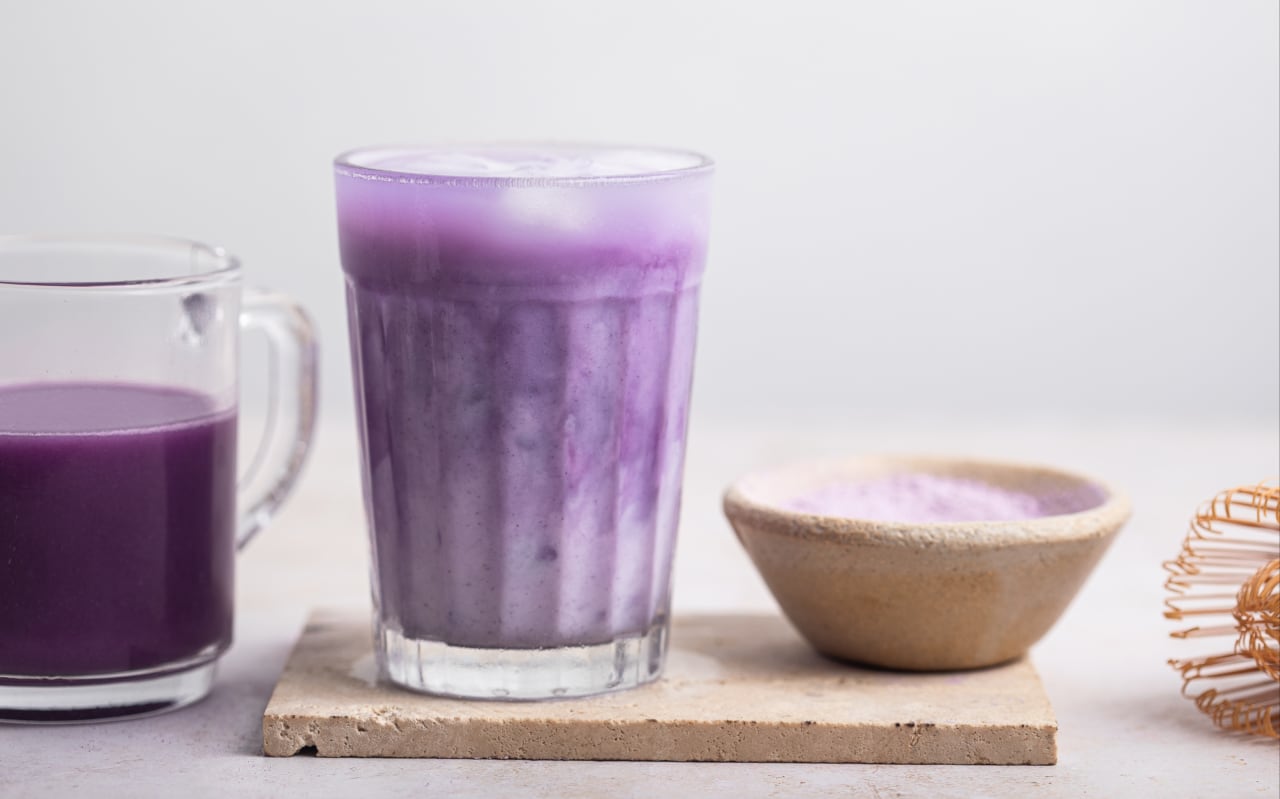
Ube, or purple yam (Dioscorea alata), is a tropical root emblematic of the Philippines, also cultivated in several regions of Asia, Africa, and the Caribbean. Easily recognizable by its deep purple flesh, it derives its characteristic color from a high content of anthocyanins, natural pigments with powerful antioxidant properties, known for their role in cellular protection and slowing down skin aging.
Long confined to desserts—ice cream, pastries, jams, or plant-based beverages—the ube is now establishing itself as a superfood in its own right. Rich in starch, it provides a sustainable source of energy while delivering fiber, vitamins (particularly B6 and C), and essential minerals such as potassium and manganese. Its mild, slightly vanilla-like flavor is increasingly appealing to fans of natural cooking, who incorporate it into both savory and sweet dishes. An ingredient that is as nutritious as it is delicious, with many health benefits.