
Our top-rated skincare products to aid digestion and promote regular bowel movements
Published on: Friday, October 23, 2026, Updated on: Thursday, November 12, 2026
Bloating after lunch, a creeping feeling of heaviness, bowel movements that slow down at the slightest change in routine: digestive discomfort is part of everyday life for many of us. It depends not only on what we eat, but also on our hydration levels, stress levels and the balance of our gut flora. Fibre, probiotics, herbs and essential oils can provide real support, provided you choose the solution that suits your needs and incorporate it into a healthy lifestyle. In this article, we present our selection of top-rated products for digestion and bowel regularity, feedback from the Aroma-Zone community, and expert commentary on the subject to help you make an informed choice.
Contents
Related products

Digestive comfort
£17.00
1 article

Liver Wellness
£21.00
1 article
Tanning
Hair dye
£17.50
£25.00
1 article

£20.00
1 article
In brief
Digestion and bowel movements depend on several factors: diet, hydration, physical activity, stress and the balance of the gut microbiota.
Our digestion and bowel movement products support a healthy lifestyle and can be chosen to suit individual needs: slow digestion after meals, bloating, sluggish bowel movements or an unbalanced gut microbiota.
In this article, we offer a selection of our top-rated natural remedies, which you can tailor to suit your needs.
Why do digestion and bowel movements become irregular?
Digestion and bowel movements
Digestion and bowel movements are most often disrupted by a combination of a low-fibre diet, insufficient hydration, an imbalance in the gut microbiota, stress and a lack of physical activity.
These factors rarely act alone. They build up over the course of the day, which explains why digestive discomfort can sometimes set in without any obvious cause. Identifying these factors enables you to choose digestive and bowel health treatments that are truly suited to your situation.
A diet low in fibre and insufficient fluid intake
A lack of fibre and water is the main cause of sluggish bowel movements. Fibre increases the volume of stools and retains water, which helps them move through the bowel (1). Health authorities recommend consuming 30 g per day, whilst French adults consume an average of around 20 g (2). Without sufficient hydration, fibre cannot fulfil its role effectively.
Meals that are too large or eaten too quickly
A high-fat meal or one eaten too quickly slows down digestion and can make you feel heavy. The stomach takes longer to empty when the meal is large, and eating quickly leads to swallowing air, which exacerbates bloating. Chewing for too short a time also places a greater burden on the rest of the digestive system.
An unbalanced gut microbiota
A microbiota that is depleted or out of balance disrupts both digestion and bowel regularity. Gut bacteria ferment the fibre that we cannot digest and produce compounds that nourish the gut lining and stimulate bowel movements (3). A diet lacking in variety, a change in routine, travelling or certain treatments can upset this balance and lead to gas, bloating and irregular bowel movements.
Stress and lifestyle
Stress directly affects digestion, as the gut and the brain are in constant communication. During periods of stress, bowel movements speed up or slow down and sensitivity in the stomach increases (4). Irregular mealtimes and a lack of sleep exacerbate this phenomenon.
Lack of physical activity
Finally, bear in mind that a sedentary lifestyle slows down bowel movements, as movement naturally stimulates intestinal contractions. Regular exercise, even moderate activity such as walking, helps to regulate bowel movements and reduces feelings of bloating. (5)
What are the main categories of products for digestion and bowel regularity?
The skincare products
Products for digestion and bowel regularity fall into five main categories: digestive herbs and essential oils, adsorbents such as vegetable charcoal, fibre, probiotics and prebiotics, and herbs for the liver.
Each product range addresses a specific discomfort. Our advice: first identify the discomfort that occurs most frequently, then choose the appropriate product, taking into account any precautions for use, particularly if you are taking medication.
Needs | Related products |
Slow digestion, feeling heavy after meals | Aromatic herbs stimulate digestive secretions and help the stomach to do its job after a heavy meal. They are used in the form of herbal teas or essential oils, in precise doses. The best known are: Peppermint (6), Ginger (7), Dill, Fennel |
Bloating, gas | Adsorbents bind to gases present in the digestive tract and help reduce the feeling of a bloated stomach (8). They should be taken as and when needed, at separate times from any medication. Where bloating recurs regularly, addressing the gut flora is a more appropriate approach. (9) The best-known: Activated charcoal, Fennel, Probiotics |
Slow or irregular bowel movements | Soluble fibre swells on contact with water and forms a gel that adds bulk to stools and helps them pass more easily. It gently regulates bowel movements, provided you drink enough fluids. (1) The best known: Golden psyllium, Chia seeds, Triphala |
Imbalanced gut flora | Probiotics provide live microorganisms that support the balance of the microbiota (9). Prebiotics are fibres that nourish the good bacteria already present in the gut. The two complement each other. The best known: Lactobacilli, Bifidobacteria, Inulin, Acacia fibre |
The day after overindulging | Liver-supporting herbs aid bile production (10), which is essential for the digestion of fats, and support the body’s detoxification processes. They are used as a short course of treatment. The best known: Artichoke (11), Milk thistle, Dandelion (12) |
Digestion and bowel regularity: our 10 top-rated natural solutions
Our products
Our top-rated products for digestion and bowel regularity combine digestive essential oils, probiotics, fibre, plant-based activated charcoal and traditional herbs, which you can choose from depending on the discomfort you’re experiencing.
We offer a selection of Aroma-Zone products designed to meet your needs, to aid digestion and promote regular bowel movements. Each product has been designed to address a specific need. We advise you to read the precautions for use before using any product.

Easy Digestion Essential Oil Trio: This set brings together three organic HEBBD-grade essential oils – peppermint, ginger and dill – recognised for aiding digestion, relieving that heavy feeling after meals and reducing bloating. An information leaflet is included with the set to ensure simple and safe use. The oils must always be taken diluted: for Peppermint, 1 drop on a neutral tablet or in a teaspoon of honey, up to 4 times a day, without exceeding 4 drops per day. Not recommended for pregnant or breastfeeding women, children, people with epilepsy, those who are hypersensitive or those with hormone-dependent cancer. This trio should not be used in conjunction with any medication without medical advice and must always be taken diluted, without exceeding the recommended daily dose.

Probiotics for Gut Comfort: This dietary supplement combines five patented and clinically tested probiotic strains, including the SynbÆctive® SmilinGut blend, with prebiotic fibres to support the balance of gut flora and promote gut comfort. It contains 16 billion CFU per capsule and comes in enteric-coated capsules, which release the strains directly into the gut. Take one capsule a day, swallowed with a glass of water; one jar provides a one-month supply. Intended for adults only and not recommended for pregnant or breastfeeding women, this supplement should be taken without exceeding the recommended daily dose.
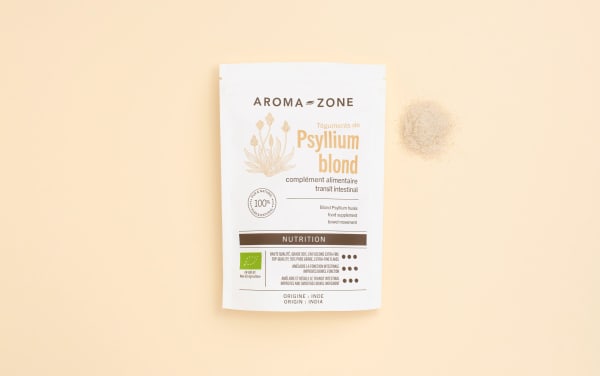
Organic golden psyllium: Also known as ispaghul, golden psyllium husks are rich in fibre and mucilage, which swell on contact with water and form a gel. Their gentle mechanical action regulates bowel movements, whether they are too slow or too fast. Dissolve between 1 teaspoon and 1 tablespoon in a glass of water or another drink, drink immediately, then drink a large glass of water. For adult use only; it is not recommended for pregnant or breastfeeding women, or in cases of difficulty swallowing, or narrowing, blockage or paralysis of the bowel, due to the risk of obstruction. It should be taken at least one hour apart from any medication; consult a healthcare professional before use if you are undergoing treatment.

Organic French plant-based activated charcoal: Sourced from chestnut trees in sustainably managed French forests and activated using steam, this charcoal has a high adsorption capacity that enables it to bind intestinal gases. It reduces bloating and flatulence after meals. Take 4 to 8 capsules a day, to be swallowed with a glass of water, either as a one-off or over a few days. For adults only; take at least 2 to 3 hours before or after any medication or the contraceptive pill, as it may reduce their effectiveness. Pregnant or breastfeeding women and those undergoing medical treatment should seek advice from a healthcare professional before using this product.
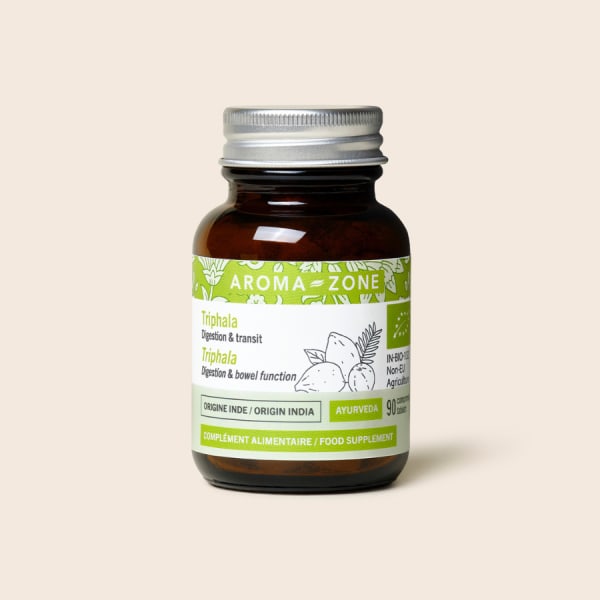
Organic Triphala: An iconic preparation in the Ayurvedic tradition, Triphala combines equal parts of three organic fruits – Amla, Haritaki and Bibhitaki – which contribute to digestive comfort and healthy bowel function. Its 100% natural tablets are manufactured in India. Start with 1 tablet a day to test how well your system tolerates it, then increase to 2 and, if necessary, to 3 tablets a day, whilst drinking plenty of fluids throughout the day. The course of treatment lasts one to two months, followed by a break of a few weeks. Intended for adults only and not recommended for pregnant or breastfeeding women; medical advice should be sought if you have diabetes or are taking anticoagulants.
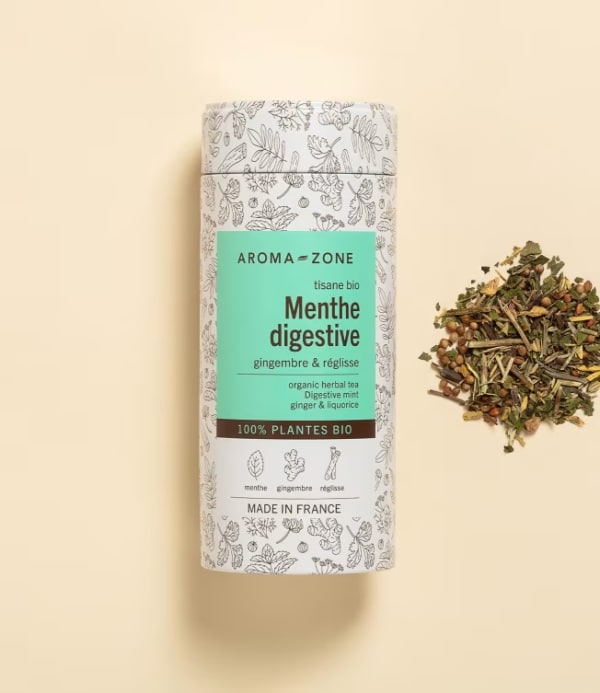
Organic Digestive Mint Herbal Tea: Fresh, minty and slightly spicy, this herbal tea combines seven organic herbs known to aid digestion and promote well-being after meals, including mint, ginger and liquorice. Made from 80 per cent herbs grown in France, with no added flavourings and no theine, it can be enjoyed at any time of day, ideally after a meal. Not recommended for pregnant or breastfeeding women or children, as it contains liquorice: people with high blood pressure should avoid excessive consumption.

Detox dietary supplement: liver health: Designed to support liver health, this dietary supplement combines artichoke, milk thistle and dandelion extract, traditionally used to promote drainage and elimination. It is recommended following periods of overindulgence and at the change of seasons. Take 3 tablets a day with a glass of water. For adults only; not recommended for pregnant or breastfeeding women, or in cases of peptic ulcer, biliary obstruction, oedematous heart or kidney failure, or allergy to plants of the Asteraceae family.

Organic Lemon Detox Herbal Tea: Fresh and lemony, this infusion combines rosemary, blackcurrant, peppermint, nettle and lemongrass – herbs renowned for supporting liver function and promoting detoxification. Made from 85% plants grown in France, with no added flavourings and no theine, it is ideal after indulging a little too much and can be enjoyed throughout the day. Steep 1 teaspoon per cup in simmering (not boiling) water for 5 to 10 minutes, depending on your taste, and drink 2 to 3 cups a day to experience the benefits. It should be consumed as part of a varied and balanced diet and a healthy lifestyle.

Organic Chaga Extract: Nicknamed the ‘mushroom of immortality’, Chaga is traditionally used as a tonic and to support digestive wellbeing, particularly in Russian and Chinese pharmacopoeias. This organic extract, obtained through water-based extraction without solvents, is concentrated to 30% polysaccharides and has had its chitin removed to ensure good digestive tolerance. Take 1 to 2 capsules a day, to be swallowed with a glass of water; one jar provides a two-month course of treatment. Intended for adults only; it is not recommended for pregnant or breastfeeding women, or for those with kidney stones, gout, an allergy to mushrooms or birch, or those taking anticoagulants. Medical advice is required in cases of type 1 diabetes, autoimmune disease or where medication is being taken.
What our community has to say
At Aroma-Zone, feedback from our community complements the work of our experts and confirms the effectiveness of our digestion and bowel movement products in real-life situations:
Sara, 13 September 2026, on Probiotics for Gut Comfort
“I’ve almost finished the 30 capsules and I can really feel the difference.”
Françoise, 18 June 2026, on the Digestive Mint Herbal Tea
"Exceptional products. They work really well for me: Digestive Mint and Chamomile Dream. One for digestion, the other for sleep."
Our experts’ advice
Although it is generally possible to combine psyllium, probiotics and other digestive active ingredients, it is best to introduce them separately and gradually. This allows you to assess the specific effects and effectiveness of each one, as well as to identify the cause of any digestive or intestinal discomfort. This precaution is particularly recommended for people with digestive or bowel sensitivities (such as irritable bowel syndrome, etc.).
Once this introductory phase is complete, combining active ingredients such as psyllium and probiotics may be beneficial due to their potentially complementary effects (13). Indeed, psyllium helps regulate bowel movements thanks to its gel-forming fibres, and acts as a prebiotic that nourishes beneficial gut bacteria. The effects of probiotics, meanwhile, depend on the specific strains involved.
If you wish to combine different active ingredients, it is best to seek advice from a healthcare professional.
Lila Bouber, PhD in Nutrition and Scientific Consultant
Precautions
Digestive and bowel health products should be used alongside a varied, fibre-rich diet and adequate hydration, but should never replace them: it is better to choose a single formula suited to your specific symptoms and to follow the recommended dose and duration of use, rather than trying multiple treatments. As fibre and plant-based activated charcoal can reduce the absorption of medication, they should be taken separately from any other treatment, and you should seek advice from a healthcare professional if you are pregnant, breastfeeding, currently undergoing treatment or have any health issues. Finally, if digestive discomfort persists, worsens or is accompanied by severe pain, blood in the stools or unexplained weight loss, you should consult a doctor.
Essential oils are powerful natural concentrates. Please refer carefully to the intended uses and precautions for use on each product information sheet. Store them in a suitable glass bottle, away from light and air. Keep out of reach of children. Do not use during pregnancy or whilst breastfeeding, or on children under 6 years of age. Avoid contact with the eyes and mucous membranes. Please refer to the general safety information sheet for essential oils as well as the specific information sheet for each essential oil.
Spotlight on Our Writer: Louise Hourcade

A 2020 graduate of ESCP, Louise began her career as a writer in 2021. Today, she mainly shares her thoughts in an intimate newsletter, where she writes cultural recommendations as well as more personal articles (on dating apps, therapy and career guidance). Alongside this, she writes for media outlets, brands and agencies on topics such as wellbeing, mental health, culture and society.
Bibliography
ANSES. (2017). INCA 3: Changing consumption habits and patterns, new challenges in food safety and nutrition. https://www.anses.fr/fr/content/inca-3-evolution-des-habitudes-et-modes-de-consommation-de-nouveaux-enjeux-en-matiere-de
Van der Schoot, A., Drysdale, C., Whelan, K., & Dimidi, E. (2022). The effect of fibre supplementation on chronic constipation in adults: An updated systematic review and meta-analysis of randomised controlled trials. The American Journal of Clinical Nutrition, 116(4), 953–969. https://pmc.ncbi.nlm.nih.gov/articles/PMC9535527/
Liu et al (2025). Regulatory mechanisms of the gut microbiota–short-chain fatty acids signalling axis in slow-transit constipation and progress in multi-target interventions. Frontiers in Microbiology. https://doi.org/10.3389/fmicb.2025.1689597
Leigh et al (2023). The impact of acute and chronic stress on gastrointestinal physiology and function: A microbiota-gut-brain axis perspective. https://research.ucc.ie/en/publications/the-impact-of-acute-and-chronic-stress-on-gastrointestinal-physio/
Gao, R., Tao, Y., Zhou, C., Li, J., Wang, X., Chen, L., Li, F., & Guo, L. (2019). Exercise therapy in patients with constipation: A systematic review and meta-analysis of randomised controlled trials. Scandinavian Journal of Gastroenterology, 54(2), 169–177. https://doi.org/10.1080/00365521.2019.1568544
Alammar, N., Wang, L., Saberi, B., Nanavati, J., Holtmann, G., Shinohara, R. T., & Mullin, G. E. (2019). The impact of peppermint oil on irritable bowel syndrome: A meta-analysis of the pooled clinical data. BMC Complementary and Alternative Medicine, 19, Article 21. https://pmc.ncbi.nlm.nih.gov/articles/PMC6337770/
Nikkhah Bodagh, M., Maleki, I., & Hekmatdoost, A. (2019). Ginger in gastrointestinal disorders: A systematic review of clinical trials. Food Science & Nutrition, 7(1), 96–108. https://pmc.ncbi.nlm.nih.gov/articles/PMC6341159/
EFSA Panel on Dietetic Products, Nutrition and Allergies. (2011). Scientific opinion on the substantiation of health claims related to activated charcoal and reduction of excessive intestinal gas accumulation (ID 1938) and reduction of bloating (ID 1938) pursuant to Article 13(1) of Regulation (EC) No 1924/2006. EFSA Journal, 9(4), Article 2049. https://doi.org/10.2903/j.efsa.2011.2049
Goodoory, V. C., Khasawneh, M., Black, C. J., Quigley, E. M. M., Moayyedi, P., & Ford, A. C. (2023). Efficacy of probiotics in irritable bowel syndrome: Systematic review and meta-analysis. Gastroenterology, 165(5), 1206–1218. https://doi.org/10.1053/j.gastro.2023.07.018
Peterson, C. T., Denniston, K., & Chopra, D. (2017). Therapeutic uses of Triphala in Ayurvedic medicine. The Journal of Alternative and Complementary Medicine, 23(8), 607–614. https://pmc.ncbi.nlm.nih.gov/articles/PMC5567597/
Holtmann, G., Adam, B., Haag, S., Collet, W., Grünewald, E., & Windeck, T. (2003). Efficacy of artichoke leaf extract in the treatment of patients with functional dyspepsia: A six-week placebo-controlled, double-blind, multicentre trial. Alimentary https://doi.org/10.1046/j.1365-2036.2003.01767.
14. Li, Y., Chen, Y., & Sun-Waterhouse, D. (2022). The potential of dandelion in the fight against gastrointestinal diseases: A review. Journal of Ethnopharmacology, 293, Article 115272. https://doi.org/10.1016/j.jep.2022.115272
Martellet, M. C., Majolo, F., Ducati, R. G., de Souza, C. F. V., & Goettert, M. I. (2022). Probiotic applications associated with psyllium fibre as prebiotics aimed at promoting a healthy gut microbiota: A review. Nutrition, 103–104, 111772. https://doi.org/10.1016/j.nut.2022.111772
https://fr.trustpilot.com/reviews/6ac33db0f9e8e4e097a1241f
https://fr.trustpilot.com/reviews/6a33026608940a0c9cf2bf10