Aroma-Zone Keratin AA Active Ingredient

STRENGTHENING HAIR REPAIR


The vegan alternative to keratin for stronger, shinier hair


An ‘keratin-like’ active ingredient, Keratin AA replicates the amino acid profile of hair keratin to strengthen the hair fibre and improve its resilience and shine.


Reading time: 0 min.

Keratin AA Aroma-Zone Profile

INCI Name: Keratin Amino Acids

VEGAN

BIOCHEMICAL COMPOSITION

Keratin AA consists of a blend of amino acids that replicate the profile of the keratin naturally present in the hair.

METHOD OF PRODUCTION

The amino acids are obtained through biofermentation, a biotechnological process that produces molecules identical to those found in natural keratin, without the use of animal-derived resources.

SUSTAINABILITY & TRACEABILITY

An active ingredient of 100% natural origin.

Keratin AA: What Effect Does It Have on the Hair?

keratin is a fibrous protein naturally present in the hair. It ensures the hair’s strength, elasticity and protection against external aggressors (heat, UV rays, colour treatments, pollution).

Over time, or as a result of repeated damage, the hair’s structure becomes weakened: the cuticle lifts, the hair fibre becomes more porous, the hair breaks more easily and loses its shine.

Keratin AA acts as a targeted source of essential amino acids for the hair fibre. Composed of biomimetic keratin amino acids, it is a vegan and 100% naturally derived alternative to animal-derived keratin.

These amino acids interact with the hair fibre by binding to its surface and strengthening its cohesion. They help to smooth the cuticles, coat the hair and improve its resistance to breakage.

This action visibly improves the hair’s softness, shine and radiance, whilst helping to maintain its moisture levels.

Keratin AA: Scientifically Proven Efficiency

The structure of the hair relies largely on keratin, a fibrous protein rich in amino acids, particularly cysteine. This amino acid plays a key role in the strength of the hair through the formation of disulphide bonds, which act as cohesive links between the keratin fibres.

Other amino acids, such as glycine, threonine and arginine, contribute to the hydration and suppleness of the hair fibre by promoting interactions with water and helping to maintain its structure.

Studies have shown that applying amino acids to damaged hair improves its mechanical properties and strength. Certain amino acids, such as phenylalanine and histidine, increase the strength of the hair fibre, whilst others, such as alanine, help to improve its impermeability.

Keratin peptides, consisting of short chains of amino acids, have also demonstrated their ability to interact with the hair fibre. Applying them improves the hair’s elasticity and strengthens its resilience, particularly in hair weakened by chemical treatments. The effectiveness of these compounds depends largely on their size. Peptides with low and medium molecular weights can penetrate the hair fibre, whilst larger ones remain on the surface and form a protective film.

This complementary action both strengthens the hair’s structure and protects its surface, thereby helping to reduce breakage and improve the hair’s overall appearance.

Skin Tolerance

A Note from Adeline Nalin, Head Pharmacist and Toxicologist at Aroma-Zone

“The Amino Keratin PF active ingredient is composed of keratin amino acids that are very similar to the natural constituents of the skin and hair. They are therefore very well tolerated. In vitro studies show that it is non-irritating and non-sensitising.”

Adeline Nalin - Head Pharmacist and Toxicologist

A Safe Ingredient for your Health

A Note from Our Aroma-Zone Toxicologist

“Amino Keratin PF (keratin amino acids) is considered safe for health when used at the concentrations recommended in cosmetic products.”

Adeline Nalin - Head Pharmacist and Toxicologist

A Note from the Dermatologist


“Keratin AA is a hydrolysed form of keratin rich in amino acids, which penetrates keratinised tissues more effectively. It helps to repair and restore the surface of the hair fibre, whilst improving the hair’s shine and suppleness.


Thanks to its moisturising effect, it also helps to minimise water loss. This active ingredient is particularly beneficial for hair that is dry, brittle, damaged or weakened by repeated exposure to harsh conditions.


On fine hair, however, excessive use may tend to weigh the hair down. It is therefore important to tailor hair care products to the hair type.


Keratin-based hair care products are also best used in conjunction with a healthy diet, particularly one with an adequate intake of protein, as well as by minimising mechanical and thermal damage to preserve the hair’s quality in the long term.”


Dr Aoun – Dermatologist

Formulation Focus with the Aroma-Zone R&D Laboratory

Keratin AA is based on a biomimetic approach: it combines a blend of amino acids selected to replicate the profile of the keratin naturally present in the hair.

These amino acids have a strong affinity with the hair fibre. They interact with its structure by binding to its surface and helping to strengthen its cohesion, particularly in weakened areas. This action improves the hair’s mechanical strength and optimises its overall appearance, making it more supple, softer and shinier.

For Which Hair Types?

Suitable for all hair types, including damaged, brittle, dry or dehydrated, dull, coloured or sensitised hair, textured.

Which Concerns Does This Address?

Hair breakage, split ends, loss of shine, lack of suppleness, dehydrated hair, weakened hair.

What Keratin AA Does for your Hair

  • Strengthens the hair fibre

  • Improves resistance to breakage

  • Smooths the cuticles and coats the hair

  • Adds softness and shine

  • Helps maintain the hair’s moisture levels.

Keratin AA: An Essential Ingredient for Hair

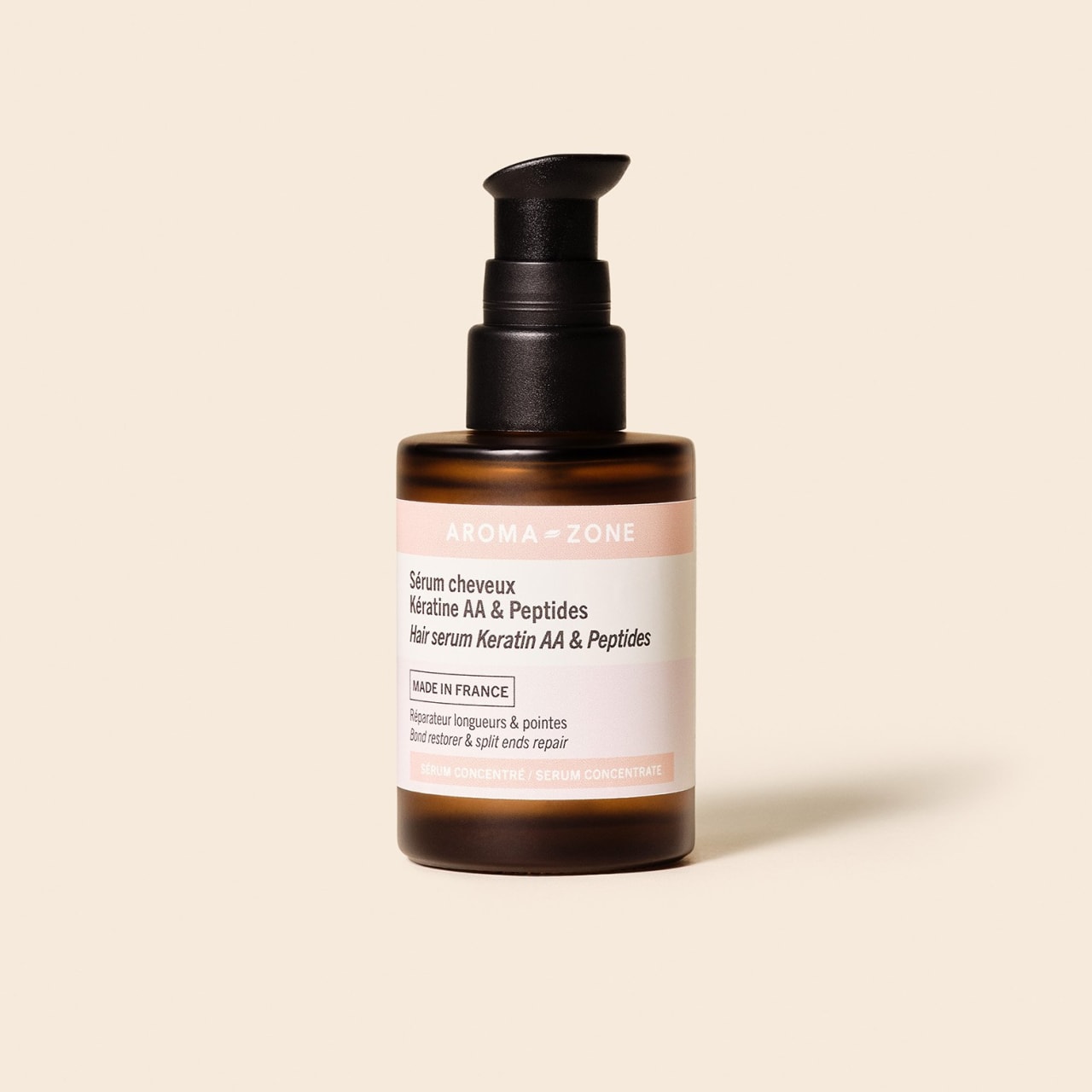
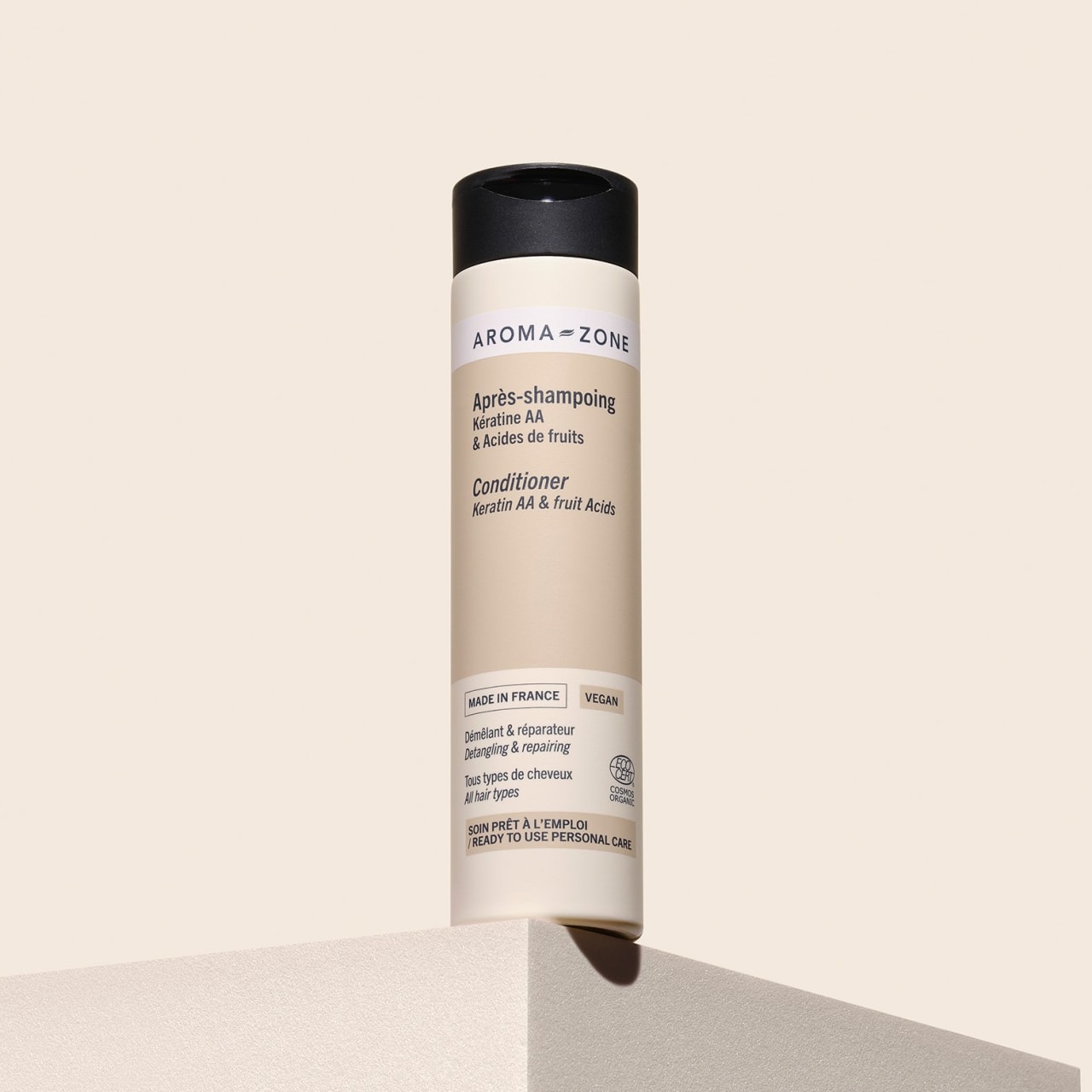
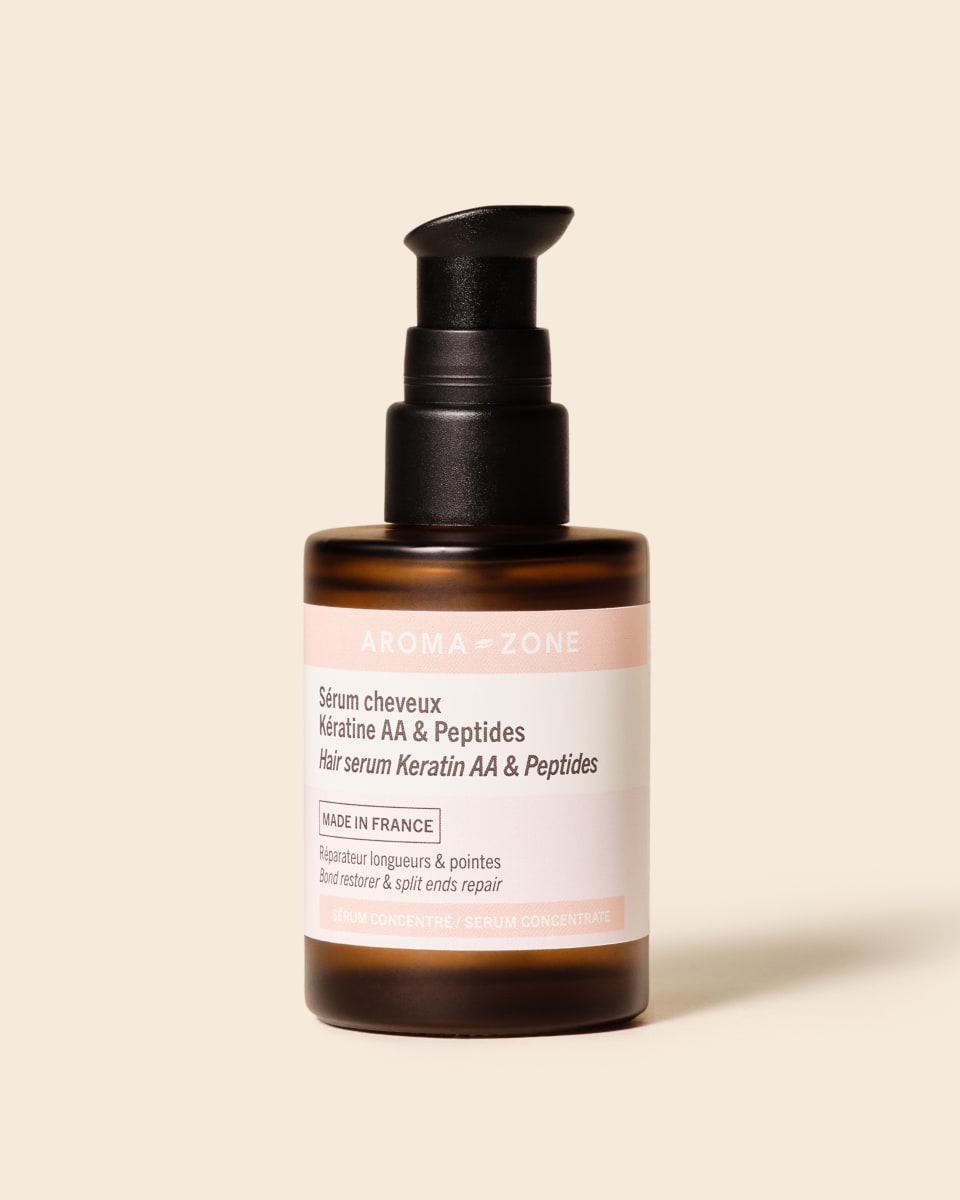
Keratin AA & Peptides Hair Serum

Precautions

Avoid contact with the eyes. In case of contact, rinse thoroughly with clean water.

Do not swallow. Keep out of reach of children.

FAQ

What is keratin?

keratin is a structural protein naturally present in hair, nails and skin. It plays an essential role in their strength, elasticity and protection against external aggressors.

It consists of long chains of amino acids, some of which, such as cysteine, enable the formation of disulphide bonds. These bonds ensure the strength and cohesion of the hair fibre, thereby contributing to the hair’s strength and hold.

What is the difference between cosmetic keratin and keratin in dietary supplements?

Keratin used in cosmetics and that used in food supplements do not work in the same way.

In cosmetics, as with Keratin AA, it consists of amino acids applied directly to the hair fibre. They act mainly on the surface to strengthen, smooth and improve the appearance of the hair.

As a dietary supplement, keratin is hydrolysed into peptides so that it can be absorbed by the body. It then provides amino acids that can be used by keratinocytes to support keratin synthesis at the hair bulb. 

The Keratin – 60 capsules – Dietary supplement formulated with Cynatine HNS®, a hydrolysed keratin whose bioavailability has been optimised to promote the absorption of amino acids.

These two approaches are complementary: one acts externally on the hair fibre, whilst the other acts internally on hair formation.

How should Keratin AA be used in a hair care routine?

The Keratin AA cosmetic active ingredient can be easily incorporated into your homemade hair care products, such as shampoos, masks, serums or leave-in treatments. It is used at a concentration of 3–5 per cent and should be incorporated at a low temperature (< 40°C), preferably at the end of the formulation process, into the aqueous phase. It is recommended to shake well to achieve a homogeneous mixture.

Keratin AA is particularly suitable for formulating products for damaged, brittle or weakened hair, as well as for coloured, dull or dehydrated hair. It can also be used in shine-enhancing or strengthening treatments, suitable for all hair types, including textured hair.

Which serum should I choose based on my hair’s needs?

The choice of serum depends mainly on your specific hair concern and the area you wish to target.

The Keratin AA & Peptides Hair Serum is particularly suitable for damaged lengths and ends. It strengthens the hair fibre, improves its resilience and protects the hair.

The Peptides & Pea Extract Hair Serum acts more specifically on the scalp. It is recommended for hair loss or to stimulate growth, promote hair anchoring and slow down hair loss.

The 3.5% Hyaluronic Acid Hair Serum is ideal for moisturising the lengths, coating the hair and leaving it feeling soft. It is suitable for all hair types.

These serums can be used on their own or in combination, depending on the needs of the scalp and hair lengths.

Spotlight On Our Specialist Writer, Marion Alves De Oliveira

Marion is a Doctor of Pharmacy, naturopath and coach. After twelve years working in the cosmetics industry, she now supports her clients in achieving greater overall balance and adopting a more mindful lifestyle, with a particular focus on sustainable nutrition. She is also the creator of a podcast, where she shares her insights to promote a lifestyle philosophy that respects both health and the environment.

Bibliography

1

Robbins, C. R. Chemical and Physical Behaviour of Human Hair. Journal of Investigative Dermatology, 1993.

2

Engineering Techniques. Hair: composition and structure.

3

Oshimura, E., et al. Hair and amino acids: the interactions and the effects. Journal of Cosmetic Science, 2007, 58(4): 347–357.

4

Fernandes, M. M., et al. Keratin-based peptide: biological evaluation and strengthening properties on relaxed hair. International Journal of Cosmetic Science, 2012, 34: 338–346.

5

Cruz, C. F., et al. Effect of a peptide in cosmetic formulations for hair volume control. International Journal of Cosmetic Science, 2017, 39: 600–609.

6

Cruz, C. F., et al. Changing the shape of hair with keratin peptides. RSC Advances, 2017.

7

Malinauskyte, E., et al. Penetration of different molecular weight hydrolysed keratins into hair fibres and their effects on the physical properties of textured hair. International Journal of Cosmetic Science, 2021, 43: 26–37.

8

Mokrejs, P., et al. The cosmetic and dermatological potential of keratin hydrolysate. Journal of Cosmetic Dermatology, 2017, 16: e21–e27.