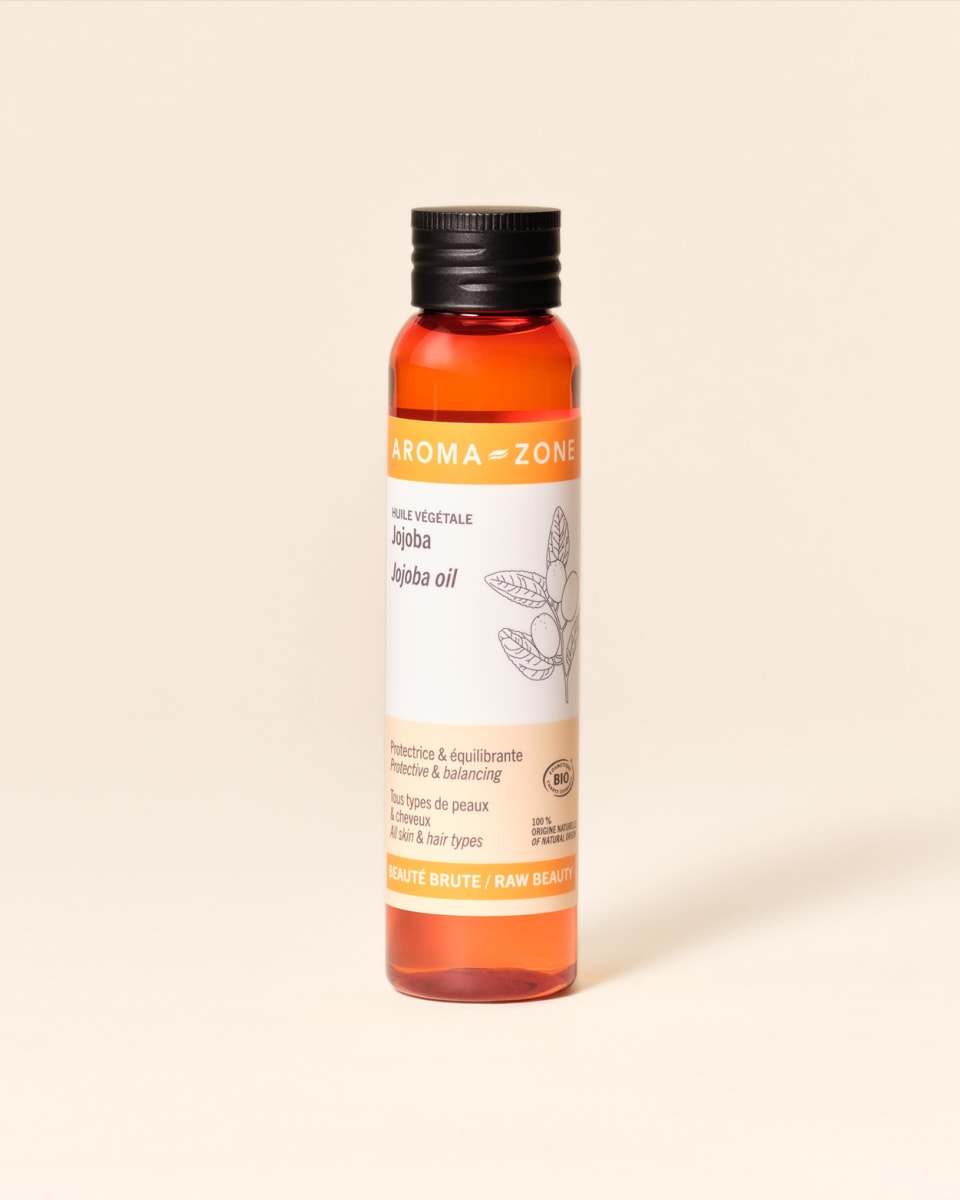
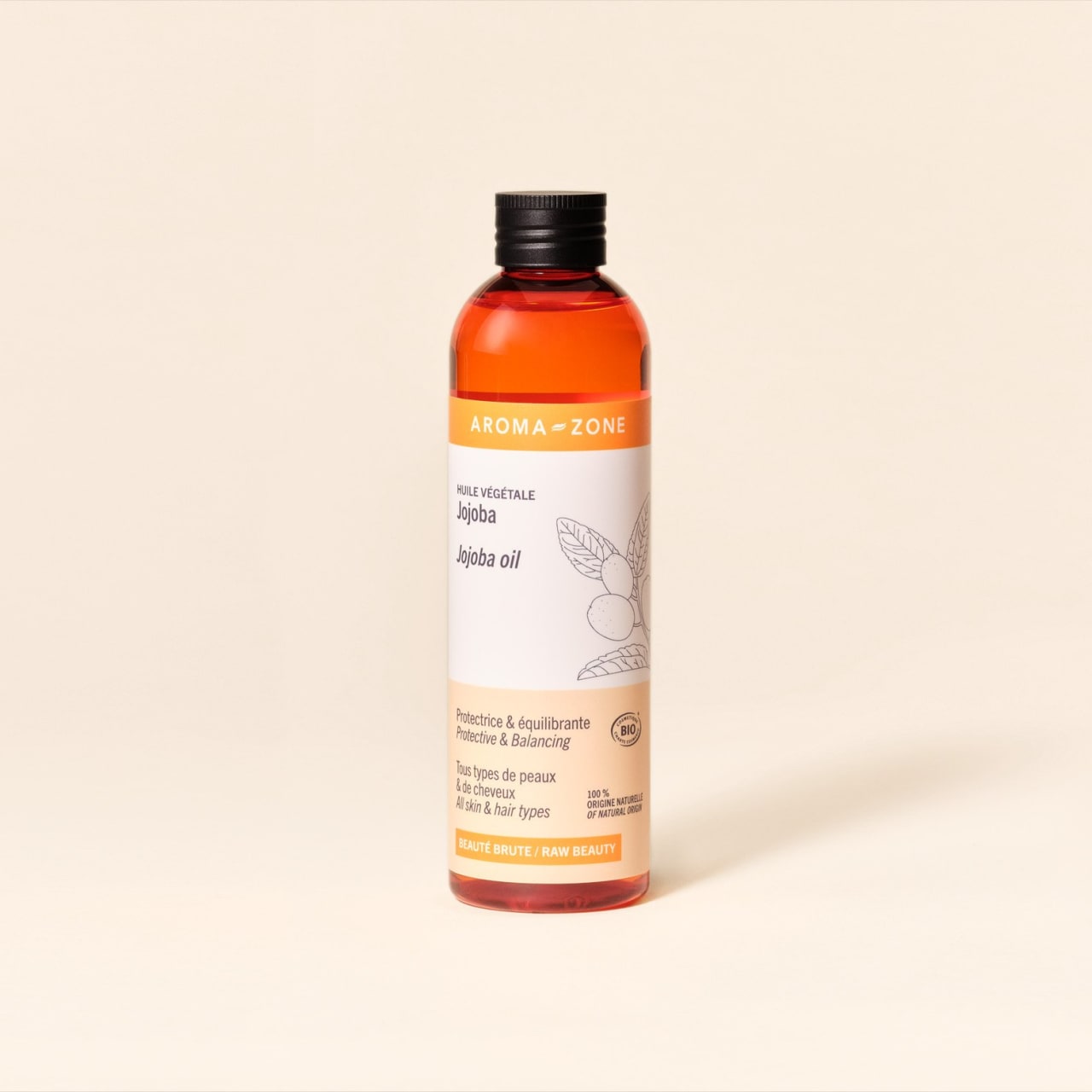
Aroma-Zone Jojoba vegetable oil

BALANCING PROTECTIVE


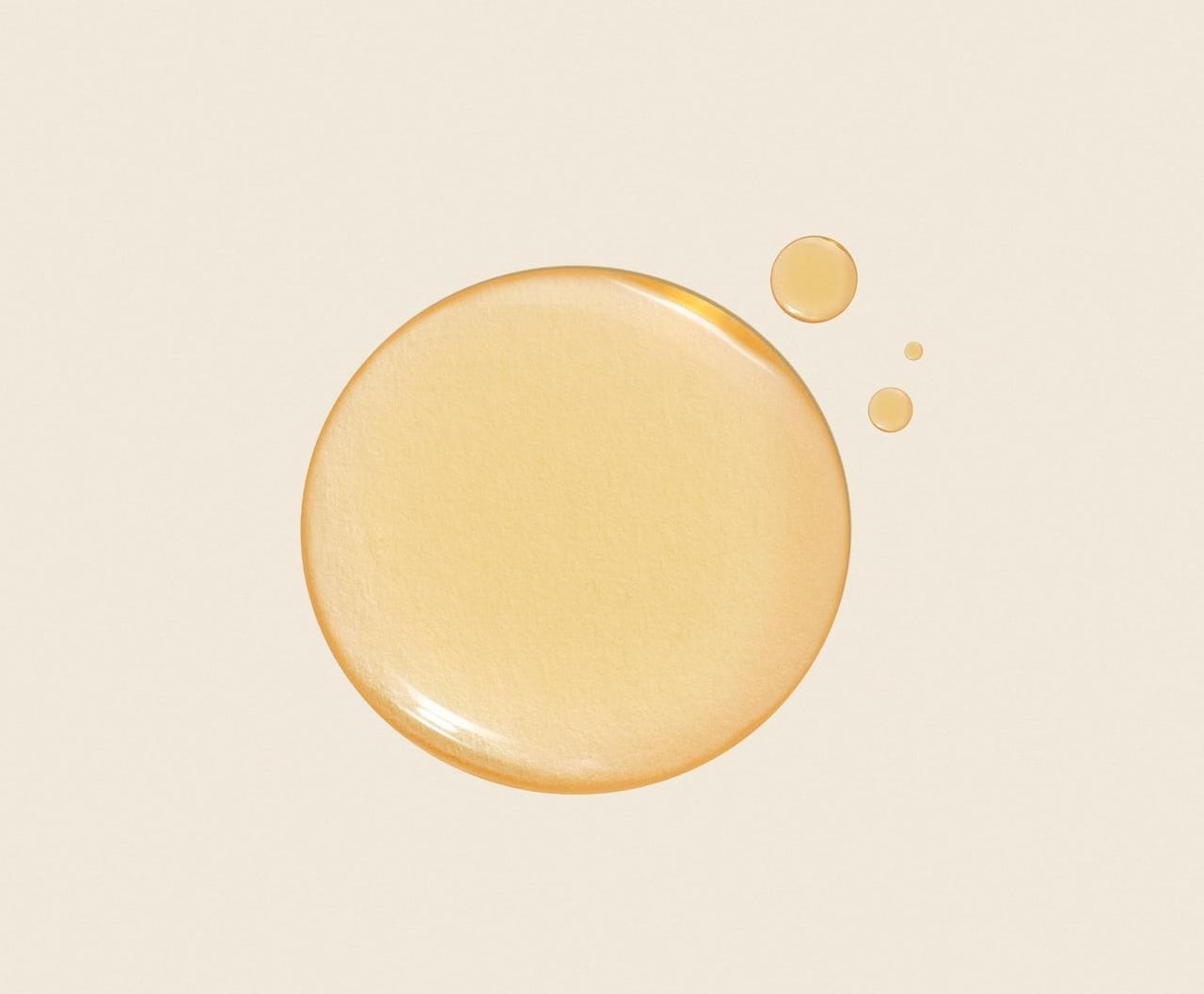
This liquid wax, rich in ceramides, has a high affinity with the skin. What makes it unique: its composition is partly similar to human sebum. Protective and balancing for all skin types, even those prone to blemishes, it leaves the skin velvety smooth, without a greasy film. Perfect for those new to plant-based oils.


Reading time: 0 min.

Jojoba oil Aroma-Zone Profile

INCI Name: Simmondsia chinensis seed oil

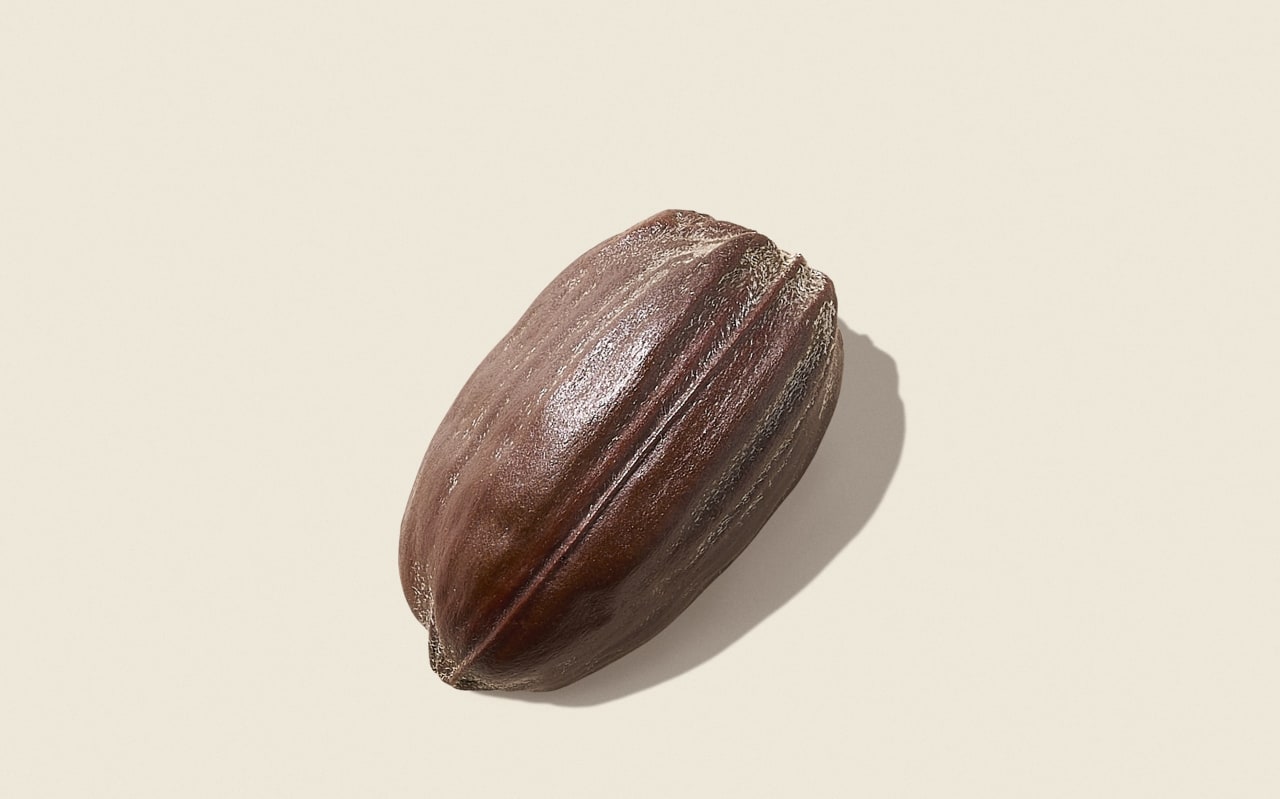
Part of the plant used: Nuts. Jojoba nuts contain up to 60% oil.

VEGAN

METHOD OF EXTRACTION

The jojoba oil used by Aroma-Zone is obtained by cold pressing.

BIOCHEMICAL COMPOSITION

Despite its name, jojoba oil is not an oil from a chemical standpoint but a liquid wax. Unlike oils, which are mainly composed of triglycerides, it consists largely of cerides: esters of fatty acids and fatty alcohols. Those in jojoba wax are mostly unsaturated, which gives it its liquid consistency.

  • Cerides (>98%): → including unsaturated fatty acids: eicosenoic acid (omega-9, 60–80% of fatty acids), cetoleic acid (omega-11, 10–20% of fatty acids), oleic acid (omega-9, 5–15% of fatty acids), erucic acid (omega-9, approximately 10% of fatty acids) → including unsaturated fatty alcohols: 20:1 fatty alcohol (40–55% of fatty alcohols), 22:1 fatty alcohol (approximately 35–45% of fatty alcohols), 24:1 fatty alcohol (5–10% of fatty alcohols)

  • Phytosterols (approximately 0.3%)

  • Other bioactive compounds : provitamin A.

ITS ACTIVE MOLECULES

The cerides that make up jojoba oil have excellent affinity with skin tissue, due to their similarity to the cerides in human sebum (25% of sebum). This allows it to penetrate the skin easily, without clogging the pores and leaving a dry feel. By strengthening the skin barrier, they facilitate skin regeneration. Thanks to these ingredients, jojoba oil nourishes, soothes, and protects against dehydration for all skin types, including those prone to blemishes. By solubilizing sebum, the cerides in jojoba oil facilitate its removal when it is in excess, thereby limiting the formation of comedones and blackheads. This property also makes the oil useful for treating oily scalps, which it rebalances


Jojoba oil: What Effect Does It Have on the Skin?

Jojoba vegetable oil is often included in moisturizers due to its high stability and affinity for the skin. Non-comedogenic, it is particularly well-suited as a carrier oil in skincare products for blemish-prone skin. The cerides in jojoba oil have excellent affinity with skin tissue due to their similarity to the cerides in human sebum (25% of sebum). They allow the oil to penetrate the skin easily without clogging pores, leaving a dry finish. By strengthening the skin barrier, they facilitate skin regeneration. Thanks to these ceramides, jojoba oil nourishes, soothes, and protects all skin types, including those prone to blemishes, from dehydration.

Jojoba vegetable oil: Scientifically Proven Efficiency

A mask made of jojoba oil and clay, applied 2 or 3 times a week for 6 weeks, reduced inflammatory and non-inflammatory acne-related lesions in 194 volunteers. The occurrence of blackheads was cut in half.

Skin Tolerance

A Note from Adeline Nalin, Head Pharmacist and Toxicologist at Aroma-Zone


“The composition of this oil is very similar to human sebum, which minimizes the risk of irritation. As it is well-tolerated, it has excellent skin compatibility and is suitable for all skin types.”


Adeline Nalin - Head Pharmacist and Toxicologist

A Plant Extract Safe for Your Health

A Note from Our Aroma-Zone Toxicologist

“The use of jojoba vegetable oil is safe for health. It is also low-allergenic because it contains few sensitizing compounds.”

Adeline Nalin - Head Pharmacist and Toxicologist

A Note from the Phytotherapist


“Using oil on oily skin may seem counterintuitive, yet jojoba oil is very well absorbed by oily skin and can help regulate sebum production. Non-comedogenic, it is, along with hazelnut and black cumin oils, a must-have for acne-prone and problem skin. 

For combination skin, this is the oil to use—you can’t go wrong. 

Rose geranium and fine lavender essential oils are its two companions that do wonders for teenage skin (and more!) prone to breakouts.”


Caroline Gayet - Phytotherapist

For Which Skin Types?

Jojoba oil is suitable for all skin types: sensitive and reactive skin, dehydrated skin, combination to oily skin, and skin prone to blemishes. 

Which Concerns Does This Address?

Jojoba oil can address the following issues: dehydration, excess sebum, blackheads and whiteheads, tightness and irritation, as well as wrinkles and loss of firmness.

What Jojoba vegetable oil Does for the Skin

  • Protects the skin from dehydration

  • Nourishes and softens the epidermis

  • Provide a soothing sensation

  • Support skin renewal

  • Maintain the skin’s balance

  • Regulate excess sebum.

Jojoba vegetable oil: An Essential Ingredient for the Skin

Jojoba vegetable oil is often included in moisturizers due to its high stability and affinity for the skin. Non-comedogenic, it is particularly well-suited as a carrier oil in skincare products for blemish-prone skin.

Plum & Oat Cleansing Oil

Zinc Hyaluronate & Plant-Based Salicylic Acid Fluid Cream

Precautions

Jojoba oil has excellent oxidative stability. Not very susceptible to oxidation, it is composed mainly of cerides, naturally stable waxy esters, which limits the risk of degradation over time.

Thanks to this stability, it generally keeps well under standard storage conditions, away from heat and light.

Although generally well-tolerated, it is recommended, as with any cosmetic ingredient, to perform a patch test on the inner elbow before use, especially on sensitive or reactive skin.

FAQ

Why is jojoba oil often described as a biomimetic of sebum?

Jojoba oil is often described as a biomimetic of sebum due to its unique composition. Unlike traditional plant oils rich in triglycerides, it consists mainly of long-chain waxy esters, whose structure is similar to certain components of human sebum.

This similarity gives it a strong affinity with the skin’s surface, making it easy to spread and integrate into the hydrolipidic film. It is therefore particularly valued for helping maintain the skin’s balance without leaving a noticeable occlusive film.

How does jojoba compare to squalane or esterified oils?

Jojoba oil is distinguished by its specific chemical nature: it is a liquid wax composed of waxy esters, whereas squalane is a saturated hydrocarbon and esterified oils are synthetic or semi-synthetic derivatives.

This difference in structure influences how they behave on the skin. Jojoba has a particular affinity with the hydrolipidic film, while squalane is known for its lightness and stability, and esters for their dry, sensorial feel.

Jojoba thus offers an intermediate profile, combining skin affinity and comfort of application.

Can jojoba solidify at low temperatures? Is this a defect?

Yes, jojoba oil can partially solidify at low temperatures. This phenomenon is due to its composition of long-chain wax esters, which can crystallize as the temperature drops.

This change in appearance is reversible: when returned to room temperature, the oil regains its original fluidity without altering its properties. It is therefore not a defect, but a natural characteristic of this ingredient.

What are the criteria for identifying high-quality jojoba oil?

The quality of jojoba oil depends on several factors, including its composition and method of extraction. A high-quality oil is typically cold-pressed, which preserves its natural components, particularly its characteristic waxy esters.

Its purity and botanical origin (Simmondsia chinensis) are also important factors. A well-preserved oil exhibits good stability, due to its unique composition, which makes it less prone to oxidation than other plant oils.

Does jojoba oil naturally contain tocopherols?

Yes, jojoba oil naturally contains antioxidant compounds, particularly tocopherols, although their content may vary depending on growing and extraction conditions.

These compounds help stabilize the oil by limiting its oxidation, which contributes to its long shelf life.

Spotlight on our specialist editor, Delphine Duc.

Delphine DUC, a biological engineer specializing in cosmetology, has been passionate about the field of cosmetics for nearly 10 years. I started making my own homemade cosmetics using Aroma Zone products to address my skin concerns, then decided to train as a cosmetologist, and finally to create a custom-made cosmetics brand to address everyone’s unique skin concerns.

Bibliography

1

SKIN CARE, The Skin, an Aroma-Zone publication by La Plage

2

Cappillino, P.; Kleiman, R.; Botti, C. Composition of Chilean Jojoba Seeds. Industrial Crops and Products 2003, 17 (3), 177–182.

3

Gad, H. A.; Roberts, A.; Hamzi, S. H.; Gad, H. A.; Touiss, I.; Altyar, A. E.; Kensara, O. A.; Ashour, M. L. Jojoba Oil: An Updated Comprehensive Review on Chemistry, Pharmaceutical Uses, and Toxicity. Polymers 2021, 13 (11), 1711.

4

Meier, L.; Stange, R.; Michalsen, A.; Uehleke, B. Clay Jojoba Oil Facial Mask for Lesioned Skin and Mild Acne—Results of a Prospective, Observational Pilot Study. Forsch Komplementmed 2012, 19 (2), 75–79.

5

Siddique, S.; Sultana, S.; Akhtar, N.; Sethi, A.; Chishti, A. W. An Overview on Medicinally Important Plant: Jojoba (Simmondsia Chinensis Link) Schneider. International Journal of Natural Medicine and Health Sciences 2023, 3 (1), 7–12.