Foods rich in magnesium

Food is our main source of magnesium, a mineral that is essential to our bodies but which is not manufactured by the human body. Let's find out together where to find magnesium in our diet, which foods are richest in magnesium and which are the best sources of natural magnesium. We'll look at the daily magnesium intake requirements, the signs of a deficiency and how to quickly boost your magnesium levels.

Reading time: 0 min.

What is magnesium? What are its benefits?

Magnesium is often referred to as a trace element, but it is actually a mineral that iskey to over 300 biochemical reactions in our bodies.

Although essential to our health, magnesium is not manufactured by the human body and must be supplied through our diet.

Most of our body's magnesium is stored in the bones (50% of our magnesium reserves). It is necessary for bone formation, healthy teeth and the proper functioning of the nervous and muscular systems. Magnesium is involved in the metabolism of potassium and above all calcium. One of magnesium's main roles is to balance our calcium uptake by helping to fix calcium in the bones.


What is magnesium used for? Role of magnesium

Magnesium is key to many of the body's metabolic functions. The role of magnesium is essential, and the recognised benefits of magnesium for the body are numerous:

  • Magnesium helps protect against the damaging effects of stress, and prevents depression and mood disorders. It contributes to the normal functioning of the nervous system.

  • At cardiovascular level, magnesium reduces high blood pressure.

  • Magnesium helps prevent muscle cramps and lockjaw.

  • Magnesium contributes to electrolyte balance

  • Magnesium contributes to protein synthesis

  • Magnesium helps reduce fatigue

  • Magnesium contributes to your energy metabolism (energy production)

Which foods are rich in magnesium?

Magnesium and diet

Who hasn't justified munching on squares of dark chocolate, citing a lack of magnesium? Nutritionally speaking, this is an entirely fair justification, as cocoa is in fact a food that contains magnesium.

The best sources of magnesium are to be found in the food we eat every day, and it is possible to prevent a deficiency by choosing foods that contain magnesium in an appropriate proportion.

Our bodies absorb only 30% of the magnesium contained in food. So, to avoid deficiencies, remember to opt for a variety of food containing magnesium and choose food with a high magnesium content every day.


Sources of magnesium

Are you worried about magnesium deficiency or do you want to avoid it? Are you looking for a balanced diet that's healthy, anti-stress and rich in essential nutrients and vitamins? A simple tip is to make colourful rainbow plates with raw and cooked vegetables, wholegrain cereals, pulses and seeds.

An example of a colourful plate rich in magnesium, iron and vitamins: pan-fried spinach, cooked green lentils, a little cooked wholegrain cereal of your choice (e.g. buckwheat, millet, spelt), some pumpkin seeds and one or two Brazil nuts, raw beetroot and raw carrots with a little sesame puree sauce (tahini) and lemon juice!


Foods containing magnesium

  • Wholegrain cereals: spelt, buckwheat, millet, rice, wheat, barley, oats, maize

  • Dark green leafy vegetables: spinach, kale and cabbage, rocket, chard

  • Dark chocolate and raw cocoa: an excellent source of magnesium, as long as you choose quality chocolate with very little sugar

  • Oilseeds: Brazil nuts, hazelnuts, almonds, sesame, cashew nuts

  • Dried fruit: dried apricots, figs, dates

  • Seeds: pumpkin seeds, chia seeds, flax seeds

  • Seafood: periwinkles, mussels, clams, cockles, oysters

  • Pulses: dried beans, lentils, chickpeas

  • Banana: the fruit richest in magnesium


A closer look at raw cocoa, a magnesium-rich superfood

Magnesium, foods to avoid

Reduce your intake of refined products (e.g. white flour, white bread, pasta, cream and butter) and ready-made processed foods, which are poor in nutrients and won't provide you with enough vitamins, trace elements and essential minerals, including magnesium.

Excessive consumption of alcohol, tea, coffee and calcium-rich foods prevents magnesium from being properly assimilated in the intestine.


What about magnesium-rich waters?

There is a wide range of mineral waters that are rich in magnesium, but naturopaths don't necessarily recommend them. Why not? Because several naturopathic movements believe that water is not designed to provide us with trace elements, but to hydrate our cells and eliminate waste.

These waters may help people lacking minerals because they don't eat enough fruit and vegetables, but it's better to do the opposite and to opt for a diet rich in sources of magnesium and drink pure, demineralised water.


What are the signs of magnesium deficiency?

Signs of magnesium deficiency

Magnesium deficiency often occurs at times when the pace of life is very intense (work, study), after periods of convalescence (long illness or depression) or when we don't take sufficient care of our lifestyle (alcohol, smoking, lack of sleep).

Here are the symptoms most frequently associated with magnesium deficiency:

  • Fatigue: you feel exhausted as soon as you wake up and you have several bouts of tiredness during the day.

  • Stress: chronic stress encourages excess magnesium elimination, creating a vicious circle of stress, anxiety and irritability.

  • Mood disorders: irritability, nervousness, difficulty tolerating noise, anxiety – these are all signs that can alert you to a lack of magnesium

  • Muscle cramps: these painful cramps can arise at any time, particularly during the night with calf cramps

  • Insomnia: magnesium deficiency can lead to sleep disorders, difficulty falling asleep, waking up at night and insomnia

  • Eyelid twitching: this is often one of the first signs of magnesium deficiency and is very easy to recognise – your eyelid twitches (or the lower part of your eye twitches) uncontrollably

  • Tingling: a magnesium deficiency can cause numbness or tingling sensations in the extremities

  • Palpitations: extrasystoles (disturbances of the heartbeat) can be caused by a lack of magnesium. When this happens, your heartbeat may seem irregular or stronger than usual, and you may feel as though your heart is 'in your throat'. In all cases, you should consult your doctor.

If you experience one or more of these signs, don't hesitate to talk to your doctor, who may prescribe a blood test to check your magnesium levels.

Magnesium deficiency: what are the risks?

First of all, if you are magnesium deficient, you may experience intense fatigue, mood disorders, anxiety and numerous physical symptoms that can be distressing (such as palpitations) or that are difficult to cope with on a daily basis (insomnia, muscle cramps).

At a physiological level, magnesium deficiency generates an imbalance that disrupts the body's essential functions.

A significant magnesium deficiency causes an excess of calcium to enter the cells, leading to muscle cramps, fibromyalgia, vasoconstriction, headaches and anxiety.

Magnesium helps to bind calcium in the bones. A lack of magnesium can cause calcium to separate from the bone, leading to calcification, particularly in the elderly. This calcium can also migrate into the arteries, leading to calcifying atherosclerosis, or into the kidneys, causing kidney stones.

If the magnesium deficiency is significant, you may develop hypomagnesaemia, which causes nausea, cramps, vomiting, loss of appetite, muscle spasms and tremors.

How can I increase my magnesium levels quickly?

To quickly boost your magnesium levels if you have a proven deficiency, there are two natural solutions available to you. You can do both at the same time!

  • Opt for a diet rich in sources of magnesium by eating foods with a high magnesium content at every meal (as a reminder, you'll find the list of foods containing the most magnesium earlier in this article).

  • Follow a natural course of magnesium, prioritising marine magnesium or magnesium malate food supplements, which are recognised as being more easily assimilated by the body.

You can find our detailed advice in the article: How do I start a course of magnesium?

How much magnesium should I take in a day?

In Europe, the nutritional reference value (NRV) for an adult is set at 375 mg for magnesium. Part of these magnesium requirements is provided by our daily diet.

However, magnesium requirements vary from one person to another depending on age (the needs will be different for a teenager or an elderly person), level of physical activity, stress and eating habits. Requirements are higher for athletes and during pregnancy in particular, but they are also increased during periods of stress. Certain drugs, such as proton pump inhibitors or anti-diabetics, can also affect magnesium uptake.

When magnesium intake from food is inadequate, a course of marine magnesium can be a useful way of quickly replenishing magnesium reserves and regaining energy during periods of temporary fatigue.

In France, regulations set the maximum magnesium content of a food supplement at 300 mg per day, which corresponds to 80% of the NRV (nutritional reference value).

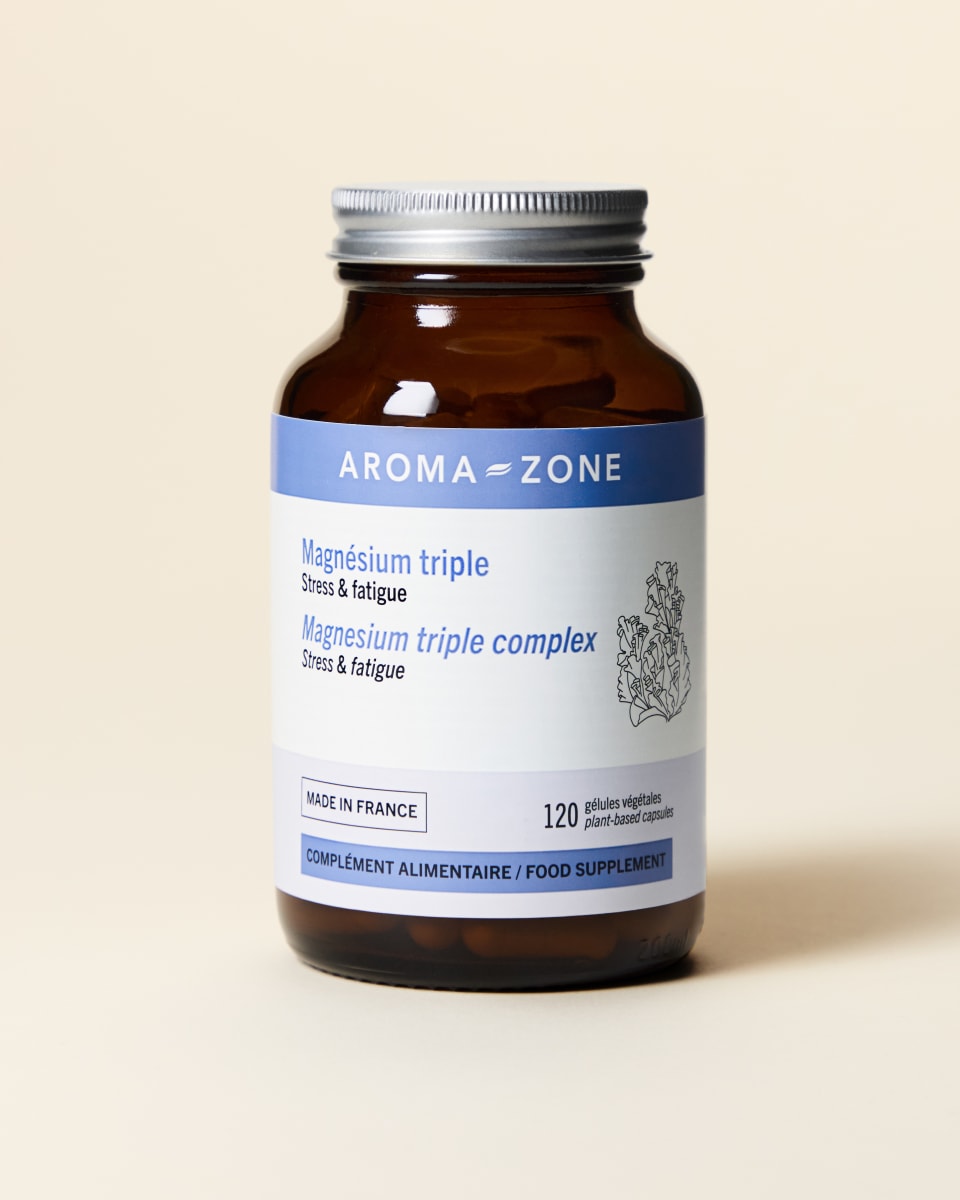
Our triple magnesium food supplement

Triple magnesium

A unique combination of three magnesiums for enhanced bioavailability, good digestive tolerance and optimal assimilation, this magnesium food supplement could be described as next gen! This vegan magnesium food supplement, with no unnecessary additives, in capsules of 100% plant origin, combines:


100% pure, 100% chelated magnesium bisglycinate, with no magnesium oxide, containing 11% magnesium by mass.


Marine magnesium, a highly purified 100% natural magnesium extracted from seawater off the coast of Ireland. It contains 72 other trace minerals that act in combination to boost effectiveness.


Organic sea lettuce extract, a 100% natural form of magnesium containing 25% magnesium.


This food supplement is recommended for fatigue and stress, and for muscle recovery. It helps reduce fatigue, contributes to the proper functioning of the nervous system, and promotes protein synthesis and good bone health.

The right dose: 1 to 3 capsules a day to cover the most commonly recommended daily intake of magnesium. Take with meals for better absorption.

Recommended duration of treatment: For maximum effectiveness, we recommend a course of treatment lasting between 40 days and 3 months. A 120-capsule pot of triple magnesium covers a 40-day course of treatment, taking 3 capsules a day.

Magnesium and pregnancy: There are no known contraindications to taking this triple magnesium food supplement during pregnancy or while breastfeeding. However, pregnant or breastfeeding women are advised to seek the advice of a healthcare professional before taking any food supplements.


Precautions and contraindications

  • This food supplement is intended for adults only and is not suitable for children.

  • Food supplements should be used as part of a varied, balanced diet and a healthy lifestyle.

  • Never exceed the recommended dosage.

  • If you are pregnant or breastfeeding, always seek the advice of your doctor or midwife before starting a course of food supplements.

  • Sea lettuce extract contains a small amount of iodine (< 10 µg for the daily dose of 3 capsules, i.e. less than 6.7% of the nutritional reference value of 150 µg / day for iodine). If you have thyroid problems, ask your doctor for advice.

  • Magnesium may have laxative effects on some people.

Discover Aroma-Zone triple magnesium food supplement

Find out more

Which food is the richest in magnesium?

Raw cocoa (approximately 499 mg of magnesium per 100 g of product) is one of the foods richest in magnesium, along with wheat germ, cooked periwinkles, sunflower seeds, Brazil nuts, and dried beans.

Where can I find magnesium?

In your food! Brazil nuts, dried fruit, dried beans, spinach, seafood, pumpkin seeds, bananas, dark chocolate, raw cocoa and wholegrain cereals are just some of the foods richest in magnesium.

What is the best natural magnesium?

Marine magnesium is reputed to be one of the best sources of supplemental magnesium because it is easily absorbed by the body.

However, the best source of natural magnesium remains a balanced, seasonal, varied and colourful diet, rich in fruit, vegetables, wholegrain cereals, oilseeds and pulses!

Spotlight on our Naturopathic editor, Lucie Granjon

Passionate about plants and their properties, she started her career as a perfumer before moving to the world of natural beauty and aromatherapy over 10 years ago. Lucie supports ethical and committed brands with strategy development, product formulation and expert advice for their customers. She has worked with the Aroma-Zone team on several books, including "Le grand guide de l'Aromathérapie et des cosmétiques naturels" ("The Complete Guide to Aromatherapy and Natural Cosmetics"). She also has years of training in aromatherapy, herbalism and essential oil distillation, and supports the work of French plant growers.