
Ylang-ylang (Cananga odorata) is a tropical tree of the Annonaceae family. It is native to the Moluccas archipelago, located east of Indonesia. First cultivated in Manila, it is now a major economic resource in the Indian Ocean. It is found in the Comoros, Madagascar, and Mayotte, where it is nicknamed “the yellow gold of the Mahorais” and featured on the island’s coat of arms. This tree bears small, pale yellow, star-shaped flowers. Highly fragrant, they exude a distinctive scent that leaves no one indifferent. Its warm, heady notes have made it a favourite among perfumers, who consider it one of the most sensual fragrances. However, its appeal extends beyond its fragrance, as ylang-ylang is also traditionally valued for its many uses and properties.
What Are the Benefits of Ylang-ylang?
Published on: Friday, May 02, 2025, Updated on: Friday, October 30, 2026
Ylang-ylang's name literally means “the flower of flowers.” Traditionally associated with peace and meditation, particularly during religious rituals, this plant is a natural remedy for soothing the heart, calming stress, and alleviating sexual dysfunction. Although they reign supreme in perfumery and aromatherapy, the benefits of Ylang-ylang also extend to skin and hair care. Feel free to use it to refresh your complexion’s radiance or to prevent hair loss, especially during seasonal changes. To discover the amazing benefits of Cananga odorata (Ylang-ylang) at home, treat yourself to the hydrosol or its most concentrated form - the essential oil.
Contents
What is Ylang-ylang?
Good to Know
There are two forms of Cananga odorata, but only the Genuina form (and not Macrophylla) is authorized to bear the name Ylang-ylang.
What Are the Properties of Ylang-ylang Totum?
Did You Know?
The term “totum” refers to the process of producing ylang-ylang essential oil. Its distillation yields several fractions, varying in density and concentration of active ingredients: Ylang-ylang I (the least concentrated), Ylang-ylang II, and Ylang-ylang III (the most concentrated). The totum form combines these three fractions for optimal aromatic potency.
When discussing the benefits of Ylang-ylang, the focus is primarily on those of its essential oil, which is its most active and valuable form. It consists mainly of sesquiterpenes (germacrene-D, beta-caryophyllene, farnesene, etc.). These biochemical molecules give it its warm fragrance as well as remarkable soothing properties. It also contains monoterpenols, such as linalool, which is responsible for its floral notes and antibacterial properties. Finally, its esters (benzyl acetate and geranyl acetate) enhance its sedative and blood-pressure-lowering effects.
What Are the Benefits of Ylang-ylang?
Its Benefits for Your Skin
Ylang-ylang, known as “the flower of flowers,” is a wonderful natural ally for caring for your skin. It may be particularly suitable for you if you have mature or visibly stressed skin. In the Philippines, when macerated in coconut oil, it is used to make boori-boori. This multifunctional ointment allows locals to nourish their skin after sun exposure or a saltwater bath. It can be considered the Philippine equivalent of Tahitian monoi.
Against the Signs of Ageing: Several of its biochemical compounds combine regenerative and antioxidant properties. This is why it is used to stimulate skin cell renewal and firm the appearance of aging skin
For a Dull Complexion: Thanks to its regenerating benefits, Ylang-ylang is one of the essential ingredients for brightening your complexion. Incorporate it into your recipes if you feel your skin looks dull or tired, for example
For Skin Imperfections: It is said to help balance sebum production. And therefore, it may be effective at reducing shine on oily skin, as well as helping to clear up any existing minor imperfections (blackheads, whiteheads, etc.).
Its Benefits for Your Hair
The benefits of ylang-ylang have earned it a place as an ingredient in many hair care products. There is also a traditional hair oil recipe, invented by Europeans around the 19th century: Macassar oil. It was reputed to promote hair growth. The famous boori-boori mentioned above also serves as a hair care treatment in its own right, nourishing the hair and protecting it from the harsh tropical climate.
For Hair Loss: it is often used as a hair tonic to support scalp cell regeneration and thus promote healthy growth. In the past, Macassar oil was touted as a “cure” for baldness
For dull Hair: If your hair feels lifeless, make room for this tropical flower in your hair care routine. Traditionally recommended for limp, lackluster hair, it helps restore natural body and shine
For Oily Scalps: Finally, it is said to have sebum-regulating properties, meaning it can help prevent excess sebum at the roots. It is this overactivity of the sebaceous glands on the scalp that gives hair a greasy, sticky appearance
Its Benefits for Your Wedeell-being
The essential oil of Cananga odorata is one of the cornerstones of aromatherapy. Traditionally, as it is reputed to be an aphrodisiac, Ylang-ylang flowers were placed in the bedroom and on the bed of young Indonesian couples before their wedding night. Brahmin priests also used it to enhance their charisma during Hindu rituals and religious ceremonies. Today, it is primarily used in massage or aromatherapy for its pleasant and balancing effects.
For Stress: The benefits of Ylang-ylang are particularly suited for people suffering from tension, nervousness, or burnout. A Korean study has shown that inhaling its essential oil lowers blood pressure and cortisol levels
For Depression: It is the ultimate flower of good cheer! Said to be an aphrodisiac, it is therefore known to promote letting go and the expression of emotions. It may be helpful in cases of emotional blockages, nervous exhaustion, or low libido
For General Fatigue: Thanks to its calming and soothing effects, Cananga odorata is recommended to help with periods of insomnia or sleep disturbances. Almost paradoxically, it is also said to be an excellent mental tonic when you’re feeling sluggish
Our Ylang-ylang-based Products
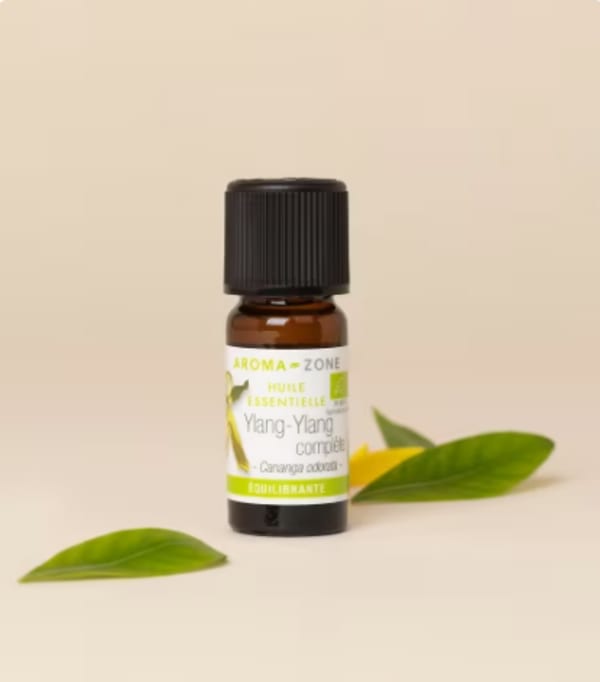
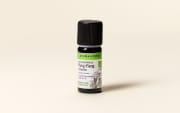
Organic Full-Spectrum Ylang-ylang Essential Oil. Ideal for use in aromatherapy. A blend of fractions I, II, and III, this is the most balanced version of Cananga odorata essential oil. Choose it for use in olfaction, atmospheric diffusion, or aromatic baths, for example. Dosage as a cosmetic active ingredient: up to 0.4%.
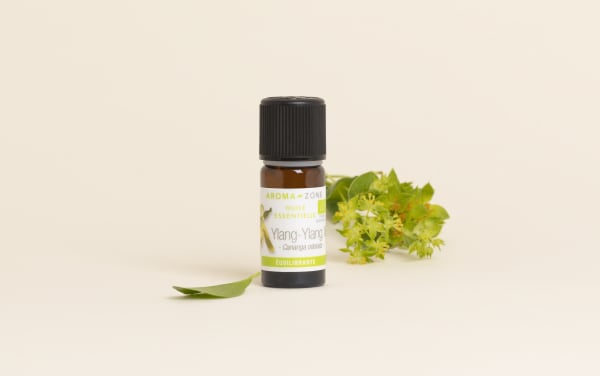
Organic Ylang-ylang III Essential Oil. Ideal for use in cosmetics. It allows you to customize our neutral bases and your recipes with just a few drops. Note that its delightful fragrance is even more delicate and sweet than that of the full-spectrum version. Dosage: up to 0.4% in your homemade cosmetic preparations.
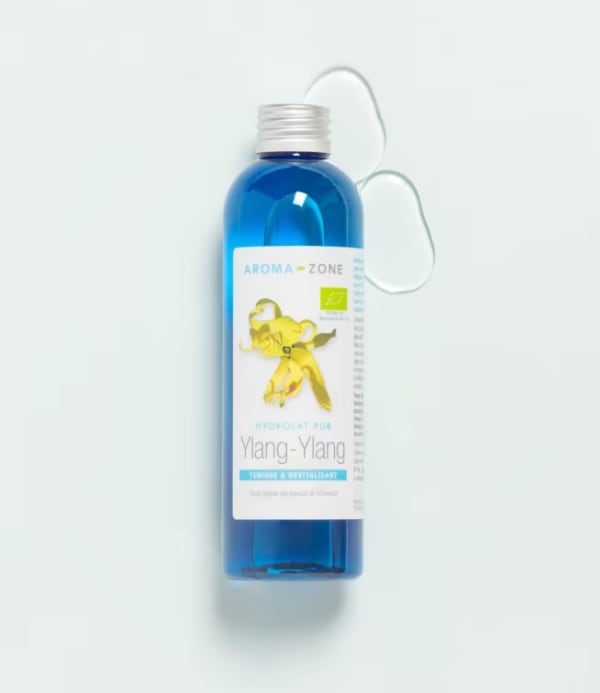
Organic Ylang-ylang Hydrosol. Ideal for pregnant women and anyone who cannot use essential oils. Hydrosol (or floral water) has a lower concentration of active molecules than essential oil, making it easier to measure out if you’re new to making your own products.
How Can You Enjoy the Benefits of Cananga odorata in Your Daily Life?
To Revitalize Your Skin
When Using Ylang-ylang Essential Oil: Simply be sure to dilute it well in a carrier oil before applying it to the skin of your face or body
By Customizing One of Our Neutral Bases: You can also customize most of our body and face creams with a small dose of Ylang-ylang essential oil
By Using Ylang-ylang Hydrosol : Unlike the essential oil, it can be used undiluted on the skin to refresh and revitalize it (as a spray or on a reusable cotton pad)
When Making Your Own Homemade cosmetics: We offer many recipes (including two for soaps a little further down) to create your own Ylang-ylang-enriched skincare products
To stimulate hair growth
Massage: Apply to your scalp before shampooing using Ylang-ylang hydrosol or essential oil (diluted in rocket oil, for example)
By Customizing One of Our Hair Care Products: You can enrich some of our neutral shampoo or hair mask bases with a few drops of Ylang-ylang
By Making Your Own Homemade Cosmetics: Ylang-ylang rinse vinegar, Ylang-ylang hair mask, Ylang-ylang serum for split ends, Ylang-ylang balm, etc., so have fun!
To relax and let go
Diffusion: To enjoy the benefits of Ylang-ylang this way, you’ll first need an essential oil diffuser, preferably a nebulising type
In an Aromatic Bath: A few drops of essential oil in a little shower gel or milk powder. It can also be incorporated into a recipe for a bath fizzer
In a Sensual Massage: Dilute a small amount of essential oil in sesame vegetable oil (one of the best known for providing a smooth, long-lasting glide!)
As a Perfume: You can make your own natural homemade perfume or opt for an Ylang-ylang home fragrance, which you can spray on your sheets, fabrics, curtains.
Our Selection of Scented Soap Recipes for You




Precautions for Use
Like all essentail oils, the Ylang-ylang essential oil (Cananga odorata) is a powerful substance. Use it with caution and follow the recommended dosages in our recipes and technical data sheets. It contains allergens that may cause a reaction in sensitive individuals. Essential oils, in general, are not recommended for pregnant women, breastfeeding women, and children under 3 years of age. As this list is not exhaustive, we recommend that you consult your doctor if you have any doubts.
Expert Advice
Don’t hesitate to use Ylang-ylang in all your cuddle rituals with your partner. In a shared aphrodisiac bath, as a seductive perfume, or as an enchanting massage oil. Vary your pleasures to awaken your senses and unleash your sensuality in a simple and natural way against a backdrop of exoticism.
Spotlight on Our Writer, Hélène Betoux

Hélène Betoux is a French beauty journalist specialising in digital media. She writes practical tips, advice and guides to help readers choose the right beauty products. Passionate about natural, organic and clean beauty, she explores the latest trends and innovations in the industry.
Bibliography
Bénini C. et al., “Ylang-ylang [Cananga odorata (Lam.) Hook.f. & Thomson]: a little-known essential oil plant in an endangered industry” in Biotechnol. Agron. Soc. Environ., volume 14, issue 4, 2010, pp. 693–705.
Couic-Marinier F., Laurain-Mattar D., “Ylang-ylang Essential Oil” in Actualités pharmaceutiques, volume 58, issue 589, October 2019, pp. 57–59.
Demars V., Béguier T., “Aromaparfumerie: Ylang-ylang” in Hegel, issue 1, pp. 57–59.
Grosjean N., Beauty Through Essential Oils, Eyrolles Pratique, 2008.
Miles E., The Big Book of Essential Oils for Dummies, First Editions, 2016.
Gérault G. et al., The Guide to Aromatherapy, Albin Michel, 2011.




