Honeysuckle (Lonicera): Definition, Properties, and Benefits

Honeysuckle (Lonicera): Definition, Properties, and Benefits


By Kévin Desenne

Published on: Wednesday, February 19, 2025, Updated on: Thursday, October 29, 2026

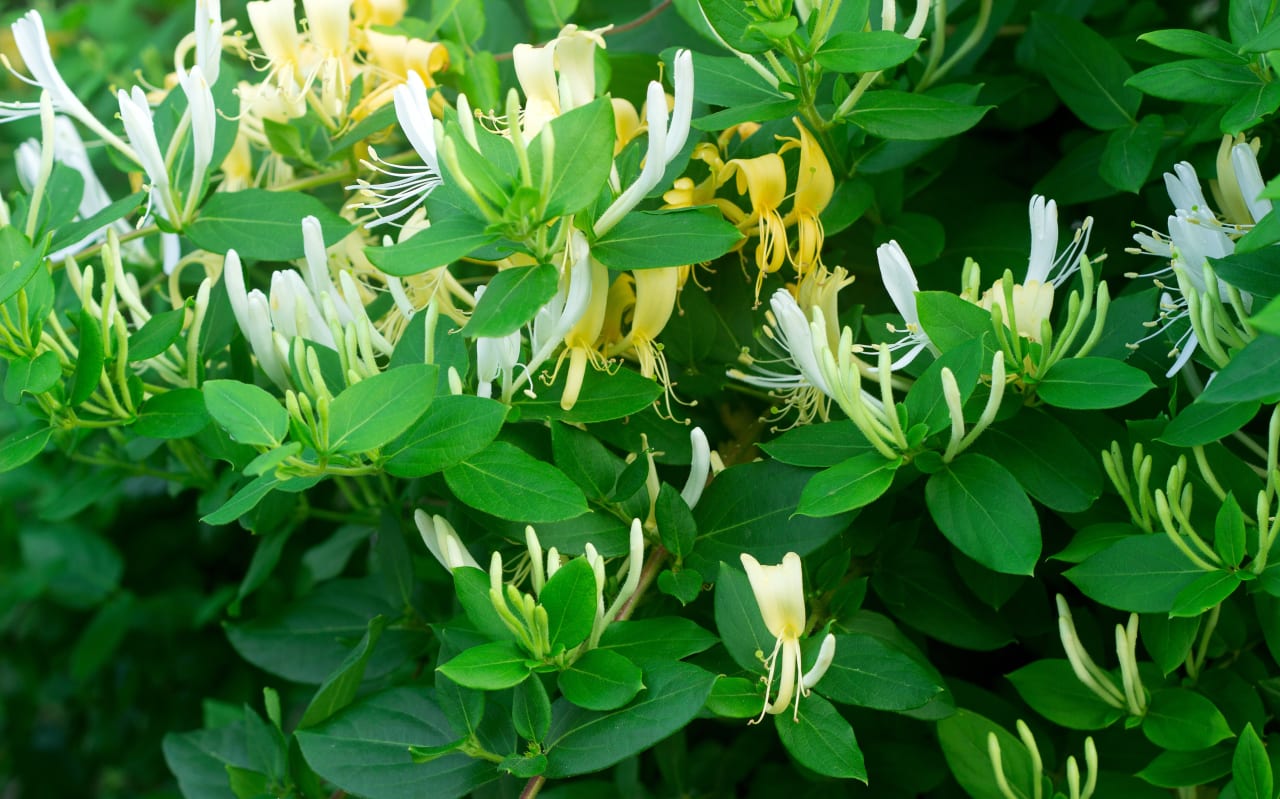
Honeysuckle is a symbol of love and friendship. Its flowers, yellow on the inside and red on the outside, have a naturally subtle, delicate honeyed fragrance, a scent so prized that it inspired the courtly love stories of the poet Marie de France as far back as the 12th century. But could this climbing plant, a familiar sight in gardens, also offer medicinal benefits? Herbalists traditionally used it to ease skin problems. It also appears in some more contemporary remedies, such as homoeopathy and flower elixirs, making it a helpful ally for taming our emotions. Discover honeysuckle's lesser-known virtues and how to use it.

Contents

Related products

Definition

There are around 158 different species of honeysuckle, all grouped under the genus Lonicera. The name Lonicera was given by Linnaeus, a Swedish naturalist, physician and botanist regarded as the father of binomial nomenclature used in biological classification, in honour of the German physician and botanist Adam Lonitzer (1528–1586), author of the Book on Herbs. The origin of the word ‘Chèvrefeuille’ (a translation of the Latin Caprifolium) may stem either from the fact that goats enjoy its foliage, or from the comparison drawn between the plant and the animal, both of which seem to take pleasure in climbing everywhere. Garden honeysuckle or common honeysuckle (Lonicera caprifolium L.) is a species native to Europe and Western Asia. It is a subshrub growing to 1 to 2 metres. This climbing plant twines its tendrils around a support, preferably in light, dry copses. It flowers from May to June and is mainly used ornamentally for its colours and pleasant fragrance. It is hardy and can withstand temperatures as low as -20°C. Its fruits, which are orange-red berries, are slightly toxic. Today, garden honeysuckle is used in various forms, including as a flower essence, essential oil, and homoeopathic preparation.

Remarkable Species

Japanese honeysuckle (Lonicera japonica Thunb.) has been used for thousands of years in Traditional Chinese Medicine (TCM) and is a key ingredient in numerous remedies. Recent research has demonstrated its anti-inflammatory, antiviral, antibacterial, antioxidant and immunostimulant effects. Blue honeysuckle (Lonicera caerulea), whose bluish berries are edible and considered a superfruit, is rich in Vitamin A and Vitamin C, as well as potassium, calcium, phosphorus, magnesium, antioxidants, and fibre.
The Main Properties of Honeysuckle

Traditionally, honeysuckle has been used for its anti-inflammatory, circulatory, respiratory, skin-soothing, and relaxing properties. Here are its main properties:

Anti-Inflammatory: Traditionally, its floral water was applied to linen compresses to soothe eye inflammation.

Circulatory: The leaves were used to relieve problems with blood circulation, particularly in the legs.

Respiratory and Antispasmodic: The flowers, prepared as a herbal tea, were valued for their soothing effects on respiratory conditions and their relaxing action on the airways.

Skin: Infusions of the leaves and flowers, taken on an empty stomach, were reputed to relieve certain skin conditions such as eczema.

Antiseptic: Its essential oil contains linalool and limonene, compounds with antibacterial, antifungal, and antiseptic properties.

Relaxing and Soothing: In homoeopathy and flower essences, it is known to promote relaxation and emotional balance. Linalool helps to reduce stress and improve mood.

Its Benefits

Honeysuckle is a plant with multiple benefits, used as much for its soothing and antiseptic effects as for its action on circulation and the skin.

  • Soothes Inflammation: Its anti-inflammatory properties help to calm skin irritations, redness and certain types of eye inflammation. In the past, its distilled water was applied as a compress to relieve tired or irritated eyes

  • Supports Blood Circulation: Honeysuckle leaves were traditionally used to relieve the sensation of heavy legs and stimulate venous circulation

  • Aids Breathing: When brewed as a herbal tea, its flowers have expectorant and antispasmodic properties, helping to soothe a cough, relieve bronchial irritation and clear the airways

  • Promotes Emotional Balance: In flower essences and homeopathy, it is renowned for its relaxing and harmonising effect on mood, helping to reduce stress and anxiety

  • Improves Skin Condition: When consumed as a herbal tea or applied topically, it helps to soothe skin problems such as eczema or irritation

  • Has Antiseptic and Antimicrobial Properties: Its essential oil, rich in linalool and limonene, offers protection against certain bacteria and fungi, thereby supporting the health of the skin and mucous membranes

  • Aids Digestion: As a herbal tea, it can promote greater digestive comfort by helping to relieve intestinal cramps and bloating

How Should It Be Used?

Honeysuckle lends itself to a variety of uses, allowing you to reap its full benefits – whether in aromatherapy, as a herbal tea, in cosmetics, or in cooking.

  1. In Aromatherapy: In cases of stress or low morale, inhaling the essential oil helps restore a sense of calm and promotes a more serene mood

  2. As a Herbal Tea: Steep 1 teaspoon of honeysuckle flowers and 1 teaspoon of peach blossoms in a cup of boiling water for 5 minutes to make a relaxing and balancing herbal tea

  3. In Cosmetics: The essential oil is sometimes used in skincare products for mature skin and/or skin prone to acne. The Honeysuckle cosmetic fragrance is particularly well suited for use in emulsions to provide a delightful floral note

  4. In Cooking: The flowers of certain varieties, such as Lonicera japonica, can be used in syrup to flavour drinks, in jelly to garnish open sandwiches and desserts, or even in fritters, in the same way as courgette flowers. You can also eat them fresh or use them to decorate dishes. Warning: the berries of many honeysuckle species are poisonous and must not be eaten.

Our Natural Solutions

Honeysuckle

Natural Honeysuckle Fragrance

This rich and elegant floral fragrance is perfect for adding a feminine and luxurious touch to all types of face and body care products.

Intense, sweet and jasmine-like notes, with a green, plant-based base, creating a distinctly cosmetic scent. This fragrance is not suitable for use on the lips.

Discover Our natural Honeysuckle Fragrance

Our Aroma-Zone Recipes

Precautions for Use

Apart from using the flowers to make herbal tea, internal use of other parts of the plant is generally not recommended, particularly the fruits, which are toxic.

Expert’s Advice

Although there is little scientific evidence to support this, garden honeysuckle seems to exert a subtle influence on our emotional state. Approach it through your senses: observe its shapes, breathe in its scent, taste its infusion and let your feelings emerge. This intimate connection with nature, so dear to alchemists and sensitive souls, often reveals symbols and deep-seated emotions.

Article Written By Kévin Desenne: Herbalist

Kévin Desenne.png

Kévin is an herbalist with an unconventional background; he is a musician with a passion for nature and ancient knowledge. He has studied martial arts, energy work and traditional medicines under various masters. He holds a diploma in herbalism from the École des Plantes in Paris. He trained in naturopathy at Cenatho (the European College of Holistic Naturopathy). He currently runs ‘Le Secret de L’Herboriste’, a company specialising in natural products and advice. He also holds a diploma from Harvard in ‘Power and Influence for Positive Impact’.

Bibliography

  1. https://www.tela-botanica.org/bdtfx-nn-39867-description

  2. https://www.mnhn.fr/fr/chevrefeuille-des-baleares

  3. https://pmc.ncbi.nlm.nih.gov/articles/PMC7127058/

  4. The marvellous virtues of plants, ancient secrets, and the main properties of animals and minerals, compiled by Suzanne Foinard: (Page 98)

  5. https://gallica.bnf.fr/ark:/12148/bpt6k1507992w/f100.image.r=lonicera%20caprifoliumvertus?rk=85837;2

  6. http://www.lejardindesplaisirs.fr/gemeaux/les-recettes-gourmandes-du-gemeaux/beignets-de-fleurs/

  7. https://miam-berry.com/2022/06/02/gelee-de-chevrefeuille-facon-miam-berry/

  8. https://fleursdebach.fr/38-fleurs-de-bach/chevrefeuille-honeysuckle/

Frequently Asked Questions

Frequently Asked Questions