
Guide to essential oils

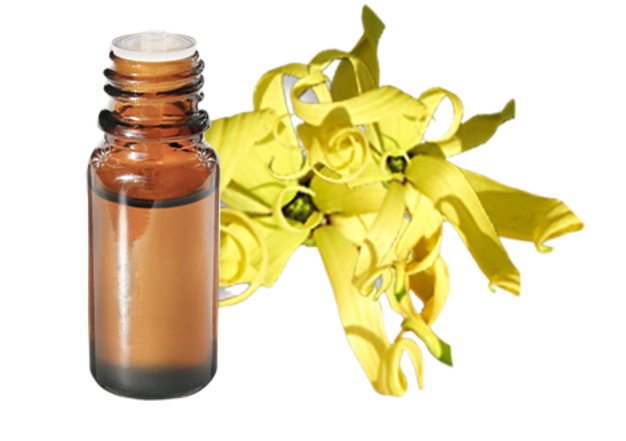
Essential oil of Ylang-ylang III

With its powerful, voluptuous fragrance, Ylang-ylang III essential oil is of interest in perfumery. Reputed to be an aphrodisiac, Ylang-ylang III essential oil is appreciated as a vapour or for use in massage oils. Ylang-ylang III essential oil also helps to calm nervousness. Highly prised in hair care, Ylang-ylang III essential oil is known to strengthen and beautify the hair.

How to use

  • Skin application and massage

    Skin application and massage

    Appropriate

  • Diffusion

    Diffusion

    Appropriate

  • Aromatherapy bath

    Aromatherapy bath

    Appropriate

  • Cosmetic active ingredient

    Cosmetic active ingredient

    Appropriate

  • Food grade

    Food grade

    Appropriate

Features

Properties and uses

Precautions

Find out more

Features

Production process

Steam distillation, 3rd distillate

Part of the plant used

Flowers

Botanical name

Cananga odorata

Warning

The properties, information and methods of use below are quotes from reference books or websites on aromatherapy, hydrolatherapy and phytotherapy. This general information is provided for informative purposes only and in no way constitutes medical guidance. Under no circumstances can this information be used as a substitute for a medical diagnosis, consultation or follow-up, nor can it incur our liability. We recommend that you consult the guide to essential oils before using them, so that you are aware of any precautions that need to be taken. If in doubt, consult a doctor before using essential oils.

Properties and uses

Ylang-Ylang III essential oil is traditionally used for : Stress

Health

Wellness

Beauty

Kitchen

Find out more

In aromatherapy, the essential oil ofwhole Ylang-ylang is generally preferred, withYlang-ylang III being used more for cosmetics and perfumery. Nevertheless, Ylang-ylang III essential oil has interesting antispasmodic effects due to its monoterpene ester content, and is traditionally known to have effects similar to those of whole Ylang-ylang in calming breathing and heart rate in cases of stress.

Properties

Ylang-ylang iii essential oil is recognised for its health benefits:

  • Antispasmodic

  • Respiratory and cardiac****calming , hypotensive

  • Anti-inflammatory

  • Anti-parasitic, anti-infectious

Uses

Ylang-Ylang III essential oil is traditionally used to improve the following situations:

  • Tachycardia, stress-related high blood pressure

  • Spasmodic disorders: nervous stomach aches, painful periods, chronic pain

  • Dermatitis, scabies

Synergies

  • Calming for the heart: True Lavender, Seville orange essential oils, etc.

  • Antispasmodic: Seville orange, Roman chamomile, tropical basil essential oils, etc.

In practice

Spasmodic disorders: Mix in your oil blend. Massage or rub your mixture into the affected area.

Precautions

  • Do not use during pregnancy or when breastfeeding, or on children under the age of 3.

  • Possible skin irritation: always use well diluted on the skin.

  • Keep out of reach of children.

  • Certain natural compounds contained in this essential oil may present a risk of allergy in certain sensitive individuals when the essential oil is incorporated into a cosmetic composition (according to the 7th Amendment of the European Directive on cosmetic products (2003/15/EC)): benzyl benzoate, linalool, benzyl salicylate, geraniol, farnesols, eugenol, citral.

  • As a general rule, always test-apply your mixture in the crease of the elbow at least 48 hours before use.

  • For use as a cosmetic ingredient, please refer to the specific precautions.

Find out more

The term Ylang-ylang originated in the Philippines, where it is known as " alang-alang " to refer to the flowers that dance in the breeze. In Indonesia, Ylang-ylang means " flower of flowers ". In fact, there is no perfume more floral, sensual and exotic. The difference between the essential oils ofYlang-ylang III andfull Ylang-ylang lies in the way they are obtained (duration of distillation) and therefore in their composition and fragrance.

Equivalents

Essential Oils

1 ml = approximately 35 drops (with our Aroma-Zone dropper caps)

Carrier oils

1 pump (Aroma-Zone aluminium pump) = approx. 0.15 ml

Mass / Volume conversion (for a liquid)

Mass (g) = Density x Volume (ml) at 20°C

Further information

1 full teaspoon = between 3 and 4.5 ml

1 full tablespoon = between 7.5 and 10 ml


However, these spoon ratios depend on a number of factors (e.g. viscosity of the liquid, temperature, depth and size of the spoon, rheological behaviour of the liquid), and we strongly advise you to use precise measuring equipment, such as graduated test tubes, graduated pipettes, and precision scales.

Aromatherapy recipes from the bibliography

EO = Essential Oil VO = Carrier Oil or Macerated Oil

Chicken breast with almonds (N. Le Foll)

Kitchen

Serves 4 - Preparation: 15 minutes - Cooking time: 15 minutes

  • 4 chicken breasts

  • 2 onions

  • 1 knob fresh ginger

  • 20 cl soy cream

  • 50 g slivered almonds

  • 2 tbsp neutral oil

  • salt and freshly ground pepper

  • 1 drop of Ylang-Ylang essential oil

Directions: Peel and chop the onions. Cut the chicken breast into strips. Peel and grate the ginger. Brown the onions in the oil in a frying pan for 5 minutes. Add the chicken breast and ginger and cook for 3 minutes, stirring constantly. Pour in the soy cream, almonds and Ylang-Ylang essential oil. Season with salt and pepper and simmer for a further 5 minutes. Serve with steamed broccoli or courgettes.

Ylang-Ylang ice cream and Mandarin madeleine (N. Le Foll and B. Da Costa)

Kitchen

Serves 6 - Preparation: 45 minutes - Cooking time: 25 minutes

  • 4 egg yolks

  • 50 cl lotion

  • 120 g caster sugar

  • 250 g red berries

  • 1 drop of Ylang-Ylang essential oil

  • For 12 madeleines :

  • 100 g butter

  • 120 g sugar

  • 50 g flour

  • 30 g almond powder

  • 3 egg whites

  • 4 drops of Mandarin essential oil

Procedure: Prepare the ice cream. Bring the lotion to the boil and, off the heat, add the Ylang-Ylang essential oil. Whisk the egg yolks with the sugar until the mixture whitens, pour the hot lotion over it, stir and cook over a low heat until the cream coats the spoon. Leave to cool, then freeze in an ice-cream maker. Serve with berries, blueberries, blackberries, raspberries, wild strawberries, etc. To make the madeleines, melt the butter; mix in the flour, sugar and almond powder. Whisk the egg whites until stiff. Fold in the mixture of flour, Mandarin essential oil and melted butter. Preheat the oven to 150°C (gas mark 5). Pour the batter into buttered madeleine moulds, slide into the oven and bake for 10-12 minutes. Check that the pastry is cooked by inserting the blade of a knife: it should come out clean.

Chocolate and Ylang-Ylang Charlotte (A. Pataud)

Kitchen

  • 200 g sponge biscuits

  • For the charlotte :

  • 200 g dark chocolate (preferably pastry chocolate containing more than 50% cocoa)

  • 120 g caster sugar

  • 5 egg yolks

  • 1 drop of Ylang-Ylang essential oil

  • For the syrup :

  • 10 cl water

  • 50g caster sugar

  • 5 cl Cointreau

Procedure:

  • Prepare the syrup: Mix the sugar, water and cointreau in a saucepan. Bring to the boil for a few moments. Set aside.

  • Prepare the mousse:

    • Break the chocolate into pieces. Melt in a bain-marie. Leave to cool.

    • Put the remaining sugar in a saucepan with a little water (about 1 tablespoon). Boil for about 3 minutes. Remove from the heat. This hot syrup will be used to make the mousse, as described below.

    • Break the eggs whole and separate the yolks from the whites.

    • Whisk the egg yolks, pour in the hot syrup in a thin stream until the mixture whitens and triples in volume. Mix the eggs, essential oil and melted chocolate, stirring constantly.

    • Beat the egg whites until stiff with a pinch of salt. Gently fold into the mixture.

  • Assemble the charlotte:

    • Soak the biscuits in the reserved syrup you prepared at the start, and line the sides and bottom of a charlotte mould. Pour the mousse halfway up the mould. Top with a layer of biscuits. Add the rest of the mousse and finish with the syrup-soaked biscuits.

    • Chill in the fridge for 3 hours.

Flower oil (A. Pataud)

Kitchen

How to use: Mix 1 drop of Ylang-Ylang (Cananga odorata) essential oil, 1 drop of Geranium (Pelargonium graveolens) essential oil and 5 cl of rapeseed oil. To give your dishes a bucolic touch.

Bibliography

1

"Huiles essentielles - 2000 ans de découvertes aromathérapeutiques pour une médecine d'avenir"

Dominique Baudoux

2

'The Practice Of Aromatherapy'

Dr Jean Valnet - Éditions Maloine

3

'L'aromathérapie exactement'

P. Franchomme and Dr D. Pénoël

4

'La bible de l'aromathérapie'

Nerys Purchon

5

'L'ABC des huiles essentielles'

Dr Telphon

6

'Aromatherapy'

Nelly Grosjean

7

"Les huiles essentielles pour votre santé"

G. Roulier

8

"Les cahiers pratiques de l'aromathérapie française - Pédiatrie"

Dominique Baudoux - Editions Amyris

9

Aroma-News newsletters from the NARD association

10

"L'aromathérapie - Se soigner par les huiles essentielles"

Dominique Baudoux - Editions Amyris

11

« L’aromathérapie énergétique – Guérir avec l’âme des plantes »

Lydia Bosson - Editions Amyris

12