
Guide to essential oils

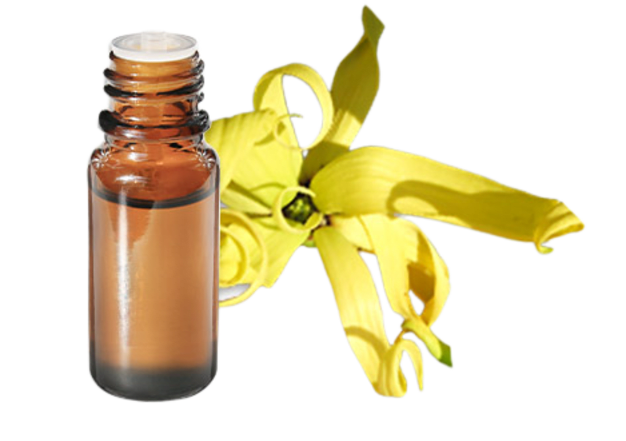
Essential oil of Ylang-ylang complete

Ylang-ylang essential oil is recognised for its effectiveness against stress and agitation. Its powerful and voluptuous scent is a well-known aphrodisiac. Ylang-ylang essential oil is also one of the most commonly used oils in hair care, providing strength and shine. In scent-based therapy, it helps to calm anger, rage, and irritability, while facilitating communication for introverted individuals.

How to use

  • Skin application and massage

    Skin application and massage

    Suitable

  • Diffusion

    Diffusion

    Suitable

  • Aromatherapy bath

    Aromatherapy bath

    Suitable

  • Cosmetic active ingredient

    Cosmetic active ingredient

    Suitable

  • Food grade

    Food grade

    Possible but not recommended

Features

Properties and uses

Precautions

Find out more

Features

Production process

Complete steam distillation

Part of the plant used

Flowers

Botanical name

Cananga odorata (Lam.) Hook F. et Thomson forma genuina (totum)

Warning

The properties, information and methods of use below are quotes from reference books or websites on aromatherapy, hydrolatherapy and phytotherapy. This general information is provided for informative purposes only and in no way constitutes medical guidance. Under no circumstances can this information be used as a substitute for a medical diagnosis, consultation or follow-up, nor can it incur our liability. We recommend that you consult the guide to essential oils before using them, so that you are aware of any precautions that need to be taken. If in doubt, consult a doctor before using essential oils.

Properties and uses

Ylang-Ylang essential oil is traditionally used to combat: stress

Health

Wellness

Beauty

Kitchen

Find out more, etc.

Rich in monoterpene esters with antispasmodic effects, ylang-ylang essential oil is traditionally used to relieve spasmodic pain, especially related to stress (such as stomach aches, etc.). It is also the most well-known aromatherapy oil for helping with tachycardia or hypertension related to stress.

Properties

Ylang-ylang essential oil is recognised for its health benefits:

  • Calming respiratory, cardiac, and hypotensive antispasmodic

  • Anti-inflammatory

  • Antiparasitic and anti-infective

Uses

Ylang-Ylang essential oil is traditionally used to improve the following condiitions:

  • Tachycardia, stress-related high blood pressure

  • Spasmodic disorders: nerves-based stomach aches, painful periods, chronic pain

  • Dermatitis, scabies

Synergies

  • Soothing to the heart : True lavender and Seville orange essential oils, etc.

  • Antispasmodic : Seville orange, Roman chamomile, and Tropical basil essential oils, etc.

In practice

Spasmodic disorders: Mix in your oil blend. Massage or rub your mixture into the affected area.

Precautions

  • Do not use during pregnancy or when breastfeeding, or on children under the age of 3.

  • Possible skin irritation: always use well diluted on the skin.

  • Keep out of reach of children.

  • Certain natural compounds contained in this essential oil may present a risk of allergy in certain sensitive individuals when the essential oil is incorporated into a cosmetic composition (according to the 7th Amendment of the European Directive on cosmetic products (2003/15/EC)): benzyl benzoate, linalool, benzyl salicylate, geraniol, farnesols, eugenol, citral.

  • As a general rule, always test-apply your mixture in the crease of the elbow at least 48 hours before use.

  • For use as a cosmetic ingredient, please refer to the specific precautions.

Find out more

The term Ylang-ylang originated in the Philippines, where it is known as " alang-alang " to refer to the flowers that dance in the breeze. In Indonesia, Ylang-ylang means " flower of flowers ". In fact, there is no perfume more floral, sensual and exotic. The difference between the essential oils ofYlang-ylang III andfull Ylang-ylang lies in the way they are obtained (duration of distillation) and therefore in their composition and fragrance.

Equivalents

Essential Oils

1 ml = approximately 35 drops (with our Aroma-Zone dropper caps)

Carrier oils

1 pump (Aroma-Zone aluminium pump) = approx. 0.15 ml

Mass / Volume conversion (for a liquid)

Mass (g) = Density x Volume (ml) at 20°C

Further information

1 full teaspoon = between 3 and 4.5 ml

1 full tablespoon = between 7.5 and 10 ml


However, these spoon ratios depend on a number of factors (e.g. viscosity of the liquid, temperature, depth and size of the spoon, rheological behaviour of the liquid), and we strongly advise you to use precise measuring equipment, such as graduated test tubes, graduated pipettes, and precision scales.

Aromatherapy recipes from the bibliography

EO = Essential Oil VO = Carrier Oil or Macerated Oil

Ylang-Ylang-Flavoured Crispy Beef (A. Pataud)

Kitchen

Serves 6 - Preparation: 20 minutes - Cooking: 20 minutes - Resting: 2 hours

  • 1 beef fillet (1.2 kg)

  • 1 tablespoon of acacia honey

  • 12 sheets of brick pastry

  • 6 cloves of garlic

  • 4 tablespoons of peanut oil

  • Salt, pepper

  • 1 drop of ylang-ylang essential oil

Directions: Preheat the oven to 210°C (gas mark 7). In a bowl, mix 1 tablespoon of peanut oil, acacia honey, and the essential oil. Brush the beef fillet with this mixture and marinate in the fridge for 2 hours.

Heat 1 tablespoon of oil in a sauté pan. When hot, sear the beef fillet, turning it to brown on all sides. Drain it on paper towels and season with salt and pepper. Lay the brick pastry sheets on the work surface and brush with a little oil. Stack them two by two. Wrap the beef fillet in the brick sheets and place it in a baking dish. Lightly crush the garlic cloves and add them to the dish. Roast for 20 minutes.

Remove the crusted fillet from the oven and let it rest for 5 minutes under aluminium foil. Slice thinly and serve with sautéed mushrooms.

Blackberries, Blueberries and Jams (D. Baudoux)

Kitchen

  • 2 drops of Ylang-Ylang essential oil

  • 600 g of blueberries and blackberries

  • 300 g of light brown cane sugar

  • 1 teaspoon of agar-agar powder

Directions: place the fruit (usually a 50/50 split, depending on your harvest, although slightly fewer blackberries than blueberries is preferable if possible) and the light brown cane sugar into a thick-bottomed saucepan. Mix and leave to set over a low heat. Don't leave for too long to avoid caramelising the sugars in the fruit. Cook for 20 to 30 minutes, depending on the size of the fruit and their juice content. Dissolve the agar-agar in a few spoonfuls of water and add to the jam, letting it simmer for 3 minutes. Remove from heat, add the essential oil, stir well, and immediately pour into glass jars. Fill almost to the brim, screw on the lids, and turn the jars upside down. Leave them upside down until they cool.

Flower syrup (A. Pataud)

Kitchen

Directions for use: Mix 1 drop of Ylang-Ylang (Cananga odorata) essential oil, 1 drop of Geranium (Pelargonium graveolens) essential oil and 20 cl of syrup. Add a few spoonfuls to fruit salads.

Bibliography

1

'Huiles essentielles - 2000 ans de découvertes aromathérapeutiques pour une médecine d'avenir'

Dominique Baudoux

2

'The Practice Of Aromatherapy'

Dr Jean Valnet - Éditions Maloine

3

'L'Aromathérapie exactement'

P. Franchomme and Dr D. Pénoël

4

'La bible de l'aromathérapie'

Nerys Purchon

5

'L'ABC des huiles essentielles'

Dr Telphon

6

'Aromatherapy'

Nelly Grosjean

7

'Les huiles essentielles pour votre santé'

G. Roulier

8

'Les cahiers pratiques de l'aromathérapie française - Pédiatrie'

Dominique Baudoux

9

Aroma-News newsletters

NARD Association

10

'Aromatherapy - Healing with essential oils'

Dominique Baudoux

11

'L’aromathérapie énergétique – Guérir avec l’âme des plantes'

Lydia Bosson

12

13

Mes petites recettes magiques aux huiles essentielles, Editions Leduc

D. Festy (2011)