The benefits of olive oil for hair

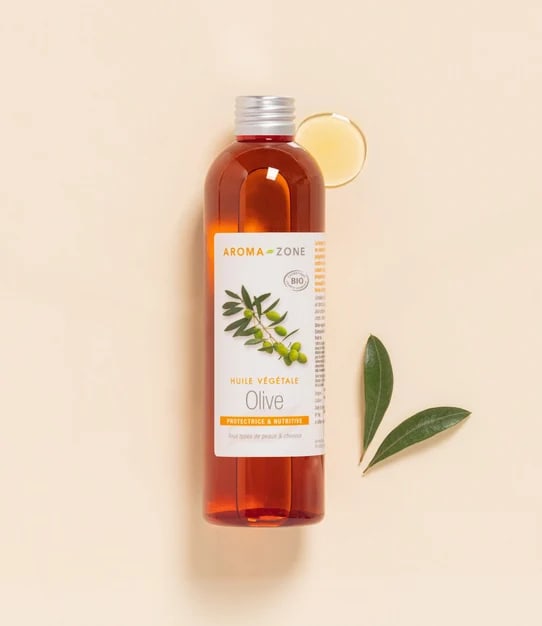
It enhances your best recipes, salads and raw vegetables with sweetness and flavour, but did you know that olive oil is also a premium go-to when it comes to enhancing your hair? Nourishing, repairing, protective and sheathing, it restores strength and shine, prevents hair loss and stimulates healthy hair growth. Used as a mask, oil mask, daily leave-in or scalp treatment, olive oil now has a place in your bathroom as much as in your kitchen.

Reading time: 0 min.

Why is olive oil good for your hair?

Usually found in your kitchen, olive oil is a real all-round treatment for your hair. In addition to its culinary and therapeutic uses, it has been used for thousands of years in many cultures to care for the body and hair. It restores strength and shine, protects and stimulates healthy hair growth. It also soothes, heals and rebalances your scalp.

Its richness in good fatty acids (77% oleic acid (omega 9), 5% linoleic acid (omega 6) and 9% palmitic acid) and antioxidants (vitamin E, squalenes, phenolic compounds, chlorophyll and polyphenols) gives it repairing, nourishing, protective, emollient, healing, anti-ageing and growth-stimulating properties. Used pure or combined with other ingredients with beneficial properties for your hair, olive oil is a complete treatment from your roots to your ends.

What are the benefits of olive oil for hair?

Olive oil has many properties to enhance your hair, including :

  • Nourishes and repairs your hair: olive oil nourishes your hair deep down thanks to its premium fatty acids and antioxidants, which penetrate to the heart of the hair fibre to repair, nourish, fill in micro-cracks and prevent split ends. Its emollient action makes your hair supple and soft. It restores the hair's lipidic film and helps prevent the loss of keratin, the protein that makes up your hair and keeps it strong, shiny and healthy. It smoothes damaged, broken or dry ends to preserve the length of your hair.

  • Protects and strengthens your hair: thanks to its richness in fatty acids, particularly oleic acid, which has a high affinity with the hair, as well as its many antioxidants, slive oil protects your your whole hair, including the ends against everyday damages such as the cold, UV rays, wind, chemical styling products, salty, chlorinated or hard water, pollution, high-temperature styling appliances, rubbing, colouring and bleaching… It restores and strengthens the protective hydrolipidic barrier around the hair, whose role is to protect keratin from deterioration and which is exposed to multiple daily stresses. Your hair is less porous, stronger, more resistant and thicker. Used as an oil mask or mask, it is ideal after a summer's day at the seaside to gently regenerate your hair.

  • Moisturises and smoothes your hair fibre: by strengthening the protective film around your hair, slive oil seals in moisture at the heart of your hair fibre. The squalene it contains and its softening and moisturising properties help your hair to be less porous, shinier and more sheathed. Its fatty acids also soften and smooth the hair fibre and protect it from dehydration. Your curls are relaxed, defined and sharper. Your hair is sheathed overall, and knots and frizz are reduced.

  • Revives the shine and lustre of your natural or colour-treated hair: By regenerating your hair, olive oil revives its shine, natural lustre and pigmentation. Its richness in polyphenols means it can also support your colourings, making them more radiant and long-lasting. By protecting your hair from external damage, olive oil preserves your colour and delays fading. Between colourings, olive oil supports and strengthens your hair, making it easier to withstand your next colouring.

  • Soothes and relieves your scalp: olive oil's nourishing, soothing and protective properties help with irritation, dryness, itching and inflammation at the roots. If your scalp is regrowing too quickly, sebum production by the sebaceous glands located in your hair follicles is probably out of balance, and olive oil can remedy this when used in small quantities. What's more, it has antibacterial and antifungal properties that are beneficial for scalp flakes or dandruff.

  • Promotes hair growth and prevents hair loss: olive oil's nutrients nourish the hair follicle and support the production of keratin to optimise healthy hair growth. It also prevents breakage and hair loss by strengthening hair and making it thicker and stronger. To stimulate hair growth, we recommend applying a small amount of olive oil to your scalp and massaging gently in circular motions with your fingertips to activate blood micro-circulation and help the oil penetrate.

  • Nourishes white hair: olive oil can be a premium ally for white hair, which tends to be drier and more fragile than pigmented hair. Thanks to its content of antioxidants, vitamin E and essential fatty acids, olive oil helps to deeply nourish white hair, making it softer and more supple. It also helps protect hair from external aggressors, such as pollution and UV rays, which can dull its shine. What's more, regular use of olive oil can help to keep white hair hydrated, preventing it from becoming brittle or rough to the touch. If your white hair is also prone to yellowing, it is advisable to combine olive oil with specific treatments to neutralise yellow highlights.

Focus on Organic Olive Oil

Does olive oil make hair grow?

Olive oil's premium nutrients help stimulate hair growth and prevent hair loss and breakage. Its antioxidants protect your scalp cells for healthy, strong, vigorous hair growth. It also soothes inflammation and irritation at the roots. Used regularly in masks, oil masks or scalp massages, it makes a major contribution to healthy hair growth.

Olive oil: for which hair types?

Olive oil is suitable for all hair types. Fine, curly, frizzy, straight, colour-treated, bleached, tired, brittle, limp, split-ends … Including dry, irritated or unbalanced scalps (which re-grease too quickly). We advise you to adapt the amount of oil you use to your hair type, applying smaller quantities to fine hair that regresses quickly than to dry, thick or frizzy hair.

How do you use olive oil on your hair?

Olive oil can be used in a number of ways to care for your hair.

In a mask

To nourish, repair and soften your lengths, we recommend that you regularly apply olive oil masks. To do this:

  1. Detangle and dampen your hair with warm water (to open up the scales), then apply a small amount of oil evenly to your lengths, ends and scalp if necessary.

  2. Tie your hair back with a soft elastic or put on a shower cap and leave on for 20 minutes to an hour.

  3. Rinse thoroughly with warm water.

  4. You can then use your usual gentle shampoo (if necessary, you can shampoo twice to remove all the oil).

Remember to combine olive oil with other natural ingredients that have a particular affinity with hair, such as avocado, honey, banana or egg. You can also add a little olive oil to our Aroma-Zone hair mask base to add its properties to those of Rosemary cineole hydrosol, jojoba and castor oils and shea butter. You can use a mask once or twice a week, or more frequently depending on your hair's needs.


As an oil mask

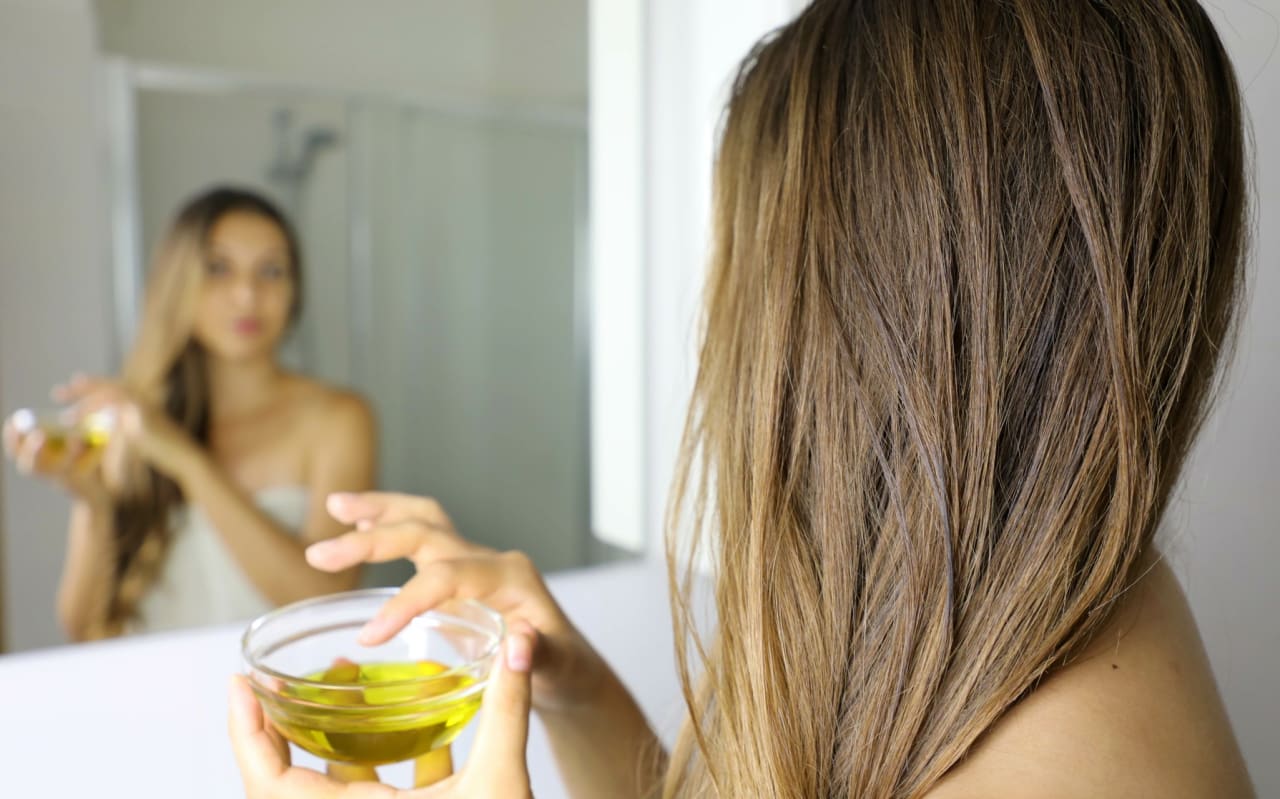
One of the best ways to take full advantage of the properties of olive oil is to take an oil mask. To do this:

  1. Apply the oil strand by strand to all your your whole hair, including the ends. If necessary, you can gently massage your scalp with the remaining oil on your hands.

  2. Gently comb through your hair to distribute the oil evenly and leave on for a good hour or even overnight (make sure you protect your sheets from staining).

  3. You can wrap your hair in a warm towel to help the oil penetrate.

  4. Once you've finished, rinse with plenty of warm water and shampoo gently once or twice to remove any remaining oil.

You can use an oil mask as often as your hair requires. If your hair tends to re-grease quickly, space out your oil masks more.


Scalp care

For dry, irritated or sensitive scalps, dry dandruff and itching, as well as to cleanse and stimulate hair growth, we recommend applying small amounts of olive oil before shampooing. To do this

  1. Spread the oil over your hands and gently massage your roots using circular movements.

  2. As explained above, massaging stimulates micro-circulation and the nutrients in the oil help your hair to grow healthily.

  3. You can leave the oil on overnight, using an old pillowcase, and shampoo gently the next morning.

  4. Repeat the application as often as necessary until your irritations improve.

Discover our Aroma-Zone "Hair growth oil" recipe, based on mustard and olive carrier oils, powder and macerated oil of the ayurvedic bhringaraj plant and organic grapefruit and pepper essential oils.


In your shampoos and conditioners

You can use olive oil as a choice ingredient in your homemade shampoo and conditioner recipes. Its nourishing, protective, softening and purifying properties will complement your mixtures according to your hair's needs.

Dosage and frequency of use of olive oil on hair

Applying olive oil to the hair can vary according to the specific needs of each hair type.

  • For dry or damaged hair, we recommend taking an olive oil mask once or twice a week. Apply the oil generously to your whole hair, including the ends, then leave on for at least 30 minutes, or ideally overnight under a warm towel for intensive care.

  • For normal or oily hair, an application every fortnight may be enough to maintain good hydration without weighing the hair down. It's important to note that regularity is the key to visible results, but hair should not be overworked to avoid becoming unnecessarily greasy.

Olive oil hair mask recipes

There are lots of recipes for homemade masks to help you look after your hair naturally. Here are a few easy ones.

Honey and olive oil hair mask

Hair care

1

In a bowl, mix the two ingredients until you obtain a smooth mask.

2

Apply the preparation evenly to your hair, strand by strand, paying particular attention to damaged ends.

3

Leave on for 20 minutes to an hour under a shower cap, then rinse thoroughly with warm water and shampoo with your usual mild shampoo.

This mask deeply nourishes and repairs your hair, leaving it supple and shiny.

Hair mask with egg and olive oil

Hair care

1

Mix the two ingredients in a bowl and apply evenly to your lengths, ends and scalp.

2

Leave on for at least 20 minutes under a shower cap, then rinse thoroughly with lukewarm water (be careful not to use hot water so as not to cook the egg) and shampoo gently.

The vitamins A and E found in eggs, as well as the premium vitamins B8 (biotin) and B9 (folate), work to promote the growth and health of your hair. Combined with olive oil, this mask leaves your hair soft, strong, resistant, shiny and protected.

Hair mask with aloe vera gel and olive oil

Hair care

1

Mix the two liquid ingredients in a bowl and apply the mask to your hair from the scalp to the roots.

2

Leave on for at least 20 minutes and shampoo gently.

This mask preserves your hair's moisture, nourishes, coats and protects it.

You can extend the possibilities and make your olive oil hair masks with a wide range of natural ingredients from your kitchen that are suitable for hair care, such as plain yoghurt, banana, avocado (or avocado oil), coconut milk, cider vinegar, chamomile, rosemary and clay (… ).

You can also add :

Other olive oil hair care products

Scalp scrub

Scalp scrub

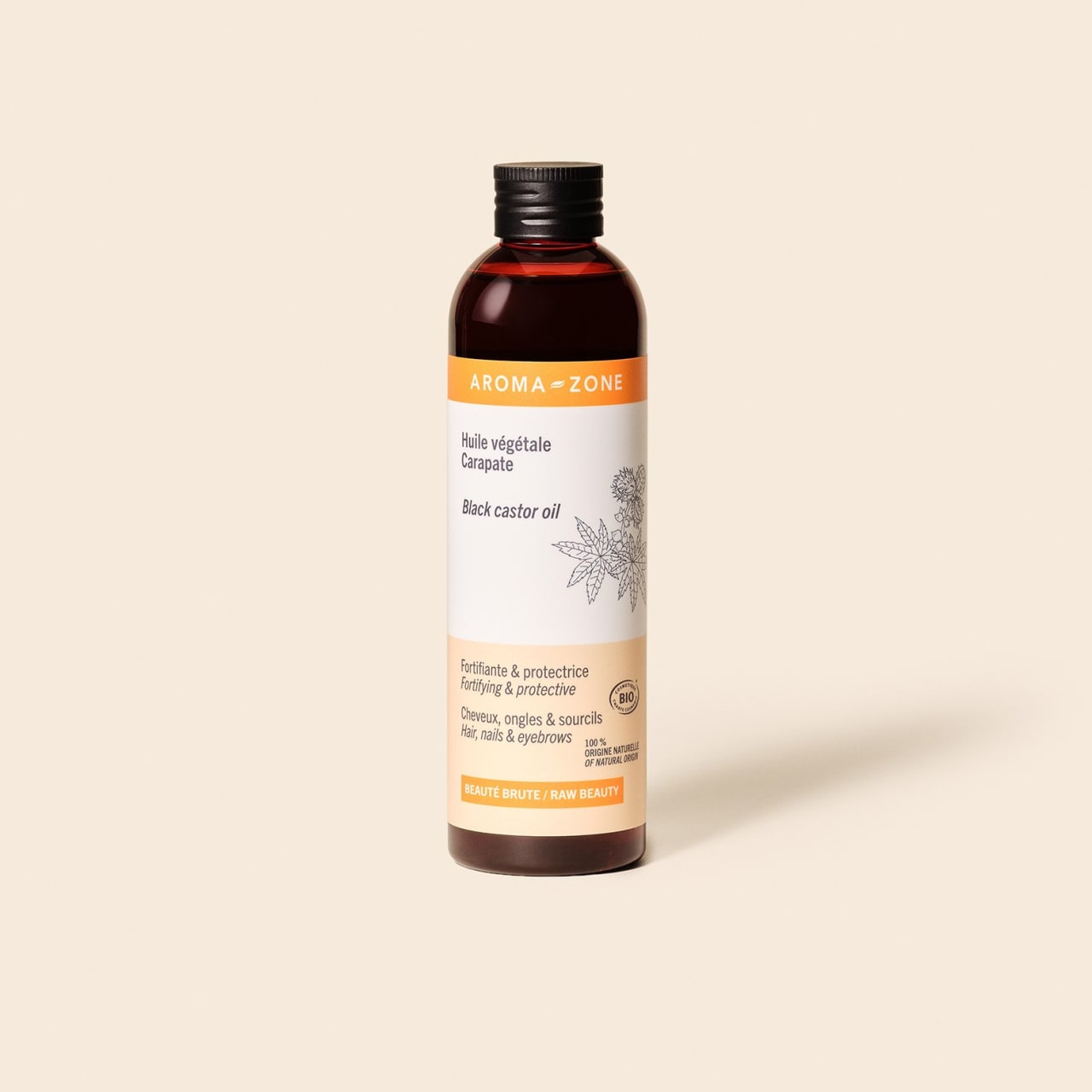
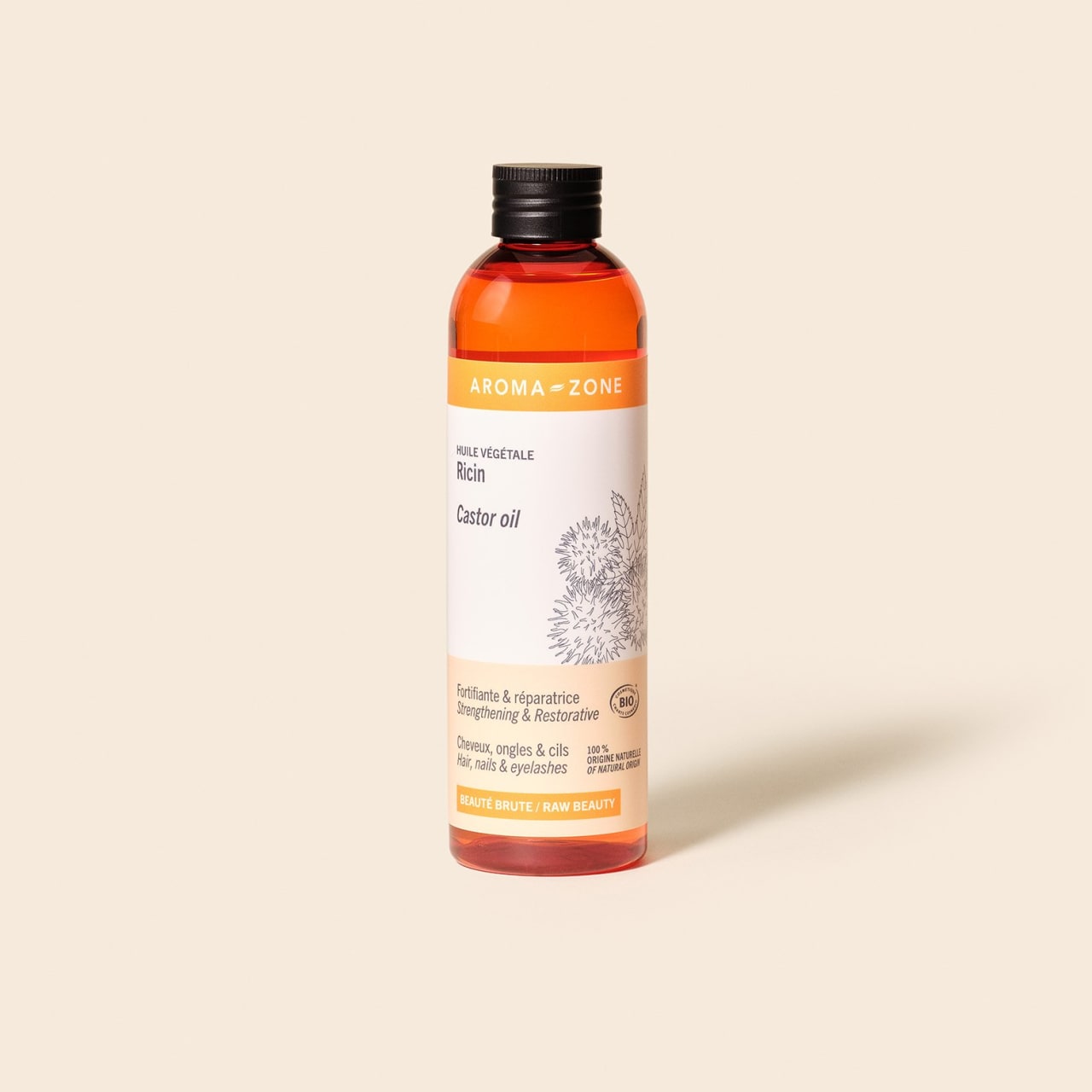
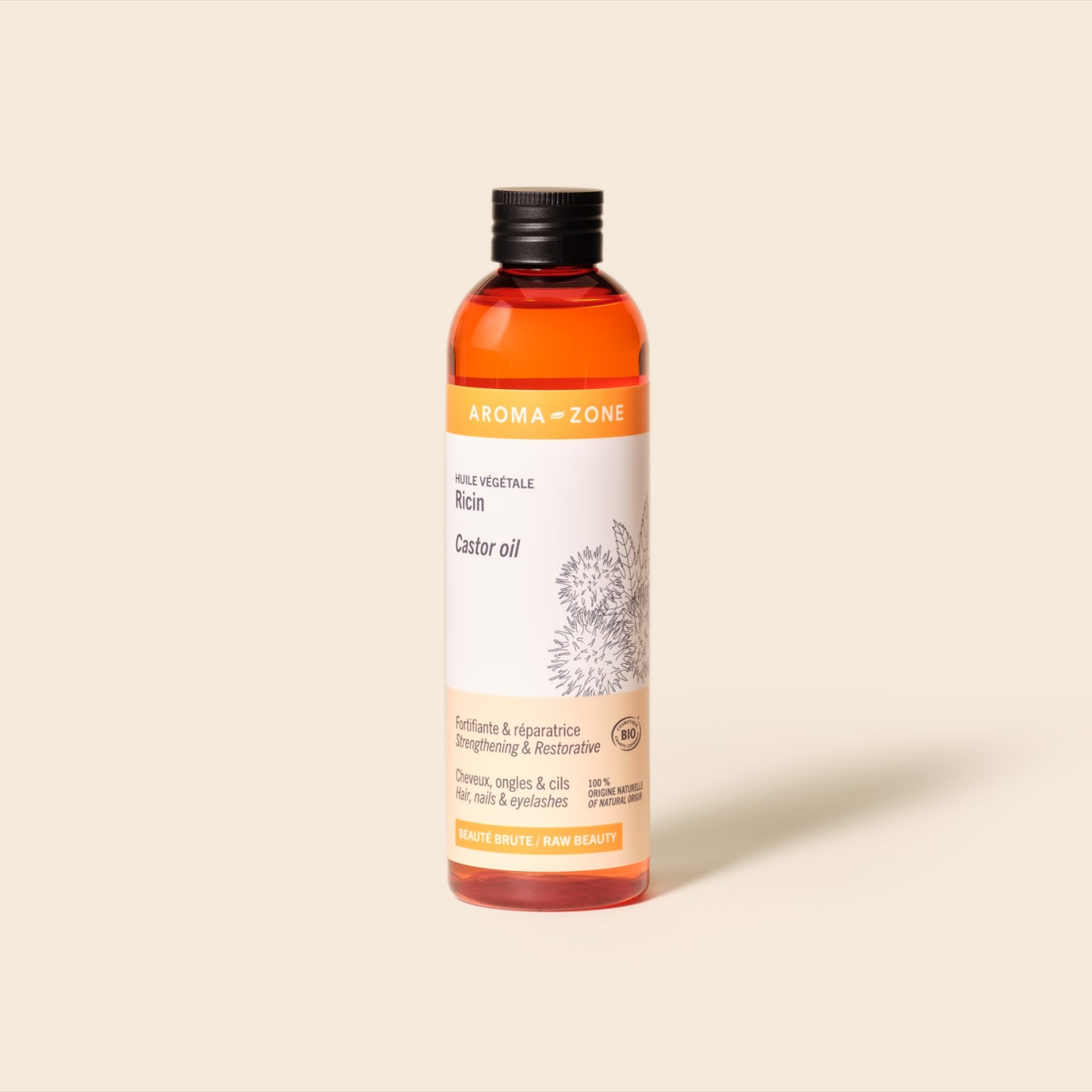
If you have dry dandruff, flakes or excess sebum on your scalp, or want to stimulate hair growth, you can use an olive oil-based scrub on your roots. To do this, mix 2 teaspoons of organic olive oil, 2 teaspoons oforganic castor oil and 2 teaspoons of table salt (or sugar) in a bowl. Lightly dampen your roots with a spray and apply the preparation to your scalp, massaging gently in circular motions with your fingertips. Leave on for a few minutes, then rinse thoroughly and shampoo. This scrub unclogs the hair follicles, eliminates dead cells and skin, shampoo residue, skincare products and pollution and cleanses your scalp. Use once a month.

Our recipe for Aroma-Zone "snake" oil (100% VEGAN)

Our recipe for Aroma-Zone "snake" oil (100% VEGAN)

A base of olive, castor oil, mustard oil, sesame oil, yellow nutsedge oil, laurel berry oil and white sandalwood and spikenard essential oils with strengthening, anti-hair loss, anti-dandruff, restorative, stimulating and protective properties. Apply evenly to your hair from the scalp to the ends and leave on for 20 minutes to an hour before rinsing and shampooing gently.

Find out more about our Aroma-Zone "snake" oil recipe (100% VEGAN)

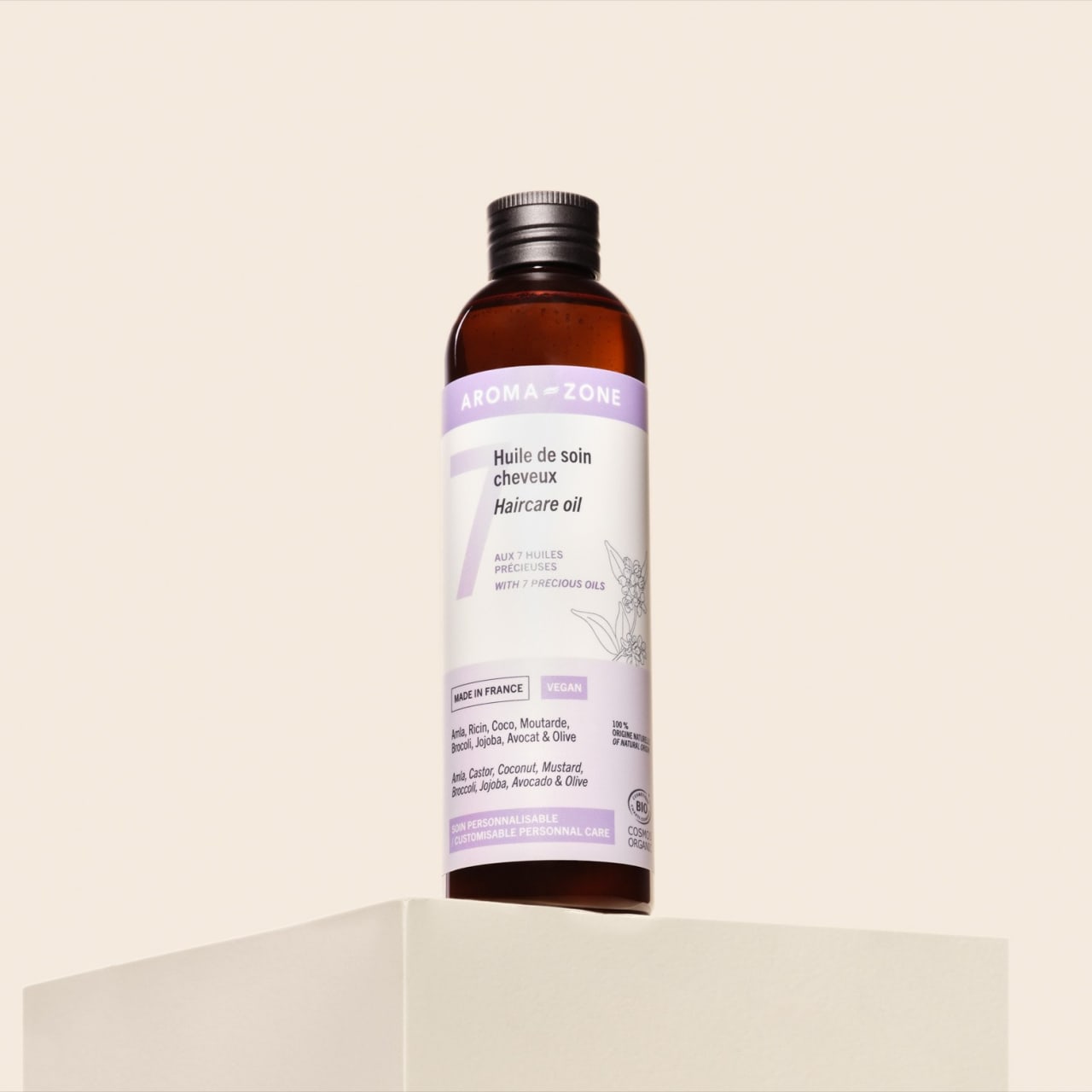
If you prefer a ready-made recipe, choose our premium Aroma-Zone hair care oil.

If you prefer a ready-made recipe, choose our premium Aroma-Zone hair care oil.

Made with olive, castor, coconut, amla, avocado, broccoli, jojoba and mustard oils to strengthen, nourish, repair and shine your hair naturally and easily. You can use it pure or with the active ingredients, essential oils, powders or fragrances of your choice. It's perfect for oil masks, as a scalp rub or as a daily leave-in treatment.

How do I rinse olive oil out of my hair?

Rinsing olive oil can sometimes be a challenge, as this oil is particularly rich and thick. For effective rinsing, start by applying your shampoo directly to dry hair, before wetting it. This makes it easier to emulsify the oil and prevents it from binding to the hair. Massage well into scalp and lengths, then gradually add warm water to work into a lather. Rinse thoroughly until the water runs clear. A second shampoo may be necessary, especially if your hair tends to be oily. Avoid rinsing with hot water, as this can activate the sebaceous glands and make your hair oilier. For best results, finish the rinse with a splash of cold water to close the cuticles and add shine to your hair.

Focus on our Naturopathic editor, Stéphanie Catrysse

Stéphanie Catrysse is a naturopath (certified by the FENA), a wellness massage and lymphatic drainage practitioner, and a personal development consultant. 

Passionate about alternative medicine, she practices a holistic approach to health.