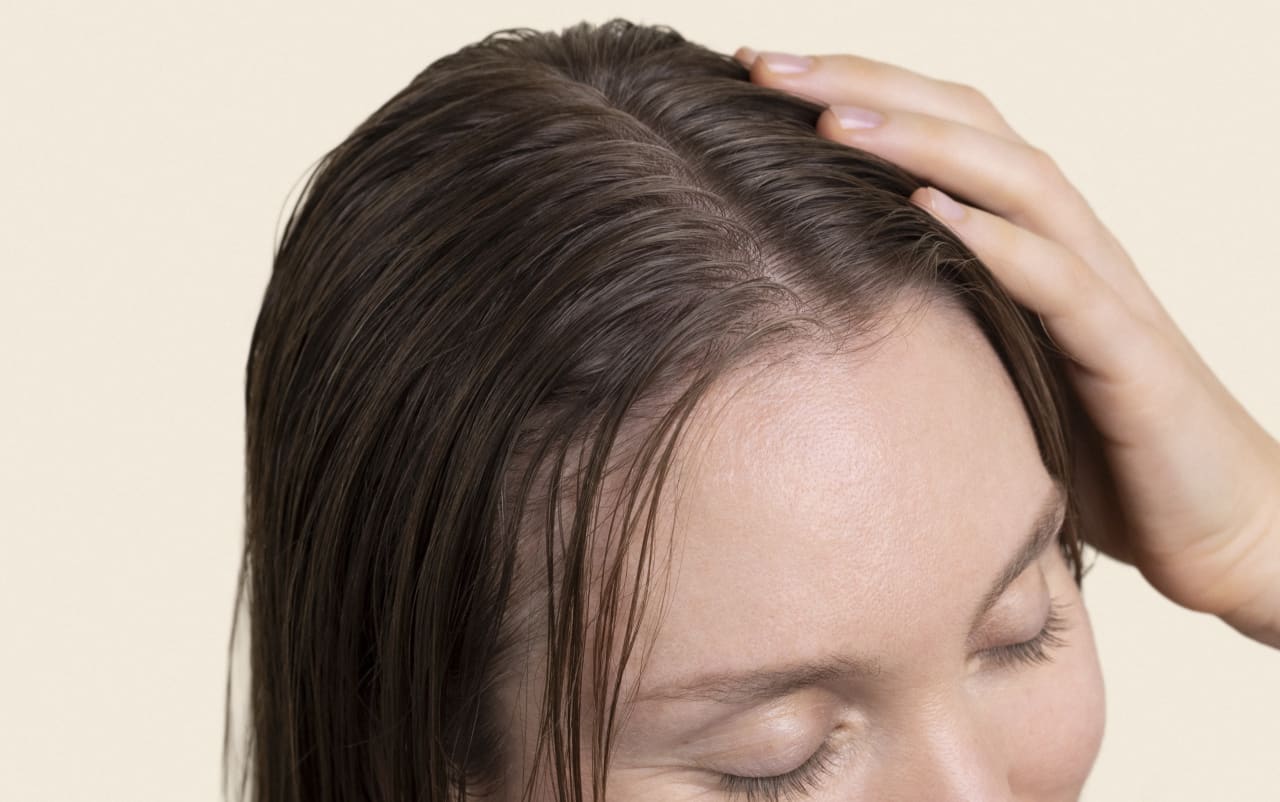
Dandruff and irritation are two linked and inseparable conditions found on most problem scalps. It usually all stems from an imbalance in the scalp’s microbiome, often favouring the Malassezia yeast. This yeast, by feeding on lipids found on the scalp, releases substances that can cause discomfort. Although most information aimed at the general public focuses on Malassezia, it is important to note that it is primarily the overall dynamics between the microorganisms colonising the scalp that influence the occurrence of dandruff (1).
Disruption of this surface ecosystem, for its part, is promoted by endogenous or exogenous factors such as:
An unsuitable routine: the use of certain ingredients or cosmetics (particularly those containing surfactants, such as shampoos) can weaken the skin barrier and create conditions conducive to the development of dandruff
Excess sebum: The sebaceous glands produce more oil in response to hormonal changes, for example during puberty. It may also be a rebound effect following the application of irritating substances or exposure to external aggressors (sun, wind, cold, etc.)
Genetics: certain individual factors, such as the lipid composition of sebum, can create conditions conducive to the development of dandruff. Our genetic makeup therefore plays a key role. Age also appears to be a determining factor, particularly as physiological skin ageing tends to weaken the skin barrier (1).