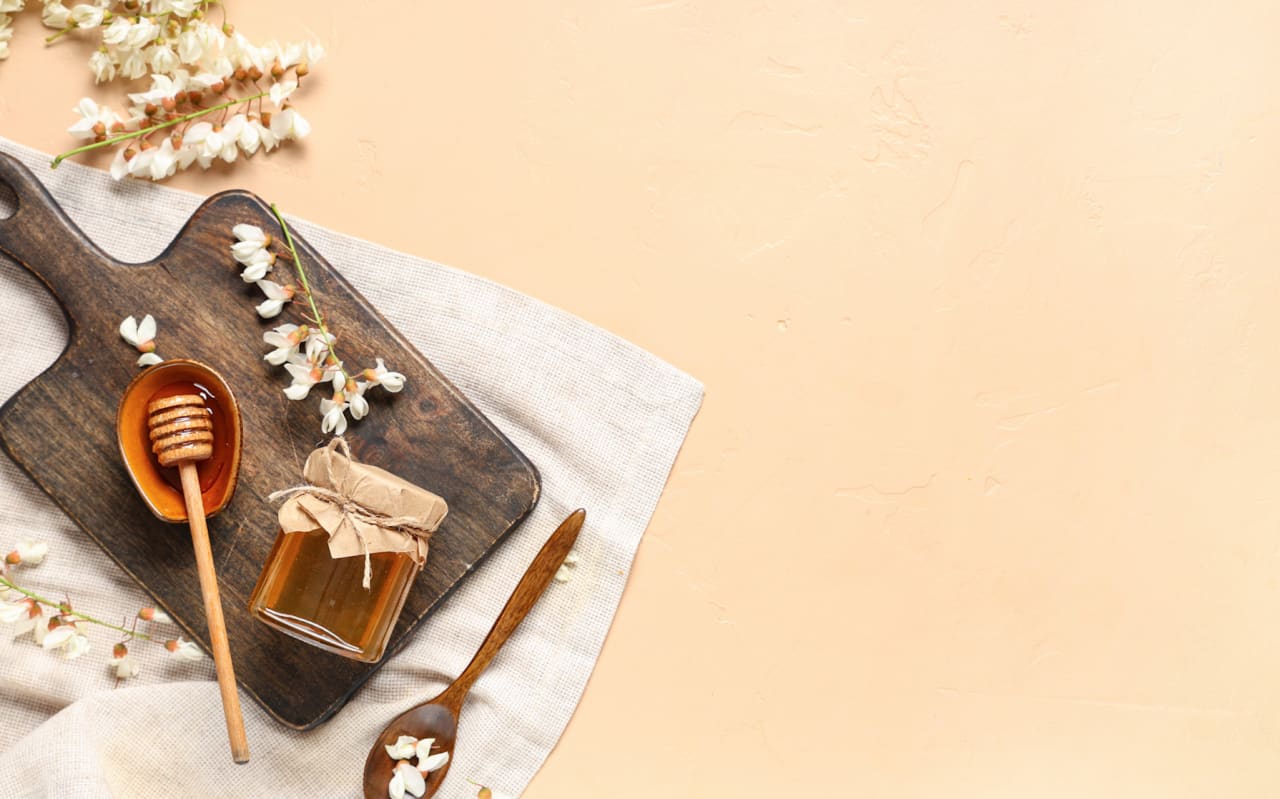
The herbal bloom commonly referred to as "acacia flowers" come from the black locust tree (robinia pseudoacacia), a tree of the Fabaceae family native to North America. Growing to a height of up to 30 metres, the black locust tree produces large clusters of small white flowers in spring, which may sometimes be yellow or pink depending on the species. These flowers are very fragrant and fill the air with a sweet scent reminiscent of the orange blossom. These blossoms are very delicate and remain fresh for only a few hours after being picked.
As an interesting fact, the black locust or pseudo acacia owes its name to Jean Robin, botanist to Kings Henry IV and Louis XIII. He is said to have been the first to bring its seeds back to France in 1601 and to have named it thus because of its resemblance to tree species of the genus Acacia. Although the term has since become widely used in everyday language, it is not entirely correct from a botanical point of view to refer to these as "acacia flowers" because they do not come from a true acacia tree. The "true" acacia, on the other hand, belongs to the Mimosaceae family. Often native to Africa or Australia, it bears small, pompom-like yellow flowers that are generally not edible.