
pH Corrector – Liquid Lactic Acid
Product out of stock. Learn more
free delivery up to £25 in United Kingdom
100% secure payment CB, Visa, Mastercard, Paypal, Apple Pay, Google Pay
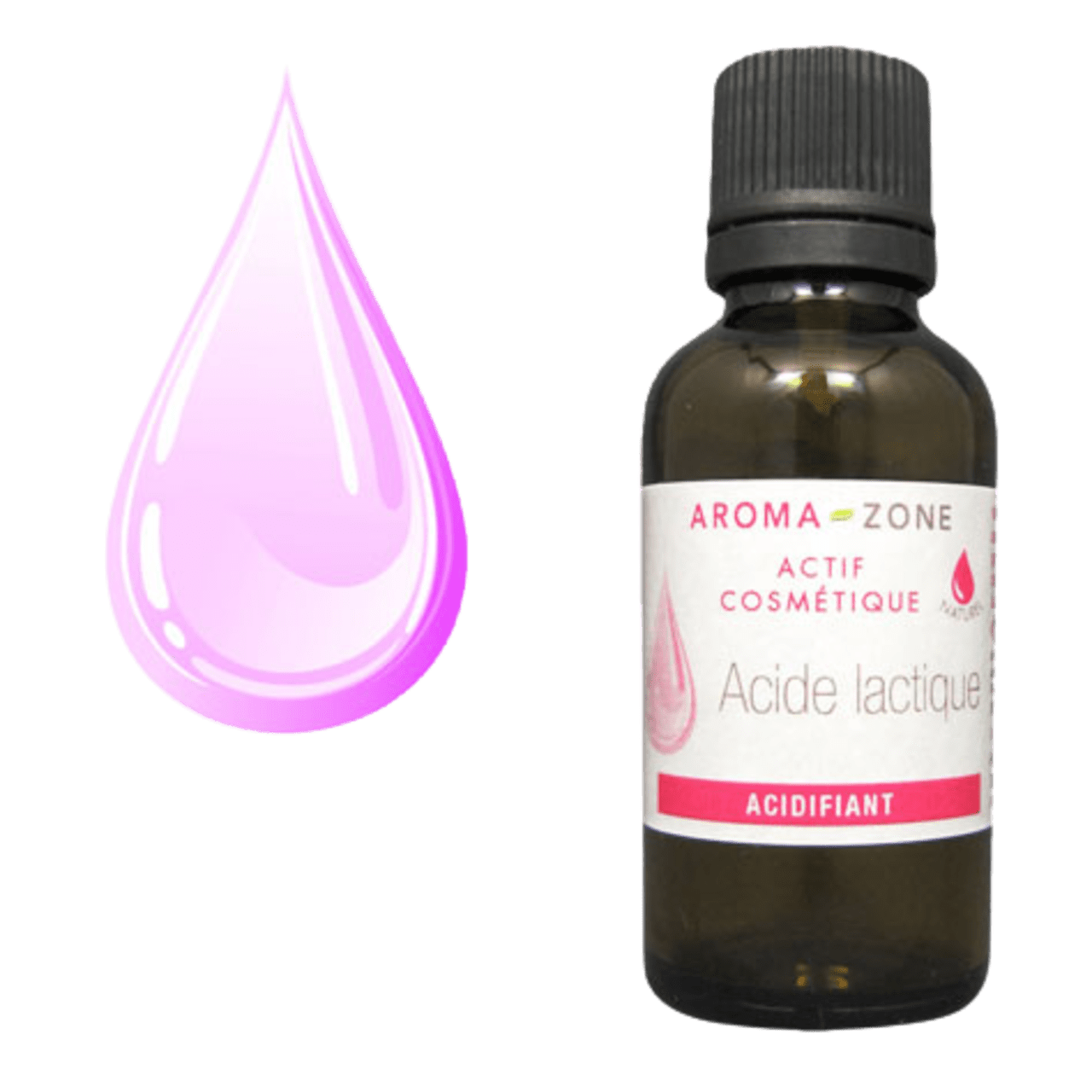

100% Plant-Based
In cosmetic products, lactic acid is known for the following properties:
Acidifying: lowers the pH of cosmetic preparations
Excellent affinity with hair and skin: naturally present in the body
Activates Conditioner Emulsifier
Keratolytic: helps facilitate the removal of dandruff and dead skin cells
Adds shine to the hair
Moisturising* and exfoliating
Helps reduce dandruff
Use as an ingredient in your preparations:
To acidify hair care products, particularly conditioning formulas containing Conditioner Emulsifier
To acidify foaming products, especially those based on Sugar Foam and/or Foaming Base Consistency, surfactants which tend to increase pH
To correct the pH of cosmetic products that are too alkaline, particularly those containing stabilised vitamin C (which can raise the pH of formulations)
General characteristics
Dosage
Drop by drop, adjust according to the desired pH (of the total weight of your preparation).
Density
1.2
Number of drops
1 ml = approximately 36 drops
Soluble in water
Oil-insoluble
Use in homemade cosmetics
Cream & lotion, shampoo, shower gel, gel
Preparation
Precautions
Precautions and allergens
Precautions for use
Allergens
Allergen-free
The necessary pH adjustment will generally be minimal (little difference between the pH measured at the end of the formulation and the target pH), so it is essential to add lactic acid in very small doses to avoid ending up with a pH that is too low.
For a large quantity of product (≥ 100 g), you can add pure lactic acid drop by drop, carefully checking the pH after each addition.
For smaller quantities of product, we recommend pre-diluting the lactic acid to 50% in order to measure it more accurately:
In a clean bottle equipped with a dropper, mix equal quantities of mineral water and lactic acid (for example, 1 ml of lactic acid + 1 ml of water). Shake to mix.
Use this dilution to acidify your preparation, adding it drop by drop and checking the pH after each addition.
Lactic acid can be used to lower the pH of all your water-based formulas: shampoos, conditioners, creams, milks, lotions, gels, etc.
Acidifying an emulsion-type preparation (cream, milk), gel, lotion
Step 1
Add lactic acid (or a dilution of lactic acid—see tip below) drop by drop at the end of the preparation.
Step 2
Mix well and check the pH after each drop is added.
Quality
100% plant-based
Method of production
Sugar fermentation
Function
Hair shine active ingredient, pH adjuster (acidifier)
Benefits and properties
Acidifier
Exfoliant
Concentration
Highly concentrated, approximately 90% lactic acid (the rest being water).
INCI designation
Lactic acid
Presentation
Colorless liquid, packaged in an amber glass bottle with a dropper.
Storage
Store at room temperature away from moisture and light. Close the bottle tightly after use.
Precautions
Keep out of reach of children.
Do not swallow, avoid contact with eyes.
Irritating in its pure form. Never use undiluted on the skin.
Wearing gloves and protective eyewear is strongly recommended when handling.
Dangerous. Follow precautions for use.
Causes serious eye damage. Causes skin irritation (risks associated with the product in its pure form).
Lactic acid is naturally sourced and helps to correct the pH of your cosmetic preparations. Its liquid form, packaged in dropper bottles, makes it practical, precise, and safe to use. Lactic acid is a fruit acid, of the alpha-hydroxy acid type, which is frequently found in cosmetics due to its very good affinity with the skin and hair.
In addition to adjusting pH, it has a keratolytic action and improves skin hydration in the upper layers of the epidermis.
It is used in particular in certain shampoos, in combination with other active ingredients, for its ability to eliminate dandruff flakes.
Its acidity also helps to close the hair cuticles and give hair shine.
It is also ideal for activating the Conditioner Emulsifier by lowering the pH of the preparation.
Focus on pH
The pH (potential hydrogen) determines whether an aqueous mixture is acidic, neutral, or basic. The pH is measured on a scale from 1 to 14:
1 < pH < 7 acidic pH
pH = 7 neutral pH
7 < pH < 14 basic (or alkaline) pH
In general, the skin has a pH between 4 and 6, which is fairly acidic, but it varies depending on the area of the body (armpits, intimate mucous membranes), skin type, and age.
Shampoo or hair care products must have a pH that is suitable for the hair, i.e., slightly acidic. Recommended pH levels:
For shower gel: 5.0 to 7.5
For shampoo: 4.5 to 7.0
For detangling hair care products: 4.0 to 5.0
For intimate hygiene products: 4.5 to 5.5 for women of childbearing age, 6.5 to 7.0 for young girls and menopausal women
For leave-on products (cream, milk, gel, lotion, etc.): 4.5 to 7.0
For creams containing AHA or DHA: 4.0 to 5.5
Environmental qualities and characteristics product sheet
Reference
01381 - lactic acid 30 mL
Main Packaging Material
Glass bottle
Recyclability
Most packaging can be recycled
Reference
02382 - Lactic Acid 100 mL
Main Packaging Material
Glass bottle
Recyclability
Most packaging can be recycled

Supplier documentation
Frequently Asked Questions
Essential Oils
1 ml = approximately 35 drops (with our Aroma-Zone dropper caps)
Carrier Oils
1 pump (Aroma-Zone aluminium pump) = approx. 0.15 ml
Mass / Volume conversion (for a liquid)
Mass (g) = Density x Volume (ml) at 20°C
Further information
1 full teaspoon = between 3 and 4.5 ml
1 full tablespoon = between 7.5 and 10 ml
However, these spoon ratios depend on a number of factors (e.g. viscosity of the liquid, temperature, depth and size of the spoon, rheological behaviour of the liquid), and we strongly advise you to use precise measuring equipment, such as graduated test tubes, graduated pipettes, and precision scales.
Loading...
I like this brand's products, I'm happy with everything except that I find it impossible to place a complete order because there are always one or more products out of stock.
I use lactic acid to lower the pH value. Only a few drops are needed
I use it for my cleansing foam.
Haven't tried it yet! Order error! I'm giving it 5 stars because of the brand's reliability.
I really like lactic acid. I use it in shampoo and intimate soap to get the right pH for these products.


