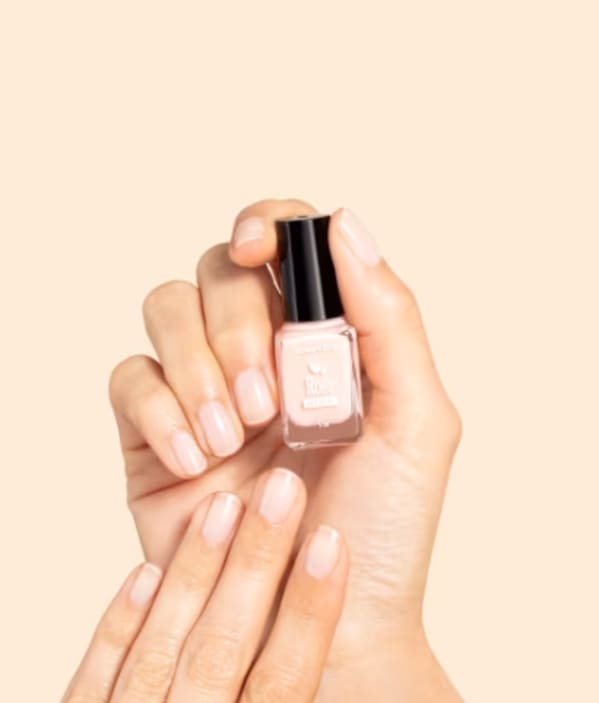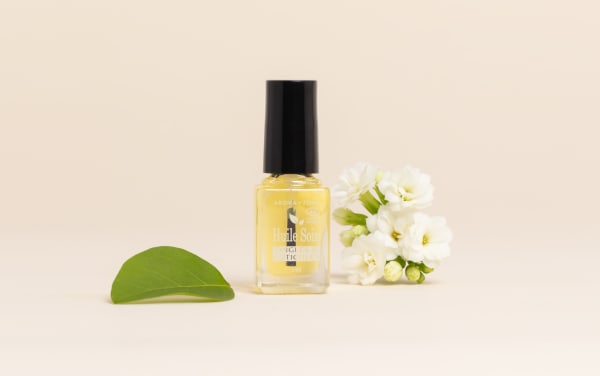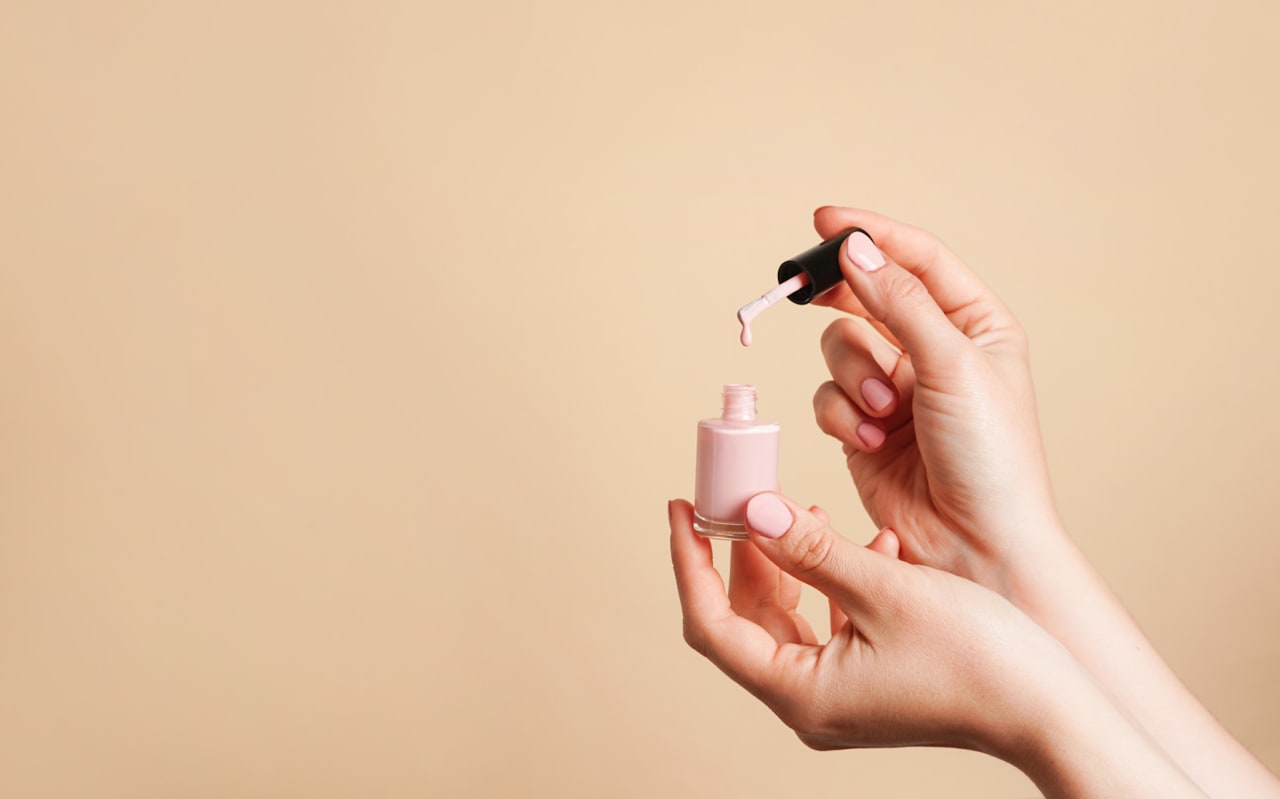

Nail varnish is, first and foremost, a mixture of resins, solvents and pigments that forms a protective, coloured film on the surface of the nail. There are several categories of products:
Classic nail varnish, applied in thin layers and left to air-dry
Semi-permanent nail varnish , cured under a UV or LED lamp for longer-lasting wear
So-called “natural” or “organic” nail varnishes, formulated without certain controversial substances.
These products fall within the cosmetics category and are used to enhance and protect the nails. However, their composition and application methods differ, which explains the frequent questions surrounding nail varnish and its safety for use during pregnancy.
Nail varnish composition: what you need to know
Nail varnish may seem harmless, but its formula is a complex blend of chemicals. It contains:
Solvents (ethyl acetate, butyl acetate, alcohol, etc.) which help the product spread evenly and dry quickly
Resins and polymers which ensure the film adheres well and has a glossy finish on the nail
Plasticisers (formerly phthalates, now replaced by other molecules) which prevent the polish from cracking too quickly
Pigments and colourants, sometimes of synthetic origin, which provide colour and shine
Various additives: pearlescent agents, UV filters, hardeners.
These components, particularly the solvents, are responsible for the strong odours experienced during application. Whilst most of the most problematic substances, such as formaldehyde, toluene and DBP, are now banned in Europe, some formulations may still contain irritating or polluting ingredients.
Today, nail varnishes are categorised into several groups based on their composition:
Conventional nail varnishes, the most common
‘3-free’, ‘5-free’ or ‘10-free’ nail varnishes, which exclude an increasing number of substances deemed undesirable
So-called organic or natural nail varnishes, formulated using solvents derived from plant-based raw materials (wheat, maize, sugar cane) and considered less harsh, even though no nail varnish is completely solvent-free.
During pregnancy, the main concerns relate to solvent vapours and repeated contact with certain ingredients. Hence the importance of choosing your nail varnish carefully and limiting how often you use it.