
White Beeswax
free delivery up to £25 in United Kingdom
100% secure payment CB, Visa, Mastercard, Paypal, Apple Pay, Google Pay

100% natural
Thickener and texturising agent in balms and creams
Hardener and texturiser in sticks
Film-forming agent in balms, sticks, and creams
Stabiliser in emulsions
Support in candles
Hardening agent in soaps
Use as an ingredient in your preparations:
Balms
Sticks and lipsticks
Gloss (texture agent)
Coloured makeup (the white colour gives you complete freedom to colour your products)
Deodorant sticks
Creams and cerates: reduces the slipperiness of rich creams and increases their protective power (film-forming), while stabilising the emulsion. Particularly useful in "water-in-oil" emulsions or to increase the protective and nourishing power of hand creams or creams for extreme weather conditions.
Candle making
Soaps
General characteristics
Dosage
1 to 10%
Melting point
61-66°C
Insoluble in water
Uses in homemade cosmetics
Balm, stick, candle, cream & lotion, soap
Further information
1 scoop 5 ml (level*) | 3.1 g |
1 scoop 2 ml (level*) | 1.4 g |
Equivalence table (measuring spoons and scoops available from Aroma-Zone) (tablets) * level: spoon filled to the brim with the excess removed using a spatula or the back of a knife
In balms and sticks: 1 to 10% (of the total weight of your preparation), or even more, to be added to the oil phase
In emulsions (creams): 1 to 5% (of the total weight of your preparation) to be added to the oil phase - generally 1 to 3% will give the best results
Use as the only wax in balms, mixed with oils and butters: hardens and increases the film-forming power of your balms.
Use alone, without emulsifier, to make "Gallien cerate" type creams: the wax helps to "hold" the emulsion by thickening the oil phase. However, it is difficult to make emulsions using only beeswax. These emulsions will be unstable over time and will also feel quite heavy and very film-forming. To make stable emulsions easily, we recommend using an emulsifier (see our emulsifiers here) and adding wax for a protective and nourishing effect.
In combination with an emulsifier: adding a small amount (1-3%) of wax to an emulsion thickens it and increases its stability and film-forming power.
In combination with other waxes (carnauba, candelilla) in lip balms and lipsticks.
Alone or in combination with soy wax in candles.
Precautions
Precautions and allergens
Precautions for use
Allergens
Allergen-free
Incorporating wax into an oil phase
Melt the wax in a double boiler with the other ingredients in the oil phase.
Quality
100% natural, purified wax.
Method of production
The honeycomb cells built by bees to store honey are melted in hot water and then filtered through activated carbon (purification, deodorisation, and bleaching).
The wax is harvested at the end of the season, along with the honey, and the combs containing the young bees are left untouched. This does not involve destroying the nest, but rather recycling the used combs.
INCI designation
Cera alba
Composition
A complex mixture of fatty acid wax esters and fatty alcohols, free fatty acids, and long-chain hydrocarbon compounds.
Presentation
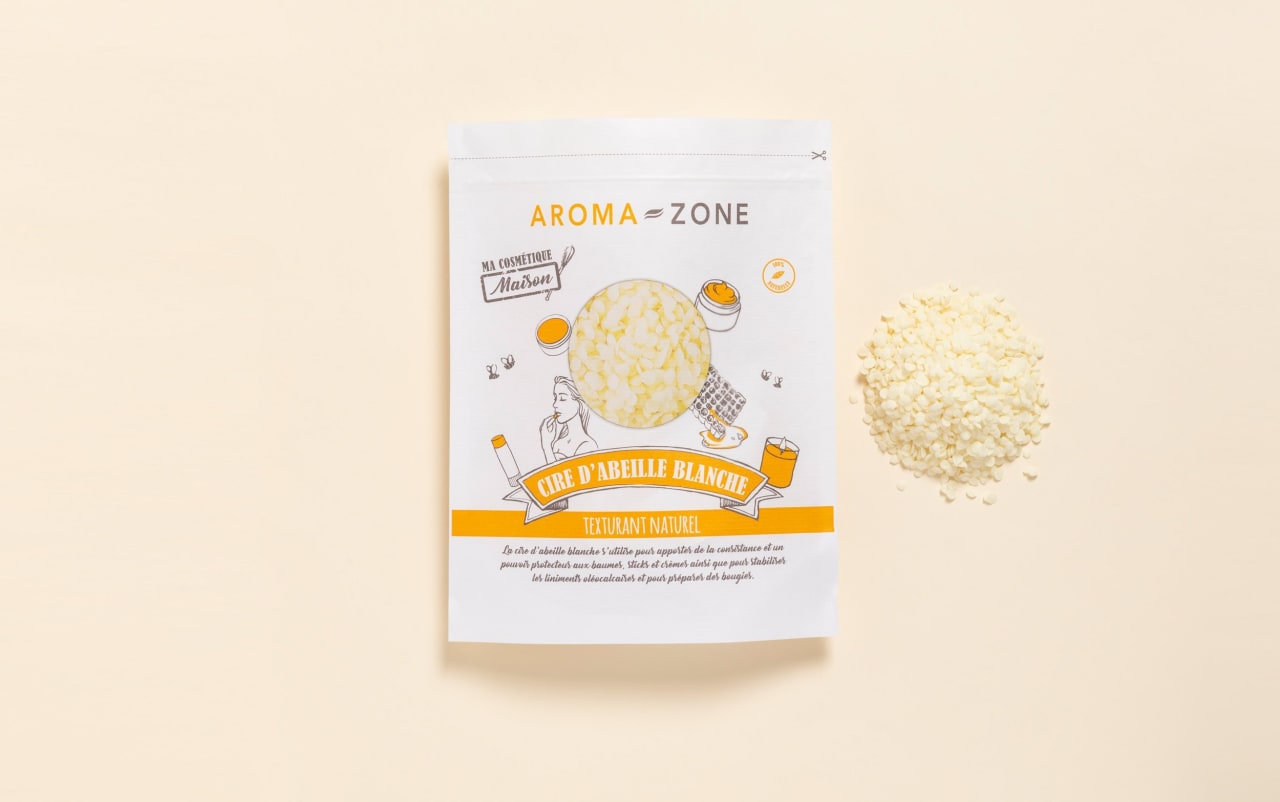
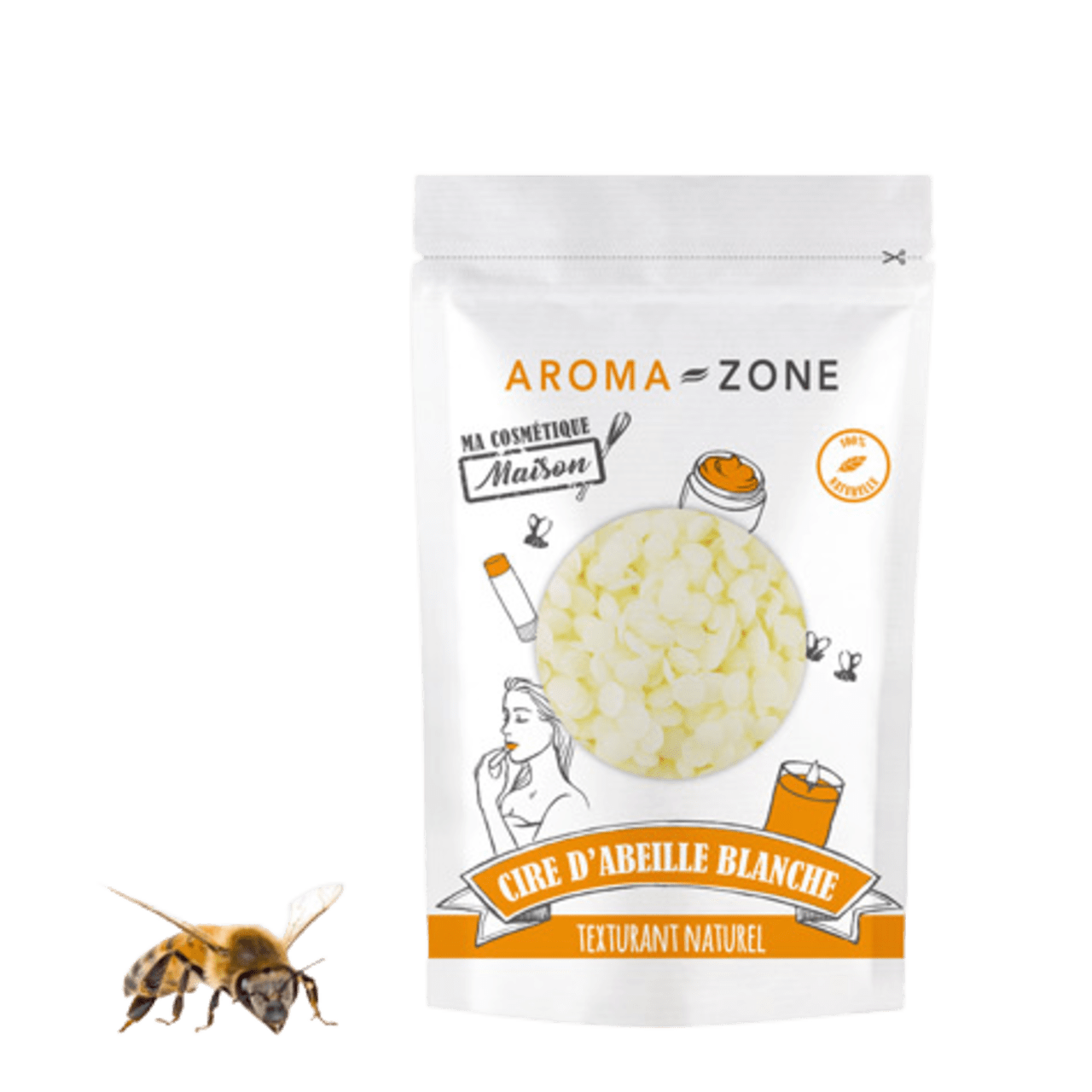
White to pale yellow, slightly translucent pellets with a very light honey scent, packaged in zip-lock bags.
Origin and uses of beeswax
Bees secrete wax to build the hexagonal cells typical of a honeycomb. It is in these structures that honey is stored and young bees are raised.
To extract the honey, the beekeeper removes the wax caps from the honeycombs. He can then extract the wax by separating it from residual honey and other impurities by heating it in water.
Since ancient times, when wooden tablets covered with beeswax were used to write messages with a stylus, the properties of beeswax have made it useful in many applications.
It is used in particular in the cosmetics and pharmaceutical industries and for making natural candles. In the food industry, beeswax is known as E 901, as a glazing agent. It is also used to coat certain cheeses.
Storage
Store at room temperature away from moisture and light. Close the bag tightly after use.
Precautions
Keep out of reach of children, do not swallow, avoid contact with eyes.
Be careful not to burn yourself when handling melted wax.
Environmental qualities and characteristics product sheet
Reference
01364 - white beeswax 50 g
Main packaging material
Paper bag
Recyclability
Most packaging can be recycled
Reference
00721 - white beeswax 250 g
Main packaging material
Paper bag
Recyclability
Most packaging can be recycled

EO = Essential Oil VO = Vegetable Oil or Oily Macerate
150 ml of Calendula oil macerate
25 g of grated beeswax
Method: Melt the wax in the oil in a double boiler and mix. Pour into a wide-mouthed jar and leave to cool and set. Storage: Store the balm away from light and heat, and use it for cosmetic emergencies (irritation, itching, redness, rashes, and inflammation).
Olive oil: 75 ml
Beeswax: 10 g
12 fresh scented geranium leaves
Geranium essential oil: 10 drops
Method: Melt the wax in the olive oil in a double boiler. Place the leaves in a glass jar (with a lid). Once the beeswax has melted, pour the mixture over the leaves. Close the jar and leave to infuse for 3 weeks. Then remove the mixture from the container, reheat it in a double boiler and strain it. Leave to cool, add the essential oil and stir before pouring into a sterilized container.
Oil of your choice: 3 tablespoons
Beeswax: 2 teaspoons
Petitgrain or Rosemary essential oil: 4 drops
Method: Pour the oil into a bowl. Add the beeswax. Place the bowl in a double boiler and stir the mixture from time to time. When the mixture is clear and smooth, remove the bowl from the double boiler and add the essential oil off the heat. Stir continuously with a whisk to ensure the mixture is smooth. Pour the mixture into a jar while it is still fairly runny.
Beeswax: 1 teaspoon
Sweet almond or sunflower oil: 1 tablespoon
Liquid honey: 1/2 teaspoon
Essential oil of your choice: 4 drops
Method: Melt the beeswax in the oil in a double boiler. When the mixture begins to cool, stir in the honey and then the essential oil.
Oil of your choice: 50 ml
Beeswax: 2½ teaspoons
Liquid honey: 1 teaspoon
Petitgrain or rosemary essential oil: 6 drops
Method: Pour the oil into a bowl. Add the beeswax. Place the bowl in a double boiler and stir the mixture from time to time. When the mixture is clear and smooth, remove the bowl from the double boiler and add the honey and essential oil off the heat. Stir continuously with a whisk to blend well. Pour the mixture into a jar while it is still fairly runny.
Beeswax: 5 g
Cocoa butter: 5 g
Sweet almond or jojoba oil: 10 g
Method: Gently melt the beeswax and vegetable oils in a double boiler. When the mixture is completely liquid, pour into small jars.
Sweet almond oil: 1 tablespoon
Coconut oil: 1 tablespoon
Glycerin: 1 tablespoon
Beeswax: 2 teaspoons
Lemon essential oil: 6 drops
Method: Melt the coconut oil and beeswax in the sweet almond oil in a double boiler. Mix thoroughly, then gently add the glycerin. Remove from heat and add the essential oil.
For approximately 100 g of balm:
Sweet almond oil: 40 g
Olive oil: 30 g
Shea butter: 15 g
Beeswax: 10 g
Glycerin: 5 g
Lavender essential oil: 5 drops
Sandalwood essential oil: 5 drops
Method: Heat the wax, vegetable oils, and shea butter in a double boiler. Mix the glycerin and essential oils in a container. When the wax has melted, remove from the heat immediately. Allow to cool for a while, stirring occasionally, then add the essential oil mixture and transfer to a jar. Allow to cool.
Use: This balm can be used as a mask: apply generously to your hands, put on cotton gloves, and go to bed, leaving the balm to work.
Important notes from Aroma-Zone: Beeswax acts as an emulsifier here, helping the emulsion to "hold". However, for a much more stable and easier-to-make emulsion, we recommend using an emulsifier. In addition, to ensure the preservation of this preparation, we recommend adding a preservative.
1 tablespoon of Calendula oil macerate
1 tablespoon of coconut oil
2 tablespoons of sesame oil
50 g grated cocoa butter
10 g beeswax
Up to 20 drops of essential oil of your choice for fragrance
Method: Melt the wax in the oils in a double boiler and mix. Remove from the heat and add the essential oils.
Rose hydrosol: 50 ml
Powdered borax: 1/8 teaspoon
Crushed nigella seeds: 10 g
Beeswax: 1 tablespoon
Sweet almond oil: 50 ml
Grape seed oil: 50 ml
Grapefruit seed extract: 1 drop
1 vitamin E capsule (or 7 drops of vitamin E)
Method: Heat the rose hydrosol in a saucepan and add the borax. As soon as the liquid comes to a boil, turn off the heat, add the nigella seeds to the saucepan, and let steep for 30 minutes to 1 hour until the mixture has cooled. Melt the beeswax in the oils in a double boiler. Strain the rose hydrosol-based liquid and reheat it until it is roughly the same temperature as the oil and wax mixture. Pour the oil and wax mixture into a bowl, then very gradually add the rose hydrosol-based mixture. Mix with an electric mixer until you obtain a smooth, thick lotion. Pierce the vitamin E capsule and empty it into the lotion. Add the grapefruit seed extract. Pour the mixture into a jar with a screw cap.
Use: Use to thoroughly massage very dry areas of skin.
Petals from 24 marigolds (calendula) or 10 g of dried marigold flowers
Sweet almond oil: 75 ml
Avocado oil: 1 tablespoon
Beeswax: 20 g
Mint essential oil: 40 drops
Method: Place the flowers in a bottle and cover them with the oils. Place the bottle in direct sunlight to speed up the process. After 3 weeks, strain the mixture through a sieve, pressing the flower petals to extract all their benefits. Melt the wax in the oil in a double boiler. Remove from the heat and allow to cool slightly before adding the mint essential oil, drop by drop, and transferring the liquid to a sterilized jar.
Beeswax: 50 g
Shea butter: 30 g
Coconut oil: 20 g
Sweet almond oil: 35 g
Jojoba oil: 15 g
Ylang ylang essential oil: 8 drops
Rosewood essential oil: 3 drops
True lavender essential oil: 2 drops
Method: Gently heat the wax and vegetable oils in a double boiler, stirring occasionally. When the wax has melted, whisk until the mixture has cooled. When it reaches approximately 40 degrees, add the essential oils. Pour into a large mold (or several small ones) and leave to cool. Remove from the mold by tapping it sharply.
Rose hydrosol: 26 g
Sweet almond oil: 17 g
Beeswax: 7 g
Preparation: Mix all the ingredients in a container and heat over a very low heat in a double boiler. Remove from the heat as soon as the wax has melted. Whisk vigorously, remove the container from the double boiler and place it in a cold bath, continuing to whisk. Before the cream becomes too solid, pour it into a perfectly clean jar and continue beating until cool, then close the jar and store in a cool place.
Important notes (Aroma-Zone): It is not easy to make a stable emulsion (cream, milk) using only wax. As waxes are weak emulsifiers, we recommend adding an emulsifier. In addition, to ensure the preservation of this preparation, we recommend adding a preservative.
Shea butter: 40 g
Jojoba oil: 60 g
Beeswax: 40 g
Cinnamon infusion: 80 g
Avocado oil: 1 tablespoon
Borage oil: 1 tablespoon
Orange juice: 1 tablespoon
Sandalwood essential oil: 5 drops
Method: Melt the shea butter and wax in a double boiler, stirring constantly. Remove from heat and add the oils, orange juice, infusion, and essential oil, stirring until cool. Pour into jars.
Important notes (Aroma-Zone): It is not easy to make a stable emulsion (cream, milk) using only wax. As waxes are weak emulsifiers, we recommend adding an emulsifier. In addition, to ensure the preservation of this preparation, we recommend adding a preservative.
Olive oil: 100 ml
Water: 150 ml
Dried chamomile flowers: 1 tablespoon
Liquid honey: 1 tablespoon
Beeswax: 10 g
Vegetable glycerin: 2 tablespoons
Chamomile essential oil: 2 drops
Method: Put the water and chamomile flowers in a saucepan and bring to the boil. Cover and simmer for 5 minutes. Leave to cool, then strain and discard the flowers. Put the oil, honey, and wax in a double boiler and gradually add the glycerin. Melt the mixture gently over low heat, stirring constantly. Remove from heat and stir in the chamomile decoction using a whisk or electric mixer. Pour the mixture into a sterile container.
Storage: Keeps for 2 months.
Oil of your choice: 3 tablespoons
Beeswax: 2 teaspoons
Rose hydrosol: 1 tablespoon
Glycerin: 1 teaspoon
Petitgrain or rosemary essential oil: 8 drops
Method: Pour the oil into a bowl. Add the beeswax. Place the bowl in a double boiler and stir the mixture occasionally. When the mixture is clear and smooth, remove the bowl from the double boiler and add the hydrosol, glycerin, and essential oil. Stir continuously with a whisk to ensure the mixture is smooth. Transfer the mixture to a jar while it is still fairly runny.
Important notes (Aroma-Zone): It is not easy to make a stable emulsion (cream, lotion) using only wax. As waxes are weak emulsifiers, we recommend adding an emulsifier. In addition, to ensure the preservation of this preparation, we recommend adding a preservative.
HV of your choice: 50 ml
Jojoba oil: 1 tablespoon
Beeswax: 1 tablespoon
Rose hydrosol: 1 tablespoon
Petitgrain or Rosemary essential oil: 10 drops
Method: Pour the oils into a bowl. Add the beeswax. Place the bowl in a double boiler and stir the mixture occasionally. When the mixture is clear and smooth, remove the bowl from the double boiler and add the hydrosol and essential oil off the heat. Stir continuously with a whisk to ensure the mixture is smooth. Pour the mixture into a jar while it is still fairly runny.
Important notes (Aroma-Zone): It is not easy to make a stable emulsion (cream, milk) using only wax. As waxes are weak emulsifiers, we recommend adding an emulsifier. In addition, to ensure the preservation of this preparation, we recommend adding a preservative.
50 g of fresh horsetail stems or 25 g of dried horsetail
Olive oil: 150 ml
Beeswax: 1 tablespoon
Vitamin E: 10 drops
Benzoin resin: 5 drops
Lavender essential oil: 15 drops
Method: Pick the horsetails and leave them to wilt overnight on a cloth. Place them in the oil and heat in a double boiler for 30 minutes. Strain the oil to remove the horsetails and return it to the double boiler. Add the beeswax and stir until melted. Remove from the heat and immediately add the benzoin resin and vitamin E. Stir. Pour the mixture into small jars. While it is still liquid, add the essential oil drop by drop and mix. Allow to cool thoroughly before closing.
Use: Use every night before bedtime for strong, flexible nails that don't chip.
Shea butter: 15 g
Sweet almond or jojoba oil: 12 ml
Rose hydrosol: 5 to 10 ml
Lemon essential oil: 1 drop
Method: Melt the shea butter with the oil in a double boiler, stirring constantly. Remove from the heat, add the hydrosol and essential oil, and stir until cool. Pour into jars.
Important notes (Aroma-Zone): It is not easy to make a stable emulsion (cream, milk) without an emulsifier. We recommend adding an emulsifier. In addition, to ensure the preservation of this preparation, we recommend adding a preservative.
6 fresh marigold (calendula) flowers or 20 g of dried marigold flowers
Cocoa butter: 10 g
Beeswax: 20 g
Sweet almond or olive oil: 100 mL
Method: Remove all the petals from the marigolds and place them in a double boiler. Add the other ingredients and heat gently until everything is melted, stirring gently. Leave on the heat for about 5 minutes, then pour the mixture into another container, filtering it through a strainer. Stir until the mixture has cooled completely and pour it into a sterilized jar.
Supplier documentation
"Your natural beauty"
Chantal Clergeaud
"Natural cosmetics"
Tiphaine Chagnoux and Hélène Baron
"Guide to Natural Beauty"
Josephine Fairley
"Create your own organic cosmetics"
Sylvie Hampikian
"Natural cosmetics - Tips and recipes for maintaining your health on a daily basis"
Tiphaine Chagnoux and Hélène Baron
Frequently Asked Questions
Essential Oils
1 ml = approximately 35 drops (with our Aroma-Zone dropper caps)
Carrier Oils
1 pump (Aroma-Zone aluminium pump) = approx. 0.15 ml
Mass / Volume conversion (for a liquid)
Mass (g) = Density x Volume (ml) at 20°C
Further information
1 full teaspoon = between 3 and 4.5 ml
1 full tablespoon = between 7.5 and 10 ml
However, these spoon ratios depend on a number of factors (e.g. viscosity of the liquid, temperature, depth and size of the spoon, rheological behaviour of the liquid), and we strongly advise you to use precise measuring equipment, such as graduated test tubes, graduated pipettes, and precision scales.
Loading...
Beeswax useful for making homemade cosmetic products.
ideal for making balms and cerates
Super serum. I highly recommend it.
This product is used to make my deodorant and I used to buy it at the Pharmacie Lyonnaise, which has stopped selling this product. So I am very happy to find it at your place.
Excellent but I would not buy again


